Cement tiles have become over the years a staple of interior decoration. Their charm lies in their ability to adapt to different styles while bringing a note of authenticity and vintage. But what are the secrets of these little gems of decor?
We will explore the world of cement tiles, from the handcrafted manufacturing process to the many decorative possibilities they offer.
Overview of the charm: I consider cement tiles as the soul of a room. In my opinion, no other covering has this depth of pigment and this particular velvety touch. I find that they break the coldness of overly modern interiors by bringing an immediate historical vibration. To me, it is a bold editorial choice: accepting that the material ages with time to become a unique piece, far from the standardized perfection of industrial porcelain stoneware.
Origin and handcrafted manufacturing of cement tiles
Cement tiles were invented in the mid-19th century. Originally, they were designed to be a less expensive alternative to traditional mosaics. However, what was initially an economical solution quickly became a valuable decorative element thanks to its varied geometric patterns and bright colors.
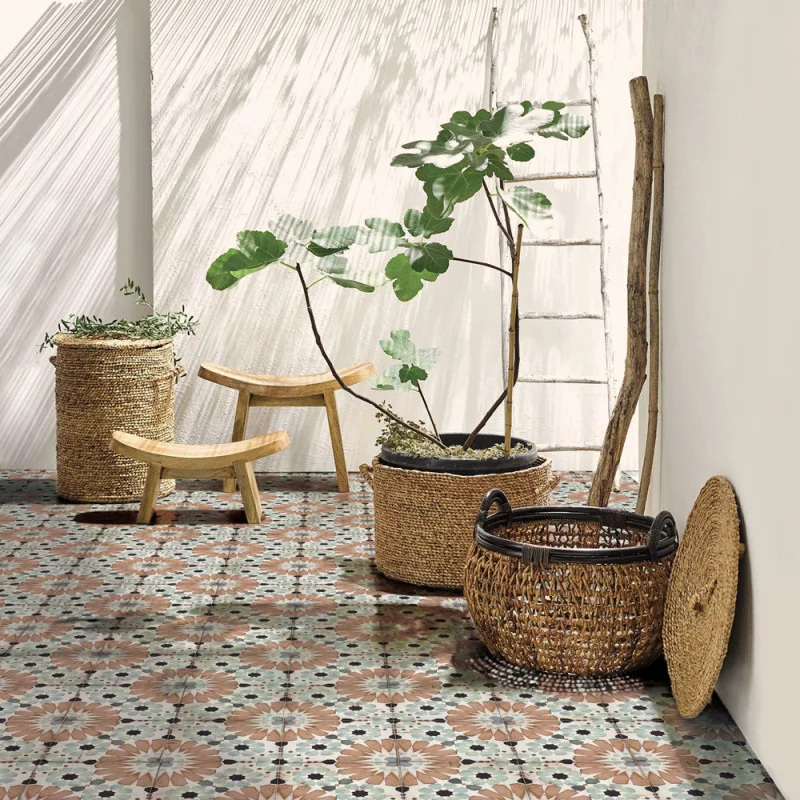
The manufacturing of cement tiles remains today mostly handcrafted. This artisanal process begins by mixing marble powder, sand, cement, and natural pigments to create a colored paste. This paste is then poured into metal molds divided into compartments to form the desired patterns. After this step, the tiles are pressed and left to harden before being carefully polished.
I fell in love with an old floral pattern during the renovation of my entrance. The realization was sudden at the time of installation: unlike classic tiling, each tile has its own small imperfection, a shade of gray or blue that differs. Seeing them align, I understood that we were not simply laying a floor, but composing a carpet of art. The most memorable was the oil treatment step: seeing the colors reveal and intensify under the product taught me that this material is alive. Today, every little wear mark tells a story, and that is precisely what I was looking for.
Authenticity and differences with industrial tiling
Unlike industrial tiling, each cement tile has a slight variation due to its handcrafted manufacturing process. This characteristic, combined with their durability and resistance, makes cement tiles a preferred choice for those seeking true authenticity in their interior decoration.
It can be said that the small imperfections and nuances of cement tiles add depth and a unique personality to each room, thus creating a truly singular floor or wall covering.
Uses of cement tiles in interior decoration
Cement tiles are not limited to just floor coverings. They can also adorn walls, countertops, kitchen backsplashes, and even furniture. Their cement tiles with geometric patterns and varied colors allow for many combinations to create striking visual effects.
Here are some ideas to incorporate cement tiles into your interior decoration:
- Create a cement tile rug on your floor to define a space.
- Use them as a backsplash in your kitchen for a colorful touch.
- Consider incorporating them into a bathroom for a retro-chic style.
- Opt for an accent wall with cement tiles in your living room for a spectacular effect.
These options clearly show the versatility of cement tiles and how they can transform an ordinary space into something truly special.
Characteristics of traditional cement tiles
| Criterion | Technical description | Point of caution |
| Thickness | Approximately 16 to 20 mm | Allow for significant floor reservation |
| Composition | Cement, sand, and natural pigments | Sensitive to acids and stains |
| Installation | Double bonding adhesive | Requires a perfectly flat substrate |
| Maintenance | Black soap and liquid wax | Strictly avoid vinegar and bleach |
| Finish | Matte, silky, and porous | Mandatory water- and oil-repellent treatment |
Durability and maintenance of cement tiles
Besides their unique aesthetic, cement tiles are valued for their durability and resistance. Properly installed and maintained, they can last for decades without losing their shine.
To ensure the longevity of cement tiles, it is important to seal them well after installation. This protects the tiles from moisture and stains. Then, regular cleaning with gentle, non-abrasive products is sufficient to maintain their original appearance.
Choosing the right colors and patterns
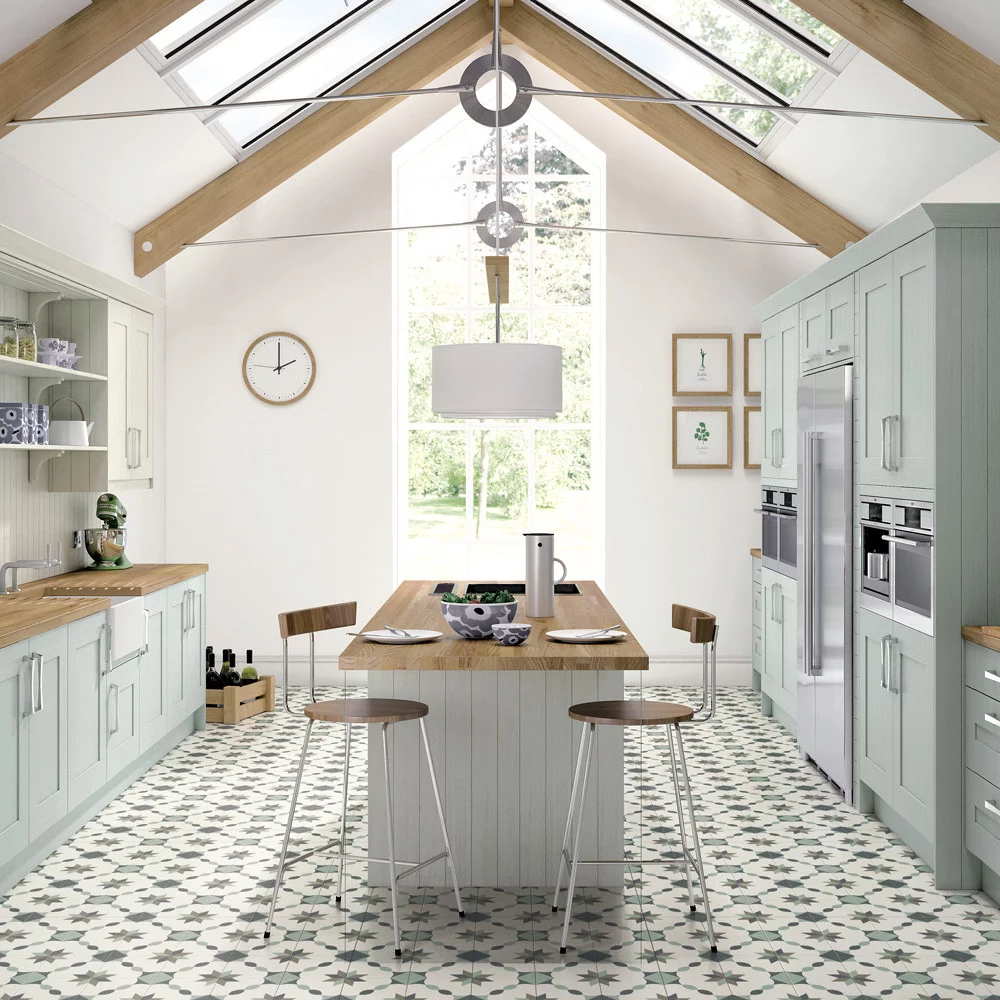
One of the greatest advantages of cement tiles is the almost infinite variety of colors and patterns available. Whether you prefer sober tones or bright colors, geometric or floral patterns, there is surely a design that will match your tastes and your interior.
When selecting cement tiles, consider the following:
- The existing color palette in your room for complete harmony.
- The size of the pattern depending on the surface to cover – large patterns for large spaces, small patterns for smaller areas.
- The desired visual effect – choose complex patterns to attract attention or simple patterns for a clean look.
These practical tips will help you make an informed choice and create a decoration that exactly reflects your personal style.
Current trends in cement tiles
With the growing enthusiasm for personalized interior decoration, cement tiles continue to evolve. Current trends include eclectic mixes of patterns and colors for modern patchwork effects.
Moreover, imitation cement tiles are also experiencing a notable breakthrough. Although they do not have the same authenticity as genuine cement tiles, they offer an interesting alternative for those looking to reduce costs or simplify installation.
Focus on French manufacturing
In terms of quality and know-how, cement tiles made in France enjoy an excellent reputation. French manufacturing often guarantees natural and environmentally friendly materials, as well as particular attention to detail and finishing.
For those who value origin and wish to support local craftsmanship, choosing French cement tiles can be a very rewarding and advantageous option.
Technical specifics to know
Before undertaking a renovation or decoration project with cement tiles, it is essential to consider a few technical aspects.
First, it should be noted that since cement tiles are porous, proper preparation of the surface on which they will be laid is crucial. Make sure the surface is clean, dry, and flat. The use of an adhesive specifically suited for cement tiles is also recommended to avoid any adhesion problems.
The thickness and weight of cement tiles
Cement tiles have a thickness of about 16 mm. This particularity must be taken into account especially if one plans an installation combined with other types of coverings such as parquet or ceramic tiles.
As for the weight, it is heavier compared to other tiles. This characteristic sometimes implies constraints regarding the support, notably for installations at height such as on fragile walls.
Final word on cement tiles
In summary, cement tiles offer an ideal blend of beauty, durability, and versatility. Using this type of floor or wall tiling can wonderfully transform any room in your house or apartment into a unique and personalized space.
Thanks to their handcrafted manufacturing, each tile is a work of art in itself. Thus, whether you choose to use them to create a focal point in a room or to add a subtle note of elegance and color, cement tiles are certainly an excellent choice for any authentic interior decoration.
FAQ: Cement tiles: authenticity at the heart of your decoration
Yes, cement tiles are very popular in kitchens: especially to create a “rug” under a table or a work area. However: being very porous, it is imperative to apply a high-quality water-repellent and oil-repellent treatment after installation. Care must be taken with wine, coffee, or grease stains: and they should be wiped immediately to prevent them from deeply penetrating the cement.
The real cement tile is handmade, without firing: with a color layer several millimeters thick. The porcelain stoneware imitation is a ceramic fired in a kiln with a printed pattern on the surface. The imitation is much thinner, cheaper, and stain-resistant: but it will never have the powdery feel, thermal warmth, and the unique patina of genuine artisanal cement.
It is perfectly compatible and even very pleasant: because cement has excellent thermal inertia. It stores heat and releases it slowly. However, it is necessary to use a flexible “flex” adhesive and to strictly respect the drying time before the first heating. Also, be careful with the total thickness of the assembly (tiles + adhesive): which is greater than standard tiling.