Sustainable housing is attracting more and more followers, both among professionals and individuals. Between home renovations, choosing eco-friendly materials, and implementing sustainable solutions, the challenges are numerous but achievable. To support the energy transition while optimizing daily well-being, it becomes essential to better understand the principles and tools available. Here are some concrete avenues to evolve towards an environmentally friendly home that also means long-term savings.
My vision of a sustainable home: In my opinion, transforming one’s home into a responsible living space should not be seen as a series of sacrifices, but as a quest for common sense and thermal comfort. I believe that insulation and water management are the two pillars on which any serious domestic ecology effort rests. My editorial viewpoint is clear: technology does not do everything; it is above all our ability to rethink the use of natural materials and the circularity of our equipment that defines, in my opinion, the true sustainability of a house in 2026.
The main principles of sustainable housing
A sustainable home stands out by its ability to integrate harmoniously into its environment while promoting the reduction of pollutant emissions. This goes far beyond simply choosing a material or an energy source: it is a coherent whole aimed at minimizing the ecological impact throughout the building’s entire lifespan.
Whether it is new construction or home renovation, every decision influences the energy performance and the overall ecology of the building. Airtightness, effective insulation, and intelligent placement of openings are all options that help maximize the use of available energy without waste.
To start your transition towards partial autonomy, installing rainwater harvesting systems is a first concrete step for watering your flowerbeds. If you want to incorporate bio-based materials into your decoration, the creative use of pallet decor: ideas and tips allows you to furnish your interior while limiting your carbon footprint. Finally, to ensure a healthy and natural atmosphere in your bedrooms, you might discover why to choose a natural latex mattress to combine sleep comfort and environmental respect.
Sustainable solutions in renovation and construction
Home renovation is often an effective lever to engage a genuine ecological transition. Replacing an old boiler with a more efficient system, properly insulating the attic, or installing suitable glazing brings immediate benefits to energy consumption.
In new construction, directly integrating equipment compatible with the sustainable housing approach changes the game. Bio-based materials, rainwater harvesting, or solar heating are common examples that combine comfort and savings.
Which materials to prioritize for sustainable housing?
Prioritizing low environmental impact materials is essential for successfully achieving the energy transition. Wood from managed forests, cellulose wadding, and hemp all have excellent insulating properties. These sustainable solutions reduce the energy needed to heat or cool the interior and help limit the project’s carbon footprint.
The use of eco-friendly paints or natural coatings also improves indoor air quality, contributing to the enhancement of daily life. It’s not just about adopting new products: their origin and life cycle must also be evaluated to ensure real consistency with the goals of sustainable housing.
How to optimize energy consumption?
To promote emission reduction, investing in solutions based on renewable energies is a relevant choice. Installing photovoltaic panels or a geothermal heat pump, combined with smart home automation management, not only generates substantial savings but also limits dependence on fossil fuels.
Attention must also be paid to the maintenance of existing appliances. Poorly adjusted heating or an outdated boiler can cause unnecessary losses. Occasional interventions ensure maintaining the expected performance level, thus guaranteeing a sustainable and cost-effective approach over time.
Action levers for eco-responsible housing
| Field of action | Sustainable solution | Environmental impact |
| Energy | External insulation (EIFS) | Massive reduction of thermal bridges: Then: heating reduction |
| Water | Aerators and collectors | 30% savings on annual consumption |
| Materials | Certified wood, cork, hemp | Low embodied energy and carbon storage |
| Waste | Local composting | Reduction of household waste treated by the community |
| Indoor air | Assisted natural ventilation (MVHR) | Elimination of VOCs without excess electricity consumption |
| Equipment | Repairable appliances (repairability index) | Fight against planned obsolescence |
Practical tips for a successful ecological transition
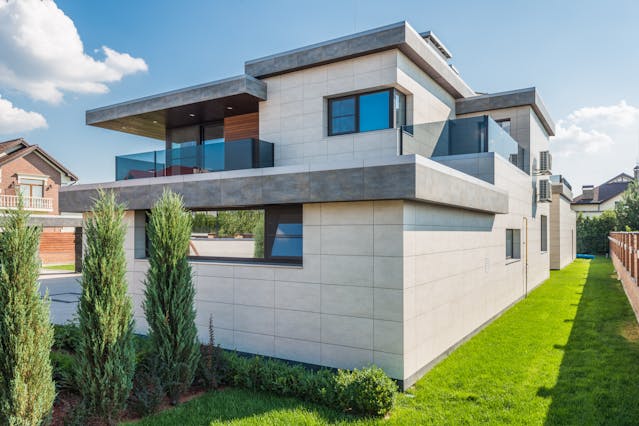
Succeeding in the ecological transition in your home usually starts with a few simple actions. Changing consumption habits, choosing green electricity suppliers, or promoting household waste recycling already mark significant progress.
Continuing this momentum involves targeted investments: thermal insulation of walls and windows, installation of low-consumption equipment, or setting up a double-flow ventilation system. Every improvement, no matter how modest, fits into a global logic of performance and long-term savings.
Why call on sustainable housing experts?
Surrounding yourself with specialists to carry out home renovations often proves decisive. These experts have the knowledge and experience to recommend sustainable solutions tailored to each situation. Their support ensures good coordination of the work, rigorous quality control of materials, as well as precise monitoring of energy consumption after renovation.
There are many financial aids intended to encourage the energy transition. Professionals are well aware of these schemes and can help to benefit from them. Seeking their advice therefore facilitates informed decision-making and reduces the risk of errors when choosing equipment or techniques used.
I personally experienced a real awakening when renovating an old barn where I had initially planned to install an energy-consuming reversible air conditioning system. By talking with the village elders, I understood that simply adding thick wooden shutters and greening the south facade was enough to regulate the temperature without consuming a single kilowatt. This experience taught me that sustainable housing often draws its best solutions from biomimicry and ancestral techniques. Since then, I systematically consider the inertia of materials before considering a mechanical solution, an approach that has drastically reduced my energy bills.
What daily actions to preserve ecology?
Adapting one’s lifestyle remains a fundamental pillar of sustainable housing. Intelligently programming heating, limiting shower time, opting for LED bulbs, or repairing rather than throwing away: all these actions actively contribute to environmental protection and improving daily life.
Encouraging residents, young and old, to contribute to ecological initiatives strengthens the collective coherence of the home. Awareness and responsibility around good practices often make the difference between a one-time initiative and a true lasting transformation of the household.
Comparative table of different actions for sustainable housing
| Action | Energy Benefit | Impact on Ecology | Implementation Complexity |
|---|---|---|---|
| Enhanced thermal insulation | Up to 30% savings | Strong emission reduction | Medium to high |
| Photovoltaic solar panels | Partial or total autonomy | Zero direct emissions | High |
| Heat pump | Consumption divided by 3 | Less CO2 emissions | Medium |
| Triple glazing | Reduction of thermal losses | Optimizes comfort, less heating needed | Medium |
| Domestic composting | Negligible on energy | Valorization of organic waste | Low |
Some misconceptions about sustainable housing
One of the main obstacles to the ecological transition lies in certain persistent beliefs. Many think, for example, that renovating is too expensive or takes too much time. Others imagine that only recent homes can achieve good energy results. In reality, every home can benefit from personalized improvements to progress towards a more responsible model.
To support this change, it is important to regularly seek information from reliable sources and compare the feedback from other homeowners committed to reducing emissions and improving daily life. Vigilance remains essential, especially when choosing materials or craftsmen: favoring recognized labels and specialized companies ensures better effectiveness of the sustainable solutions implemented.
Key points to move towards a more ecological home
Transitioning to a sustainable habitat is more of a gradual process than a radical upheaval. Everyone can act at their own pace, according to their means and the specifics of their home. The essential thing is to have a clear vision of priorities: identify weak points, target actions with greater impact, then adjust the budget based on the expected outcomes.
Practically, using practical advice provided by professionals, monitoring ecological innovations, and experimenting with new tips greatly facilitate the energy transition. Many solutions exist today to better respect ecology while significantly improving quality of life at home.
Frequently asked questions about sustainable habitats
How to initiate the transition to sustainable housing?
- Carry out an energy audit to identify the main sources of heat loss
- Start with small tasks such as improving insulation or replacing light fixtures with LEDs
- Seek advice from a certified professional
What aid exists for renovating homes with a sustainable approach?
- Energy renovation aids (MaPrimeRénov’…)
- Reduced VAT rate for certain improvement works
- Zero-interest eco-loan for insulation works or installation of efficient systems
Can old housing become environmentally efficient?
- appropriate interior or exterior insulation
- replacement of windows and closures
- connection to renewable heating systems
What are the concrete benefits of investing in sustainable housing?
- A reduction in energy consumption
- Long-term savings
- Improved thermal comfort in all seasons
- A lower environmental impact