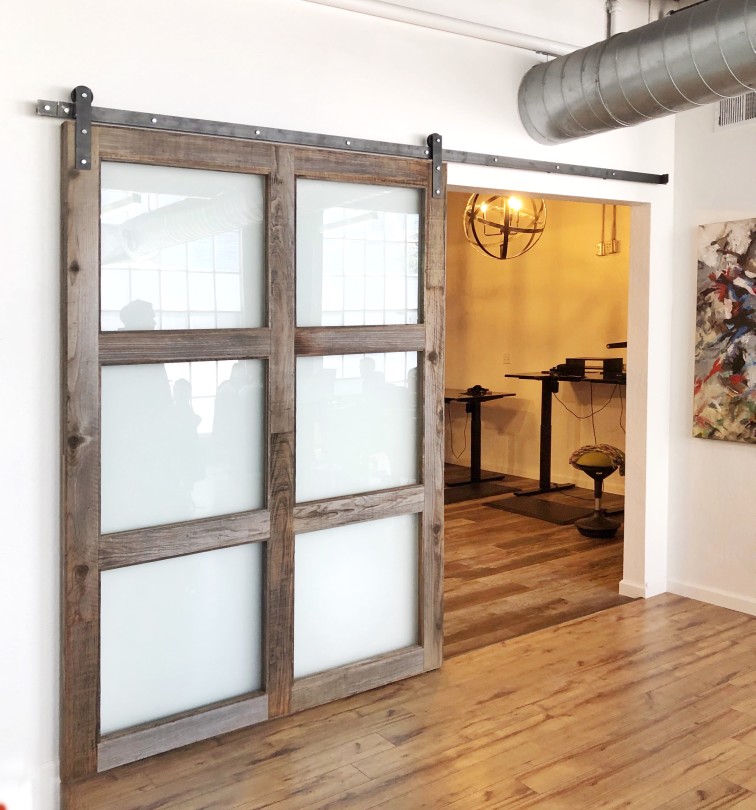
Compared to the hinged door on pivots or on frame, the sliding model is becoming increasingly trendy. The installation combines aesthetics and practicality.
Available in many colors and shapes, it optimizes space and brightness in the home. Even better, it suits almost all decoration styles.
Since it is an opening that gives access to the interior, its security is of paramount importance. This article provides interesting details on this subject. We explain the essentials to consider regarding the locking of a sliding door.
But before getting to the heart of the matter, let’s first discover the different models available on the market.
Types of sliding doors
This door has been hugely successful in recent years. That is why there is a wide range of options on the market. To find the right one, it is crucial to know the different categories.
| Type of sliding door | Description | Advantages | Disadvantages | Common use |
|---|---|---|---|---|
| Surface-mounted sliding door | The door slides along a rail fixed to the wall. | Easy to install, low cost, no major work needed. | Visible rail, requires space on the wall. | Bedrooms, living rooms, offices. |
| Recessed sliding door | The door slides inside a built-in partition. | Maximum space saving, sleek aesthetics. | More complex and costly installation. | Small spaces, high-end renovations. |
| Suspended sliding door | Suspended from an upper rail, no floor rail. | Modern style, no floor obstacle. | May support less weight, precise installation required. | Kitchens, living areas, design spaces. |
| Folding sliding door | Composed of panels that fold onto themselves. | Very space-saving, ideal for small spaces. | Less aesthetic, less sound insulation. | Closets, laundry rooms, small rooms. |
| Accordion sliding door | Multiple panels that fold like an accordion. | Affordable price, quick installation. | Less robust, more basic style. | Closets, temporary partitions. |
If you prefer the classic, the sliding door on rail is perfect for you. To open, it operates with a rail system placed at the bottom or top of the door.
This standard model is widely used for passage from the interior of the home to the outside. It is also used for the veranda.
For the retractable door, it opens by means of a rail located above the door. Its difference from the first category is the integrated box.
Thanks to this, the door can be stored after use. This element is not visible because it is hidden inside a partition.
The third type is called semi-retractable sliding door. It has characteristics roughly identical to the retractable door. But the storage box is less deep.
How to lock an interior sliding door?
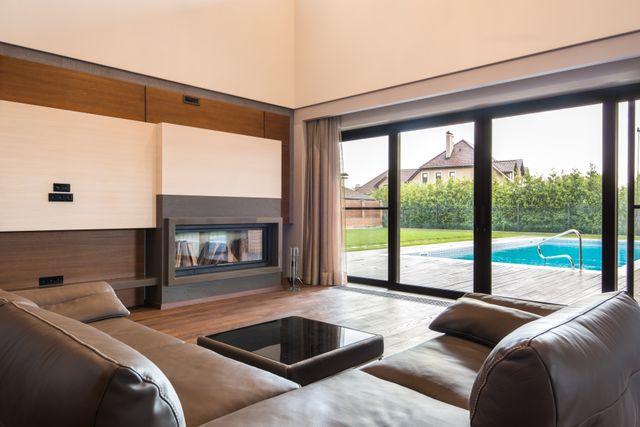
Despite the quality of its finish, a sliding door must be well secured to prevent possible break-ins.
Burglarers do not hesitate to use a monseigneur pliers or a crowbar to force locks. For this reason, your door must withstand any theft attempt.
There are generally 2 types of sliding door locks. The hook lock is easy to install. It is also cheaper. However, the system is less secure.
As for the lock with key, it is highly recommended by professional locksmiths. It demonstrates great performance. Even better, it ensures optimal security. There are several versions, the keyless model is called a privacy lock.
No matter which lock you choose, it is necessary to equip yourself with the appropriate tools and equipment to successfully install it. Among the most commonly used devices, the multi-tool is very useful.
Sliding door locking tip
Besides the hook lock and the one with a key lock, some people opt for the recessed lock. As its name suggests, the system can be less visible from the outside. It is very successful aesthetically.
It is most often found on pocket doors. The recessed lock is equipped with a metal device called a pocket door frame. This is inserted into the wall.
If you have children, the sliding door block prevents them from easily opening the closet door. Thus, you can store dangerous products inside. The system is not only intended for closets but also for cabinets and drawers.
Aside from these details, magnets can be better solutions to block your sliding door.
Also called a magnetic latch, this door closure is favored for its ease of use and installation. It can simply be fixed using the integrated adhesive. Therefore, there is no need to drill anything.
4 solutions to block sliding closet doors
The following options are among the most popular systems used by individuals to secure their sliding closet doors:
- Key lock
- Door stopper
- Hook lock
- With a magnetic system
Whatever your choice, it is advisable to call a professional to install the system. They will advise you on the best method to lock your sliding door.
How to put a lock on a sliding door?
As mentioned above, there are several types of locks that allow you to close a sliding door. Before proceeding with installation, you must first choose the right model. Once done, use a marker or felt-tip pen to mark the place where you will install the mechanism.
The next step is to drill holes. This can be used to fix the latch. Then create its housing. Use your drill to make the openings.
Once this step is finished, install the lock. The final phase consists of attaching the trims and inserting the strike plate.
How to lock sliding closet doors?
Compared to the hook lock, the key lock is more reliable. It is effective for securing any object inside the closet. You just have to lock the sliding door with a key. Your files and valuables will then be protected.
If your children are still very young, it is better to choose the door stopper. Available in several models, it can be attached to the door using an included adhesive. Some products are more aesthetic due to their inconspicuous nature.
The magnetic system is also gaining popularity. If you are not a good handyman, you can install it without difficulty. You just need a strong adhesive on the door and another on a wall. Regarding security, the mechanism is somewhat questionable.
How to lock a sliding door on a rail?
Start by mounting the door. Allow more space to the left and right of the frame to properly accommodate the sliding device. That said, install the rail and slide it if necessary.
Now drill the door and install the rollers. Place the door on the rail and make sure it is securely fixed. All that remains is to locate the spot for the floor guide and install the handle.
To lock the door, you can opt for the mortise lock for excellent sound and thermal insulation.
As for the surface-mounted lock, it is favored for its ease of installation, affordable cost, and versatility for all types of doors.
Regarding the cased lock, it is a version of the surface-mounted model, but comes at a higher price. Its solidity and discretion justify its cost.
How to lock 2 sliding doors?
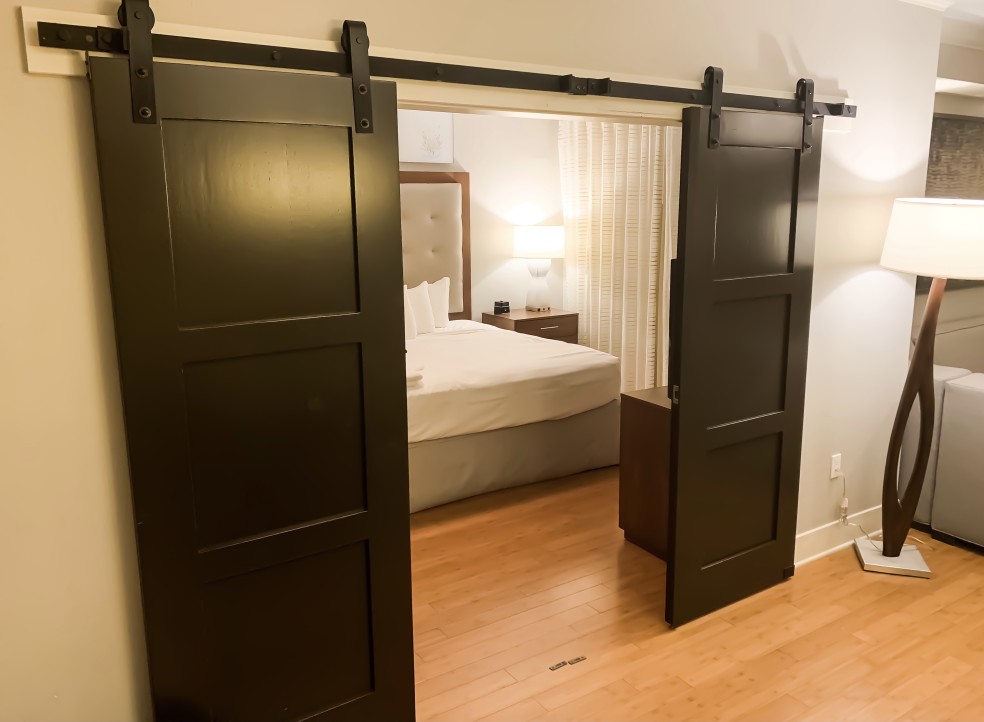
You have two options: the hook system and the classic locking. Let’s talk about the first one; it is classified among simple locking devices due to its attractive price. However, it is a less secure option.
The second, on the other hand, proves its effectiveness. The lock is similar to a swing door. You install it not in the masonry, but on a door leaf.
In any case, security can always be reinforced, even if the house has two sliding doors. For example, it is possible to use door sensors. The device is linked to an alarm that serves to scare away burglars.
If your sliding door is made of glass, it is advisable to equip it with a glass break detector. Like the door sensor, it sounds an alarm once the material is broken. This helps to deter thieves.
It plays a crucial role in securing the property. Locking helps to anticipate break-in attempts.
There are many mechanisms to block this type of door. For example, you have the surface-mounted lock, mortise lock, and encased lock.
You use a good lock that optimizes the protection of the inside of your home. Faced with the infinite offers, find the model combining strength, resistance, and durability.