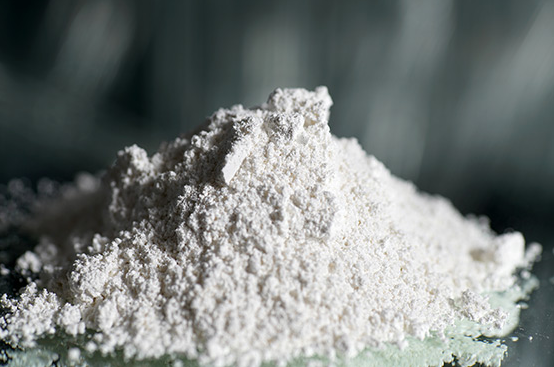
Milk lime is not a new product at all. It is one of the oldest wall coverings. It is most often used to sanitize and paint sheepfolds or barns.
Nowadays, white milk lime is becoming one of the most used decorative paints. It can be applied both indoors and outdoors. That’s not all, it is used in almost every room of the house.
Before asking yourself about the paint color for a living room, first consider learning about milk lime application.
What is milk lime?
To better understand our ideas, it is important to provide you with a milk lime definition. Whether it is tradical milk lime, arboricultural milk lime, masculine milk lime or whitewash milk lime, this product is nothing other than a mixture of water and aerial lime sometimes without pigments.
In chemistry, it is a solution filled with calcium hydroxide. Since lime can be dissolved in water, the resulting liquid forms lime water.
Depending on the proportion of water used with the lime, the texture can vary. And the names are also different.
For example, there is whitewashing which is notably used in gardening. The product serves to protect fruit trees against diseases. It is also perfect for painting facades.
As for milk lime, also called lime paint or whitewash, it is more diluted compared to whitewashing. It gives your wall a more patinated effect.
When you combine it with sand, you get a sandy finish. This product can be applied using a roller or a special brush.
Several types of preparations can be obtained depending on the amount of water mixed with the lime. For example, there is lime patina, lime distemper, and lime plaster.
The latter can serve to protect walls against temperature changes. This product is also used as a finishing plaster.
When to use milk lime?

You may have seen fruit trees painted white in gardens or orchards. This is white arboricultural milk lime which serves to protect plants from many living organisms such as parasites, lichens, mosses, larvae, or fungi.
In this context, you use whitewash milk lime or arboricultural milk lime as a fungicide or insecticide.
Just like anti-rust paint, it acts as a protector, but for plants. The product can limit the risks of several diseases such as peach leaf curl, coryneum, moniliosis, and scab.
Milk lime application is especially suitable for adult fruit trees. However, it is still possible to use it on shrubs and ornamental trees provided you avoid the leaves and young shoots.
The use of the arboricultural milk lime product is not limited to this aspect. It also protects young fruit trees from sunburn as well as temperature changes during winter.
Some plants are fragile and cannot withstand this phenomenon.
To use tree lime milk or lime wash milk, you can act once you notice the leaves falling in October.
Experts especially suggest the month of February or March. You can renew the application every 2 years. If the risks are low, nothing prevents you from using it every 3 years.
It is worth noting that white lime milk is not only used to protect fruit trees. It also makes an excellent paint for your wall decoration.
If you plan to enhance a living room or even set up a cellar, lime milk paint will not disappoint you.
It offers a natural finish generally in white. The product can also be applied outdoors to camouflage, for example, imperfections on the facade.
How to make lime milk?
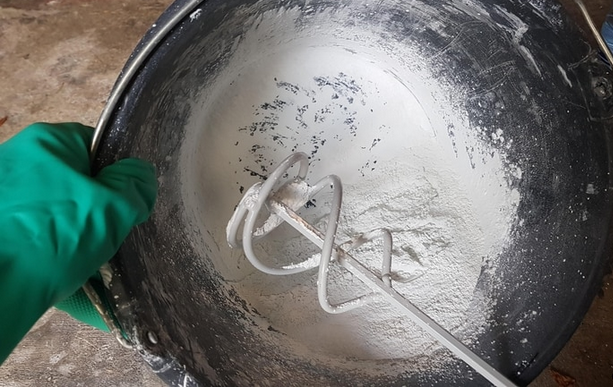
- The forms of lime milk: White lime milk comes in two forms. There is lime in paste form, ready to use, and lime powder which must be diluted in water.
- Preparation of paste lime: Simply shake it well before use, then stir it with a stick to obtain a homogeneous liquid.
- Preparation of powdered lime: This must be diluted in water respecting the proportions indicated in the instructions for use.
- Safety precautions: Wear gloves, long sleeves, and goggles, and prepare only outdoors.
- Choice of container: Use a metal container, as a plastic model could melt.
- Mixing proportions: Add three volumes of water to the container, then one volume of lime, and follow the instructions on the label.
- Reaction of the preparation: Intense bubbling and strong heat appear; immediately cover with a lid.
- Rest time: Let the preparation rest overnight before use.
- Consistency adjustment: Stir the mixture, then add a little water if necessary to obtain the desired texture.
- Application on surfaces: Lime milk is applied on natural materials such as brick, earth, aerated concrete, and stone.
Which lime for lime milk?
For various uses, lime comes in many different forms. If you plan to make lime wash milk, air lime is very helpful. Also called lime flower, it exists in paste or powder form.
If you want to tint the product, use powdered lime instead. Pigments incorporate easily into this mixture.
Regarding colorants, favor natural oxides or pigments. The colors have an excellent finish and better durability compared to synthetic colorants.
To make lime milk, you dilute air lime with water. To color it, you can add pigments. As for lime milk application, use a brush or roller.
What are the advantages and disadvantages of lime?
| Advantages | Disadvantages |
|---|---|
| Allows walls to breathe, promoting humidity regulation. | Less resistant to abrasion than some modern coatings. |
| Natural antibacterial and antifungal properties. | May require more frequent maintenance. |
| Compatible with old materials and preserves heritage. | Longer drying time than cement. |
| Offers good natural thermal and sound insulation. | Less suitable for areas heavily exposed to water. |
| Authentic aesthetic with varied finishes (troweled, brushed…). | More technical application, requiring expertise. |
Slaked lime, aerial lime, limewater, limewash or even lime paint, no matter the product obtained from it, lime has its advantages as well as its disadvantages.
Let’s start with its main qualities, it is one of the microporous elements. It also proves to be waterproof. When combined with other materials, it has a good insulating capacity both acoustically and thermally.
Thanks to its elastic and flexible properties, it can reduce possible cracks in the coating. It is also highly recommended when bonding elements without cement. Due to its bactericidal nature, it is perfect for sanitizing surfaces.
Despite its many assets, it also has its limits. Limewash application should not be taken lightly. If you do not respect the proper conditions, it offers you poor adhesion.
Whatever the limewash substrates, this product refuses to give you a bright shade. For this, several coats are necessary even if you add pigments.
How to limewash an interior wall?
Before applying the limewash milk, know that you can very well make it yourself. To do this, simply mix aerial lime with water in a metal container, at a ratio of 1 volume lime to 1 volume water.
If you follow the limewash milk recipe well, you normally obtain a pasty liquid. You can apply it using a brush on your interior wall.
But before this operation, it is important to properly prepare the surface. You just have to spray it with water the day before. The wall must be both slightly rough and clean for better adhesion.
If you want to color the limewash, wait 4 hours of drying after its preparation. Once this step is done, mix the pigment with limewater. You just have to apply the colored water on the fresh product.
Tools for making limewash milk
To sand concrete, you need a powerful tool capable of performing this operation. This is not the case when making limewash milk. This task does not require many tools. Moreover, they are easily found in hardware stores.
A measuring container is practical for measuring ingredients. You also need a bucket to mix them. It is wise to provide an airtight container to store unused product.
Besides that, use a funnel, whisk, ladle, sieve, roller, spatula and many others. For your protection, equip yourself with a mask, gloves, and goggles designed for this purpose.
Almost all professionals also use a mixer which is a tool specially designed to make this kind of preparation. Easy to handle, it is capable of producing high-quality limewash.
Limewash for roofing
Lime paste or slaked lime is mixed with water to produce limewash. This can be used on countless surfaces including roof tiles.
In this latter case, it is an effective solution preventing heat absorption during hot climates. It is especially its bright white shade that causes this effect.
Since limewash application is a work at height, it is advised to remain cautious during the operation. Be sure to equip yourself with the appropriate safety gear.
Limewash on wood
Almost all construction wood is smooth. The limewash paint can thus easily slip. It becomes difficult to make it adhere to the material. To solve this problem, it is recommended to add a fixative during the preparation of the limewash paint.
The benefit of its use on wood is its ability to sanitize and protect it from pests. The product helps slow down its decay.
It sanitizes damp rooms and preserves furniture. To use limewash paint on this natural material, it requires 3 to 5 different coats for optimal adhesion.
Limewash on stone
It is possible to apply limewash on countless natural earth materials such as brick and stone. It should be noted that there are 2 main families of lime: air lime and hydraulic lime.
The first is used to make finishing plaster, paint, and insulating plaster. On the other hand, the second helps you make foundation mortars, screeds, and foundations. It also allows for stone pointing.
If you plan to prepare lime mortar on a stone wall, know that the dosage may vary depending on the type of material. Hard stones require a higher dosage compared to firm stones.
Limewash on plaster
Limewash paint is the only preparation that can be applied directly on plaster. It requires no prior preparation.
However, several layers of lime plaster are not suitable for such a surface. Since they appear heavy, they risk damaging the structure.
To apply lime paint, the plaster must be lightly moistened beforehand, as water can damage it. Application is done using a rectangular natural bristle brush. For a better finish, do not hesitate to apply up to 5 coats.
Why use limewash?
Limewash offers several ecological advantages. It is a healthy paint that coats interior walls as well as exterior surfaces. It is also used on many substrates in building construction.
Many use it to reduce odors in chicken coops and dairy farms. White limewash is widely used, due to its bright shade, to limit heat absorption. As for its application on fruit trees, it helps protect them from pests and frost during the bad season.
Interior wall limewash
Lime wash or lime paint, limewash can offer an exceptional result on your wall. Many households use it during interior renovation.
Depending on the type of limewash used, the paint can be more covering. Since lime can whiten a lot, you can add pigments to it. If you prefer to keep the brightness of the wall, reduce the amount of dye.
When working on an old stained or discolored plaster, a well-white white limewash or lime wash can start again on a clean wall.
Limewash recipe
Instead of learning to DIY, it is also necessary to know the correct recipe for limewash. You just have to soak quicklime or hydrated lime. Do not stop until you get a homogeneous white solution.
Easy to use, the lime milk product is generally used as the main ingredient in a lime paint.
When you mix it with dyes or pigments, it offers you subtle colors. Its use varies according to the dilution level of the lime. You will get whitewashing, patina, lime wash, and strong lime water.
For the first, it is a thick preparation with one volume lime and one volume water. The second makes the plaster uniform with one volume lime and 15 volumes water.
As for the lime wash, it is the most common limewash recipe with one volume lime and two parts water. Regarding strong lime water, it is the most diluted limewash with a fluid mixture.
Limewash paint
Lime milk paint is very suitable for wall application. It can be used on earth plaster, aerial lime, chips, and cellular concrete. Also, it can be applied on plaster, cement, and wood.
Before the operation, it is necessary to clean the surface. In case of cracks, try to fill them then wash down. Now apply the lime paint using a wider brush. Between each coat, let dry for 6 hours.
Generally, the first coat appears transparent. But when drying, it becomes opaque. If you plan to increase opacity, increase the amount of Meudon white and reduce the amount of milk.
Arboricultural limewash
White arboricultural limewash is not only a natural preparation but also antifungal and antiparasitic. It is particularly used to eradicate fungi and parasite larvae found in fruit trees.
This product is generally ready to use. Since it is a very corrosive product, it must be handled with care. So be sure to wear thick gloves and protective glasses.
Limewash dosage
With 2 volumes of water for 1 part of slaked lime, you get a creamy limewash. If you prefer colors, add pigments of your choice. To apply it, a brush will do.
The variants of lime milk are numerous. While whitewashing is a thick preparation, nitric acid is a diluted lime milk. For patina, it offers you a uniform coating.
Bitumen lime milk
To ensure the safety of visitors on roadways, the competent authorities take measures against road degradation.
When you cross the Ille-et-Vilaine roads, you have probably noticed the white lime milk. The road officials decide to spread it on the roads. This product made from slaked lime and water is used to reduce the temperature of the bitumen.
Facade lime milk
Just like with interior walls, lime milk can be applied to exterior walls. It not only protects them but also covers them with a nice finish.
For better results, it is recommended to apply many thin layers, but not thick ones.
If the facade seems too dry to you, you have the option to rehydrate it between the application of different lime layers.
Limewash is generally applied with a wide brush or a whitewashing brush, using cross strokes for an even coverage. The surface must be clean, dust-free, and slightly dampened to promote adhesion.
Generally, two to three thin coats are sufficient. The first serves as a bonding base and the following coats enhance the color and protection. It is important to let each coat dry before applying the next.
Limewash is preferably used on natural and breathable surfaces such as brick, stone, cob, or aerated concrete. On surfaces that are too smooth or non-porous, adhesion will be weak and the finish less durable.