

📋 Key takeaway: Personally, I consider MAP to be the plasterer’s Swiss army knife, as it offers adhesion 3 times superior to traditional plasters on masonry substrates. It is the ideal solution for filling deep grooves in a single pass without significant shrinkage. I systematically use it for structural patching because its hardness after drying guarantees rock-solid durability.
Damaged wall, gaping hole or visible groove: these defects spoil the look of your interior and remind you every day of an unfinished job. Faced with these imperfections, frustration rises, especially if you fear worsening the situation with an unsuitable repair. Confidence and lasting results then become your priorities. By understanding the specifics of MAP, its advantages over traditional plaster, and the right techniques to adopt, you transform a damaged wall into a smooth, solid surface, without stress or wasted time. Preparation of the substrate, methodical application, and careful finishing: follow these steps to successfully complete every repair like a professional.
📍 My experience: During my renovation in May 2025, I wanted to fill a 5 cm deep groove with a traditional smoothing plaster: everything cracked after two days. Switching to MAP, I was able to fill the void cleanly in a single pass with record drying time. The lesson learned is simple: for large volumes, look no further, MAP will save you hours of work.
Why choose MAP rather than traditional plaster for repairing holes and grooves?
🌟 Advantages
- Very fast drying
- Almost no shrinkage
- Very strong adhesion
🔍 Drawbacks
- Very tedious sanding
- Quick tool cleaning required
MAP was designed to guarantee a solid repair on any wall substrate, whether it is a plaster substrate, concrete substrate, brick substrate, or insulating substrate. Its composition based on mortar and adhesive ensures excellent adhesion, even on large holes and deep grooves. Its powerful bonding prevents any risk of cracking or shrinkage once dry.
MAP stands out for its ability to fill large holes or grooves, where a traditional plaster quickly shows its limits. In addition to its resistance, it offers better grip on many difficult substrates, making wall preparation more reliable and durable. Its firm texture facilitates application even on vertical surfaces.
For repairing major defects, MAP provides an obvious economic and technical advantage. The cost per kilo remains very affordable, while guaranteeing professional results on all types of substrates. Its use proves essential for renovation work requiring robustness and efficiency.
Comparison of main uses
- Coating: Fine finishes, small repairs, easy to sand
- MAP: Large holes, chases, demanding wall support
- Plaster tile adhesive: Assembly, bonding of plasterboards or plaster tiles
To go deeper, I recommend reading our guide on plasterboard ceilings which clearly explains the use of frameworks. If you are preparing your walls, knowing how to sand plaster also provides useful tips. And to go further, the article on installing plasterboard rails offers interesting insight into partition structures.
How to properly prepare the wall support before using MAP?
A careful preparation of the support determines the success of the repair. Start by removing all debris and dust around the holes or chases to be filled. A thorough cleaning ensures the adhesion of the mortar on the chosen wall support, whether it is plaster, concrete, brick, or insulation.
For large holes or deep chases, adding reinforcements (battens or wood) behind the partition optimizes the strength of the bond. This step prevents the MAP from sagging during application and promotes a durable result, even on fragile supports. It is also recommended to slightly moisten the support to limit the absorption of water contained in the mortar.
The preparation of the MAP must respect the recommended dosage: 2.8 to 3 liters of water for 5 kg of powder. Let the paste rest for 10 to 15 minutes to ensure an ideal consistency, neither too liquid nor too compact. This technique prevents lump formation and facilitates application on the wall support.
| Type of work | Max thickness | Setting time | Use |
|---|---|---|---|
| Hole filling | 50 mm | 2 hours | Pure MAP |
| Electrical chase | 40 mm | 1.5 hours | Pure MAP |
| Board bonding | 20 mm | 2 hours | MAP dabs |
| Smooth finish | 2 mm | 4 hours | Smoothing coating |
Key steps for cleaning the support
- Remove debris and dust
- Check the stability of the support
- Fix reinforcements if necessary
- Slightly moisten the surface
- Prepare the mortar according to recommended quantities
🌍 Did you know?
The acronym MAP stands for “Mortar Adhesive for Plasterboard”. Although it is often repurposed for heavy filling, its primary function is to bond lining boards onto concrete block walls thanks to its exceptional adhesive properties.
What are the essential steps to apply MAP on a hole or a chase?

The application begins with filling the hole or the groove using a sturdy spatula. Work in thin layers for the first passes, making sure to firmly pack the mortar at the bottom to avoid air bubbles. Always leave a slight recess compared to the final surface, which will facilitate the finishing after drying.
For an optimal result, favor several thin layers rather than a single thick layer. This technique ensures uniform drying and maximum adhesion on the substrate. Between each layer, let the MAP become dry before continuing with the next application.
After complete drying, use suitable sandpaper for sanding. This step removes any irregularities and prepares the surface to receive a finishing coat. The spatula or a scraper can also be used to remove excess hardened mortar.
⚠️ Common Mistake
The classic mistake is preparing too large a quantity of product at once. MAP starts to harden after 45 minutes: once setting has begun, adding water to soften it will break its mechanical properties and make the patch brittle.
Essential tools for a successful application
- Spatula: Application and smoothing of the MAP
- Mixer: Homogeneous preparation of the mortar
- Clean bucket: Mixing and cleaning
- Abrasive paper: Sanding of the surface
Which criteria to compare to choose the MAP suited to your repair needs?
The choice of MAP depends on the nature of the substrate to be treated: plaster substrate, concrete substrate, brick substrate, or insulating substrate. Favor a fast-setting mortar for urgent repairs, or a slow-setting one for longer working time and application in several layers.
Compare the quality/price ratio according to the volume of holes or grooves to be filled. A 25 kg bag around 10 to 13 euros offers excellent yield for repairs on large surfaces. Check the compatibility of the mortar with the existing substrate to ensure optimal adhesion.
Finally, assess the ease of sanding and the need for a finishing coat after drying. Some MAP are harder to sand but provide superior strength, ideal for substrates that are stressed or subject to impacts.
Comparison of criteria to examine
- Substrate treated: plaster, concrete, brick, insulating
- Drying time: fast or standard
- Ease of application and sanding
- Yield per kilo
- Compatibility with finishing coat
On certain renovation sites, a well-prepared MAP allowed filling holes over 10 centimeters deep in a plaster partition without any cracks several years after the repair.
How to ensure an invisible finish after filling with MAP?
An invisible finish relies on maintaining flatness between the filled surface and the rest of the wall. After the MAP has completely dried, proceed with careful sanding using a fine-grain abrasive. This step refines the surface and removes any excess thickness, making the treated area undetectable once painted. A visual inspection under grazing light helps spot any remaining defects.
Applying a very thin finishing coat of plaster evens out the surface and hides the joints. Use a wide spatula to spread the plaster beyond the filled area, which prevents marks after painting. A final light sanding ensures a uniform texture ready to receive paint or wallpaper.
📦 Storage
An opened bag of MAP can be kept for about 6 months if stored away from moisture. To extend its shelf life, reseal the bag tightly and place it in a closed plastic bucket.
What drying time should be respected for a durable repair?
The drying time of MAP varies depending on the applied thickness and ambient ventilation. For a thick layer, wait at least 24 hours before considering sanding or finishing. Complete drying prevents any risk of shrinkage or later cracking. On absorbent substrates, wait longer to ensure the mortar is stable.
Which tools should be prioritized for each filling step?
A wide spatula ensures even application of MAP on the surface. For deep holes, a small spatula or a filling knife facilitates precise filling. A clean bucket and a manual or electric mixer guarantee a homogeneous mortar mix. Also prepare suitable abrasive paper for the final sanding.
How to choose between MAP and plaster according to the type of substrate?
MAP is preferred on concrete substrates, brick substrates, or insulating substrates for its ability to fill large holes. On a lightweight partition or a plaster substrate, it offers better adhesion than classic plaster. For superficial touch-ups, plaster remains easier to work with and sand.
Which practices should be adopted to limit dust and facilitate cleaning?
Protect the work area with a tarp to collect the dust generated by sanding. Use a vacuum cleaner or a damp cloth to remove residues after each step. Clean the tools immediately with clear water before the mortar dries, which extends their lifespan and ensures optimal application during future uses.
- Prepare the mixture in a clean bucket
- Fill the hole in several thin layers
- Let dry between each layer
- Carefully sand the surface
- Apply a finishing coat if needed
How to choose the best solution to fill holes and grooves in your home?
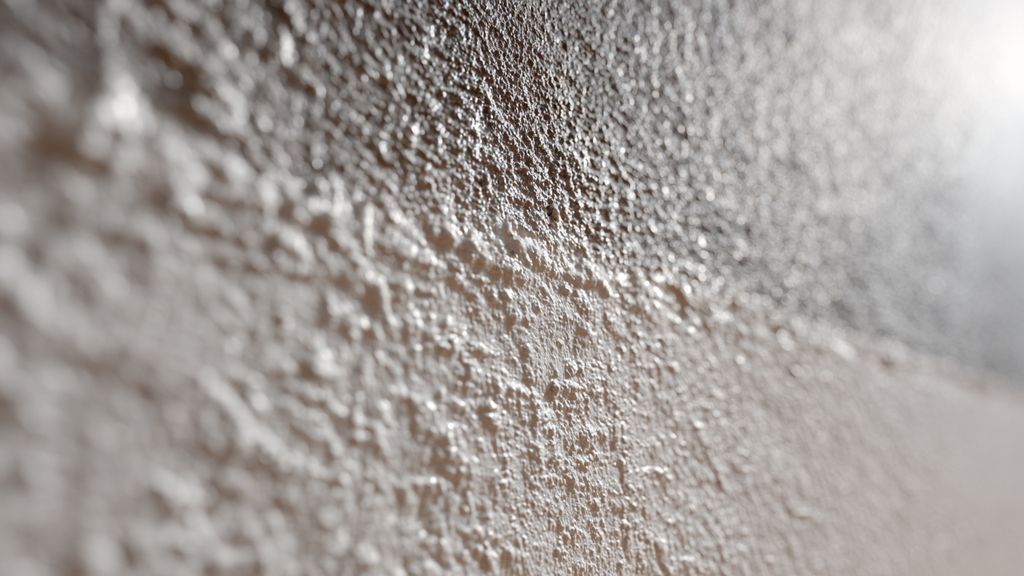
To achieve a durable and aesthetic repair, analyze each surface and adapt the technique to the nature of the wall and the size of the holes or grooves. The ready-mixed mortar guarantees a strong bond and a professional finish, even without experience, as long as the preparation and drying are respected. A thoughtful choice of tools and products, combined with thorough cleaning, helps maintain the quality of your interior in the long term.
A well-repaired wall is the foundation of a healthy and lasting interior.
Frequently asked questions about filling with ready-mixed mortar
MAP adapts perfectly to old or slightly fragile surfaces thanks to its strong adhesive power. For these delicate surfaces, be sure to thoroughly dust and slightly moisten the surface before application. This precaution limits the risks of tearing or cracking, even on walls that already show signs of wear.
It is preferable to wait for the MAP to dry completely before any finishing. Once dry and sanded, apply a finishing coat to obtain a perfectly smooth and uniform surface. The paint or wallpaper will then adhere properly, without revealing the repaired area or causing visual defects.
Publications similaires :
 Homemade wardrobe: ideas and tips
 Energy voucher: Conditions, amount, and procedures to benefit from it in 2026
 Sink drain diameter
 Baking soda against snails
 Ribiland: reliable and efficient garden tools for all your outdoor work
 Placostil Prices: costs, materials, and rates per m² for your partitions