Plaster is among the wall finishes that have been widely used for a long time. It can be used as mortar, but also allows for coating walls.
During construction as well as renovation, plaster sanding is a crucial step not to be overlooked. These tasks do not seem complicated once you equip yourself with good tools.
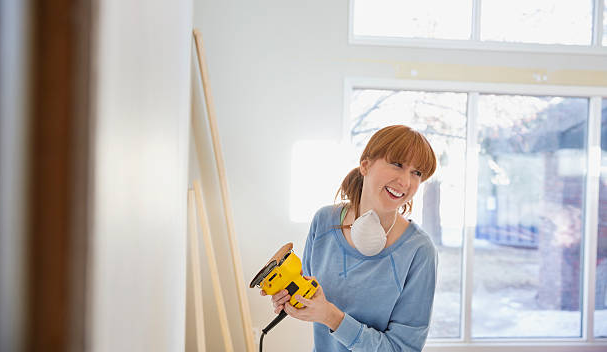
Between the giraffe sander, eccentric sander, wall sander or orbital sander, there are many devices dedicated to plaster wall sanding. Thus, it is easier to get lost in choosing the appropriate electric sander.
To give you a helping hand, it is appropriate to mention in the first part the equipment used for sanding wall work.
📋 The essentials at a glance: Personally, I consider plaster sanding the least forgiving step, because grazing light reveals 100% of imperfections after painting. It is a task that requires gentleness so as not to gouge the material. Successful sanding guarantees perfectly smooth surfaces and optimal adhesion for your subsequent decorative finishes.
Which tool to sand plaster?
If you wonder how to sand a plaster wall, think about equipping yourself with good devices. Their selection notably depends on the type of surface to be treated.
There are many categories of plaster such as construction plaster, exterior coating, plasterboard, drywall or plaster blocks and many others. So make your choice according to the nature of the support.
Two plaster sanding techniques can be distinguished. The first is the manual method which is done using a sanding block with paper. The second requires electric tools.
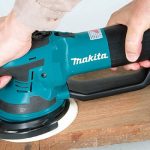
The orbital sander is among the most used devices for fairly fine or coarse sanding. As for the vibrating sander, it is the best ally of DIY enthusiasts for finishing work. It differs by having an integrated oscillating pad on which the abrasive paper grain is attached.
As for the eccentric sander, the machine is praised for its versatility. Beyond its capacity for medium and fine sanding, it is used to polish many types of surfaces.
There are still several electric devices allowing to sand plaster walls. These are just examples among many others.
📍 My experience: During my first bedroom renovation in 2025, I sanded without proper protection. Plaster dust is so fine that it infiltrated every room in the house, even behind closed doors. The lesson is clear: never start without a construction vacuum connected to your sander and complete sealing of passage areas. Cleaning afterwards takes ten times longer than the sanding work itself.
What grit to sand plaster?
After you have determined the tool for sanding plaster walls, the next step is to define the abrasive paper grit suitable for the work.
If you choose fine grit, know that it allows you to remove less material. On the other hand, a coarse grit sandpaper helps you remove more material.
In any case, it is always necessary to make two passes when sanding plaster walls. The actual sanding is done with 80 or 120 grit. This is perfect for treating imperfections or burrs. For the finish, you need a 120 or 200 grit.
How to sand plaster without making dust?
Sanding drywall or sanding plaster walls usually generates dust. Regardless of the type of wall sander used, the device often produces powders during the friction of a surface.
| Step | Description |
|---|---|
| Prepare the work area | Protect surrounding surfaces with tarps or sheets to prevent dust dispersion. |
| Use a sander with suction | Choose a sander equipped with an integrated suction system or connected to a vacuum cleaner. |
| Slightly moisten the plaster | Spray a little water on the surface to be sanded to reduce airborne dust. |
| Sand gently | Make slow and steady movements to avoid excessive dust production. |
| Clean regularly | Vacuum or wipe accumulated dust to maintain a clean and healthy workspace. |
To limit debris, it is advisable to use a good electric sander. Even if it leaves dust, it is in small quantities, thanks to its powerful suction system. It also differs by its correct diameter of about 150 mm.
When the coating powders are already present, all you have to do is remove them with a vacuum cleaner. This step allows you to work more cleanly.
How to do good sanding?
🌟 The advantages
- Perfectly smooth surface
- Professional paint finish
- Paint savings (healthy substrate)
🔍 Drawbacks
- Very dusty
- Physically demanding for ceilings
To achieve this goal, it is essential to use a better electric sander. Each model performs a specific function. It is recommended to use a suitable device. Likewise, choose an appropriate abrasive grit paper based on the nature of the surface.
Remember that sanding plaster walls is done dry. To obtain excellent results, use increasingly finer grits in multiple passes.
Do not neglect the preparation of the site. This step defines the quality of the wall sanding. Before starting, discover the essentials to remember.
What you need to know before sanding a wall or ceiling
- Site preparation: Before starting the work, take the time to check the condition of the walls. Make sure the surface is free of cracks or fissures. If this is the case, it is imperative to carry out repairs.
- Room protection: After this inspection, the next phase is to protect the room. To start, cover the electrical outlets to shield them from dust or various shocks. Add masking tape around window edges or on the baseboards. Cover the floor with a plastic sheet. Clear out all the furniture. Make sure the room is unoccupied so you can work freely.
- Preparation and repair of walls: To fix walls with holes or cracks, you will need to use a filler compound and a finishing compound. Fill each hollow and repair the existing imperfections. Once done, let it dry. For the first plaster sanding, use an 80-grit abrasive paper. It is essential to vacuum the dust or clean the surface. After this phase, apply a smoothing compound.
Before repainting an already painted wall, should you sand it?
To bring change to the home, many people prefer to repaint the walls. Before proceeding with this operation, sanding is a step not to be skipped. By making the plaster wall smooth, this phase facilitates the application of the new paint.
Before finding out how to sand already painted walls, it is useful to inspect the nature of the old paint. If it is in poor condition, it is better to strip it first. On the other hand, you can directly polish the wall if the paint is not degraded.
💡 Practical tip
Always make regular circular movements without ever staying static in the same spot. If you press too hard on a specific area, you will create a visible “flat” spot that will show as soon as you apply satin paint.
Sanding plaster without dust
Using a sanding block allows you to sand plaster walls without producing dust. Many retailers like Amazon offer a kit including a sanding block and a suction hose.
Whatever your project, sanding sandpaper or polishing smoothing compound, it is important to work with a plaster sander equipped with an efficient suction system. This allows you to sand under good conditions.
Sanding smooth compound without dust
⚠️ Common pitfall
A frequent mistake is sanding the compound before it is dry through. If the center is still damp, the abrasive will “clog” and tear off pieces of plaster instead of smoothing them, creating holes that are difficult to fix.
Indeed, it is annoying to work on a surface full of compound dust. To avoid this situation, equip yourself with a plaster sander with a vacuum cleaner. On Amazon, it seems easy to find this good electric sander to limit dust spread.
An orbital sander can be effective for flattening walls covered with compound. It promises better results even for large surfaces. Thanks to an integrated dust extraction mechanism, it helps you work cleanly.
How to apply and properly sand joint tape for plasterboard?
When installing drywall partitions, there are often empty spaces between the plasterboard sheets. To fill them, the use of joint tapes is necessary.
After their installation, sanding may seem useful to provide better finishes. Many people use a Placoplatre wall sander.
For corners, a giraffe sander equipped with a telescopic handle is very helpful. For small surfaces, a sanding block may seem practical. In all cases, avoid applying pressure with each pass. You must act gently to avoid damaging the plaster.
How to fill a hole in a wall?
To do this, the use of a filler compound is recommended. If you buy powdered products, you can mix it yourself.
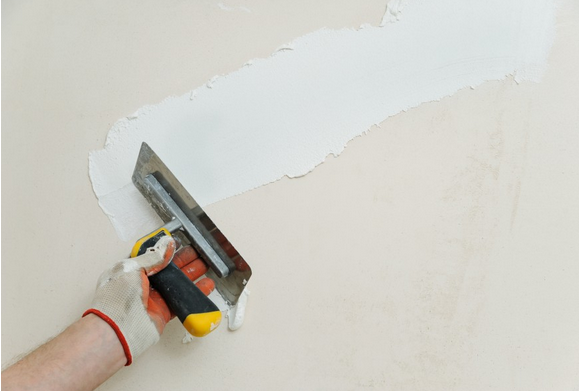
Use a putty knife to apply it by filling the gaps. After drying, it forms a block and no hole remains visible.
Now, regarding small repairs, you can get a ready-to-use filler paste available in specialized stores. This helps you to make imperfections on the wall disappear.
How to sand plaster?
Proper surface preparation is the key to successful sanding. In case of cracks, you will need to fix them before proceeding. Aside from that, use only the most suitable plaster sander for the job. It combines ease of use and efficiency.
🌍 Did you know?
Plaster is a natural material derived from gypsum. Once sanded, its dust is recyclable, but it should never be thrown into drains because it hardens on contact with water and causes permanent blockages.
How to buy a good random orbital sander?
This electric sander stands out for the quality of its results. It has features that allow it to properly smooth a surface.
Generally, branded sandpaper machines combine performance and durability. Even if they often cost more, they offer better efficiency.
How to fill a hole in a wall?
There are several products that help you seal a hole. Choose according to its size. For a small dent, it can be fixed with a ready-to-use filler compound in paste form.
If the hole is large, fill it with a repair piece previously made. This is a piece of plasterboard plasterboard cut to the size of the gap.
Frequently Asked Questions
It seems unthinkable to sand without tools. You must always use products and devices suited to this kind of operation. A sanding block is necessary for manual sanding. If you want to save time, an electric sander is a valuable help.
Sanding is among the relatively simple construction tasks to carry out. You just need basic knowledge and to equip yourself with good tools, and you’re all set.
Plaster sanding work takes a lot of time. If you aim for quality work, avoid doing it hastily.