Cellular concrete is a material of choice for barbecue construction. Due to its lightness and insulating properties, it offers a solution that is both ecological and economical for gardening and outdoor cooking enthusiasts. Let’s see how to take advantage of this ingenious material to create a friendly space in your garden.
Why choose cellular concrete for your barbecue?
| Element | Role | Recommendation |
|---|---|---|
| Cellular concrete blocks | Structure | Thickness 7 to 10 cm |
| Special adhesive | Assembly | Heat resistant |
| Work surface | Cooking area | Concrete slab + tiles |
| Finishes | Insulation & decoration | Coating or plaster |
Cellular concrete stands out for its ease of handling. Unlike traditional materials like brick or reinforced concrete, it is light and easy to cut, which greatly simplifies the task when building a barbecue. These characteristics make it a valuable ally for DIY enthusiasts who want to carry out work without sophisticated tools.
Moreover, cellular concrete has excellent insulating qualities. This means it retains heat well while reducing thermal losses. An additional asset when building a barbecue that must withstand high temperatures. Thanks to these properties, your cellular concrete barbecue will be not only efficient but also durable.
Materials needed for construction

Before starting the barbecue construction, it is essential to gather all the necessary materials. Here is a list of the essential elements to successfully complete your project:
- Cellular concrete: the blocks will be used to build the main structure of the barbecue.
- Firebricks: essential for surfaces directly exposed to intense heat.
- Refractory cement: used for the mortar when assembling bricks and cellular concrete.
- Stainless steel grill: essential to ensure optimal cooking of food.
- Masonry tools: such as trowel, spirit level, and cellular concrete saw.
With these materials in hand, you are ready to move on to the next step of your barbecue project: building the structure and support.
Preparation and construction plan
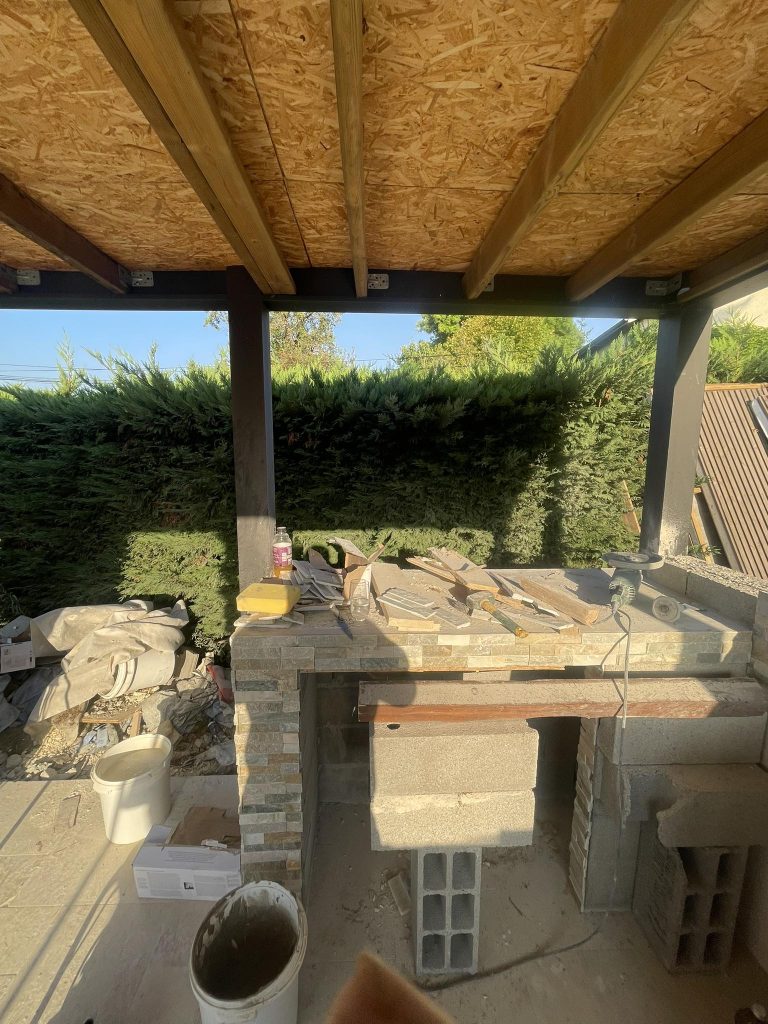
Before starting any construction, it is crucial to define a clear and detailed construction plan. Take the time to draw a diagram of your future cellular concrete barbecue. This plan should include the exact dimensions as well as the location of the different parts, such as the hearth and shelves.
A good construction plan not only facilitates the subsequent steps but also allows for an accurate estimate of the quantities of materials needed. It is important to pay particular attention to the solidity of the foundation, as it must support the entire barbecue structure. A solid base guarantees the longevity of your work.
Foundation construction
To ensure good stability, start by digging a trench about thirty centimeters deep where the barbecue will be installed. Then fill this trench with crushed stone and compact it carefully. This step is essential to prevent the structure from shifting over time.
After preparing the ground, install a traditional concrete footing reinforced with a metal mesh. Let the concrete dry for at least 48 hours before continuing with the construction of the cellular concrete walls.
Assembly of the main structure
Once the foundation is ready, begin laying the cellular concrete blocks to raise the walls of your barbecue. Make sure to assemble each block with refractory cement to ensure their heat resistance. Don’t forget to regularly check the plumb and squareness of your structure to avoid defects that could compromise the final assembly.
Focus your efforts on creating an efficient hearth. To do this, properly align the refractory bricks that cover the inside of the grill. These are specifically designed to withstand the extreme temperatures generated by the fire and will therefore extend the lifespan of your barbecue.
Finishing the barbecue and final touches
The finishing of the barbecue calls upon your artistic sense. You now have the opportunity to personalize your creation so that it perfectly reflects your style. For example, consider applying a natural coating to improve the overall aesthetics while protecting the cellular concrete from the weather.
At the same time, install the stainless steel grill that will serve as the cooking surface. Opt for a removable grill if you want to facilitate cleaning and regular maintenance of the equipment. Also consider integrating side shelves to keep cooking accessories and ingredients within easy reach.
Heat resistance: A key factor
When talking about barbecues, heat resistance is a determining criterion for safety and durability. Cellular concrete, despite its rough appearance, shows excellent tolerance to temperature increases when combined with refractory bricks.
However, be sure to provide adequate ventilation in your initial plan. This will not only allow smoke to be efficiently evacuated but also prevent excessive heat buildup around the hearth, which could prematurely weaken the materials used.
Possible adjustments and improvements
Finally, after completing the construction of your barbecue, take the time to observe its operation during several uses. You will then be able to determine if any adjustments are necessary. Perhaps you will realize that an additional shelf would be useful or that a space to store wood could be integrated into your setup.
Thanks to the flexible and easily workable properties of aerated concrete, making some modifications remains relatively simple even after the project is completed. Be inventive and do not hesitate to continuously improve your equipment to maximize its functionality.
To prepare your site and ensure a solid structure, learn the basics with how to make a screed: explore techniques to achieve a clean finish with the application of a troweled render: and get inspired by wood projects with making a wooden shutter for your exterior finishes.
Frequently asked questions about building a barbecue with aerated concrete
Aerated concrete is a composite material made of water, sand, cement, and aluminum powder. It combines lightness, thermal insulation, and ease of use, making it an ideal choice for building outdoor structures like a barbecue. Its ability to retain heat reduces the energy consumption needed to perfectly cook your meals.
To cut aerated concrete, use a saw specially designed for this type of material, often called an aerated concrete saw, or a standard saw equipped with a diamond blade. This ensures clean and precise cuts, essential for properly assembling the parts of your barbecue.
The main maintenance for a barbecue made of aerated concrete consists of regularly cleaning the cooking grates and ensuring that the exterior protective coating remains intact. Periodically check the condition of the joints between the blocks and replace them if necessary. With this care, your barbecue will retain its beauty and performance for many years.
Yes, it is possible to paint a barbecue made of aerated concrete after applying an appropriate coating. Choose a paint resistant to high temperatures and suitable for porous materials to optimize adhesion and the durability of the color. This also allows you to customize the appearance according to your tastes while providing additional protection.