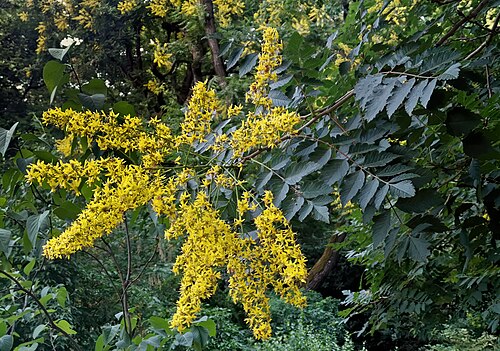
The golden rain tree (Koelreuteria paniculata) charms with its summer yellow blossoms and light foliage, which brighten gardens and public spaces. Often planted for its relative resistance and attractive silhouette, this small ornamental tree is not without its flaws. Several drawbacks are regularly mentioned, whether it be sensitivity to diseases, risks related to invasive roots, or aesthetic problems over the seasons. To choose its location wisely and avoid disappointments, it is useful to be informed about these specific constraints.
Summary of my observations: In my opinion, the golden rain tree (Koelreuteria paniculata) is the perfect example of a “double-edged” tree in the garden. I consider its aesthetics undeniable, but I think its structural fragility against increasingly frequent storms is too often overlooked. My editorial view is that it should not be planted solely for its yellow flowers, as managing its spontaneous seedlings can quickly become a weekly chore if one is not prepared for this silent invasion.
Health problems of the golden rain tree
Despite a reputation as a resistant tree, the golden rain tree is not immune to certain phytosanitary issues. Its sensitivity to diseases and pests remains moderate but should not be underestimated in certain contexts, particularly in cases of persistent humidity or proximity to other sensitive plants.
One frequent threat comes from bacterial canker, which causes lesions on the bark and can compromise the overall health of the tree. Certain scale insects and aphids also take advantage of the light structure of the foliage to settle there permanently, generating a sticky honeydew conducive to the appearance of black sooty mold visible on leaves and branches.
What impacts does sensitivity to cold bring?
Even though the golden rain tree tolerates occasional negative temperatures fairly well, it generally shows sensitivity to cold, especially during harsh or prolonged winters. Young trees are particularly vulnerable: their wood risks freezing, while spring regrowth is slowed down. In areas with late frosts, flower buds may also abort, greatly reducing the ornamental appeal of the specimen.
This constraint therefore limits its planting in cold continental climates and requires winter protection in exposed regions. Repeated thermal stresses also promote the rapid development of cracks in the bark, making the tree more fragile and sensitive to external attacks.
To prepare the ground before any large-scale planting, the use of a best rototiller is often essential to aerate the soil deeply. If you need to remove old diseased shrubs, a radical solution is to proceed with the elimination of stumps with a stump grinder to free up space cleanly. Once your garden is rearranged, you can consider making a coffee table with our DIY guide to fully enjoy the shade cast by your new plants.
Why do we talk about debris fall and honeydew production?
The soapberry tree is known for producing a significant amount of plant debris throughout the seasons. Beyond the natural leaf fall in autumn, its long yellow inflorescences and decorative fruits, forming balloon-like capsules, quickly end up on the ground, thus creating slippery mats that are not appreciated on terraces or paths.
Aphid infestations exacerbate the problem: they secrete an abundant honeydew, a sticky substance that covers not only the leaves but also all nearby surfaces, promoting the formation of a sticky film. This nuisance requires frequent cleaning and makes space management more tedious.
Cultivation constraints and mechanical problems
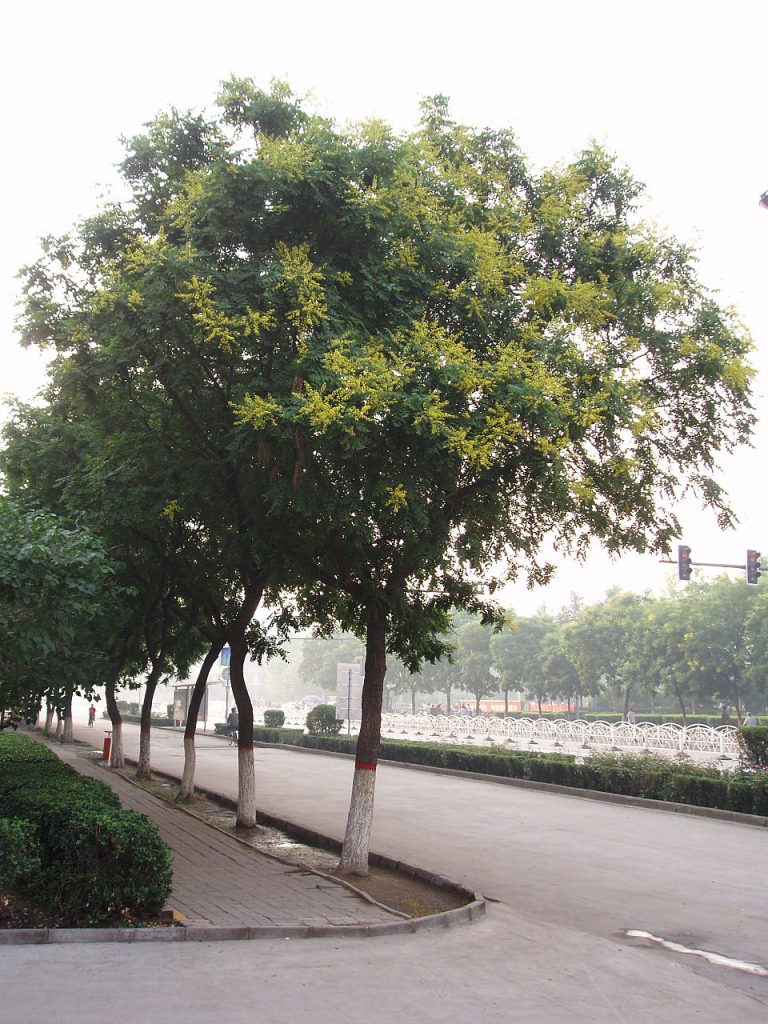
Certain characteristics of the soapberry tree explain why it is sometimes difficult to integrate sustainably into all landscape contexts. This species presents several structural and root weaknesses that can cause long-term inconveniences, both for the tree itself and for the surrounding arrangements.
The rapid growth of the soapberry tree often leads to root problems. The shape of the roots, often superficial, favors their overflow on the surface, sometimes lifting pavements or disturbing the stability of nearby lawns. During windy episodes or after heavy rainfall, the insufficient anchoring accelerates the risk of sudden toppling in poorly established adult specimens.
Comparative table of the soapberry tree’s inconveniences
| Type of inconvenience | Problem intensity | Direct consequence for the gardener |
| Invasiveness | High | Appearance of hundreds of young shoots everywhere: Then: long manual weeding |
| Wood fragility | Moderate | Clean breaks of branches during strong winds or heavy snow |
| Soiling | High | Sticky fruits and flowers that stain terraces and car bodies |
| Growth speed | Low at first | Patience required before obtaining truly protective shade |
| Root system | Moderate | Risk of lifting light pavements if planted too close |
| Sensitivity | Low | Occasional attack by coral disease (red fungus) |
How to manage mechanical fragility and maintenance?
The branched structure of the soapberry tree, fine and flexible in its youth, becomes quite brittle at maturity. This mechanical fragility phenomenon causes breakage of twigs during storms or under the weight of snow. After each difficult weather episode, a safety pruning is often necessary to remove broken branches.
Managing capsules and dead branches adds to the regular maintenance problems, especially if the tree is located near frequented areas. Careful seasonal pruning remains the most reliable solution to preserve the tree’s aesthetics and reduce annoying debris.
What limits does the invasive species and its short longevity produce?
If the soapberry tree was once recommended for its good urban adaptability, its behavior as an invasive species raises questions. Its high germination capacity leads to the spontaneous spread of many small plants in the surrounding beds, which complicates maintenance and sometimes harms the local biodiversity.
On the other hand, the short lifespan of the soapberry tree represents a limitation for those looking to plan their garden layout over several decades. Most specimens rarely reach more than 40 to 50 years, showing signs of senescence such as hollow trunks or unexplained dieback well before that age.
Toxicity and safety concerns
The potential toxicity of the soapberry tree is too often overlooked. Although its danger remains moderate, certain parts of the tree – particularly the seeds contained in the fruits – contain substances that can cause skin irritation or digestive disorders in humans and many domestic animals.
Prolonged contact with the sap sometimes causes mild irritations. It is therefore advisable to wear gloves during pruning or collection operations, especially since children and animals may be attracted to the colorful berries fallen on the ground. As a simple preventive measure, store any plant waste from the soapberry tree out of reach.
- Sensitivity to diseases and pests: increased risk of the notorious sooty mold and bark damage
- Sensitivity to cold: exposure to frost is harmful especially for young specimens
- Root problems: lifted surfaces, moderate anchorage
- Toxicity: possible irritation, seeds risky for children and animals
- Invasive species: problematic spontaneous proliferation
- Short lifespan: lifespan shorter than some classic ornamental trees
- Debris fall, honeydew: risks of soiling and recurrent maintenance
- Mechanical fragility: brittle branches, increased breakage during storms
- Aesthetic problems: irregular habit, ground soiling
| Disadvantage | Description | Severity |
|---|---|---|
| Sensitivity to diseases | Canker, sooty mold, pests | Medium |
| Sensitivity to cold | Frost fatal to young plants | High |
| Invasive roots | Soil lifting and weak anchorage | Variable |
| Toxicity | Irritation, dangerous berries | Low to medium |
| High maintenance | Pruning, cleaning, abundant debris | High |
A few years ago, I was charmed by the decorative lanterns of the soapberry tree and planted one near my terrace. The realization was harsh during the first autumn: the capsules fallen on the ground stain the tiles indelibly if not picked up immediately. This experience taught me that the beauty of a species should never make one forget its maintenance constraints. Today, I think twice before placing a deciduous fruit tree in the immediate vicinity of a living area, a beginner’s mistake I will not repeat.
Frequently asked questions about the drawbacks of the soapberry tree
What are the main health risks associated with the soapberry tree?
The soapberry seeds contain various slightly toxic chemical compounds, which can irritate the skin or cause digestive issues if ingested by young children or pets. When handling the tree, it is best to wear gloves to avoid redness caused by the sap.
- Skin irritation upon contact with the sap
- Berries posing a risk to children and animals
How to limit root problems with the soapberry tree?
The ideal is to keep the soapberry tree away from pavements, borders, or pipes to prevent soil heaving caused by its shallow roots. Also avoid planting it in very loose soils, as it may lack anchorage against the wind.
- Planting away from built structures
- Preference for deep and well-drained soils
| Area | Recommended minimum distance |
|---|---|
| Terrace | 4 m |
| Lawn border | 3 m |
Why is the soapberry tree classified as an invasive species in some regions?
Because of its strong capacity for dissemination via its numerous seeds, the soapberry tree quickly colonizes wastelands and garden edges, to the detriment of local plants. Its prolific behavior disrupts the natural balance, thus requiring control measures in various communities.
- Massive seed production
- Frequent spontaneous germination every spring
What annual maintenance should be planned to limit the nuisances related to the soapberry tree?
A careful collection of fallen fruits and a shaping pruning prevent uncontrolled proliferation of young shoots and facilitate movement under the tree. Check the health status each year to detect deformities or dead branches to be removed quickly.
- Corrective pruning in winter
- Regular collection of seed capsules and dead leaves
- Health monitoring to anticipate fungi or cankers