

When it comes to effectively managing a fleet of vehicles, geolocation proves to be an essential tool. Advanced technologies now allow precise tracking of each vehicle’s movements, thereby simplifying many aspects of fleet management.
This article provides insight into the different existing tracking systems and their specific benefits depending on the type of use.
📋 The essentials at a glance: Personally, I consider geolocation no longer an option but a major profitability lever, allowing fuel costs to be reduced by 15% on average. Did you know that 25% of stolen construction equipment is never recovered due to lack of active tracking? I advise you to choose a hybrid system capable of reporting not only the position but also engine hours to optimize your preventive maintenance.
The different types of vehicle tracking systems
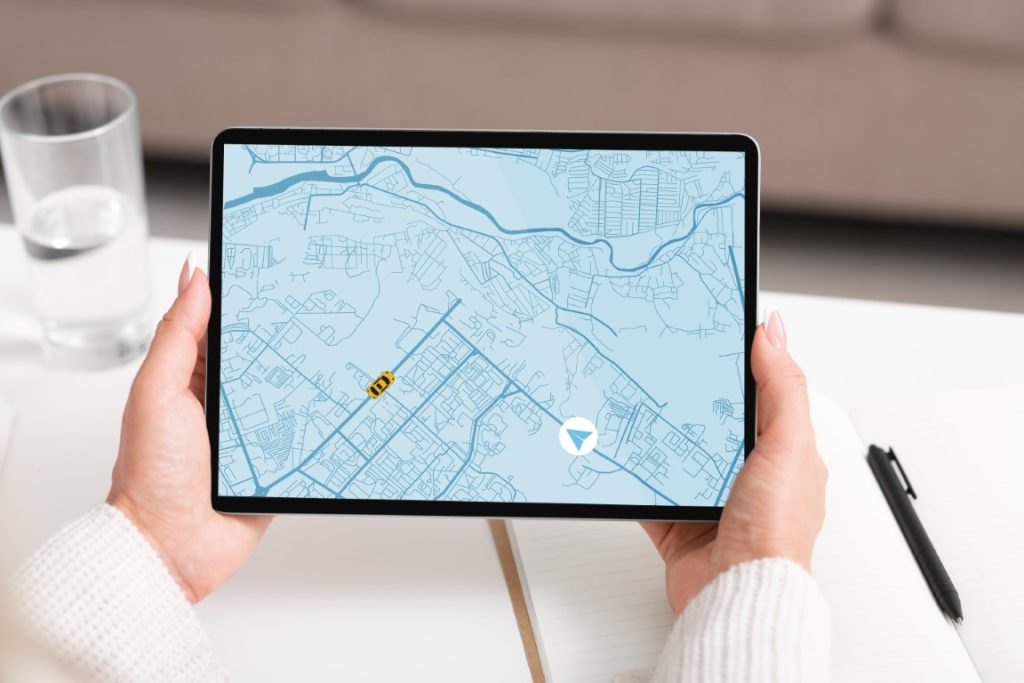
Modern fleet management inevitably involves the integration of an appropriate geolocation system.
Depending on their characteristics, these systems can be classified as active or passive tracking. Each offers different features that can be aligned with the goals and constraints of each company.
📍 My experience: In 2025, I helped an entrepreneur whose mini-excavator had “disappeared” from a site on a Sunday evening. Thanks to the geofencing system (virtual barrier) he had just installed, he received an SMS alert as soon as the machine left the area. The lesson learned is that technology is useless if alerts are not configured: the machine was located 50 km away in less than two hours by the police.
Cellular tracking
Cellular tracking is a vehicle geolocation method that uses cellular networks to transmit location data.
This type of system is generally more affordable in terms of initial costs but involves monthly fees for service maintenance. It provides regular updates on vehicle positions, allowing fleet managers to have an almost real-time overview of operations.
This solution is particularly suitable for areas well covered by mobile phone networks, where data transmission is reliable and constant.
Perfect for companies that need frequent tracking, cellular tracking can nevertheless be limited in regions where connectivity is weak or nonexistent.
Satellite tracking
Unlike cellular tracking, satellite tracking does not depend on the mobile phone network and therefore allows much wider coverage, including in remote areas.
The transmitted data is often more detailed and the update frequency can be adjusted according to the specific needs of the company. This type of tracking is ideal for managing fleets operating in remote regions or on an international scale.
However, the costs associated with installing and using a satellite tracking system can be significantly higher than those of other systems. It is an investment that requires careful consideration and adaptation to the specific needs of the fleet to justify its cost.
The vehicle’s passive tracking system
Passive vehicle tracking systems, often referred to as GPS recorders, are distinguished by their ability to store location information without transmitting it in real time. The data is recorded on a hard drive or memory card and can be accessed later to analyze routes and driving habits.
This type of system is particularly useful for companies looking to optimize their operational costs, such as fuel consumption or vehicle maintenance.
Although they do not provide real-time data, these systems offer a wealth of information that can be used to improve the overall efficiency of the fleet.
🌍 Did you know?
Installing a certified geolocation system often allows you to reduce your fleet’s insurance premium by 10% to 20%, as it statistically decreases the risk of total loss after theft.
How to compare available geolocation systems?
Geolocation solutions differ in their technologies and uses. A comparative table helps to better visualize their specificities and choose the system best suited to your fleet.
⚠️ Warning
A common mistake is to mount the GPS antenna under a metal surface (hood, roof). Metal blocks satellite signals. Make sure the tracker is placed under plastic, glass, or a clear area to avoid position “jumps” of several kilometers.
| Geolocation system | Technology used | Main uses | Advantages |
|---|---|---|---|
| Simple onboard GPS | Connected GPS device | Basic vehicle tracking | Affordable, quick installation |
| Real-time GPS solution | GPS network + GSM/4G data | Live tracking, alerts, route optimization | Accuracy, logistical efficiency |
| Autonomous beacons | GPS + long-life internal battery | Tracking isolated equipment or machinery | Mobility, works even without connection |
| IoT coupled systems | GPS + connected sensors (IoT) | Fuel tracking, operating hours | Comprehensive analysis, global management |
What criteria should be considered when choosing a geolocation system?
Vehicle and construction equipment geolocation has become essential to optimize costs, improve safety, and monitor activity in real time. To choose the right system, several key points must be examined.
- Type of tracking offered: real-time or deferred tracking depending on your precision needs.
- Equipment compatibility: suitable for vehicles, heavy machinery, or specific equipment.
- Associated features : speed alerts, fuel tracking, trip history, detailed reports.
- Ease of use : intuitive platform, accessible from PC and smartphone.
- Data security level : protection of sensitive information against cyberattacks.
- Cost and billing method : purchase, rental, or monthly subscription.
- After-sales service and maintenance : responsive support, regular updates.
Which vehicle tracking system to choose?
The choice of a vehicle tracking system largely depends on the specific needs of the company and the nature of its operations. For companies requiring constant updating of their vehicles’ locations, such as those involved in transport or delivery, active tracking systems, cellular or satellite, are the most relevant.

On the other hand, companies that focus more on analyzing past performance and reducing operational costs will benefit more from passive tracking systems. Here are some key advantages of subscription:
🌟 Subscription Advantages
- Software updates included
- Immediate replacement in case of failure
- Cost spread over the year
🔻 Purchase Limitations
- Rapid obsolescence
- SIM card management at your expense
These systems allow for in-depth data collection which, once analyzed, can reveal significant improvement opportunities.
💡 Practical Tip
For construction machinery that remains stationary for long periods, favor beacons with a “deep sleep” mode. They only activate when movement is detected by the accelerometer, thus preserving their battery for several years.
In conclusion, fleet management is a complex task that requires sophisticated tools to be carried out effectively. Vehicle tracking is now essential in this field, offering managers precise means to monitor, analyze, and optimize their operations.
Whether cellular networks, satellites, or passive systems, each solution has its own advantages and must be chosen according to the unique needs of each company.
Ultimately, a thorough understanding of the different available options and a rigorous assessment of the company’s needs are essential to select the most appropriate and cost-effective vehicle tracking system.
Frequently Asked Questions
No, it is not a legal obligation, but it is highly recommended to optimize fleet management and enhance the security of assets and personnel.
Costs vary between €10 and €30 per month per vehicle depending on features (simple tracking or comprehensive management with IoT). The investment can be quickly amortized through fuel savings and improved productivity.
No, it must not be used for abusive surveillance. Its use is regulated by the CNIL and must be clearly communicated to employees. It should primarily serve safety and activity optimization.
Publications similaires :
 Cleaning company after a death: expertise and know-how
 Off-peak hours: a time slot to save on your electricity bill
 No more hot water overnight
 Baking soda against snails
 Ribiland: reliable and efficient garden tools for all your outdoor work
 Placostil Prices: costs, materials, and rates per m² for your partitions