Compared to the cost of a bathroom renovation, kitchen or living room, the cost of a construction project can be substantial. There is no room for error when calculating the budget.
The creation of a section plan is a great help in avoiding mistakes. Whether it is a house section plan, pool section plan or land section plan, this graphic illustration gives you precise ideas about the technical indications of the foundation or building.
But that’s not all, the section plan is part of the documents to be prepared as part of a prior works declaration file. To see more clearly, we suggest you consult this article.
Administrative essentials: I consider the section plan (DP3) as the key piece of a prior declaration file. In my opinion, it is the document that “gives height” to your project by allowing the town hall officer to visualize the vertical insertion of the works in relation to the terrain profile. I find that many individuals neglect the precision of height measurements, whereas it is precisely here that compliance with the Local Urban Plan is determined. In my view, it is a mandatory clarity exercise to prove that your project does not distort the existing environment.
What is a section plan and what is it used for?
Certainly, we already try to provide you with some explanations about the construction land section plan in the introduction. But they might still seem a bit unclear to you.
The section plan is defined as a graphic representation of the natural terrain and existing constructions in profile. It is very useful for discerning the external volumes of a construction on the land as well as the terrain slope variations.
In most cases, it is created by an architect or a builder. But you can also establish it by respecting its main characteristics.
Just like the site plan and the location plan, it is part of the documents to be provided in a prior declaration file for works and building permits.
It is not uncommon to hear about the PCMI section plan during an urban planning application. The section plans are listed as PCMI 3 in the list of documents to be submitted.
If you want to obtain authorization for your construction idea on a natural sloping land, you must create it. The construction land section plan, pool section plan or even house section plan therefore guarantees the conformity of your project.
This document facilitates the control of the works in compliance with the urban planning code, especially regarding the shape and heights of the construction.
That said, this illustration of the terrain profile for works provides almost all the technical indications about the building’s placement and its structure.
If you plan to make some modifications to the natural terrain, for example the creation of a pool or terrace, these must be shown on it.
By the way, if you want to set up a nice terrace, do not hesitate to click on the page for more information.
During my first request for the creation of a small garden annex, I had provided a rather basic sketch thinking that the photo would suffice. My file was suspended due to “insufficient sectional plan”. The realization was immediate: the administration does not need an artistic drawing, but a technical section showing the “before” and “after” relative to the natural ground. I had to bring out my optical level to measure the actual slope between the boundary wall and the future construction. That day, I learned that a rigorous DP3 saves weeks of processing and avoids frustrating back-and-forths with the urban planning department.
How to develop an effective sectional plan for a construction project?
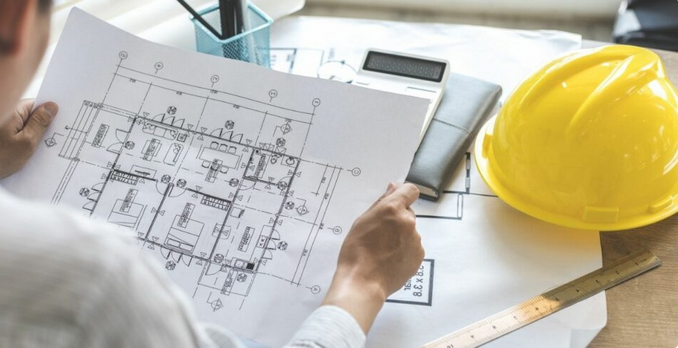
Whether it is a house sectional plan, a pool sectional plan or a construction site sectional plan, this document is a major element in urban planning procedures.
This representation is essential for the administration to verify the compliance of your sectional plan project. Therefore, it must be detailed, clear, and precise without neglecting any element.
If you are creating a sectional plan file for the first time, it is advisable to gather necessary information on the subject from the responsible authorities.
It should be noted that obtaining authorization largely depends on the degree of consistency between the urban planning code and your work. The first thing to do is to consult the Local Urban Plan to avoid any surprises.
If you want to know whether easements affecting your parcel exist, it is better to request a urban planning certificate.
| Step | Description | Practical tips |
|---|---|---|
| Project analysis | Carefully study the architectural and technical plans. Identify the necessary materials, dimensions, and shapes. | Note specific constraints such as angles, openings, or load-bearing elements. |
| Materials list | Make a precise inventory of the materials to be cut: wood, metal, panels, etc. | Sort materials by type and thickness to optimize cutting. |
| Accurate measurements | Measure all lengths, widths, and heights needed for each piece to be cut. | Double-check each measurement to avoid costly errors. |
| Draw the sectional plan | Draw a diagram indicating the exact location of cuts on each material. | Use color coding or numbers to differentiate pieces and sections. |
| Cut optimization | Group cuts to reduce material waste. | Prioritize standard lengths to limit unnecessary offcuts. |
| Final verification | Check that all necessary pieces are included and that measurements are consistent with the overall plan. | Involve a colleague or professional for a second opinion if possible. |
| Labeling pieces | Mark each piece with its code or number corresponding to the sectional plan. | Facilitates assembly and reduces the risk of errors on site. |
| Tool preparation | Select appropriate tools: circular saws, jigsaws, grinders, etc. | Ensure blades are sharp and machines are in good condition. |
In the section plan project, choose complete and relevant elements to convince the urban planning department. It must, for example, include the representation of the before and after terrain profile and work report. Do not forget to mention the existing constructions and those planned in your project.
The terrain profile such as the low wall or the natural terrain slope can also impact the section plan project. In this sense, consider integrating it by providing more details.
For the section plan execution to be successful, make sure to take good care of the presentation. The section plan scale must be clear and readable. The same goes for all annotations.
Establish a legend for the plan by distinctly indicating the colors, boundary lines, dimensions, lines, and of course the section plan scale.
Thanks to this well-detailed graphic representation, the administration will be able to easily understand your project on a construction site. In any case, you can call on an expert to draw the PCMI section plan if you are not able to do it yourself.
What are the key elements to include in a section plan?
No matter the content of the project, making a plan is always useful to avoid errors. Especially when it concerns a foundation, a section plan file is undoubtedly essential.
You must mention the dimensions of the natural terrain as well as those of the existing constructions. The section plan terrain construction must indicate the height of the building or construction in its initial future state. Note the presence of a single-family house as well as its annexes including a garden shed.
Also, mention the size of the building in proportion to the natural terrain. Likewise, sidewalks, the street, ditches, the road, and fences must be stated.
Besides that, the natural terrain slope is one of the key elements of the section plan file. It allows the urban planning officer to understand how the construction covers the ground in relation to the slope.
The section plan must be reported on the site plan to help them easily locate themselves in space.
Like the terrain slope, the roof slope should also be indicated in the section plan document. To do this, use the percentage, not degrees.
Similarly, add the land boundaries by noting the distance between the roads or public easements and your construction project.
To be clearer, do not forget the underground elements. But when the foundation has no impact on the crawl space or the pool basin, you can ignore them.
The PCMI section plan is not intended to show the interior spaces of a house. It only allows visualization of all elements crossed by the cutting line, for example walls and floors.
How to use drawing software to create a section plan?
- Choice of software: Whether you plan to develop a house section plan or a pool section plan, there are several drawing software options that can help you.
- Understanding terms: Between the section plan scale, terrain work profile, or section plan site plan, many terms may seem difficult to understand. Fortunately, these online tools greatly facilitate the tasks for you.
- Progressive handling: Of course, the first floor plan drawing remains a bit complicated. But the more you use the architecture software, the more you gradually master it.
- Drawing and modifications: It allows you to draw your plan in 2D or 3D. If the result does not satisfy you, it offers you the possibility to modify the drawing until it meets your expectations.
- Popular free software: Among the best-known online tools, Kozikaza appeals to many individuals as well as professionals. This software may seem easy to use. Its use does not require any subscription fees.
- Other software options: Besides that, you have the choice between Blender, SketchUp, ArchiFacile, MagicPlan, or Sweet Home 3D. They differ by their interface which is both modern and intuitive.
Is it necessary to have a floor plan checked by a professional before starting a project?
Site section plan or house section plan, creating this document is undeniably useful before starting a project. It is not only necessary from a regulatory point of view, but it also helps you observe the condition of the land before and after the work.
It should be remembered that constructions require a heavy investment. The floor plan creation helps avoid inaccuracies, discrepancies, and errors. Thanks to this illustration, you can define the budget more easily.
If you have doubts about the elements included in the floor plan file, do not hesitate to ask for help from a professional.
A project manager or an architect can give you good advice on the information provided in the document.
Due to their experience and in-depth technical knowledge, this construction specialist can closely study your floor plan.
They do not hesitate to make corrections if necessary. Thanks to their intervention, you have a strong chance of obtaining authorization from the urban planning department.
How to update an existing floor plan?
Whatever the floor plan scale used, it remains possible to make a modification to the drawing. This step generally depends on the type of modeling software.
But one thing is certain, the operation can seem like child’s play. You just have to follow the instructions and that’s it.
The main advantage with these online tools is that they offer automatic updates. After your correction on the illustration, the software does all the work.
How to verify the compliance of a floor plan with construction standards?
The house section plan is one of the useful documents in your building permit file or also in a prior work declaration file.
For small-scale projects, this document may be optional. But when the work modifies the floor area or the footprint of existing constructions, the urban planning agency requires the floor plan.
For a building permit application, it is mandatory just like a site plan and a location plan.
To review its compliance with construction standards, the administration refers to the content of the document. Then it proceeds to verify the authenticity of all the information mentioned.
The urban planning department hopes to obtain a cross-section plan file precise enough to identify the placement of the building in its initial future state, the natural terrain slope, surrounding constructions, underground elements, fences, roads, sidewalks, ditches, and many more.
FAQ: The cross-section plan in your preliminary declaration (DP3)
You have the option to use architectural software to make your house cross-section plan. Otherwise, you can entrust this task to a construction expert.
An architect has the ability to create a cross-section plan according to professional standards. Due to their specialized knowledge in the field, they will know how to include all the important elements that must be contained in this file.
Yes: for a preliminary declaration: you can absolutely make your own plans as long as the floor area remains below the mandatory thresholds requiring an architect.