Since July 2012, the as-built drawing has been a requirement, according to the Urban Planning Code. It is mandatory to present a document including georeferenced data of the networks for any type of work carried out.
The content of the as-built drawing is thus part of the field of construction sites and building. Just like the project plan or the section plan, it holds great importance.
If you want to learn about the different as-built drawing points, this article provides details. To begin with, it is important to offer you a clear and precise definition.
What is an as-built drawing?
Compared to a pool veranda or even a steel pergola, a construction project is subject to countless administrative procedures. The preparation of the as-built drawing is part of this.
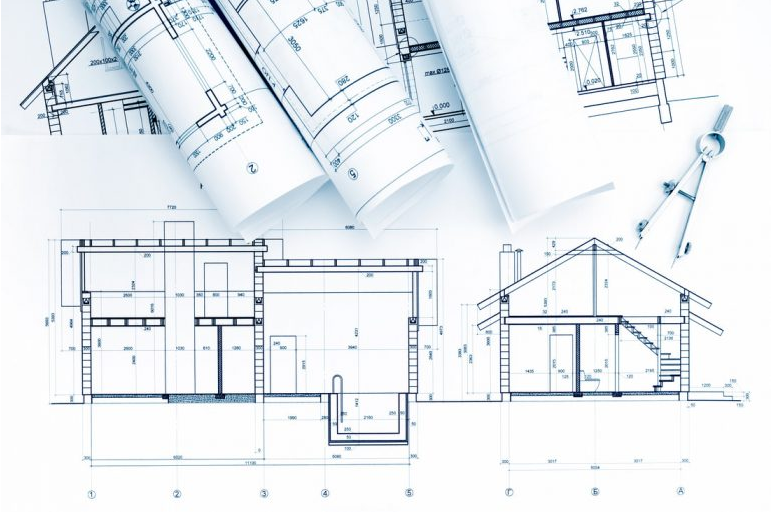
As its name suggests, it is primarily a plan, but one that shows the work completed at the end of a construction site. By this explanation, the network as-built drawing is the opposite of the project plan. The latter is used to present the planned work.
At the end of all the work, the as-built drawing assesses the structures present. It is included in the classification of necessary documents listed in the complete works file. It is the contractor who submits it to the project owner.
It must be produced in three versions. The first copy is sent to the administration while the second goes to the project owner. As for the third, it is used for archiving. It can be presented either on paper or in digital form.
The as-built drawing document is nothing other than a graphic model. It determines the location and nature of a structure at the end of the site. It also takes into account improvements made during the execution of the work.
Thus, the exact position and type of structures must be identified to examine the conformity between the work carried out and the project’s execution plan. It is therefore a record of the work sometimes resulting from a topographic survey.
What is the purpose of an as-built drawing?
- Actual position of structures: Also known as network as-built drawings, these plans specify the actual position of each element of a construction site as well as that of each structure.
- Adaptation to site constraints: It should be noted that these locations can vary during construction when the project is subject to the technical constraints of the site.
- Precise georeferenced data: That said, the document makes available all georeferenced data established according to precision class A. Thanks to this plan, the conformity of the work and that of the installed equipment are properly verified for their maintenance and use.
- Knowledge of completed work: Besides that, it guarantees a thorough knowledge of the category as well as the position of the work carried out on a construction site.
- Risk assessment: It is based on the as-built plan content that maintenance agents can evaluate potential accident risks as well as elements to improve.
- Locating underground networks: In the context of subdivision, the as-built work plan is of paramount importance. It allows you to know in detail the location of underground networks such as wastewater and electricity.
- Measurements and wiring: Even better, its objective is to provide you with more information about the measurements of pipelines and wiring, making maintenance and monitoring of networks easier.
- Inventory of installations: The as-built work plan helps you establish a list of the different types of existing installations. This detail is very often required by the road authority.
When should an as-built plan be carried out?
Before answering this question, it is appropriate to clarify the difference between inventory check and recollement. The latter is used to inspect objects during a seizure or inventory. The term therefore has nothing to do with our subject.
An as-built plan, on the other hand, is a mandatory file that comes into play when a construction work is completed. When developing a project, you do not have to worry about it. However, it is imperative to proceed with the construction as-built plan at the end of a site.
Thanks to this element, you can thoroughly check all the work carried out on the ground.
It also allows defining the location of structures and identifying underground networks.
That’s not all, it serves to know their general condition. In this way, you have the possibility to limit potential damage and anticipate accidents.
In case of danger, the network as-built plan indicates installation failures helping you adopt appropriate safety measures.
Who is responsible for preparing the as-built plan?
Whether to comply with standards or to avoid work stoppage, the construction network as-built plan can prove essential.
However, its realization should not be taken lightly, as it requires thorough expertise in architectural study and expertise.
That is why the as-built plan preparation is particularly reserved for a surveyor or an architectural design office. Likewise, professionals in topography, georeferencing, or cartography can establish it without problem.
For the construction of a new building, it is preferable to entrust it to an architect. They are among the specialists in the field of construction as-built work plans.
Whether you call on a surveyor, a design office, or an engineer, these experts often use innovative and high-quality equipment to successfully carry out their functions.
In general, they use topographic GPS, high-end theodolite, photogrammetry, and many others.
What information must appear on an as-built plan?
As-built work plan, as-built construction plan, as-built network plan, or as-built location plan, this document includes countless elements such as the diameter and type of pipeline.
It also indicates the location of solenoid valves, check valves, sprinklers, wiring, and more.
Furthermore, the plan shows the intermediate dimensions as well as the location of the electrical junctions. It specifies the exact position of the buried networks, facilitating their maintenance.
To put it simply, the as-built plan contains three types of information. First, there is information about the position of the structure, that is to say the profiles, the referencing, and the situation.
Next, the document indicates the composition of the structure including elevations, sections with dimensions, plans, and calculation notes.
The last element that is part of the as-built plan points concerns the operation and maintenance conditions of the networks.
How to create an as-built plan?
To achieve this, it is essential to use topographic equipment. They are the ideal tools for obtaining detailed surveys. The as-built plan is characterized by a geographic determination as well as a precision class of the surveys.
Besides that, you use topographic surveys for constructing the as-built plan. In this context, it is of precision class A. The surveys are then georeferenced, defining the positioning of the site.
| Step | Description | Tools / Required Documents | Objective |
|---|---|---|---|
| Site preparation | Identify the structures to be listed and define the areas to be surveyed. Inform the stakeholders of the need for as-built surveying. | Initial project plan, specifications | Delimit the elements to be included in the as-built plan |
| Field surveys | Carry out precise surveys of the completed structures, taking into account any modifications due to site constraints. | Topographic GPS, total station, survey notebook | Obtain exact georeferenced coordinates of the installations |
| Collection of technical data | Gather information on materials, dimensions, depths, and types of installed structures. | Technical sheets, site reports, photos | Document the characteristics of the networks and equipment |
| Plan creation | Integrate the data into CAD or GIS software to produce a plan compliant with precision class A. | AutoCAD software, QGIS, or equivalent | Create a readable, precise, and usable plan for maintenance |
| Verification and validation | Have the plan reviewed by technical managers and validate its conformity with the completed works. | Final plan, validation report | Ensure the reliability of the document for future use |
| Transmission to authorities | Send the plan to road services, local authorities, or project owners according to regulatory obligations. | As-built plan in PDF or paper format, technical file | Ensure traceability and regulatory compliance of the site |
That said, the as-built plan is associated with an alphanumeric scale. It also contains other indications such as the date of plan release, the status of the completed works, the contact details of the company responsible for executing the works, and the name of the establishment handling the delivery of the georeferenced survey.
During the creation of the as-built plan, it must comply with a scale of 1/500 or 1/1000. Large-scale works can also be considered.
On one hand, there are the foundations which ensure the load-bearing capacity of the building. On the other hand, the formwork sets up the construction materials until they dry. It should be noted that this generally consists of many wooden boards.
Except for that, we distinguish the reinforcement which is part of the as-built plan. It plays a crucial role as it ensures the stability and consolidation of constructions.
What are the standards and regulations to comply with when creating an as-built plan?
The creation of the as-built plan is mandatory at the end of construction sites. It is among the requirements of the Urban Planning Code.
The document aims to present all the work carried out. It allows the person in charge to inspect whether all the steps planned in the project plan have been completed. To do this, many as-built plan points that we have just mentioned above must be included in this file.
In a word, it provides a clear idea of the work done and their location. Beyond the construction plan domain, the as-built plan can also be involved in the context of urban development.
In France, it is subject to numerous obligations mentioned in the general administrative clauses booklet. To locate it, consider consulting Article L 462-2.
What is the average cost of an as-built plan?
It remains difficult to determine the exact price, as it depends on the professional in charge of the construction as-built plan work. In any case, it is essential to entrust this task to an expert to obtain more precise and detailed data.
In most cases, owners call on a surveyor. The latter charges on average from 50 to 100 euros per hour, regardless of the intervention.
If you plan to consult an architect, you must admit that their rates are often somewhat high. The creation of the as-built plan, like other house plans, costs between 1000 to 3000 euros.
What are the advantages for professionals and individuals of having an as-built plan?
Even if the as-built network plan is very useful for a construction project, it can also seem indispensable during renovation.
This file gives the owner the opportunity to identify the location of installations in a dwelling. It provides precise information on their general condition to ensure their maintenance and prevention.
During renovation work, the as-built plan helps professionals as well as the owner to know the location of buried networks. This helps to avoid potential damage.
Specialists also use it to verify the conformity of work and an installation. It is imperative to authenticate, for example, the quality of foundations, frameworks, or formwork.
Professional or owner, everyone will be informed of the condition of the dwelling to take appropriate measures.
To limit the costs of a site, establishing a plan is one of the essential steps. Thanks to the as-built plan content, you can avoid any damage that might occur during construction.
This file indeed provides a cartographic view of all present installations. This offers you a detailed field of action.
Contrary to popular belief, those responsible do not take long to validate an as-built plan. They are aware of the importance of the document for the continuation of the work.
It is necessary to mention that this type of plan is among the mandatory programs, according to the Urban Planning Code. To ensure your work complies with standards, its use is undeniably useful.