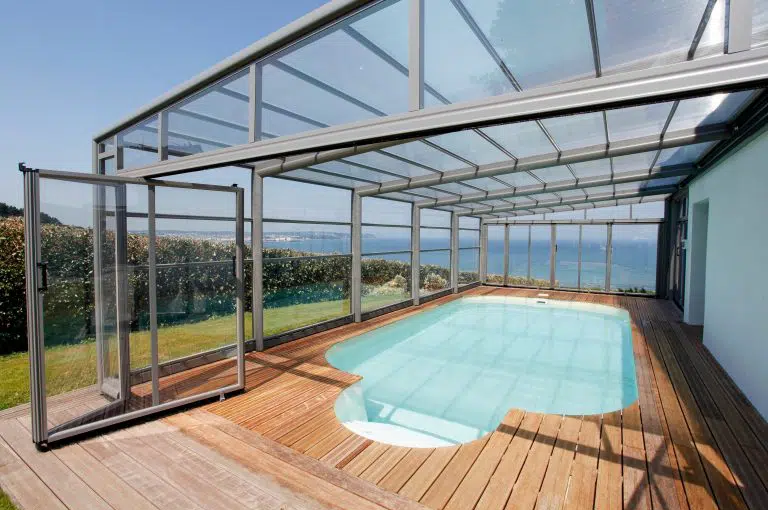
To increase the value of a property, it remains essential to give it a fresh touch. Creating a contemporary garden, installing a wooden mezzanine at home, or even building a pool veranda, there are many renovation ideas to consider.
This last project offers multiple advantages. It gives you the opportunity to enjoy your pool throughout the year, and in complete tranquility.
Since the work requires a significant budget, it is necessary to thoroughly inform yourself on the subject before starting. To help you see more clearly, this article provides essential information about the pool veranda.
📋 The essentials at a glance: Personally, I consider the pool veranda the ultimate luxury to enjoy swimming 365 days a year, regardless of the weather. Did you know that a glazed structure can increase the water temperature by 6°C to 10°C thanks to the natural greenhouse effect? I recommend investing heavily in efficient dehumidification to prevent this dream space from becoming an environment saturated with condensation.
What is a pool veranda?
As its name suggests, a pool veranda is an enclosed space with glazing used to completely cover a pool. Like a steel pergola, it is defined as a house extension, but it is attached to a wall of the home.
📍 My experience: In February 2026, I visited an installation where the owner had neglected the insulation of the aluminum profiles. Despite water heated to 28°C, the feeling of cold near the walls was icy due to the radiation from the glass. The lesson learned is that in a humid environment, the quality of reinforced insulation glazing is not optional: it is the only barrier against permanent fogging and huge heating bills.
Compared to a pool shelter, a pool veranda provides better thermal insulation. It can maintain a pleasant temperature both during the cold season and in fine weather.
🌟 Veranda Advantages
- True insulated living space
- Strong real estate value increase
- Thermal comfort summer/winter
🔻 Shelter Limitations
- Low sound insulation
- More industrial aesthetics
This structure must comply with a large ground footprint and a significant ceiling height to ensure swimmer comfort. As a general rule, its height must be at least 1 m 80. Administrative procedures depend on its total surface area.
🌍 Did you know?
A lockable pool veranda is an approved safety device (standard NF P90-309). It advantageously replaces an alarm or a safety cover while offering unparalleled ease of use.
Besides that, a pool veranda is both dehumidified and heated. With the use of various equipment, you can enjoy your pool all year round.
It should be noted that this comfort, however, requires a significant financial investment compared to a simple pool shelter. Since it is part of the dwelling, the pool veranda must be effectively secured. It comes in many different configurations. You are free to choose the one that best matches the style of your property.
What are the advantages of having a pool veranda?
Covering a pool with a veranda is an interesting alternative to a pool shelter. Thanks to this structure, you benefit from an additional living space where you can invite your friends for a drink and swim at any time.
This installation is popular for the comfort it provides not only to swimmers but also to people moving around the pool.
Since it is an enclosed space, it allows you to fully enjoy your pool in both summer and winter, regardless of weather conditions.
It is still possible to enlarge the area depending on the layout around the pool. Like an outdoor aquatic space, you can dress the pool perimeter with a terrace. Consider placing suitable furniture there to create a cozy corner.
Since the pool veranda is attached to the house, it offers you direct access from inside the home to the pool. You can indeed go swimming without having to go outside.
Even better, thanks to the walls and roof of the veranda, your pool is perfectly secured. It enjoys excellent brightness because the glazing lets in a maximum of natural light. Thanks to its elegant design, it enhances not only the property but also its exterior.
⚠️ Common mistake
The mistake is choosing standard indoor tiles around the pool. With the ambient humidity of the veranda, non-slip tiles (minimum class R11) turn into a dangerous skating rink. Never neglect floor grip in favor of aesthetics alone.
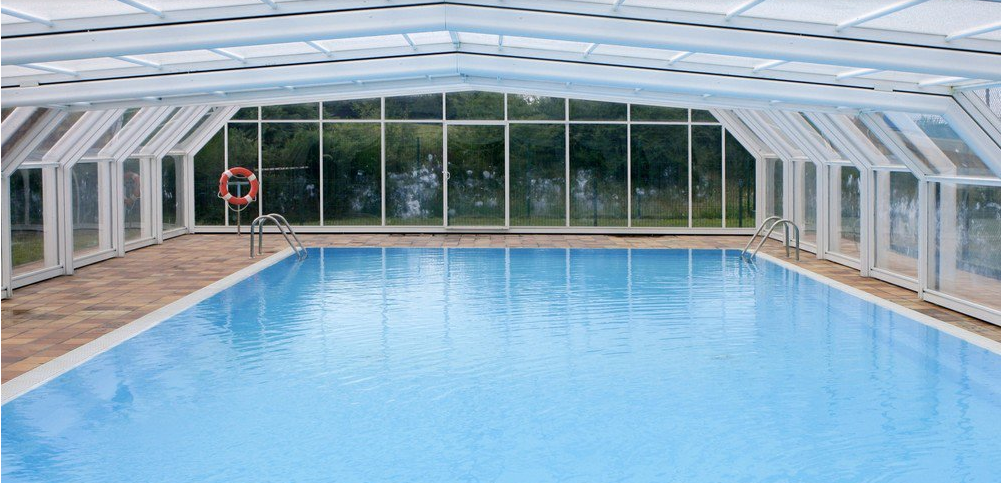
How to choose the material for your pool veranda?
How to choose materials suitable for my veranda pool? This question is very common before starting work. There are several finishing elements used for this design.
There are wooden pool verandas that differ by their insulating properties and aesthetics. Their price varies depending on the type of wood. Generally, they are expensive and require regular and complex maintenance.
Steel is also among the materials favored by many people. It gives your house a retro yet timeless touch.
This finish offers many possible configurations. Its drawback is its sensitivity to humidity. It requires a specific treatment to prevent rust and corrosion.
| Material | Advantages | Disadvantages | Recommended Style |
|---|---|---|---|
| Aluminum | Lightweight, corrosion-resistant, easy maintenance, modern design | Less insulating without thermal break | Contemporary, minimalist |
| Exotic wood | Warm aesthetic, rot-proof, durable | High cost, requires regular treatment | Natural, traditional |
| Composite wood | Moisture resistant, reduced maintenance, wood appearance | Less authentic than solid wood | Modern, ecological |
| PVC | Inexpensive, good thermal insulation | Less durable, limited aesthetics | Classic, economical |
| Wrought iron / Steel | Very strong, refined aesthetics | Prone to corrosion, heavy, requires maintenance | Vintage, industrial |
| Reconstituted stone | Non-slip, easy to maintain, safe around the pool | Less comfortable barefoot, can heat up in the sun | Mediterranean, natural |
| Glass | Maximum brightness, effect of openness to the outside | Thermal insulation needs monitoring, fragile without specific treatment | Design, high-end |
That said, glass verandas are trendy. Their glazed walls optimize the light in the interior space. Even better, they feature ultra-elegant modern lines.
Despite its unique charm, this construction has a high price. Due to the heaviness of the glass, it requires a sturdy base to support it.
Compared to these different types of pool verandas, nothing beats opting for an aluminum version. It offers high resistance to humidity, weather, and the test of time. That’s not all, aluminum is easy to maintain.
Whatever material is preferred, it must demonstrate great tolerance to humidity.
The latter is inevitable in a pool and in an enclosed space. So if you want to create a durable pool veranda, favor solid finishes.
How to integrate a pool veranda into the aesthetics of your home?
The first element to check is the size of the available surface that can accommodate a pool veranda. Note that there are standard dimensions to respect for the assembly of a veranda and a pool.
The latter implies an extension of the dwelling of approximately 15 m in length by 7 m in width. Either it is offset from the house like a greenhouse, or it is attached to it.
That said, it is essential to choose the best materials for this house extension. It must be made from elements resistant to humidity.
Also, these must harmonize with the exterior appearance of the building. Note that aluminum and PVC offer you many choices of colors and shapes to customize your pool veranda.
Is a building permit required for a pool veranda?
Installing a veranda is considered a house extension. It allows you to gain a few more square meters, providing you with new living space.
Before drawing up the plan for your pool veranda, it is crucial to determine its area, as this helps define the administrative formalities.
For more information, it is strongly recommended to visit the town hall. They will invite you to consult the Local Urban Plan. It defines the different rules applicable to the installation of the veranda over the pool.
It remains possible to install it without authorization if it measures a maximum of 5 m2. For a structure between 5 and 20 m2, you are invited to make a prior declaration of work with the municipal administration.
If its total surface area exceeds 20 m2 in a rural area, you are required to submit a building permit. In urban areas, this procedure is required for a veranda larger than 40 m2.
What type of glazing is recommended for a pool veranda?
This selection should not be made lightly, as the glazing determines the insulation performance and the aesthetics of the pool veranda.
If you opt for mineral glass glazing, it provides elegance to the structure, but its cost is high compared to other materials.
Plexiglass glazing also appeals to many people, as it brings more light inside. Its drawback is its limited lifespan.
Otherwise, choose polycarbonate glazing which offers an excellent quality-price ratio. This material is also distinguished by its high impact resistance. Besides being a good thermal insulator, it can filter the sun’s UV rays.
To enhance the insulation of the pool veranda, it is recommended to use double glazing.
The latter provides a consistently pleasant temperature even in winter. It allows maintaining optimal swimming comfort while saving heating energy.
How to ensure good ventilation in your pool veranda?
Unlike other pool shelters, the veranda requires a very high level of humidity insulation. It should be noted that humidity problems accelerate the degradation of the structure.
Worse still, they sometimes emit unpleasant odors making the atmosphere unbreathable.
To resolve this situation, it is essential to install good ventilation in the pool veranda. Although this may increase the installation cost, the work is necessary to guarantee the comfort of the room’s use.
The humidity level in a pool veranda should not exceed 65 %. It is advisable to use an effective dehumidification system. Also, make sure to ventilate the room well by increasing the number of openings.
What are the layout options for a pool veranda?
- Harmonized flooring: The floor covering should harmonize with the existing decor, namely the style of the house and veranda, sun loungers, garden furniture, and more. For a contemporary-style veranda, wooden planks are an interesting option.
- Non-slip material: In addition, you have the option to use the same flooring as that initially surrounding the pool. Reconstituted stone is among the highly favored materials.
- Safety and maintenance: It is not only non-slip but also easy to maintain. Moreover, it enhances the safety of the pool.
- Rot-resistant wood: Since it is a covered space, a rot-resistant exotic wood such as bankirai, almendrilla, or composite wood is a better option.
- Relaxation furniture: So that you can fully enjoy the place, consider equipping it with furniture. Do not hesitate to build a mini lounge with two sofas and a coffee table in the middle. Alternatively, create a small garden bar.
- Appropriate lighting: Decorate the room with good lighting. This also helps you use it comfortably both at night and during the day. However, be sure to comply with safety standards regarding lighting around a pool.
How to maintain your pool veranda?
Compared to an outdoor pool, the maintenance of a pool under a veranda is greatly simplified. There is no risk of dust, leaves, and other debris falling into the water.
On the other hand, the windows must be washed repeatedly. Ideally, this should be done once a month. To do this, clean the glass and structure with soapy water and non-abrasive sponges.
It is preferable to maintain the polycarbonate panels with a neutral pH detergent. As soon as dirt appears, it is advisable to remove it immediately with a clean, damp cloth.
For a steel pool veranda, it requires annual maintenance with an anti-rust treatment. Take the opportunity to check the operation of the dehumidifier, heating system, and air conditioning. Their maintenance is also performed once a year.
What is the average cost of a pool veranda?
The average price of a pool veranda varies according to many factors including its size, width and height, integrated options, the quality of the glazing, and construction materials. A PVC structure is less expensive than one made of glass or aluminum.
It must be admitted that the price range seems quite broad. To create a pool beneath a veranda, it is wise to budget between 25,000 to 50,000 euros.
This design can be costly when you plan to use accessories that enhance the comfort of bathers such as the air dehumidifier, quality ventilation and heating system, triple or double thickness glazing, and treatment of profiles against humidity.
Frequently Asked Questions
A pool veranda allows you to enjoy swimming all year round, regardless of weather conditions. It protects the pool from external impurities such as leaves, dust, or insects, thus reducing maintenance needs. In addition to improving thermal comfort, it can also enhance the home’s aesthetics and increase its real estate value. Finally, it offers an additional relaxation space, adaptable according to desires: living room, winter garden, or spa corner.
The choice of material depends on the desired style, budget, and expected performance. Aluminum is highly valued for its lightness, resistance to humidity, and modern design. Exotic wood, although more expensive, adds a warm and natural touch while being rot-proof. PVC is an economical option with good insulation but less durable. For the floor, non-slip materials such as reconstituted stone or composite wood are recommended to ensure safety and ease of maintenance.
Yes, appropriate ventilation is essential to avoid problems with humidity, condensation, and mold. The constant evaporation of the pool water can saturate the ambient air, which affects comfort and the durability of materials. Good air circulation, through openings, grilles, or a mechanical ventilation system, helps maintain a healthy climate. It is also recommended to install a dehumidifier to regulate humidity levels, especially if the veranda is completely enclosed.