
Is your interior lacking vitality in front of a vine that refuses to thrive or, on the contrary, becomes invasive? Adopting a ceriman plant requires much more than admiration for its cut leaves, as this tropical marvel hides growth secrets and formidable toxicity. This guide reveals how to tame the Monstera deliciosa, from mastering aerial roots to safely tasting its fruit with pineapple flavors. You will discover precise rituals to transform your living room into a lush jungle while avoiding the traps of irritating oxalate crystals.
- The enigma of the ceriman plant: between ornamental vine and exotic delight
- Safety and flavors: the art of consuming the Monstera fruit
- Taming the growth of Monstera deliciosa indoors
- From flower to cutting: sustaining your ceriman collection
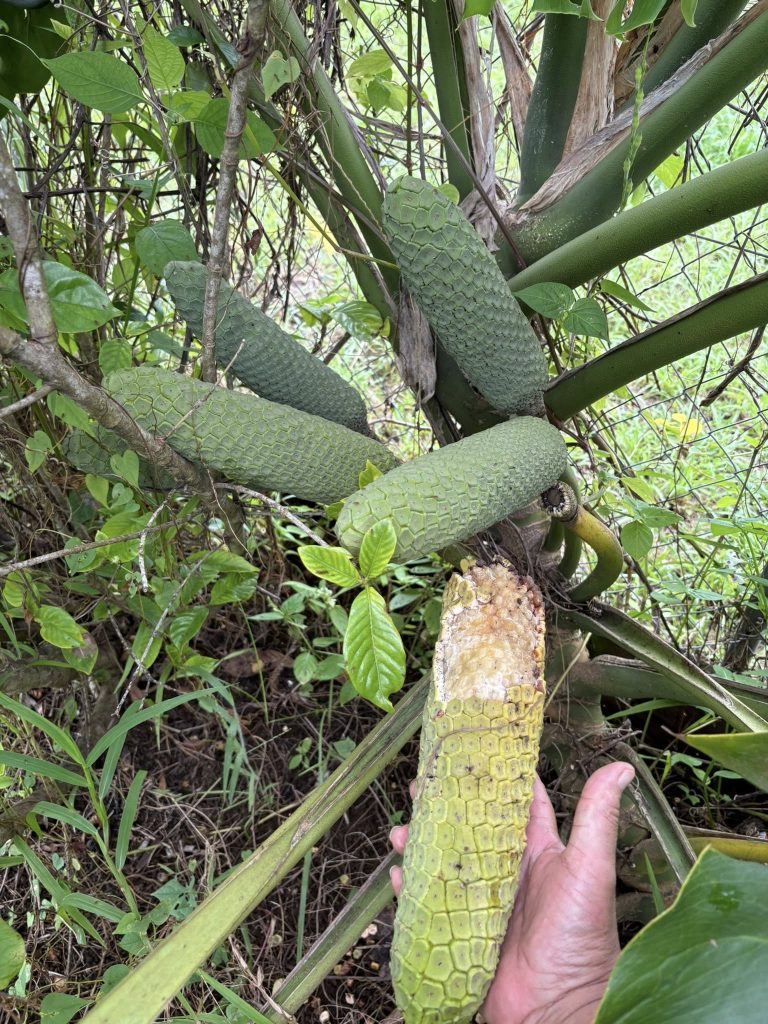
📍 My experience: I waited three years before seeing my first ceriman flower appear in my veranda. The first time I tasted the fruit, I almost made the mistake of consuming it too early, which would have caused intense mouth burns. The lesson learned is that the plant dictates its own pace: the fruit is ready only when the scales fall off by themselves, revealing flesh with the aroma of banana and pineapple.
The enigma of the ceriman plant: between ornamental vine and exotic delight
After admiring its foliage at the garden center, one often ignores that this vine hides a complex culinary secret and a precise botanical identity.
Distinguishing Monstera deliciosa from its edible fruit
The term ceriman refers to the tasty fruit of the ceriman plant, while Monstera deliciosa names the botanical species. One qualifies the harvest, the other the plant.
🌍 Did you know?
The name “Monstera deliciosa” comes from the monstrous size the plant can reach in the Mexican jungle and the “delicious” flavor of its fruit, often compared to a mix of strawberry and pineapple.
This vigorous vine roots between Mexico and Panama. It thrives in the humid shade of dense, warm tropical forests.
Its flowering occurs around three years. A rigid spadix then emerges, protected by an elegant creamy white spathe before fruiting.
Understanding the defense mechanism of oxalate raphides
The plant synthesizes calcium oxalate crystals called raphides. These microscopic needles pierce cells during a bite. It is a formidable defense mechanism.
The irritating effect on mucous membranes is immediate. Biting into immature tissue triggers intense burning, preventing prolonged ingestion by the greedy.
This chemical shield serves a clear biological role. It effectively protects the foliage and fruits against herbivores in its habitat.
Identifying the characteristic fenestrations of adult foliage
The foliage undergoes a spectacular metamorphosis. Young shoots are full and heart-shaped before developing perforations and deep lobes.
Exposure to indirect light dictates this transformation. Sufficient brightness stimulates the appearance of the oblong holes so characteristic of the species.
Indoors, the dimensions become impressive. The leaf blades reach nearly one meter under optimal tropical growing conditions.
Safety and flavors: the art of consuming the Monstera fruit
While the plant impresses with its stature, its fruit demands infinite patience and constant vigilance before it can be tasted.
Recognizing signs of maturity to avoid poisoning
The eye watches for the change in the green scales. When they fall off on their own, a white and creamy pulp finally reveals itself.
The sense of smell confirms this metamorphosis with a powerful fragrance. This banana and pineapple scent guarantees the disappearance of the irritating crystals.
Patience is required because the process remains slow. The fruit ripens in stages from the base to the tip.
⚠️ Warning
The classic trap is letting your pets chew on the leaves. All green parts of the plant are toxic to dogs and cats due to oxalate crystals, causing excessive salivation and swelling.
- Wait for the natural fall of the scales.
- Harvest the pulp from the base to the tip.
- Check the smell of fruit salad.
- Test a small amount to verify the absence of tingling.
Safe tasting protocol and recipe ideas
The harvest of the ceriman plant stretches over several days. Only the segments whose scales fall off on their own are consumed to avoid oral burns.
In cooking, the pulp excels in creamy sorbet. It pairs wonderfully with acidic fruits or coconut milk.
Heat acts as a final protective barrier. Light cooking helps to eliminate the last oxalate crystals.
Vital precautions for children and pets
Vigilance is required regarding the risks to our companions. Ingestion causes throat swelling in cats and excessive salivation in dogs.
In case of an accident, rinse the mouth with clear water. Contact a veterinarian or a specialized poison control center without delay.
The toxicity of immature Monstera deliciosa is a serious chemical reality that requires constant supervision of young children.
Taming the growth of Monstera deliciosa in your living room
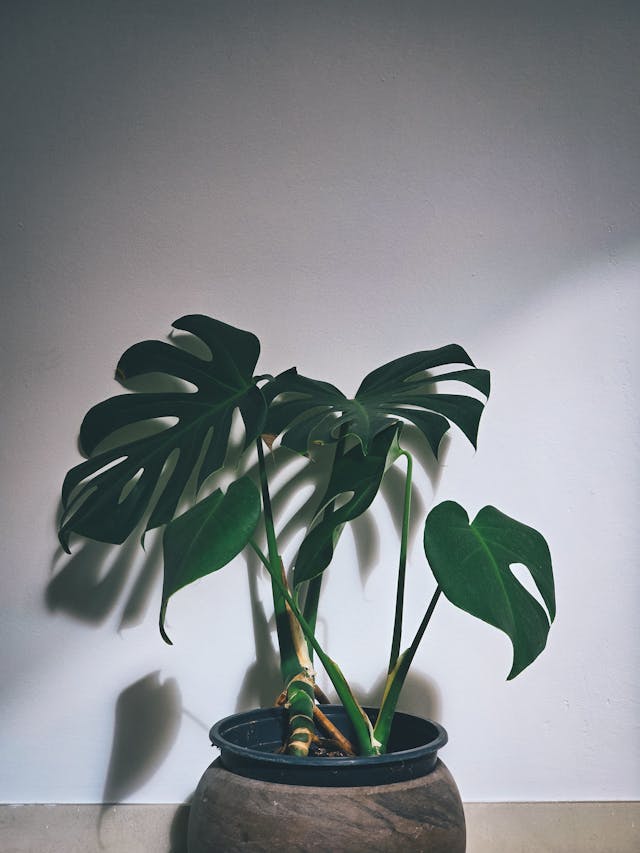
Once the risks are identified, it remains to provide this green giant with the necessary care for it to thrive without taking over your entire space.
Mastering watering and humidity in heated rooms
Adjust water supply according to the season. Let the soil dry out by two centimeters before watering. Excess water causes root rot.
Manage humidity in winter. Use a tray of wet clay pellets under the pot. A humidifier also helps prevent browning.
- Regular leaf cleaning
- Misting with non-calcareous water
- Keeping away from radiators
🔧 Tip
Clean the leaves with a damp sponge and a little beer or diluted milk every 15 days. This unclogs the plant’s pores and restores its exceptional natural shine.
To succeed in your planting, I suggest you consult our guide on the house of nature which provides useful insights on ecology. If you grow outdoors, the article on planting distance offers interesting information. Finally, for landscaping your green spaces, discover the advantages of polymer sand for your paths.
Enhancing aerial roots with appropriate staking
Aerial roots capture ambient moisture and stabilize the plant. This is a legacy of its epiphytic lifestyle. They are vital for its balance.
Install a coconut fiber stake. This support allows the plant to climb vertically. The roots naturally cling to it over time.
Never cut these roots. Instead, direct them towards the potting soil to feed the plant.
Repotting frequency and natural pest control
Spot the signs of the need for repotting. Roots come out through the drainage holes. Growth slows down despite regular fertilizer applications.
Identify common pests. Mealybugs and red spider mites love dry air. Carefully monitor the underside of large leaves.
Use black soap. This diluted solution effectively cleans infested areas.
| Action | Advantages | Disadvantages |
|---|---|---|
| Staking | Saves floor space | Sometimes complex installation |
| Misting | Vibrant foliage | Risk of limescale if water is hard |
From flower to cutting: perpetuating your ceriman collection
🍀 Good points
- Unique tropical aesthetic
- Air-purifying and robust
- Delicious exotic fruit
🔻 Limitations
- Takes up a lot of space
- Leaf toxicity
For enthusiasts, the ultimate challenge is to multiply the plant or to achieve this mythical flowering outside of its native climate.
Create the ideal environment to trigger fruiting
The ceriman requires a constant warmth of twenty degrees. Its growth demands bright light but without direct sunlight.
Fruiting remains an exceptional event in an apartment. Air volumes are often too limited for the plant.
Be patient with your specimen. The plant must be at least three years old before producing its first flower.
Practical guide to cuttings to multiply your plants
Make a clean cut below a stem node. Check for the presence of an aerial root start on the taken segment.
Place the cutting in a vase of clear water. Change the water weekly until vigorous white roots appear.
The time for repotting has come. Use a very well-draining mix to avoid rotting of young rootlets in the pot.
Visual diagnosis of common cultivation errors
Yellowing often indicates overwatering. The absence of holes indicates a clear lack of light for the ceriman plant. Observe every suspicious color change carefully to correct the placement.
In pots, nutrients are quickly depleted. The plant remains smaller than its wild relatives due to constrained root volume.
| Criterion | Pot Cultivation | Tropical Ground |
|---|---|---|
| Maximum size | 2 to 3 meters | Over 20 meters |
| Maintenance | Regular | Autonomous |
| Fruiting | Exceptional | Annual |
| Mobility | Mobile | Fixed |
Taming this majestic Monstera deliciosa requires patience, between staking the aerial roots and vigilance against irritating raphides. Quickly provide it with filtered light to admire its future sculptural fenestrations. Your interior will soon transform into a lush jungle, promising a daily and lasting exotic escape.
FAQ
What exactly distinguishes the ceriman plant from the famous Monstera deliciosa?
It is fascinating to note that these two names actually refer to the same botanical entity, but from different perspectives. The term ceriman is traditionally used to evoke the exotic fruit and its exquisite flavor, while Monstera deliciosa is the scientific name of this majestic vine native to the tropical forests of Central America.
While the plant is an ornamental marvel with its cut leaves, the ceriman represents the culmination of a rare flowering, transforming into a fleshy spike whose taste evokes a heavenly blend of banana and pineapple.
Is the ceriman fruit safely edible?
Tasting this fruit is an experience that requires gourmet patience and scientific caution. The ceriman is delicious, but only when it reaches perfect maturity, indicated by the natural detachment of its green hexagonal scales. Consumed immature, it releases calcium oxalate raphides, microscopic needles that cause intense burning in the mouth.
To safely enjoy its white and creamy pulp, you must wait until the strong fruit salad aroma spreads. In case of doubt, cooking or prolonged fermentation can neutralize these irritating crystals and allow you to peacefully enjoy its tropical flavors.
Why don’t the leaves of my ceriman have holes?
This phenomenon, called fenestration by botanists, is a sign of the plant’s maturity and flourishing. Young leaves are born whole and heart-shaped; it is only over time and, especially, thanks to bright but indirect light, that oblong perforations appear. If your plant remains stubbornly whole, it probably needs a spot closer to a light source.
How to successfully propagate this tropical vine?
Multiplying this plant icon is child’s play for those who know how to observe its stems. The most effective method is to cut a stem segment just below a node, ensuring it carries at least one aerial root. Then plunge this cutting into a vase of clear water, changing the liquid weekly, until vigorous white roots appear.
Once the roots reach a few centimeters, you can transfer your young plant into very well-draining soil. Maintain constant humidity during the first weeks to support this transition and soon see a promising new leaf emerge.
What are the risks for my pets?
Caution is advised, as the beauty of the Monstera hides a real toxicity for our four-legged companions. Ingesting the leaves or the green fruit causes excessive salivation and painful swelling of the mucous membranes in dogs and cats. It is essential to keep this vine out of reach or closely monitor your pets to prevent any contact with the irritating oxalate crystals.