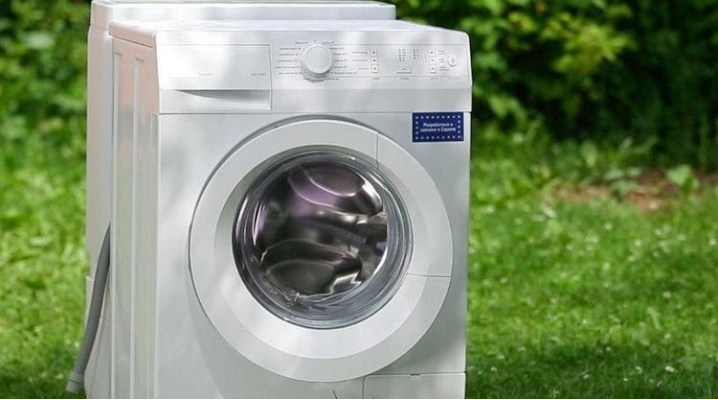
When dirty laundry piles up, you have to proceed with washing it. Fortunately, the washing machine greatly simplifies life.
Just like the freezer, the pressure washer, the stand mixer, or the cordless drill, this appliance can prove very useful on a daily basis.
However, when you are in a village that is not supplied with running water, manual cleaning may seem inevitable. Besides the loss of time and energy, this operation also damages the superficial layers of the skin.
To address these problems, it is recommended to use a washing machine without water. If you want to learn more about this device, discover, through this article, all the important information to consider about it.
How does a washing machine without direct water supply work?
When we talk about washing machine connection, we hear many technical terms such as the self-piercing tap, the laundry supply hose, the water supply tap, or the solenoid valve water hose filter.
Specialists are inventive and have brought to market a washing machine without water, or more precisely without a water inlet.
Like traditional washing machines, it has a washing cycle that is generally divided into two stages: washing proper and rinsing.
Contrary to popular belief, its cleaning quality is close to that of a standard washing machine. Its performance depends on the model it belongs to.
For it to perform its roles, you must manually fill the water tank with a sufficient quantity before each wash. After adding detergent, start the washing cycle by pressing the button or the pedal, depending on the model.
Once this step is finished, you then need to add more water for rinsing. After draining, clean the detergent compartment.
Washing machine without water supply: possible alternatives
Some homes, such as studios, chalets, or temporary accommodations, do not have a traditional water supply. However, it is entirely possible to wash your laundry thanks to alternative solutions, adapted according to space and budget. Here are the main options available:
- The washing machine with integrated reservoir: equipped with a manually refillable water tank, it operates without a tap.
- The portable mini machine: compact and lightweight, ideal for small spaces or when traveling.
- The manual washing machine: ecological, without electricity, it works by mechanical action.
- Connection on sink or washbasin: thanks to a specific kit, your classic appliance can be used.
- Advanced autonomous machines: modern models combining large reservoirs, low water consumption, and washing performance.
Is it possible to convert a standard washing machine to operate without a water supply?
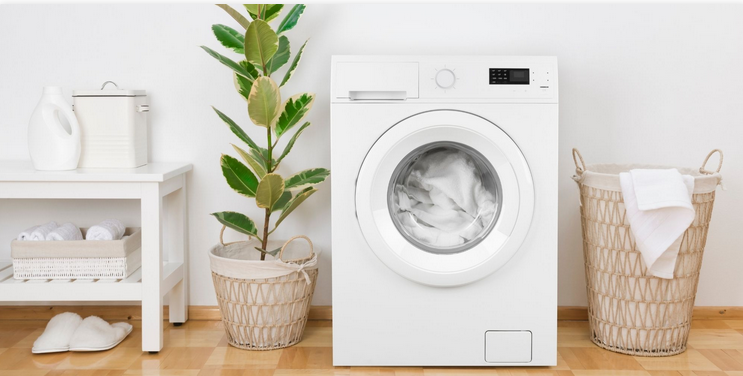
To be able to use it properly, there is nothing better than using a device in the state it was designed for.
If you plan to benefit from a washing machine installation without a water supply, choose a device that is specially made for this purpose. It is capable of operating without a direct water inlet.
As technology advances, it is not necessarily required to have a centralized water supply to equip yourself with a washing machine laundry.
Of course, the latter requires a water reservoir and you are required to fill it manually. But compared to traditional washing machine models, it allows you to save water.
Comparative table of washing machines without water supply
Each solution offers different advantages depending on whether you are looking for a practical, economical, or ecological option. The table below helps to compare the alternatives:
| Solution | Advantages | Disadvantages | Ideal use |
|---|---|---|---|
| Washing machine with reservoir | Easy to install, effective washing | Smaller capacity than a traditional machine | Studios or small apartments |
| Portable mini machine | Very compact, affordable price | Limited volume, sometimes semi-automatic | Camping, travel, small housing |
| Manual machine (without electricity) | Ecological, low water consumption | Physical effort, small capacity | Students, ecological lifestyle |
| Sink connection kit | Low cost, suitable for a traditional machine | Less practical daily use | Apartments without water supply |
| High-end autonomous machine | Close to a normal washing machine, large capacity | Higher price, bulky | Families seeking autonomy |
How to install a washing machine without water supply?
Washing machine installation without water is not necessarily intended for professionals. A weekend handyman can do it, of course with some technical knowledge.
Just like installing a heat pump, it is important to have the necessary tools and equipment.
Among the most used, you will need a screwdriver, a knife, bolts, a caster wheel, sealing tape, clamps, nuts, and many others.
The washing machine connection sometimes also requires a centrifugal pump or electric pump, a laundry supply hose or water hose with filter solenoid valve of appropriate diameter, a water supply tap or self-piercing tap, crimp fittings, and more.
To start the washing machine installation without water, be sure to define its location well. Whether you place it in the basement, bathroom, laundry room, or even kitchen, make sure it remains functional, no matter where you put it.
That said, proceed to assemble the water reservoir, ideally near the washing machine laundry. Remember that this tank must have a capacity of at least 50 liters.
Make sure the top opens easily. Consider installing it on legs 50 cm high from the floor.
Now make a hole at the bottom of the water reservoir. Ensure its diameter matches that of the laundry supply hose. The latter serves to facilitate the arrival of water. To ease the connection between the washing machine water hose and the hole, use an appropriate adapter.
To compress the water supply, use a medium power electric pump. Then proceed to connect it to the hose.
After adjusting the valve flow, fill the water tank. Once done, connect the pump to the electrical network. Your washing machine can finally operate without a water supply.
What are the advantages of using a washing machine without a water supply?
Contrary to what most people think, a washing machine without water is extremely efficient. It manages to make your dirty laundry ultra clean.
Some people claim that its performance does not surpass that of traditional models. However, the results prove otherwise. This device is capable of scrubbing and rinsing your laundry perfectly, regardless of its quantity, nature, or condition.
If you live in the countryside, there is generally not enough water supply. Thanks to this type of washing machine water connection, you can always have clean laundry, whatever the condition.
The device does not require a professional water supply system to operate. You just need to choose a high-quality model and you’re all set.
Even though it requires manual filling of the water tank, its use is very easy. Some models also require draining the water between cleaning cycles, but know that this operation is both easy and quick.
There are also categories of gas washing machines on the market. This technology does not need a washing machine water tap supply to function.
It compresses then cools carbon dioxide. In liquid form, this gas dissolves dirt and stains. This device thus saves you up to 90 liters of water per cleaning cycle. Ecological, it also requires no detergent use at each wash, thanks to the CO2.
How does a washing machine without a water supply manage the rinse cycle?
Generally, the wash cycle of a washing machine without water resembles that of standard washing machines. Their difference is that it can operate even without a water supply.
After installation, place the dirty laundry in the drum while respecting the weight conditions required by the washing machine. After adding detergent, close its door which sometimes locks automatically.
Through the water pipe solenoid valve filter, the device gradually fills up. Once the level is reached, a pressure switch immediately commands the stop of the water loading washing machine.
After the laundry is agitated comes the evacuation of washing machine wastewater. Then water must be added for rinsing.
This allows the removal of remaining dirty substances and all detergent residues. Spinning is the final step that facilitates drying of the clothes.
Are there capacity limits for a washing machine without a water supply compared to traditional machines?
In terms of volume, it must be admitted that a washing machine without a water supply has a smaller capacity compared to standard models. Its tank can usually hold 50 liters of water.
On the other hand, washing machines with a running water supply system can hold a large amount of water. In terms of capacity, they can accommodate from 5 kg up to 18 kg of dry clothes in their drum.
Whether you choose a washing machine without water or with a water supply, it is important to clearly define your needs. The capacity of the device depends on your washing frequency per week and especially on the number of people in your household.
If you are single, a 5 kg model may suffice. However, a couple with children needs a large capacity item. Otherwise, the washing machine is unable to meet their expectations.
How does the cleaning efficiency of a machine without a water supply compare to that of traditional models?
Even though the first model washes your clothes without running water, it shows remarkable efficiency.
As mentioned above, classic models surpass it due to their capacity. But in terms of power, it should not be underestimated.
It should be noted that waterless washing machines are among the latest washing machine models. Manufacturers use technologies developed during their design. This innovation optimizes their performance.
That’s not all; this device is generally practical to use. Its handling is suitable for everyone. Likewise, it usually does not require specific maintenance. Nevertheless, its durability can be undeniable.
How to maintain and clean a washing machine that has no water supply?
Although a waterless washing machine has a robust design, avoid neglecting its regular maintenance. This operation guarantees its durability.
Remember that it is supposed to receive dirty clothes. These usually smell bad. When bacteria are not definitively eliminated in the drum, they clog and stink up the entire washing machine.
To avoid this, it is necessary to clean it at repeated intervals. Make sure to take care of every component of the device, including the drum, the electrovalve filter water hose machine, the seals, the washing machine drain hose, and much more.
Also, clean the detergent drawer containing detergent residues. Do not forget that this part is constantly exposed to moisture. It is therefore normal for mold to form and for it to also smell bad.
To carry out the maintenance of your washing machine, consider disassembling it and removing all removable parts. You can use cleaning products, but also natural solutions like tea tree essential oil and white vinegar.
Once done, put all components back in place once they are thoroughly dry. It remains necessary to regularly check the cleanliness of the waterless washing machine. After each wash cycle, leave it slightly open to air dry.
Does a washing machine without a water supply consume less energy or is it more energy-efficient?
Indeed, this category of innovative washing machines benefits from cutting-edge technologies that allow it to save energy. Almost all models have interesting options that prevent spending more water and electricity.
Like any household appliance, the performance and consumption of the device mainly depend on the model. The better the quality, the more satisfactory its water and energy consumption.
If you want to reduce your monthly bills, there is nothing better than choosing a high-quality waterless washing machine. It promises not only power or solidity but also durability combined with energy savings.
How to manually fill a washing machine without a water supply?
Unlike a washing machine filled with water, a washing machine without a water supply requires manually filling the water reservoir. This operation does not require any specific technique or particular methods.
You just have to fill the tank with a regular bucket and make sure to respect the volume of the model to avoid overflow.
To simplify the washing machine water supply, it is important to place the water tank above the washing machine level. The water can then flow out by gravity.
It may also be that the washing machine is installed near a water supply. Even if the water inlet system is not functional, you can use a self-piercing tap.
By placing it on the laundry supply pipe, it allows piercing it itself, simplifying the filling of the washing machine.
Washing machine without water drainage
Faced with fierce competition in the market, manufacturers do not lack creativity and ingenuity to stand out from other brands. That is why they continuously offer washing machines equipped with innovative technology.
While the washing machine is generally equipped with a drainage hose or an installation ensuring the passage of wastewater, there are currently models without water drainage.
Fortunately, every problem has suitable solutions. You have the possibility to create a washing machine drainage.
For this, use a hole saw to make a hole in an existing drain, for example that of a sink. Then insert a glue-on sleeve, a vertical pipe, and a siphon. Finally, connect the new drainage to an existing pipe.
To carry out all these operations, it is important to have some plumbing knowledge. Also, do not hesitate to use all your DIY tools. They are a valuable help, allowing you to work quickly and efficiently.
No, on the contrary. Manual and portable models often consume much less water and electricity than a traditional machine, but they have a reduced washing capacity.
Yes. Some kits allow you to temporarily connect a standard machine to a sink faucet, provided there is a drain for wastewater.
The washing machine with an integrated reservoir is generally the best compromise: it avoids the constraints of a water supply and offers a user comfort similar to that of a traditional machine.