To ensure comfort in the home, many questions come to mind. How to treat humidity in the house? How to replace your electric water heater? Or, how to proceed with heat pump installation?
This last topic deserves detailed explanations since this heating system is very popular among countless households.
Whether it is the water heat pump or air heat pump, the equipment offers several significant advantages. The installation work must be carried out according to best practices to ensure the proper heat pump operation.
How does the installation of a heat pump take place?
Before answering this question, it is important to define what is meant by heat pump system. Whether it is an air heat pump or water heat pump, the device is designed to help you save energy.
This heating equipment creates a thermal transfer to produce heat or cold in the house. It provides renewable, free, and clean energy in the home.
Its principle consists of collecting external heat from water, the ground, or air. Then, it transforms it into a higher temperature to be able to heat the dwelling.
To ensure the heat pump operation, it must be equipped with several components such as a pump installed inside or outside the house, sensors, and a heat distribution device.
Heat pump installation is often carried out by professionals. The work requires in-depth technical knowledge.
Whether it concerns the aerothermal heat pump or the geothermal heat pump, the installation is done under certain conditions. A specialist will know how to master them to offer you neat and flawless work.
To guarantee, for example, the performance of the heat pump PAC, the heating engineer studies the insulation level of the house.
This heating equipment promises high efficiency only if it is associated with a well-insulated home. If this is not the case, it is advisable to start the work by reviewing the insulation of the dwelling. The assembly of the heat pump unit will come next.
By the way, we invite you to consult our article titled: What aids are available to insulate your home?
What are the steps during the installation of a heat pump?
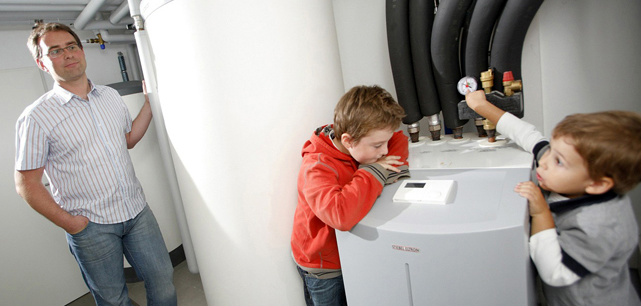
- Complexity of the subject: If you wonder how to cut tiles or how to plane a board with an electric planer, information on these topics can be easily found. But when it comes to the process of heat pump installation, one must admit that the subject is difficult to handle.
- Preliminary thermal study: To help you better understand, let’s summarize in the following passage the steps for installing an air heat pump or water heat pump. When you call on a competent craftsman, he always starts by calculating the thermal losses in the house.
- Needs analysis: With many questions, he tries to determine your needs for sanitary hot water heating, air conditioning, and many others. This preliminary study allows him to define the type of heat pump with its most suitable performance coefficient. This must guarantee you optimal thermal comfort.
- Component placement: If an aerothermal heat pump or air heat pump meets your expectations, he can start the installation with the placement of its various components.
- Unit assembly: The heating engineer first assembles the outdoor heat pump unit and then the indoor unit. Once done, he installs the heat emitters, the sanitary hot water tank, and the refrigerant fluid.
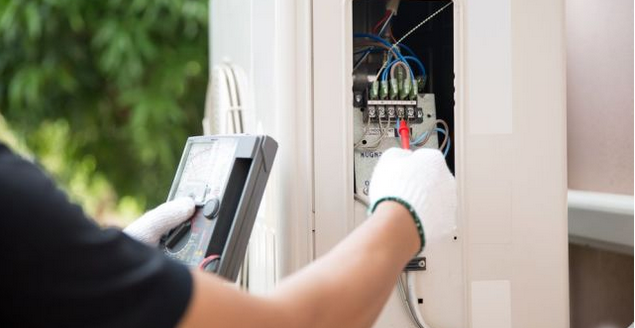
- Connection and regulation: After the electrical connection, the next phase consists of installing the regulation sensors. The installation work ends with the commissioning of the air heat pump.
- Case of geothermal energy: For the geothermal heat pump, its installation somewhat resembles that of the air heat pump or aerothermal heat pump. Nevertheless, some differences are noted in the installation of sensors in the wells or underground. The same applies to the assembly of the indoor heat pump unit and the heat emitters.
Heat pump installation: price, aids, and timelines
Let’s start with the heat pump price installation, this heating device is expensive to purchase. Air heat pump PAC or water PAC, its purchase requires a significant investment.
Its cost rises depending on the quality of its finish, its performance coefficient, and the integrated technologies.
However, heat pumps become very profitable after a few years. They help you save energy sustainably. Unlike the electric boiler, this device is inexpensive to buy but costly in energy.
As for the price of the heat pump installation, it is calculated based on the model. Discover below a table summarizing the budget to plan for:
| Type of heat pump | Average installation price | Price range |
| Ground-to-ground, water-to-water, ground-to-water | €1,500 to €6,500 | €2,500 to €25,000 |
| Air-to-water, air-to-air | €700 to €4,000 | €600 to €30,000 |
Even if the heat pump PAC installation work involves large expenses, many financial aids are available.
It should be noted that the installation of water heat pumps as well as air heat pumps is among the government’s energy renovation projects. In this perspective, more and more French households choose to equip themselves while benefiting from financing.
Two main types of subsidies can cover up to 90% of the estimate. These are the Energy Savings Certificates or CEE and MaPrimeRénov’.
The latter replaces the Tax Credit. These bonuses can be combined, and their amount varies depending on several parameters such as income, type of heat pump, location, and many others.
As for the heat pump installation timeframe, it generally depends on the type of heat pump as well as the characteristics of the home.
For a new house, a team of qualified technicians can install the outdoor and indoor heat pump units in at least two days. A week should be planned for the complete installation of the various components.
What are the advantages and disadvantages of the heat pump?
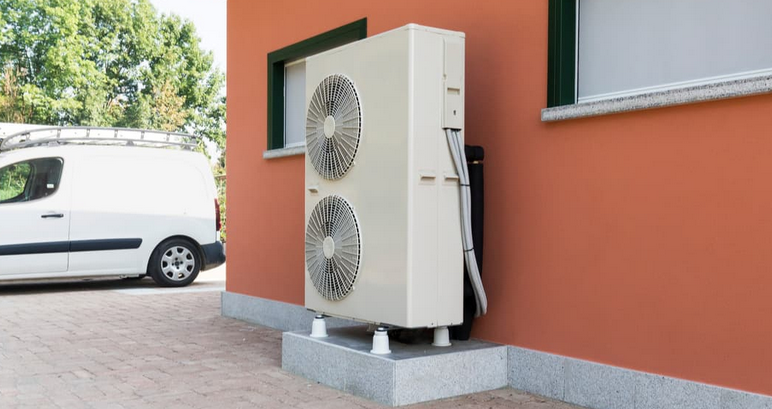
Air heat pumps or water heat pumps, this heating equipment offers a number of advantages. Among its major benefits, its energy savings significantly reduce monthly electricity bills.
Unlike other heating devices, a heat pump mechanism uses only outside air as raw material. This is always free and available. Moreover, the components that make up the device remain low energy consumers.
When making your purchase, be sure to check the performance coefficient or COP of the air heat pump. It is classified among efficient pumps when it has a performance coefficient between 4 and 5.
One of the advantages of the heat pump also relates to its great ease of use. Unlike wood boilers or oil boilers, it seems pleasant and easy to operate. It emits no particular odor during operation.
Even better, it maintains the temperature in the house sustainably. During warm days, the air-to-air heat pump (PAC air-air) cools the indoor air by means of a valve inversion system.
Some models of water heat pumps or air-to-water PAC are also equipped with a cooling option. They are generally connected to a hydraulic circuit.
As for its disadvantages, this domestic hot water heating is criticized for its noise. Certainly, it provides comfort for its owner, but this will not be the case for the neighbors. That is why some condominiums prohibit PAC installation.
It is also noted that its performance varies according to the temperature. Some heat pumps lose efficiency below 10 °C or below 20 °C. In this case, they must be accompanied by an auxiliary heater.
Should you call a professional to install a PAC?
Whatever the model, air-to-water heat pump or air-to-air heat pump, this device can generally be installed by oneself. But ideally, you should use a professional.
The installation work requires broad skills and experience in the field. Even if you are one of the best DIYers, the operation demands in-depth technical knowledge. Only a qualified craftsman can guarantee you a quality and reliable installation.
When looking for an installer, it is advisable to prioritize an expert with the RGE QualiPAC label.
This is a certification provided by an accredited organization and established according to the rules of the Agency for the Environment and Energy Management or Ademe. The qualification highlights the expertise of specialists to their clients.
Can I install my heat pump myself?
If you are a heating engineer or a technician specialized in renewable energy equipment, you can very well handle it on your own.
An ordinary individual can also take care of it, but they must still have broad technical knowledge regarding heat pumps.
Before carrying out the heat pump installation steps, it is crucial to define the location of the device in advance. It should be noted that there are safety distances to respect.
That said, find a solid and stable support to place the heat pump unit. It is advisable to equip it with an anti-vibration device.
In case of indoor installation, other work is required, namely ventilation, air intake, and sealing. After mounting the heat pump, the last step concerns the evacuation of condensates.
It is important to emphasize that the overall system installation can be done without any problem by oneself. However, the gas charging is an operation reserved exclusively for a professional.
Installing a heat pump: price
Of course, a heat pump installation allows you to save energy over a long period. However, it must be admitted that the work requires a significant initial investment.
On average, the heat pump installation price ranges between 4,000 euros and 8,000 euros. This does not include the purchase of the equipment.
This indicative range can nevertheless decrease depending on the type of heat pump chosen. Installation costs can soar above 10,000 euros for a high-end heat pump PAC. The latter is very expensive and its installation is automatically complex.
To clarify, let’s discover the heat pump price according to the model:
| Type of heat pump | Average installation price of the heat pump |
| geothermal heat pump | 5,000 euros to 10,000 euros |
| air-to-air heat pump | 500 euros to 3,000 euros |
| air-to-water heat pump | 1,000 to 3,000 euros |
Heat pump installation diagram
Find below the representation of a heat pump installation:
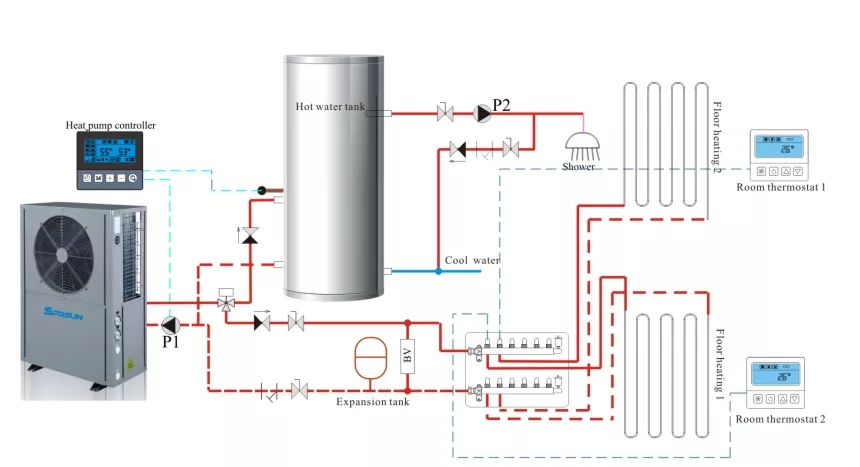
Air-to-water heat pump installation
The air-to-water heat pump uses air as an energy source. It serves to heat the water that feeds the existing heating circuit. Also, the device is capable of providing sanitary hot water heating.
Regarding its drawback, its efficiency can decrease during cold seasons.
Some air-to-water heat pumps may even fail to operate when the temperature drops below a set threshold. It is therefore necessary to maintain an auxiliary heating system apart from the air-to-water heat pump installation.
Heat pump installation time
The duration of the heat pump installation depends on countless criteria including the model of the water PAC or air PAC, the type of soil, the characteristics of your house, and your geographical location.
Unlike the installation of a boiler, heat pump installation work seems more extensive. Setting up the heating system in the house requires, for example, an arrangement that can take an entire week.
In most cases, an air-air heat pump device can be installed in 2 days. But this timeframe can be extended depending on the difficulty of the installation. For the air-water heat pump, it can be installed within a maximum of 7 days.
If you plan to install a water heat pump or an air heat pump, it is advisable to be patient and avoid rushing things.
Consider requesting several quotes to compare prices. It should be noted that the time between signing and installing the heat pump varies according to the technician’s schedule.
Most of the time, you can expect around 14 days before the final installation of the water or air heat pump.
Who can install a heat pump
A heat pump can be installed by a skilled craftsman specialized in renewable energy devices. Whether an electrician or plumber-heating engineer, they must hold the RGE label or Recognized Environmental Guarantor.
Thanks to this certification, they are able to carry out heat pump installation work in compliance. This expert can offer you a high-quality installation and optimal functioning of the device.
That’s not all, the RGE qualification also makes you eligible for various financial aids related to energy renovation. These subsidies allow you to easily realize your heating project.
Installation of reversible heat pump
As its name indicates, this device is part of the heat pumps, but it operates only in reversible mode. While most are used to heat the interior of the home, it has the ability to act as an air conditioner, thanks to the integrated reversible option.
As such, it can offer you cooling during hot seasons and a heating system during the cold season. However, this equipment seems less efficient than a true air conditioner.
What is the cost to install a heat pump?
Currently, there are different models of heat pumps on the market. They can be classified into two categories such as the geothermal heat pump and the aerothermal heat pump.
The first offers significant energy savings compared to the second. It logically has a higher price. Its installation requires a substantial budget up to €10,000. As for the aerothermal heat pump, its installation costs approximately €3,000.
To calculate the heat pump installation price, many parameters come into play such as the power and type of heat pump, the configuration of the home, the room to be heated, the complexity of the site, the number of indoor units, labor costs, and the nature of the work.
What are the aids for heat pumps in 2022?
There are many financial aids available to subsidize the costs of heat pump installation work.
It should be noted that the cost of air heat pump devices as well as water heat pumps is high. The grants help reduce your expenses for purchasing and installing the equipment.
The main distinction is the CEE subsidy granting between 3,000 or 4,000 euros. MaPrimeRenov’ is also among the most requested aids offering up to 5,000 euros.
When these two bonuses can be combined, it is possible to receive up to 9,000 euros. This is more than enough to finance a large part of the heat pump installation.
To benefit from this, you are required to use a QualiPAC and RGE certified specialist. These qualifications guarantee quality work according to the organizations offering the bonuses.
How does a heat pump work?
Whether you equip yourself with a geothermal heat pump or aerothermal heat pump, all heat pumps operate on the same principle. It involves collecting thermal energy from outside to then transmit it to the home’s heating system.
Thanks to this technology, you have the possibility to make energy savings on average within 6 years after heat pump installation.
For an air-to-air heat pump, it captures energy from the outside air to share it inside.
An air-to-water heat pump (PAC air-eau) is based on the air-to-air type principle. It also uses the heat from the air, but to transform it into energy created in the water of the heating ducts. It is thus necessary to supply the underfloor heating, the radiator, and domestic hot water.
It is advisable to entrust this task to a professional to obtain reliable, quality, and efficient work. If the craftsman is certified RGE QualiPAC, you can benefit from numerous financial aids.
To do this, it is essential to have good knowledge of heat pumps. Also, make sure to equip yourself with the necessary materials and tools.
First, you need to find the right location for the heat pump unit. After connecting to the existing heating system, you must install the domestic hot water tank and the refrigerant. The final phase involves the electrical connection.
A heat pump is only effective in a properly insulated house. During installation, its location must be away from neighbors due to its noise. The outdoor unit must be located more than 20 meters from the indoor unit.