Sometimes, when planning to undertake renovation work, we focus on the interior layout. We thus wonder about the cost of a bathroom renovation or that of the kitchen.
However, this project is very important. It also applies to improving the energy performance of a home. To achieve this, you must insulate the walls, roof, floor, and attic.
It must be admitted that this work requires a large budget. To encourage households, the State offers many attractive subsidies. Before addressing the heart of the matter, it is appropriate to mention the benefits of insulating a house.
The key takeaway: I consider energy renovation aids as the most powerful lever to transform a financial drain into a comfortable home. In my view, the administrative maze should not hinder your projects, because in 2026, the schemes have become massive to encourage comprehensive renovations rather than isolated actions. I believe the key to success lies in anticipation: it is imperative to apply for subsidies before signing any estimate. In my opinion, this is a historic opportunity to enhance your property while acting concretely for the planet.
Good reasons to insulate your home
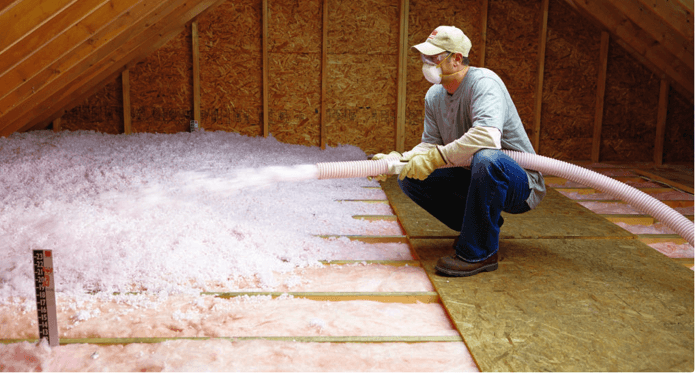
If the State decides to finance this work, it is because it offers many advantages. First, it helps households save energy. Insulation significantly reduces their heating bills.
Secondly, this operation improves their comfort in both winter and summer. It offers them a healthier and more pleasant living environment.
For a sales project, carrying out an energy performance diagnosis is a way to attract potential buyers. They often prefer an ecological and economical home.
Thanks to insulation, there is no need to wonder how to treat humidity in the house. The work protects it from bad weather and the formation of mold. It should be recalled that the latter is dangerous for health as well as for the home’s framework.
I accompanied a relative in renovating an old stone house where heating bills were becoming unbearable. The realization was radical upon receiving the financing plan: by combining MaPrimeRénov’ and Energy Savings Certificates (CEE), the out-of-pocket expense was reduced by three. That day, I understood that the real obstacle is not the cost of the work, but the lack of knowledge about the stacking mechanisms. Since then, I systematically advise going through a “Renovation Advisor”: it is the only way to be sure not to leave any aid on the table. This experience taught me that successful insulation always starts with a solid and well-organized administrative file.
What are the State aids for insulation in 2026?
| Subsidies | Numerous state aids such as MaPrimeRénov’ and Energy Bonus |
| Eligibility | Specific conditions based on income and type of work |
| Covered works | Insulation of attics, walls, roofs, and more |
| Advantages | Energy savings, improved comfort, better health |
| Ecological impact | Reduction of the home’s energy footprint |
| Amount | Varies, can reach several thousand euros |
| Additional financing | Eco-PTZ, reduced VAT, energy voucher |
| ANAH | Subsidies to improve energy performance |
| Update | Conditions updated in 2026 for several aids |
| Documentation | Need for diagnostics and regular monitoring |
There are several programs designed to finance thermal insulation. Each requires specific conditions and involves more or less complicated procedures to benefit from them. They are also subdivided according to the type of work. For example, insulating lost attics is not eligible for MaPrimeRénov’.
The latter is the best-known public aid. It is aimed at all households. However, its amount may vary depending on the work carried out, income, and place of residence. It can be combined with the Monexpert Energy Bonus.
As for the latter, it is also open to everyone. It does not depend on income conditions. The bonus finances renovation work in houses built more than 2 years ago. These can be a secondary residence or a primary home.
Now let’s talk about Eco-PTZ, which is defined as a bank loan with zero interest rate. It allows beneficiaries to borrow up to 50,000 euros. This amount will be repaid over 20 years to realize a thermal renovation project.
Besides these schemes, there are still several government subsidies such as the reduced VAT rate of 5.5%, the energy voucher, and the CEE scheme. Also, the private sector finances home insulation by providing other interesting aids.
The long-term benefits of good home insulation
Investing in insulation is not just about the aids available at the time of the work. A well-insulated house brings many benefits daily, but also in the long term. Here are some key points:
- Durable reduction of the energy bill: effective insulation allows consuming less heating and electricity.
- Improved thermal comfort: less feeling of cold in winter and excessive heat in summer.
- Property value enhancement: a well-insulated home benefits from a better energy class and gains value upon resale.
- Positive ecological impact: reduction of CO₂ emissions thanks to reduced energy consumption.
- Durability of materials: walls, attics, or floors properly insulated also protect the house structure against moisture.
- Acoustic comfort: thermal insulation often provides better soundproofing against external nuisances.
What works are covered by ANAH 2026?
The ANAH or National Housing Agency intervenes to ensure the success of thermal renovation of homes. To motivate homeowners, it suggests multiple schemes such as MaPrimeRénov’, MaPrimeRénov’ Co-ownership, the Habiter serein and Habiter sain aids as well as the Habiter facile aid.
This state public organization subsidizes numerous energy renovation works such as attic insulation, installation of a double-flow mechanical ventilation system, wall insulation, replacement of energy-consuming heating, conducting an energy performance diagnosis or DPE, facade restoration, installation of double-glazed windows, and many others.
Who is eligible for the Renov 2026 grant?
The Renov’ grant was established in October 2020. Previously, it was only intended for the most modest households to subsidize energy renovation works.
But currently, this financial aid is adapted for everyone. The goal is to improve comfort in the home. Although anyone can benefit, certain conditions must still be met.
Since January 2022, the scheme applies only to buildings older than 15 years. Also, it applies to primary residences. These homes are occupied for at least 8 months.
In 2026, MaPrimeRénov’ is accessible to all owners, occupants and landlords, usufructuaries and co-owners, without income conditions. It similarly concerns homes over 15 years old as a primary residence for energy efficiency works such as insulation and heating but only carried out by an RGE professional.
Summary table of aids available in 2026
| Aid scheme | Target audience | Type of works | Possible combination |
| MaPrimeRénov’ | All owners (depending on income) | Insulation, heating, audit | Yes (with CEE) |
| CEE Bonuses | All households | Step-by-step or overall | Yes (with MPR) |
| Zero-Interest Eco-Loan | All owners | Bundle of works | Yes (financing of remaining balance) |
| 5.5% VAT | Homes older than 2 years | Energy renovation | Automatic on invoice |
| Local aids | Depending on regions/municipalities | Territorial specificities | Often combinable |
Everything you need to know about financial aids to insulate your home
Almost all the aid offered by the State costs nothing. However, you must meet the eligibility criteria to benefit from it.
Between the Monexpert Energy Bonus, MaPrimeRénov’, MaPrimeRénov’ Sérénité, the zero-interest eco-loan, Action Logement aid, the reduced VAT rate of 5.5%, the energy voucher, and Ademe aid, there are many options suitable for all profiles.
The amount is not fixed, as it varies depending on multiple parameters, particularly income and the type of work to be done. Generally, the sum amounts to hundreds or even thousands of euros.