
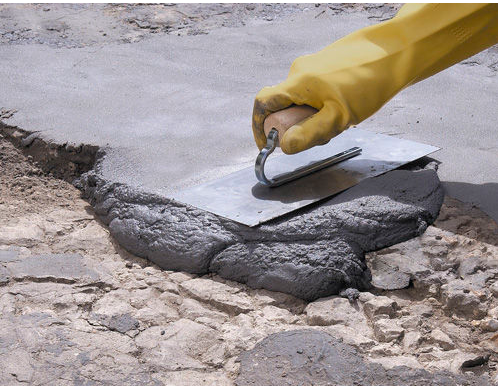
When you plan to carry out the renovation of a bathroom or interior rooms, the use of a rapid-setting concrete can often be necessary. This ready-to-use construction material is used in countless masonry works.
It is nothing other than a specific concrete composed of a mixture of water, sand, cement, gravel, and a setting accelerator admixture. The latter shortens the time of setting and hardening.
Also called accelerated concrete or fast concrete, rapid-setting cement has quite a few notable advantages. Although its use is not new, some people know very little about it.
They particularly wonder about the water quantity proportional to the cement volume, the rapid setting characteristics, the compressive strength in MPa, and more.
To help clarify things, this article provides essential information about rapid-setting cement as a construction material.
What are the main uses of rapid-setting concrete in construction?
This construction material stands out due to its rapid concrete setting time. Unlike traditional concretes, its setting time is accelerated. It is used to carry out many urgent masonry works.
That’s not all, it is the best choice for concreting in cold weather. Thanks to the incorporation of a setting accelerator admixture, work can continue despite cold weather. Mechanical strengths can develop very quickly and the setting accelerates.
The uses of rapid-setting concrete do not stop there. It can also be used at normal temperatures. The goal is sometimes to shorten the commissioning time of the part of the structure or the formwork removal time.
Besides that, many individuals use it during sealing works such as fixing windows or entrance doors.
During renovation works, this ready-to-use fast concrete is perfect for covering imperfections on interior walls. It allows for small masonry works such as correcting floor irregularities or filling holes.
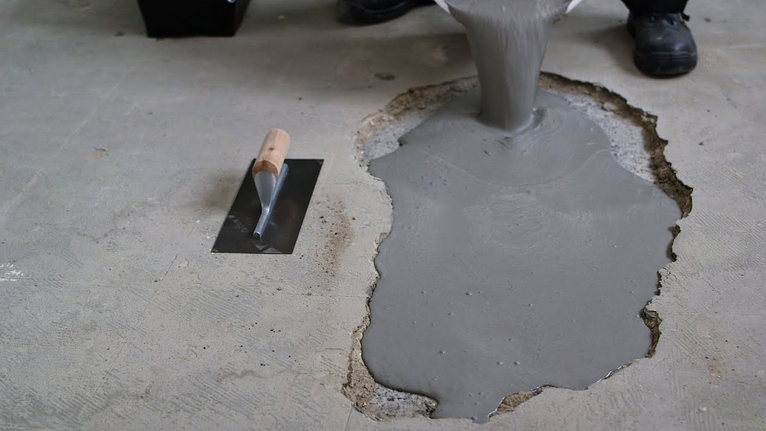
If you plan to make emergency repairs in a damp environment, it can be useful. Even better, rapid-setting cement is ideal for backfill concretes.
It is often found in ornamental works such as ceiling cornices or facade moldings. To fix drainage pipes or covers, do not hesitate to use it.
How can the setting time of rapid-setting concrete be correctly measured?
We have already seen in our other articles how to sand a concrete slab or even how to break a concrete slab.
This time, it is necessary to explain the setting time of accelerated concrete to avoid making a mistake. It is the duration taken by fast concrete to form a mass that is both rigid and compact.
It is important to emphasize that weather conditions can alter this setting time of concrete. It is observed that this time is approximately 2 hours 30 minutes when the ambient temperature is around 20 °C.
On the other hand, this duration increases up to 10 hours in case of very low temperature. It is therefore important to take this into account to determine the setting time of the concrete.
The latter is characterized by two distinct stages. First, there is the beginning of setting, marked at the moment when the viscosity of the material rapidly increases. It gradually releases intense heat.
As for the end of setting, it is limited to the moment when the concrete solidifies. You recognize it when it is no longer malleable.
For this concrete setting time to be correct, it is imperative to consider atmospheric factors. Likewise, please strictly respect the water quantity proportional to cement volume.
An excess causes the setting to slow down and reduces the strength of the rapid setting cement construction material. And in the worst case, the future structure could suffer cracks.
Essential steps for properly using rapid-setting concrete
Rapid-setting concrete is very practical for work requiring immediate strength: post anchoring, urgent repairs, or small outdoor jobs. To use it effectively and achieve a durable result, it is essential to follow some simple steps:
- Prepare the surface: clean the application area by removing dust, debris, or old mortar traces.
- Adjust proportions: respect the dosages recommended by the manufacturer to avoid too rapid drying or low strength.
- Mix quickly: pour the concrete into a clean container, add water gradually, and mix without delay.
- Apply immediately: apply the mixture directly, as the setting time is very short (only a few minutes).
- Avoid corrections: do not rework the concrete once hardened; it must be smoothed before setting.
- Protect from moisture and cold: cover the surface if necessary to ensure good setting and durability.
What are the advantages and disadvantages of using rapid-setting concrete for minor repairs?
The main advantage of rapid-setting cement concrete lies not only in its ease of use but especially in its very accelerated setting time.
In this respect, its use offers you a significant time saving, thanks to the setting accelerator additive. The rapid concrete shortens the pace of work. It also reduces the time required for formwork removal.
That’s not all, this rapid-setting cement mixing is among the materials highly favored by professionals. It allows them to continue work even in unfavorable weather conditions.

No matter the season, including winter, there is no need to suspend the site. Workers can always pour concrete. Indoors or outdoors, the material resists weather conditions.
The advantages of rapid-setting cement also lie in its versatility. It works equally well in humid and dry environments. Its use is not limited to basic concrete compositions. You can use it on surfaces made of plastic, wood, or even iron.
That said, consider using it for your small DIY projects. Since this rapid-setting concrete material comes in many types of packaging, there is something for every requirement.
Despite its many advantages, it has some drawbacks. It is noted that its final strength is somewhat reduced.
Calcium chloride, which is sometimes used as an accelerator, causes corrosion of the metal surface once in contact with the cement.
To avoid encountering this kind of issue, it is recommended to use the NF standard accelerating setting admixture. Safe and of good quality, it is free of chlorinated products.
Comparison of common uses of rapid-setting concrete
Rapid-setting concrete can adapt to several situations. Depending on the type of work, its advantages and limitations vary. Here is a summary table to help you better understand:
| Common Use | Advantages | Limitations | Concrete Example |
|---|---|---|---|
| Post anchoring | Quick installation, immediate drying | Very limited correction time | Fence fixing |
| Urgent repairs | Time-saving, instant strength | Not suitable for large surfaces | Filling a hole |
| Outdoor work | Weather-resistant after drying | Sensitive to extreme temperatures during setting | Garden, terrace |
| Fixing heavy elements | High mechanical strength | Requires precision and speed | Gates, metal bars |
| Small DIY projects | Ease of use | Not suitable for large volumes | Base for decorative object |
How does rapid-setting concrete compare to ordinary concrete in terms of strength and durability?
Ordinary concrete or rapid-setting concrete, we are primarily talking about concrete here. It consists of a mixture of cement, sand, aggregates, and water. It is necessary to properly balance the water quantity proportional to the cement volume to obtain quality concrete.
A rapid-setting cement is an ordinary or conventional concrete to which an accelerating setting admixture has been added so that the mixture sets in a short time. It is thus notable for its rapid setting and ready-to-use nature.
Regarding strength, it must demonstrate great tolerance to weather as well as high heat. Unlike other types of concrete, it can be used at any time, even during the cold season.
Like ordinary concrete, the mixing of rapid-setting cement is equally valued for its strength and durability. With its robustness, it is the preferred material for outdoor applications.
Its gray color is also one of the characteristics of rapid-setting cement. It differs not only by its texture but also by a granulometry ranging between 0 to 6 mm.
The water quantity proportional to the cement volume is always indicated on the packaging. Be sure to respect the measurements to obtain a homogeneous substance.
What precautions should be taken when handling and mixing rapid-setting concrete?
To achieve better results, some precautions must be taken into consideration during rapid-setting cement uses.
For your protection, wear a mask to avoid inhaling dust. Also, wear gloves and protective goggles. These equipments protect your eyes and skin since rapid-setting cement can sometimes be irritating.
When preparing the mixture, set up close to the work site. This way, you optimize the duration of the work, preventing the cement from hardening before use.
It is recommended to carry out the making and mixing of rapid setting concrete in small quantities. This avoids wasting the material.
During mixing, respect the dosage and the water quantity proportional to the volume of cement. This information is necessarily available in the product’s technical sheet. If you ignore it, it may harm the rapid concrete setting and explain the appearance of cracks on the work.
When it is very cold with an ambient temperature below 0 °C, it is better to refrain from concreting. This atmosphere slows down the process of rapid concrete setting as well as its hardening.
Can rapid setting concrete be used for foundation work?
This rapid setting cement material is not really suitable for foundation work. This type of work requires the use of concrete that demonstrates high tensile strength.
For this, concrete is often combined with steel or iron to guarantee the durability of the foundation. It is reinforced concrete that meets these conditions.
On the other hand, rapid setting cement is the construction material best suited for anchoring work. It is useful for fixing windows or anchor bolts for grilles.
Similarly, it can be used for renovation, for example to conceal imperfections on the wall, to fill chases or holes, and to level small irregularities on the floor.
Moreover, many use it in the creation of ornaments such as making the cornice of your ceiling or the moldings of your facade.
No matter the uses of rapid setting cement, this material is an excellent choice for carrying out work in a short time.
Thanks to its strength, it is suitable for any location, indoors or outdoors. Its remarkable advantage is its ease of application. Whether novice or experienced, any DIYer can handle it without difficulty.
What are the relative costs of rapid setting concrete compared to other types of concrete?
Ready-to-use rapid setting concretes are available on the market. By the way, our previous article informs you about the hardware store open on Sunday in France. You can consult it to help you find the product at any time.
Bags of rapid concrete come in sizes from 5 kg to 25 kg. Their price varies according to the brand of the manufacturer or the store chain. Generally, rapid setting cement of 5 kg costs between 5 to 40 euros. It is thus advisable to browse store aisles to find the best price.
If you protect it from moisture, you can keep the prompt dosage cement for 6 months. It is imperative not to open it during this period. For the rapid concrete setting bucket, you can keep it for a whole year.
Generally, it starts to harden within 2 to 5 minutes after preparation and reaches sufficient strength in about 15 minutes.
No, it is not recommended for large surfaces like slabs. For such work, it is better to use regular or fiber-reinforced concrete.
Regular concrete has a long drying time (several hours), which allows more flexibility during application, whereas quick-setting concrete is designed for rapid interventions or immediate fixings.
Publications similaires :
 Work financing
 Floor installation: What are the different types of floor coverings to choose from in 2024?
 How to customize your Ikea Metod kitchen?
 Brass price: rates and buyback advice in 2026
 Zolpan paint review: professional excellence for your walls
 Ixina kitchen review: analysis of quality and actual budget