To limit energy consumption, it is preferable to insulate your home. Many measures are taken during energy renovation work. Despite this, it remains necessary to redouble efforts to reduce heat loss.
In the era of energy transition, we have heard everywhere about bioclimatic house design or bioclimatism. More and more fields prioritize more ecological values, including construction and architecture.
The bioclimatic house is part of a more sustainable solution to save energy while respecting the environment.
But concretely, what exactly is meant by bioclimatic house construction? What are its basic principles, its advantages as well as its disadvantages? Discover below, through this article, everything you need to remember on this subject.
What is a bioclimatic house?
Just like a low-energy house or passive house, a bioclimatic house is above all an ecological house. Simply put, it is a construction discipline whose goal is to fully benefit from the environment of a site.
From its design, it is adapted to the particularities and characteristics of a location by taking into account its geography, climate, orientation, and many other factors. The idea is to enjoy natural inputs such as sunlight and its heat to improve the comfort of occupants and the energy efficiency of the dwelling.
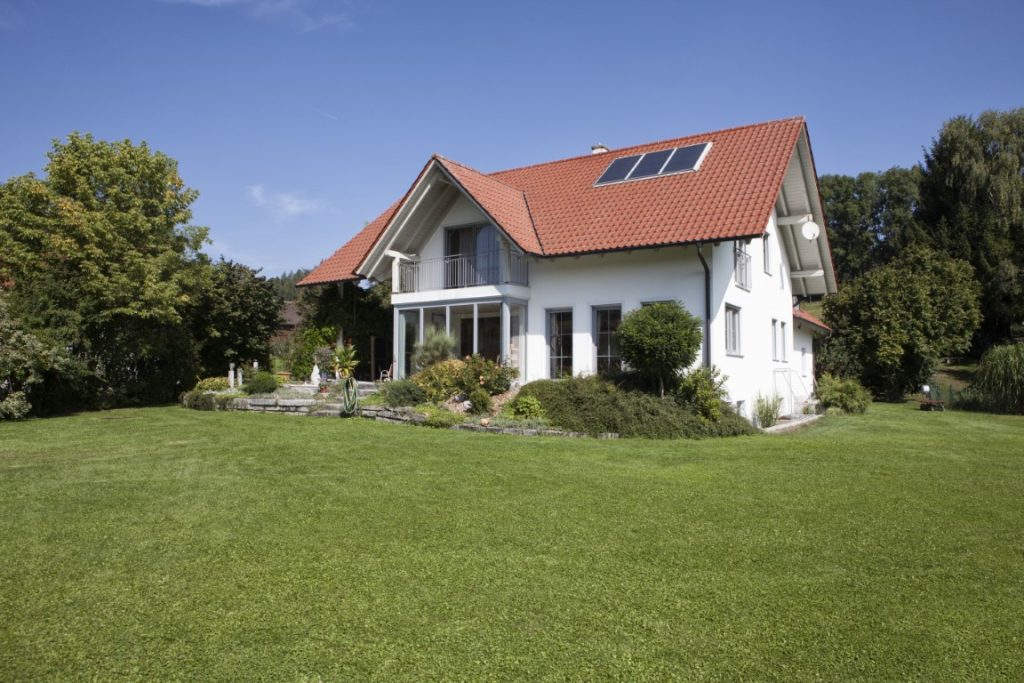
That’s not all, the bioclimatic house construction uses renewable energy to operate, for example by using a rainwater recovery system, a Canadian well, or geothermal energy. It thus employs more specific techniques to heat, ventilate, and cool the interior of a house at a lower cost.
It brings together strategies and technologies that capture these natural inputs to ensure the health and comfort of occupants while reducing energy consumption.
A good understanding of the bioclimatic house environment such as climate, biodiversity, orientation, and surrounding geography is necessary to successfully carry out bioclimatic house construction.
The bioclimatic need or BBio is among the structuring elements of the thermal regulation RT 2012. The latter was replaced by the RE 2020 in January 2022.
For a new construction to fall within the scope of RT 2022, its bioclimatic coefficient must meet the standard. The threshold depends on the regional climate and the type of buildings.
What are the fundamental principles of designing a bioclimatic house?
Several basic principles of bioclimatic construction can be distinguished. Among the best-known elements, it involves exploiting solar gains to make the most of the free and inexhaustible energy inside the house.
To do this, it is essential to capture solar energy, for example by placing glazed openings to the south. Several types of windows can be distinguished, but double or triple glazing is recommended. They are available in almost all window stores in the city.
Apart from that, the opaque construction materials such as ceilings, walls, or floors ensure the conversion of sunlight into heat. The bioclimatic house construction uses this to reduce energy consumption and guarantee the thermal comfort of the inhabitants.
It is still necessary to protect yourself from the sun in summer by means of installations such as the bioclimatic gazebo and pergola. Patios, sunshades, and solar canopies can also help you.
Apart from the sun, the choice of materials plays a role in the success of the bioclimatic house design. It is advisable to favor elements with high thermal inertia. They are capable of storing heat. Then they release it gradually to maintain a stable indoor temperature.
Besides the bioclimatic house materials, orientation is one of the essential principles of bioclimatic house construction architecture. Generally, this type of ecological house is built facing south.
This indeed allows benefiting from daylight and sun rays during the cold season. Moreover, this south-facing orientation naturally warms the interior of a home.
What elements distinguish a bioclimatic house in daily life?
The bioclimatic house is not limited to ecological construction; it transforms comfort and energy management day by day. Here are some key points that differentiate it from traditional housing:
- Natural optimization: it exploits sunlight and heat from the sun from the design stage.
- Thermal comfort: more stable temperatures, summer and winter alike.
- Energy savings: significant reduction in consumption thanks to insulation and free gains.
- Landscape integration: harmony with the environment and respect for the local ecosystem.
- Choice of healthy materials: raw earth, wood, hemp, cellulose wadding…
- Well-being of occupants: better air quality and indoor living conditions.
What design approaches are possible according to your priorities?
Each bioclimatic project can adapt to the owner’s needs. Here is a simplified comparison of the most common design orientations:
| Preferred approach | Main objective | Ideal for… |
|---|---|---|
| Solar orientation | Maximize thermal gains from the sun | Temperate or cold zones |
| High thermal inertia | Store and gradually release heat | Families seeking lasting comfort |
| Natural materials | Reduce ecological footprint | Projects focused on sustainability |
| Natural ventilation | Improve indoor air quality | Hot climates or risk of overheating |
| Renewable equipment | Produce green energy at home | Long-term investments (solar, geothermal) |
| Landscape integration | Create a harmonious and healthy habitat | Land with high biodiversity |
How much does the construction of a bioclimatic house cost on average?
Bioclimatic house construction is becoming increasingly popular in countless regions. This is because it is both an economical and ecological solution by using more natural resources. If you want to embark on this construction project, it is important to inform yourself about the bioclimatic house price.
Compared to the foundation of most traditional homes, this construction can take more time. Additionally, the intervention of a qualified craftsman is necessary. It is not surprising that the bioclimatic house cost seems high. Generally, you should expect between 1000 to 3000 euros per square meter.
A bioclimatic house price can, however, vary depending on several parameters. The size of the land plot is one of them. The larger it is, the higher the bioclimatic house cost.
Besides that, it remains necessary to consider the materials to be used. If you opt for elements with a low ecological footprint for the bioclimatic construction, you must always be prepared as they are often more expensive.
The budget can also increase because of the bioclimatic house equipment price. To meet the conditions of an ecological house, it must be equipped, for example, with double or triple glazing windows, solar panels, a rainwater recovery system, a heat pump, and more.
Besides the bioclimatic house equipment price, do not forget to include the installation costs. Their number, type, and quality fluctuate the total cost.
It should be noted that companies specializing in bioclimatic construction often practice free pricing depending on their reputation and especially their level of expertise. If you want to enjoy the best price, it is advisable to compare several quotes from professionals.
What are the advantages of a bioclimatic house?
Unlike other constructions, a bioclimatic house offers a well-thought-out design. Its creation requires taking into account countless parameters such as climate, region, orientation, and location. Thus, a thorough study must be conducted before drafting the house plan, which guarantees the quality and durability of the bioclimatic house construction.
Like a low-energy house, it allows you to make significant energy savings. To achieve this, it uses natural inputs such as solar energy or renewable energy to cool or heat the interior of a dwelling. Despite everything, a bioclimatic house construction promises you better thermal comfort all year round.
Since it is an ecological house, the bioclimatic house equipment is in perfect harmony with the landscape and environment. It only uses natural materials that can be recycled if necessary.
It is entirely possible to use a rainwater recovery system. Thus, whether it is for laundry, cooking, toilets, or garden watering, it can be used without worry in the bioclimatic house.
Its advantages do not stop there! It is a home where it is pleasant to live. The bioclimatic design is above all well thought out to provide better comfort to the owner. This relates not only to thermal comfort but also to air quality in the house.
Natural and healthy materials are used in the bioclimatic house construction materials. This consequently limits health problems for occupants, such as cardiac risks, respiratory disorders, and many other allergic reactions.
What are the potential disadvantages of a bioclimatic house?
Even though a bioclimatic house offers several advantages, it also has some drawbacks.
As mentioned in the paragraph above, it differs due to its specific design. As a result, the construction period may be longer than that of a conventional home. It is essential to have ample availability to realize your bioclimatic construction project.
Furthermore, its realization is reserved for professionals. If you do not have in-depth skills in bioclimatic house construction architecture, you must give up on designing the home. Otherwise, you are obliged to turn to more qualified craftsmen.
By making some comparisons with a passive house or a low-energy house, it is clear that the cost of a bioclimatic house is high.
In any case, this is understandable since the construction involves using the services of artisans specialized in the field. As skilled labor is rarer, it is consequently more expensive.
In any event, although the price of a bioclimatic house is higher, the investment in the design pays off over a long period.
Moreover, you have the possibility to request subsidies and financial aids such as property tax exemption. Even if these schemes do not fully cover the cost of a bioclimatic house, they lighten your budgets.
What are the differences between a bioclimatic house and a passive house?
Like a low-energy house, a passive house and a bioclimatic house construction are part of an ecological house. Although they share many common points, they are two completely different types of construction.
The first benefits from a distinctive design to preserve heat inside the home and then capture solar energy. Consequently, it requires no use of a conventional heating system.
Besides that, this house relies on double-flow ventilation technology in order to recover energy from the extracted air and transfer it to the incoming air.
Compared to the price of bioclimatic house equipment, that of the passive house is less expensive. However, it ensures energy consumption control and guarantees the comfort of the inhabitants.
Regarding a bioclimatic house construction, it integrates perfectly with its environment. It uses all natural resources to optimize energy efficiency in the home while limiting environmental impact.
A bioclimatic house offers high thermal comfort by producing energy from the sun’s heat. Consequently, it has the capacity to save up to 20% of energy.
With bioclimatic house equipment, it is capable of reducing energy consumption not only for heating but also for ventilation, lighting, and cooling.
Which materials are most used in the construction of bioclimatic houses?
Despite the somewhat high cost of a bioclimatic house, this type of construction has many notable advantages. To ensure it promises you comfort and energy performance, please use environmentally friendly materials.
Fortunately, a wide range of elements can easily correspond to bioclimatic design. Professionals recommend a bioclimatic house with high thermal inertia materials. They are capable of capturing and storing the heat from sunlight to warm the interior of a home even in winter.
Among the key materials, nothing beats prioritizing new wood for construction in a bioclimatic house. Easy to work with, this material, both natural and renewable, offers better acoustic and thermal performance. It gives the home a contemporary and warm look. Additionally, wood blends perfectly into the landscape.
For floors and walls, raw earth is an ecological and healthy material. Since it undergoes no chemical treatment, it causes no pollution during the bioclimatic house design.
In brick form, hemp is also widely used in bioclimatic construction. Its advantages lie not only in its thermal performance but also in its superior humidity regulation. It helps maintain a good humidity level inside the home, as it is a breathable material.
Regarding thermal insulators, glass wool, sheep wool, cellulose wadding, and straw are widely used in bioclimatic construction. Ecological and natural, the latter option provides high thermal and acoustic resistance to the home.
How to optimize the orientation of a bioclimatic house to maximize solar gains?
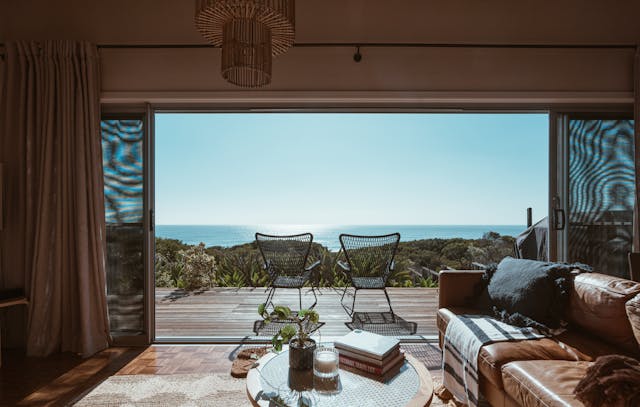
A bioclimatic house construction offers higher efficiency thanks to its orientation. It greatly contributes to the thermal performance of a home.
To fully benefit from solar gains, a bioclimatic house is generally installed facing south. This exposure increases solar gains that warm the interior of a dwelling and provide more natural light.
If you have difficulty choosing the orientation of your future home, know that the south/west, south/east, and north/south orientations are advantageous compared to east/west. You can increase the size and number of openings on the south side, for example with bay windows or regular windows. Conversely, it is better to minimize them on the north side to avoid heat loss.
By definition, a bioclimatic house is designed to fully harness solar energy. During the cold season, it captures and then distributes it throughout the entire home to warm it. In summer, it is advisable to protect the dwelling from solar radiation, especially during heatwaves.
Please consider the orientation of each component of the bioclimatic house construction to maximize solar gains. Living spaces such as the kitchen and living room should be placed facing south.
For utility rooms like halls, stairs, corridors, or the garage, prefer a north-facing orientation. The same applies to areas that do not require heating throughout the day. For bedrooms, east is the best location to enjoy the morning sun.
What heating and cooling systems are recommended for a bioclimatic house?
For a dwelling to meet the criteria of a bioclimatic design, it must use natural resources available on the site. The goal is to heat or cool a building. It is mainly heating systems that consume more energy. To limit energy expenses, it is strongly recommended to use a number of bioclimatic home equipment.
The heat pump or heat pump is part of the list. It is a highly valued heating system, thanks to its ecological and economical properties. The principle is to recover energy present in the earth, air, or water to transform it into thermal energy. This energy is used to provide heat in the dwelling.
Solar panels are also among the heating solutions in a bioclimatic construction. Recyclable, they help reduce greenhouse gas emissions. Some models are used for producing sanitary hot water or water dedicated to heating. As for photovoltaic solar panels, they generate electricity.
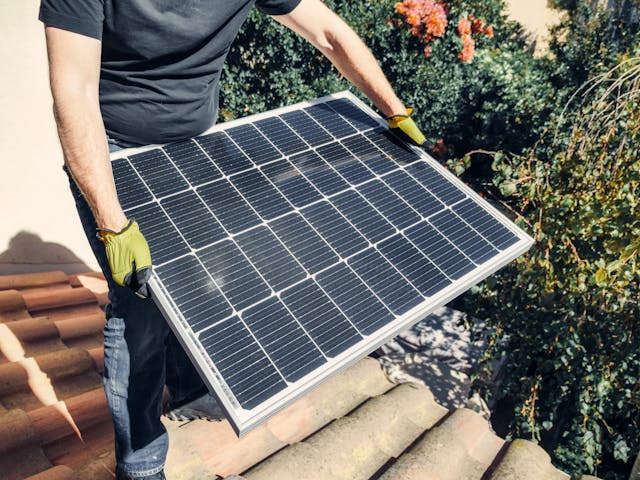
Besides that, bioclimatic houses use Canadian wells, inertia radiators, wood stoves, low-temperature boilers, solar water heaters, and many others.
As for bioclimatic home equipment to cool indoor air, there are many environmentally friendly solutions.
For example, you can choose between a bioclimatizer and an air-to-air heat pump. Specialists also recommend cooling systems by ventilation, geothermal energy, or evaporation.
What are the criteria to consider when choosing a suitable plot for building a bioclimatic house?
A bioclimatic design consists of adapting the dwelling to its environment. It is therefore essential to find an ideal plot for this type of construction. Some elements must be examined, including the climate. It should be noted that this differs according to the region. Sweden, for example, has a cold climate while France has a temperate climate.
Also take the time to consider the orientation of the plot and the weather conditions. The sun and wind exposure play crucial roles in the placement of each room in the house.
Thus, favor a plot whose orientation guarantees optimal living comfort for its occupants. Orientations to the south-east or south-west are perfect for a bioclimatic house construction. It is also preferable to stay away from shadows cast by neighboring buildings. This situation risks depriving your dwelling of heat and light.
Finally, do not forget to consult the subdivision regulations and the local urban plan to know the various collective rules. Likewise, take into account the slope of the plot, as this undoubtedly influences the cost of bioclimatic house construction.
There is nothing better than visiting the site in person to see the location. This helps you understand the ambient noise, the general life of the neighborhood, and especially the sun’s path before making a final decision.
Yes, the initial cost is higher (around €1,000 to €3,000 / m²) but the investment is offset by reduced energy bills and better real estate valuation.
Yes, through a comprehensive renovation: enhanced insulation, replacement of openings, use of renewable energies, and optimization of interior orientation.
On average, 12 to 18 months depending on the complexity of the project and the availability of specialized craftsmen. The additional time is compensated by the durability and comfort achieved.