When the nice weather returns, the garden is an exceptional living space where it remains pleasant to fully enjoy the sun. You are probably dreaming of setting up a shaded corner there, but you don’t know how to choose between the garden gazebo and the pergola.
Just like the veranda, these structures are among the outdoor layout solutions widely used by individuals.
If you are having trouble deciding on the most suitable installation for your garden, this article will help you see things more clearly.
📋 Key points: Personally, I find that the choice mainly depends on the desired durability: the pergola is a fixed, durable structure, while the gazebo is often seasonal. About 70% of homeowners now opt for the bioclimatic pergola despite a higher initial investment. It is a solution that truly enhances your real estate assets in the long term.
What is a gazebo and what is a pergola?
🌍 Did you know?
The word “pergola” comes from the Latin “pergula,” which originally referred to a roof extension intended to support climbing vines since Roman Antiquity.
To clarify the subject better, it is appropriate to provide you with their definitions. A gazebo is distinguished by its small size construction. Also called a marquee, it is generally made of PVC or woven resin. To meet all expectations, it is available in various shapes such as hexagonal, circular, and rectangular. Its configuration is chosen based on the usable space of your outdoor area.
| Characteristic | Gazebo | Pergola |
|---|---|---|
| Definition | Lightweight structure, often removable, serving as a temporary or decorative shelter for the garden. | Generally fixed and more robust structure, intended to create a permanent shaded space. |
| Materials | Metal, light wood, PVC, canvas or fabric for the covering. | Wood, aluminum, steel, sometimes combined with modern materials. |
| Roof / Covering | Often canvas, removable or retractable, sometimes with sails. | Can be open or covered, often with adjustable slats or fixed roof in wood or metal. |
| Installation | Simple and quick, sometimes temporary. | Heavier and more durable installation, often requires professional assembly. |
| Main use | Temporary shade, light protection against sun or light rain, garden decoration. | Creation of a permanent outdoor living space, covered terrace or relaxation corner. |
| Mobility | Movable or removable depending on the model. | Fixed, designed to stay in place for several years. |
A gazebo can be placed anywhere in the garden. Some people install it near their house. Others hide it at the back of the garden or in the middle of the lawn. You can place your outdoor furniture there to host your guests.
It is in most cases covered with a polyester canvas that benefits from UV protection treatment. For better protection against bad weather and intense heat, it is equipped with side curtains.
⚠️ Common Mistake
The mistake is neglecting the drainage of rainwater on a flat-roofed gazebo. In case of heavy rain, water pockets weighing several tens of kilos can tear the fabric or twist the frame.
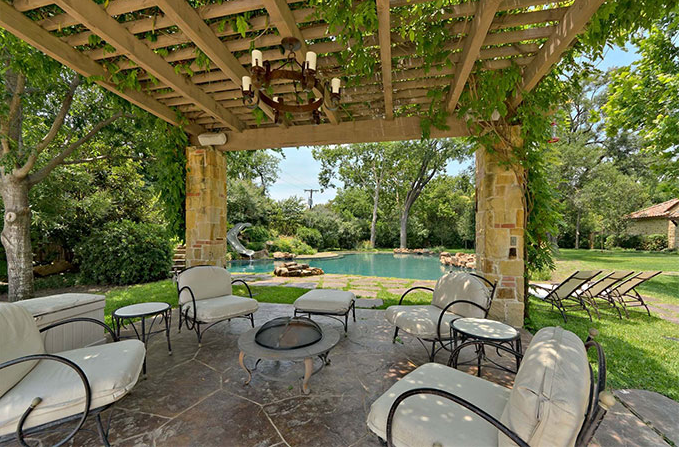
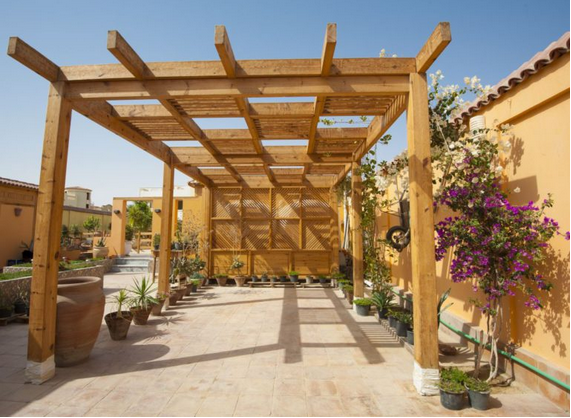
Let’s now talk about a pergola, which is a construction that is both sturdy and fixed. Unlike a gazebo, it cannot be moved. Whether it is a steel pergola, wood, aluminum, or PVC, it is generally composed of a roof and pillars.
As a rule, this structure is installed as an extension of the house. But nowadays, there are pergolas with four posts that stand free from the building. In any case, it always retains its permanent and fixed nature. In some situations, it can be transformed into a veranda.
🎒 On the ground: In July 2023, during a violent storm, I saw my neighbors’ folding gazebo literally fly away while my attached pergola did not move an inch. I had paid 1,200 euros for mine compared to 150 euros for theirs, but the sturdiness against bad weather justified every cent invested. The lesson is clear: for a windy area, a fixed structure is essential.
What are the main similarities between a gazebo and a pergola?
When it is warm and sunny, a shaded corner remains useful and pleasant. Whether it is a gazebo or pergola, both constructions provide this extra space to fully enjoy a garden.
They share the same purpose by promising to shelter you from the vagaries of weather and the sun’s rays.
That’s not all, these installations are practical for hosting a garden lounge. Many people create a dining area in the shade of the burning sun.
No matter the style to adopt, the pergola like the gazebo adds a decorative touch to your outdoor space. Due to their slender structure, these setups integrate easily into almost any environment. They can also serve as support for all your climbing plants such as grapevine, jasmine, roses, wisteria, and many others.
These structures can be erected without difficulty. They suit all uses and tastes. Since they can be closed on the sides, they provide more privacy and more protection against the wind.
💡 Practical Tip
To clean your gazebo fabric, use lukewarm water with a mild soap. Absolutely avoid high-pressure cleaners which destroy the water-repellent and UV treatments of the fabric.
What are the main differences between a gazebo and a pergola?
Despite their similarities, the gazebo and pergola undoubtedly have differences. The first is a small-scale structure that is in most cases rectangular in shape. It consists of a fabric and 4 legs.
As for the second, it is nothing other than a shelter made up of two vertical posts. These support a horizontal construction by means of a wall. Indeed, it is located as an extension of a building, which provides you with an additional room.
If the gazebo is a rather seasonal installation, the pergola is intended to be placed in the garden all year round. The first can be assembled and removed without any hassle. On the other hand, the second is built permanently. It is equipped with immobile and solid pillars.
You can place the gazebo anywhere in the garden. The pergola can be attached to the house. If it is not attached to the wall, it is thus equipped with 4 independent legs.
The garden gazebo is also distinguished by its quick and easy installation. The same goes for its dismantling. Conversely, the pergola requires more or less significant work.
That is why its installation necessarily requires a work declaration beforehand.
If the construction covers more than 20m2, you must apply for a building permit.
How to choose between a gazebo and a pergola for your garden or terrace?
- Main objective: Gazebo or pergola, these structures are ideal for sheltering you from the sun, wind, and bad weather in your garden. They offer you the opportunity to make the most of your outdoor spaces.
- Functional differences: As mentioned above, they still have different functions. If you do not know which one to choose to equip your terrace or garden, determine your own objective.
- Temporary use: If you are organizing an outdoor event and want your guests to be protected from the sun’s rays, a gazebo is the best option. After the reception, you can quickly dismantle it.
- Seasonality: You might also only need it during the summer. After the good weather, it can be removed and stored somewhere. It should be noted that a gazebo is sometimes foldable. It is made with a light and flexible material.
- Durability: If you are looking for a durable installation, the pergola is the most suitable structure.
- Longevity: Since it is mainly made of solid materials, it has a long lifespan. You can enjoy it for many years, regardless of the season.
What criteria should be considered to choose the best option between a gazebo and a pergola?
The first parameter relates to your needs. It is imperative to make your choice based on your expectations and tastes.
If you are demanding in terms of longevity and solidity, a pergola will suit you perfectly. However, if you prioritize convenience, there is nothing better than opting for a gazebo.
That said, do not forget to examine the characteristics of the ground that will host the structure. Since the pergola is a permanent installation, it requires a much stronger foundation to support it.
This is not the case for a gazebo. It can be moved anywhere you want to place it. Moreover, it easily adapts to each location. In any case, both these outdoor structures need a flat ground to ensure their stability.
The next criterion concerns building materials. Wood is prized for its natural charm. It similarly adds a rustic touch to your garden. Its drawback lies in its maintenance. It requires more care to preserve its characteristics.
The pergola or gazebo in aluminum is also increasingly appealing to homeowners. Thanks to its lightness, this material is easy to work with. Even better, it resists rust. It brings a note of modernity to your outdoor space. Over time, it tends to lighten. If you wish to maintain its condition, you can repaint it.
👍 Strengths
- Almost no maintenance for aluminum
- Natural aesthetic of wood
- Great sturdiness against wind
👎 Weaknesses
- High price of aluminum
- Annual treatment of wood required
Many builders also use PVC to make these installations. This material is not only maintenance-free but also economical. However, it is criticized for its limited lifespan. Lastly, budget is one of the factors to consider to make the right choice between the gazebo and the pergola.
If your financial means are limited, the first is less expensive. Its price ranges between 200 and 5,000 euros. The second costs between 200 and 30,000 euros.
Both structures serve to create a sheltered space in the garden or on a terrace. They provide shade and protection against wind or light rain, while adding an aesthetic and friendly touch to your outdoor spaces.
The gazebo is generally lightweight, detachable, and sometimes foldable, ideal for temporary or seasonal use. The pergola, on the other hand, is sturdy and fixed, designed to last several years and withstand the elements. It constitutes a true permanent outdoor living space.
The choice depends on your needs: for occasional events or summer use, the gazebo is more practical and flexible. If you want a durable setup and an outdoor space usable all year round, the pergola is the most suitable solution.