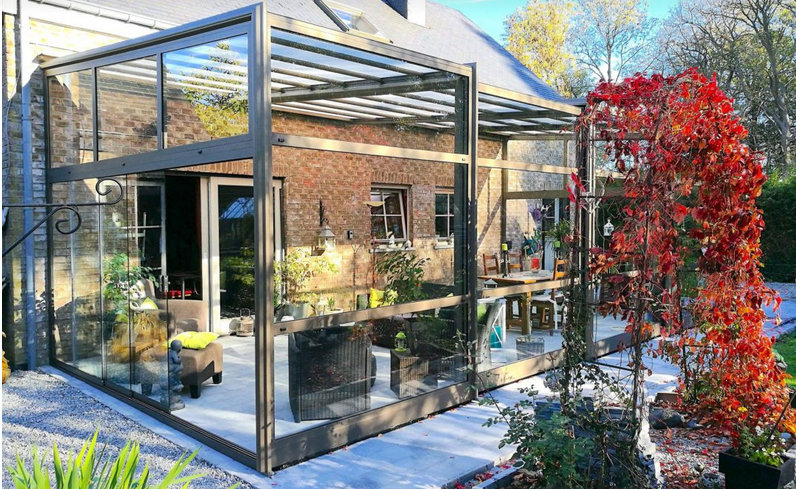
Despite the cost of a veranda being somewhat expensive, more and more homeowners are choosing to build one on their terrace. Thanks to this structure, the terrace will be usable all year round.
Even better, the project offers you the opportunity to expand the home by creating an additional living room. If the idea interests you, we suggest you consult this article revealing the essentials to remember on the subject.
📋 The essentials at a glance: Personally, I consider that converting a terrace into a veranda is the most cost-effective investment to gain square meters without moving. Did you know that a well-insulated veranda can reduce your lighting needs by 20% in the adjoining rooms? I advise you to pay special attention to the thermal break of the glazing to enjoy this space both summer and winter.
What is the difference between a veranda and a terrace?
Before examining in detail, it is important to distinguish the veranda and the terrace since many people tend to confuse them.
The first is defined as an additional room that is connected to the main rooms. In most cases, it serves as an outdoor living room to welcome guests. With its roof and walls, it allows you to enjoy daylight and sunshine safely.
As for the terrace, it is a developed area always located outside the house. Unlike the veranda, it is not a room at all. It is neither insulated nor enclosed. However, it offers you a space available to create, for example, a relaxation area or a reading nook.
📍 My experience: In 2025, I installed a veranda on my south-facing terrace without planning for an external blind. By June, the temperature inside rose to 35°C despite the windows being open. The lesson learned is clear: a veranda on a terrace is a wonderful living space, but solar control is mandatory to avoid turning your dream into an unusable tropical greenhouse in summer.
Terrace or veranda, they are generally adjacent to the building. To enjoy the terrace at any time, some people erect a steel pergola above it. Recently, it has become trendy to build a veranda there.
What are the advantages of having a veranda terrace?
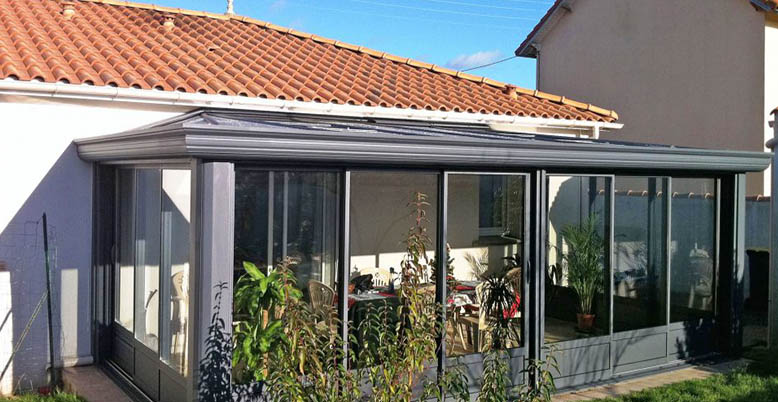
- Comfort all year round: The main advantage of a veranda on the terrace is the ability to enjoy it at any time, winter or summer. It always shelters you from bad weather.
- Extended moments: It gives you the chance to extend your dinners under the stars without worrying about rain or cold. It guarantees your comfort at all times.
- Space gain: That’s not all, installing a veranda terrace allows you to gain a few square meters. Your terrace becomes a room attached to the house, increasing its total area.
- New living space: To this end, it offers you a new living space that is both friendly and warm. With the bay windows of the veranda, fully enjoy the natural light in your new garden lounge, office, or dining room.
- Simplified work: It should be noted that the work is also simplified. This house extension is feasible since the terrace already has a solid and flat surface.
- Cost savings on work: This greatly facilitates the installation of the veranda. There is no need for excavation, which means significant financial savings for you.
- Aesthetic enhancement: In terms of aesthetics, adding a veranda on the terrace also brings an architectural asset to the building. It gives it character. To sell your property, its installation increases its value. The property thus attracts more and more potential buyers.
Which materials are best suited to build a veranda terrace?
If you equip yourself with a wooden terrace, installing a veranda can prove complicated. Remember that the volume of this natural material changes with the seasons.
In summer, it continues to shrink with the heat, while in winter, humidity causes it to swell. The terrace must therefore be replaced by a very flat concrete slab ensuring the durability of the construction.
To build a veranda terrace, many materials can be used. Homeowners can choose between PVC, wrought iron, wood, and aluminum. The latter is very popular due to its multiple advantages.
👍 Aluminum Advantages
- Almost no maintenance
- Thin profiles (more light)
- Many colors available
🔍 Wood Drawbacks
- Regular maintenance required
- Higher purchase cost
Elegant, it first offers a touch of modernity to the veranda terrace. Then, it combines resistance and robustness to withstand heavy loads.
Aluminum also does not risk deforming over time. It requires no special maintenance. Unlike other materials, it does not rust. It offers you a wide choice of colors.
The only downside with an aluminum veranda terrace relates to its high price. It is among the most expensive models on the market. It should be noted that the cost of a veranda varies depending on the type of finish.
Is a building permit required for a veranda terrace?
Since adding a veranda terrace is among house extension projects, there are some administrative procedures to complete. Be sure to inquire about them in advance at the town hall.
The formalities vary depending on the type of veranda, the planned area, and the ground surface. If the latter does not exceed 40 m2, you only need to submit a simple work declaration.
As a rule, the authority grants permission within one or two months. Be sure to check if any special conditions also apply to your project.
In the case where the floor area of the veranda terrace exceeds 40 m2, it is mandatory to apply for a building permit.
Its primary purpose is to ensure that the new structure blends appropriately into its environment. To obtain the paperwork, you should allow between 2 to 3 months, and it will then be valid for 2 years.
In any case, it is strongly recommended that you always visit the town hall to study the feasibility of the project on site. You can consult the local urban plan, the communal map as well as the land use plan.
The municipal administration can inform you if any specific conditions must be applied to your land. Additionally, urban planning rules can vary from one city to another.
How to choose the orientation of your veranda terrace?
The design of a veranda terrace requires a thorough study of the selection of its orientation. You need to thoughtfully plan its layout based on the configuration of the home and especially the path of the sun.
🌍 Did you know?
Thanks to the greenhouse effect, a south-facing veranda can naturally heat the air in your home during the off-season, acting as a true free solar radiator.
The goal is to ensure that the structure offers better thermal performance throughout the year. It should also allow you to enjoy natural lighting optimally.

If the veranda faces east, it allows you to benefit from the sun in the morning and then shade in the afternoon. If you live in oceanic regions, it can protect you from winds coming from the west.
If your veranda terrace is oriented west, the sun is absent in the morning but persists for the rest of the day. For those living in very sunny areas, this arrangement is not recommended to avoid overheating.
If the configuration of the house does not really give them a choice, they must use other options such as installing special glazing, shutters, or certain equipment to improve comfort.
| Type of glazing | Thermal insulation | Solar protection | Recommended use |
|---|---|---|---|
| Classic double glazing | Medium | Low | Temperate regions |
| Enhanced insulation glazing | Excellent | Medium | Year-round use |
| Solar control glazing | Good | Maximum | South exposure |
| Heated glazing | Optimal | N/A | Extreme cold / Luxury |
For a south-facing orientation, it optimizes sunlight. It is perfect for properties located in the northern part of France. If you live there, it allows you to enjoy the warmth of the sun. In mid-season, it guarantees an excellent temperature.
If you plan to orient your veranda terrace to the north, this arrangement is ideal for those living in the south of the country. This location is also suitable for rooms that do not require a lot of lighting, such as bedrooms.
How to ensure good thermal and acoustic insulation of your veranda terrace?
Its location and orientation play a crucial role in the insulation of the structure. For constructions in less sunny regions, south exposure is recommended. Conversely, east-facing orientation is preferred for those living in hot areas.
Similarly, the materials of the terrace veranda are also very important for its insulation. Compared to PVC and wrought iron, aluminum and wood are among the preferred materials for this extension.
The first is not only strong and lightweight but also durable. However, it is a conductive element. If you choose it, be sure to equip it with thermal bridge breakers.
As for wood, it is a naturally insulating material. To maintain its characteristics over time, remember to maintain it regularly.
Whatever the quality of the finish, do not take the glazing side lightly.
It not only serves to let in light but also contributes to the insulation of the structure. Double glazing is the best solution providing good sound and thermal insulation.
The same goes for the roller shutter. Besides optimal protection, it provides a barrier against temperature variations and noise.
What are the layout options for a terrace veranda?
In most cases, the veranda is installed on the terrace to protect plants from the cold during the off-season. At this stage, it offers you a beautiful winter garden that is wonderful to look at. And at the slightest sunlight, it will be pleasantly heated.
| Layout option | Possible use | Advantages |
|---|---|---|
| Garden lounge | Relaxation corner with armchairs, plants, and coffee table | Friendly atmosphere, ideal for relaxing all year round |
| Dining room | Dining space with family table and chairs | Perfect for sunny meals or extended dinners |
| Office | Bright workspace with storage | Calm and inspiring environment, conducive to concentration |
| Reading nook | Comfortable armchair, bookshelf, and soft lamp | Peaceful atmosphere, ideal for escaping into a book |
| Winter garden | Green plants, hanging pots, plant shelves | Brings freshness and life to the space, even in winter |
| Play area | Playful zone for children with mats and storage | Safe and bright, perfect for indoor play |
More and more individuals are also transforming their terrace veranda into a lovely dining room. It is pleasant to gather with your family in this room.
Others arrange it as a functional, ergonomic, and sunny kitchen ensuring passage from the inside to the outside.
The ideas are endless; it is still possible to make it a friendly and festive corner. To do this, you just need to install a video projector or a pool table to have fun with friends.
The veranda can similarly accommodate an office. Just set up the necessary equipment, and you’re good to go. Very bright, this room is perfect for enhancing your concentration at work.
⚠️ Warning
A common mistake is forgetting ventilation. Without effective air circulation (ventilation grilles or extractor), condensation will form on the windows, causing mold on the seals and a permanent feeling of humidity.
What is the average lifespan of a veranda terrace?
You are planning to build a veranda above your terrace. But before you start, you first want to know its durability. This is often defined by the quality of its materials.
The wooden veranda can last a long time. Even though this living material is sensitive to parasitic insects, climbing plants, frost, and especially humidity, the structure remains functional for three decades. However, it requires regular maintenance.
Besides that, the aluminum veranda also appeals to owners due to its significant lifespan. One can say its longevity is unlimited. It is roughly comparable to that of a dwelling, which can last up to half a century.
In any case, it is necessary to consider the finish of the terrace that hosts the veranda. It must be ultra-solid to ensure the extension’s durability over time.
How to maintain your veranda terrace to extend its lifespan?
The maintenance of the structure varies depending on the type of materials it is made of. For a PVC veranda terrace, it does not require complex care. Frequent washing with soapy water may be enough to keep its shine.
🔧 Tip
To clean the glazed roof of your veranda, use a telescopic pole with a chamois leather. Never climb directly on the structure, even if the glass panels are thick, to avoid any risk of falling or weakening the profiles.
As for a wrought iron veranda terrace, it must be said that this material does not resist corrosion. To increase its lifespan, consider applying a coat of varnish or polyester paint on the frame.
Since wood does not tolerate humidity, a construction with this natural material requires regular care to optimize its resistance. Although it tolerates cleaning with soapy water, try to pre-treat it by using stain or microporous paint at least every 2 years.
Regarding an aluminum veranda terrace, its maintenance is child’s play. Wiping it with a sponge soaked in soapy water keeps it always clean and shiny. After washing, rinse with clear water and dry with a microfiber cloth.
Can a veranda terrace be used as an extension of your house?
Previously, the veranda was considered a simple outdoor feature. Thanks to technical progress, it is now classified among home extensions, on par with basement or attic conversions, roof elevations, or solid extensions.
There are many reasons encouraging individuals to extend a house. Teenagers, for example, demand more independence while parents want more privacy. With a successful layout, the veranda terrace can become a living space.
Of course, it may not directly cover all needs. However, it can house the kitchen, bedrooms, or living room, helping you free up useful space for the new project in the house.
Frequently Asked Questions
The classic veranda is often designed as an extension integrated into the house from its construction or added onto a blank space. In contrast, a terrace veranda is built on an existing terrace, which simplifies the work. It allows transforming an outdoor space into a living area while maintaining the opening to the garden. It is an ideal solution to enjoy the outdoors all year round without major construction.
Yes, provided it is well insulated and properly equipped. Thanks to bay windows, good ventilation, and appropriate heating, the terrace veranda becomes a comfortable space in winter as well as in summer. It protects from bad weather while letting in natural light. It is a perfect place to relax, work, or entertain, whatever the season.
It depends on the size of the veranda and local urban planning regulations. Generally, if the surface area is less than 20 m², a simple prior declaration of work is sufficient. Beyond that, a building permit may be required. It is recommended to consult the town hall or a professional to ensure the project’s compliance before starting the work.