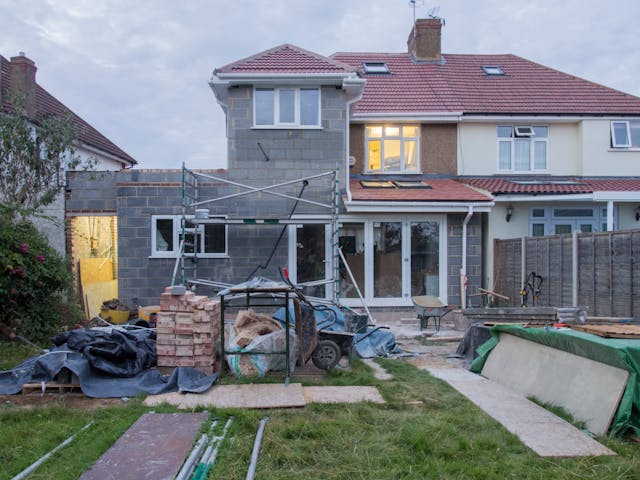
With a new member in your family, you are considering expanding your current house. This project gives you the opportunity to have additional rooms without having to move.
It should be noted that the work requires heavy expenses. That’s not all; the operation is subject to various obligations and constraints. For a novice, it must be said that they are not easy to manage.
If you are one of them, we suggest you discover this article. We provide detailed explanations on the subject. To better understand our ideas, let’s start with the definition of a house extension.
What is a house extension?
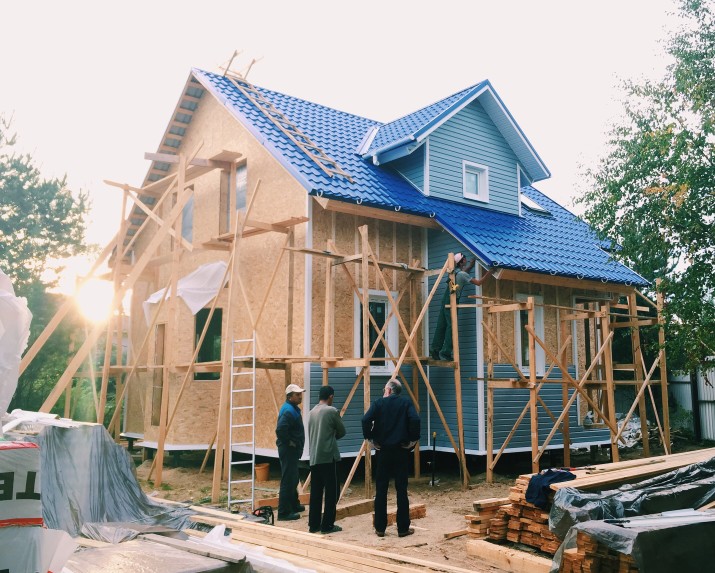
Indeed, you have already heard about it. But since you plan to embark on this project, it is appropriate to master the subject in all respects. The extension of a building is a structure that allows multiplying the living area in many ways.
If you choose horizontal enlargement, the work involves widening the ground area.
As for vertical extension, it relates to increasing the living space upwards. To achieve this, you have two options. Either you raise the roof or you convert the attic.
In any case, the work does not mean building a new dwelling, but rather adding one or more rooms connected to the existing constructions. They are created as a continuation of the habitat, and on the same foundation.
In this logic, the extension project does not apply to the construction of a separate room such as an annex or a garden shed.
On the other hand, it includes the creation of an additional bedroom, the enlargement of the living room including the addition of a veranda, the raising of the building by adding an extra floor, as well as changing the appearance of the house, for example by installing a roof terrace.
The advantages of a house extension
As mentioned above, this project requires significant expenses. However, the cost can be affordable compared to building a new house.
The work allows you to enjoy new rooms. Thanks to this, you can more easily adapt your home to your needs.
| Advantage | Description |
|---|---|
| Space gain | Allows increasing the living area without moving. |
| Property value increase | Increases the real estate value of the house in case of resale. |
| Adaptation to needs | Offers the possibility to create an additional room according to needs (office, bedroom, living room, etc.). |
| Customization | The extension can be custom-designed to match the style of the house and the tastes of the occupants. |
| Saving compared to moving | Avoids costs related to buying a new property and moving. |
| Comfort improvement | Optimizes interior layout and makes the house more functional and pleasant to live in. |
With the arrival of a baby, it helps you create a room just for them. It also gives you the possibility to have an office to work from home or a bedroom to host your guests or even a relaxation space like a gym or a playroom.
Besides that, a house extension offers you the opportunity to enlarge the living rooms. Your living room becomes more spacious. Do not hesitate to set up a reading corner or a mini bar.
Otherwise, you will have the opportunity to have an open kitchen. Why not add a dining area for the whole family? Ideas abound when a large space is available.
Many owners also undertake extension work to modernize the style of their property. For it to meet current tastes, it requires some additional modifications.
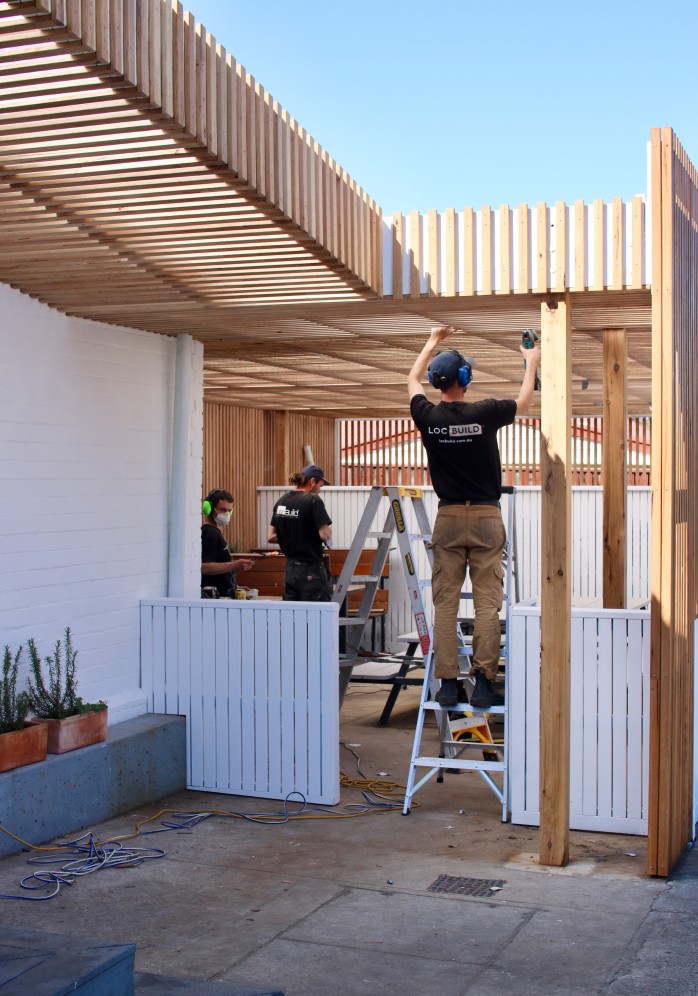
Adding wood is very trendy. It gives the home a warm yet contemporary look. For a raising project, many opt for extending the glazed area on the facade creating a loft effect.
The advantages of house extension do not stop there. There are many other strong points. In any case, it is essential to comply with legal obligations to avoid making a mistake.
Filing a prior declaration of works
When planning to enlarge a dwelling, it is important to know the formalities to prepare. Between the declaration of works and the building permit, the procedure depends on the nature of the work and the size of the room to be created. There is nothing better than consulting the urban planning services of the town hall.
Speaking of the prior declaration of works, it is an official procedure outlining the works that do not require a building permit. Unlike the latter, it is easier to complete.
The following constructions require a prior declaration to the competent authority:
- Facade renovation works
- Changes of use of an already existing house
- Works located in protected sector buildings without modification of the existing volume and structure
- Works requiring modification of the exterior appearance of the property
- Works transforming the volume of a building causing excavation of an exterior wall.
The list does not end there; creation beyond 5 m² and 20 m² of ground coverage requires a prior declaration of works. This famous declaration must be filed at the town hall. Generally, the latter sends a response at the end of one month after studying the file.
If your extension project concerns a site up to 5 m² of ground coverage, you have no procedure to complete. You can start the work on your own initiative without any problem.
The building permit
It is an administrative document used to control the compliance of your project with the city’s urban planning rules.
The application is accompanied by a complete file including a large number of administrative documents and graphic materials.
As an example, you must gather a roof and facade plan, a location plan, a site plan, a section plan, a photograph of the land, or a graphic display allowing verification of the building’s integration into the environment.
If you plan to create an extension with a footprint on the ground and a floor area exceeding 20 m² and up to 40 m² in an urban area, a building permit is mandatory.
The same applies to a project enlarging a living area equal to or greater than 150 m². In this case, you must both use an architect in addition to obtaining a building permit.
Regardless of the created surface area, the constructions below require a building permit:
- Works related to real estate restoration
- Works requiring modification of the facade or structure of a dwelling when associated with a change of use
- Works on a building or part of the construction that has a historical monument status
In this last case, simple repair and maintenance work is not included. After submitting your file, the town hall will provide a response within 2 months.
Works without authorization
It should be noted that municipal agents inspect extension works and new constructions in the city. If the owner obstructs this visit, a fine exceeding €3,000 is imposed.
The absence of a building permit or a work declaration results in penalties. If the work is unauthorized, the mayor has the right to stop the construction site. He can also order the demolition of the built area.
The owner will be fined up to €300,000. Additionally, he risks 6 months in prison in case of a possible repeat offense. However, he still has the possibility to apply for a regularization permit to avoid demolition.
FAQ
It is safer to call on a professional to study the feasibility of the project. With their knowledge and experience, they can help you create the plan, choose the materials, and analyze the consistency between the technique and your needs.
If it measures up to 5 m² of ground coverage, there are no formalities to respect. And even if the created surface includes between 5 and 20 m² of ground coverage, you only need a prior declaration of work.
This obligation applies if the extension area is greater than 20 m² and 40 m² of ground coverage bringing the total area to more than 150 m². Besides the building permit, you are also required to go through an architect.