
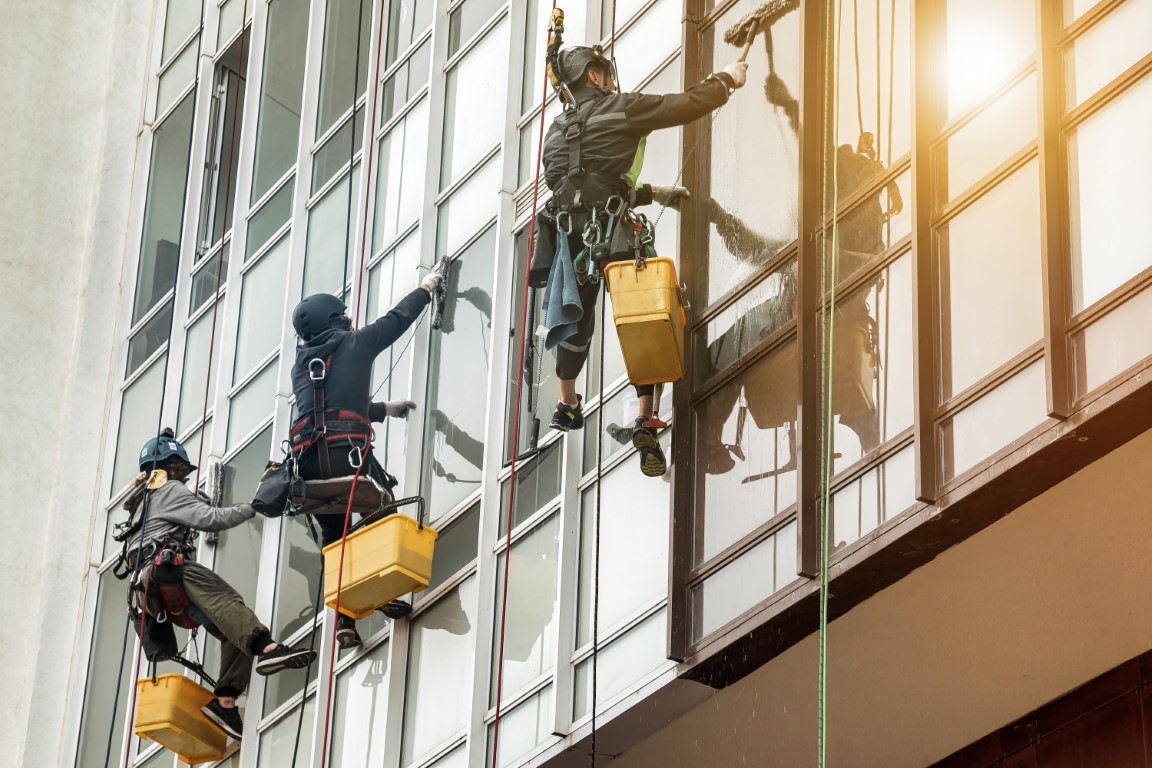
When working at height, safety is paramount. Rope access technicians must use appropriate equipment to ensure their protection in case of falls, accidents, and rescues. This article guides you in choosing the PPE kit (personal protective equipment) suitable for rope access technicians, covering various aspects such as fall arrest kits, rescue kits, as well as specific equipment like helmets and other fall arrest devices.
The essential elements of a working at height kit
A good working at height kit includes several key components designed to ensure the safety of rope access technicians. It is crucial to choose the right elements to minimize risks during interventions.
To select a suitable option, consult the guide choosing your kit for working at height. This guide offers a multitude of approved equipment to guarantee your safety during your work at height.
The harness
The harness is undoubtedly the most essential element of the PPE kit. It must be comfortably adjusted while offering a high level of safety. Harnesses are often designed with multiple attachment points to facilitate various types of work.
- Full freedom of movement: Choose a harness that allows users to move freely while ensuring their protection.
- Increased comfort: A good harness distributes weight well to avoid discomfort during prolonged wear.
- Certification: Always check that the harness complies with current standards such as EN 361 standard.
What are the differences between the main PPE equipment for working at height?
Each working at height situation requires appropriate equipment, and PPE kits vary depending on risks and the type of intervention. This table compares the most commonly used options:
| Type of equipment | Main use | Strengths | Limitations / constraints |
|---|---|---|---|
| Fall arrest harness | Securing the rope access technician | Comfortable, multi-attachment points, EN 361 standards | Requires precise adjustments |
| Lanyard with energy absorber | Absorbing the energy of a fall | Limits serious injuries | Reserved for occasional interventions |
| Ascender/sliding system | Vertical work (ropes, pylons) | Immediate stop in case of slip | Requires correct installation |
| Protective helmet | Protection against impacts and falling objects | EN 397 standard, lightweight and ergonomic | Must be replaced after a strong impact |
| Scaffolding kit | Temporary work on structures | Life line + carabiners + straps | Frequent inspection essential |
| Rescue kit | Emergency first aid | Allows immediate action | Effectiveness depends on training |
Helmets and hearing protection
Head and ear protection should not be neglected in a rope access technician kit. Wearing a helmet and ear defenders can prevent many accidents.
The helmet
The helmet provides a first line of defense against falling objects and other impacts. Modern models are designed to be ergonomic while providing maximum protection.
Main features to look for:
- Impact resistance: Ensure that the helmet meets the requirements of the EN 397 standard or equivalent.
- Adjustability: Good adjustability ensures a secure and comfortable fit.
- Lightweight: Choose lightweight helmets to reduce fatigue.
Hearing protection
Noise nuisance is a risk often underestimated. Suitable earmuffs can greatly improve the comfort and safety of workers at height.
- Effective attenuation: The best protections offer sufficient attenuation to prevent hearing damage.
- Compatibility: Check that they can be used together with the chosen helmet.
Fall arrest equipment

Another critical component is the fall arrest equipment, designed to stop a potential fall and minimize possible damage.
Types of fall arrest equipment
There are different categories of fall arrest equipment, each with its own specifics:
- Lanyard with energy absorber: This lanyard reduces the stopping force to a minimum, thus decreasing the risk of injury.
- Ascenders: They allow a quick stop in case of slipping or falling.
- Mobile anchor: Allows creating a secure anchor point on various temporary structures.
Standards and certifications
All fall arrest equipment must comply with strict standards such as EN 355 for lanyards and energy absorbers to provide the best possible protection.
First aid kits
Incidents can occur despite all precautions taken. Having a first aid kit within reach is essential for quick and effective intervention.
Contents of a first aid kit
A first aid kit should contain items that allow effective management of first aid. Here are some key elements to include:
- Bandages and dressings: To immediately treat minor injuries.
- Scissors and pliers: To cut clothing or remove debris.
- Ventilation systems: such as a resuscitation mask to provide air to unconscious victims.
Training and Use
Having a first aid kit is useless if no one knows how to use it. Proper training of teams in first aid gestures is essential.
Scaffolding fall arrest kit
Work on scaffolding presents particular risks that require specific safety measures. Choosing a suitable scaffolding fall arrest kit can make a difference.
Essential components
Here are some typical components of a scaffolding fall arrest kit:
- Temporary lifeline: Provides a secure anchorage point when fixed points are not available.
- Anchoring straps: Can be attached around many types of supports to offer secure attachment points.
- Connectors and carabiners: Used to securely link all elements of the system together.
Regular Inspection
Fall arrest equipment used on scaffolding must be inspected regularly to ensure reliability. Any damaged or worn part must be replaced immediately.
By following these guidelines and carefully choosing each element of your PPE kit, you can significantly improve the safety and efficiency of work at height. As a reminder, training is mandatory for work at height.
It is recommended to visually check your equipment before each use and to carry out a full inspection at least once a year by a competent person.
Yes, but only if the harness is designed to be multifunctional (with several certified attachment points). Otherwise, an unsuitable harness can increase risks instead of reducing them.
The essential trio includes a harness, a lanyard with energy absorber and a secure anchorage system. To be complemented by standard helmet and first aid kit depending on the nature of the intervention.
Publications similaires :
 How to install a wooden mezzanine at home?
 6 missions of a professional construction and renovation agency
 Everything you need to know about outdoor stairlifts
 Make a mouse trap
 How long does it take for a freezer to reach its temperature?
 Fatmoose: sturdy playground frames and play areas for children