
Parquet was previously discouraged in the kitchen. Since the kitchen is one of the most humid areas of the home, wood was not welcome.
However, since the success of open kitchens or American-style kitchens, the use of this material has become trendy. Many models are suitable for this room.
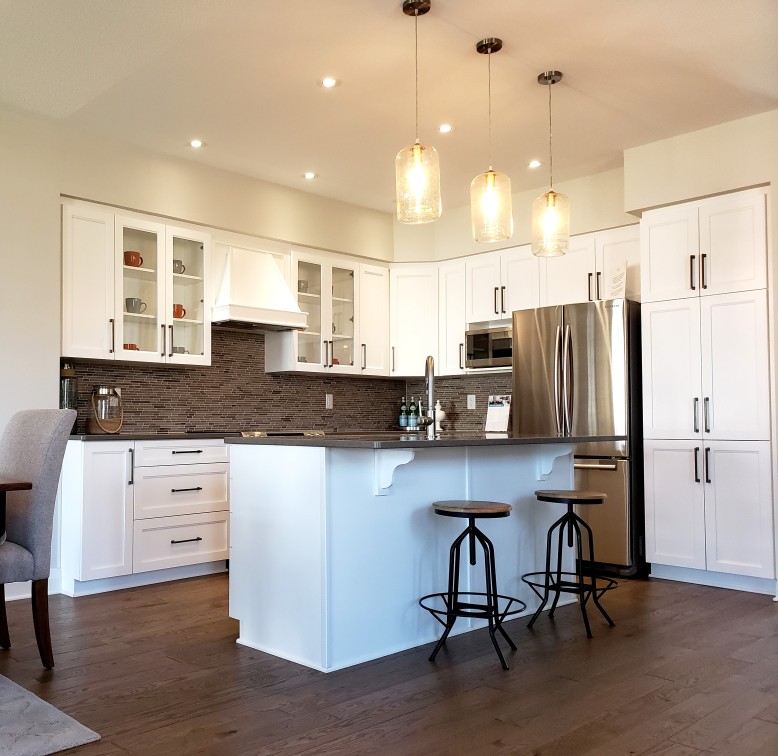
To make the right choice, this article serves as a guide summarizing some key advice to remember. But before starting, it is important to mention the strengths of parquet.
The advantages of parquet
Just like tiles for ceiling and wall, parquet is very versatile. It can be used for many different purposes. Regardless of its location, it gives the room a warm look. It is prized for its natural charm.
Besides its pure elegance, the floor is easy to work with. You can renovate or sand it without difficulty. With a circular saw, it can be cut quickly.
| Type of flooring | Advantages | Disadvantages | Usage tips in the kitchen |
|---|---|---|---|
| Solid wood flooring | Very durable, natural aesthetic, can be sanded and renovated multiple times | Sensitive to moisture, requires regular maintenance | Choose a hard wood and well varnished, protect from splashes |
| Engineered wood flooring | More stable than solid wood, less sensitive to humidity variations | Less sandable, more fragile than solid wood | Ideal if well installed, choose a water-repellent treatment |
| Laminate flooring | Scratch and stain resistant, easy to clean, affordable price | Sensitive to water if poorly installed, less authentic wood imitation | Opt for a specific “kitchen” laminate with good resistance |
| Exotic wood flooring | Very durable, naturally resistant to moisture | High cost, sometimes difficult to maintain | Good choice for kitchen thanks to its natural moisture resistance |
| Varnished flooring | Enhanced protection against water, stains and scratches | Can become slippery, requires regular renovation | Use a high-quality varnish for kitchen |
It should be recalled that this device is dangerous. If you do not know how to handle it, we invite you to read our article: How to use a circular saw?
Back to our subject, wood flooring also differs by its insulating properties. Since it is a natural material, it can be handled safely.
Criteria for choosing flooring for the kitchen
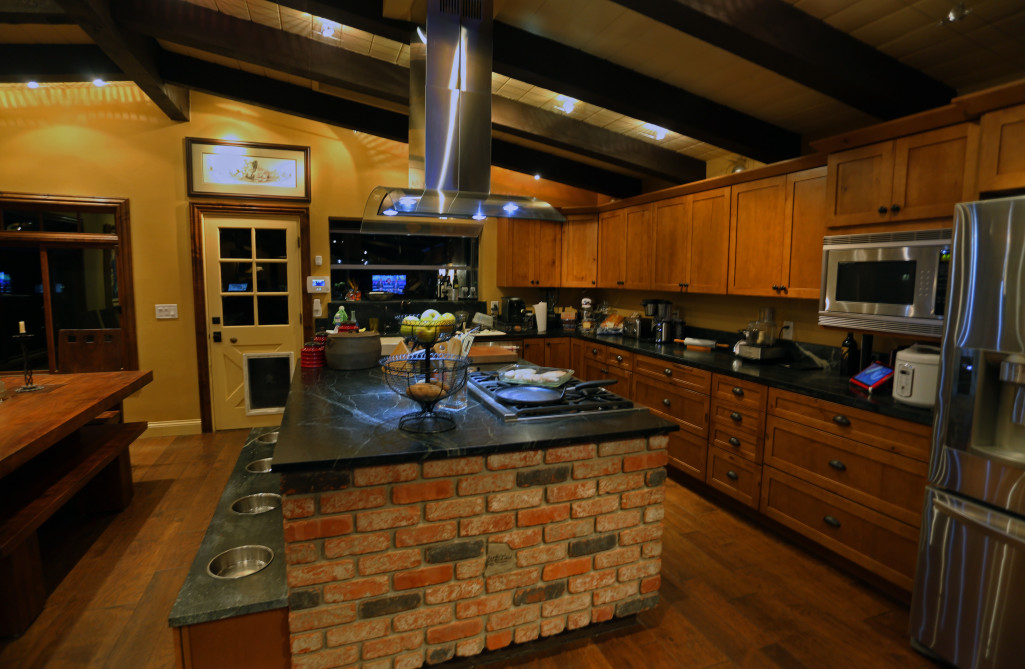
Due to its many advantages, this material continues to fascinate a large number of people. Faced with the plethora of offers on the market, it is appropriate to consider the following points to avoid ending up with the wrong product.
The wood species
Currently, there are several options regarding the wood species of the flooring. The classic material is not recommended for the kitchen. Since it has a high humidity rate, the floor must be quite resistant to withstand this environment. That’s not all, it is exposed to falling objects, the passage of the whole family, as well as heat. Therefore, you must choose a robust and durable wood that withstands the test of time. Specialists recommend class 4 materials which have an ultra-hard species. They do not degrade and remain intact even if they come into contact with water. In most cases, exotic woods such as iroko, merbau, and wenge fall into this category. Likewise, ash, oak, and black locust are part of it.
The installation type
Installing parquet flooring is not done just any way. There are two ways to install it. Between floating installation and glued installation, the latter is the ideal choice for the kitchen. In almost all humid rooms, specialists always prefer this technique because it helps reduce water infiltration. In the kitchen, you cannot avoid possible water splashes. When liquid seeps into the parquet, moisture can cause damage. The material risks warping. Fortunately, with glued installation, there is no empty space between the floor and the screed. The area will be filled with epoxy glue. This prevents any water stagnation under the planks of the material.
The finish
To enjoy your kitchen parquet for a long time, avoid varnishing it during finishing. The explanation may be simpler: a varnished parquet can be scratched more easily. Yet, the kitchen is one of the most frequented rooms. In this sense, the floor can wear out or scratch more quickly. So do not expect the varnish to protect the material. To prevent premature scratches, think about oiling it. This technique offers excellent resistance to cuts, shocks, and dirt. Linseed oil is among the most used products. Among its various advantages, the finish optimizes the wood’s resistance to moisture. It also allows sanding when the parquet has been damaged. It can be re-oiled without any problem. To maintain it and increase its lifespan, it is recommended to apply a coat of oil every year.
FAQ
This material has many major advantages. It is not only pleasant to look at but also has interesting insulating and acoustic qualities.
It is important to consider the wood species before making a choice. Likewise, the glued installation is strongly recommended. As for the finish, applying oil will be the better option compared to varnish.
Publications similaires :
 Collective heating meter: measurement and allocation of consumption
 Cleaning company after a death: expertise and know-how
 Off-peak hours: a time slot to save on your electricity bill
 No more hot water overnight
 Baking soda against snails
 Ribiland: reliable and efficient garden tools for all your outdoor work