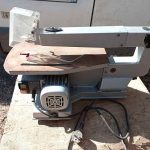
Of course, electric saws ensure fast cuts. However, they are not capable of providing you with more precision, unlike hand saws. They offer you a very sharp work finish.
Compared to the hand saw, pruning saw, log saw or keyhole saw, the Japanese saw has many strengths. Combining lightness and ease of use, the tool delights DIY enthusiasts seeking a good quality cut finish.
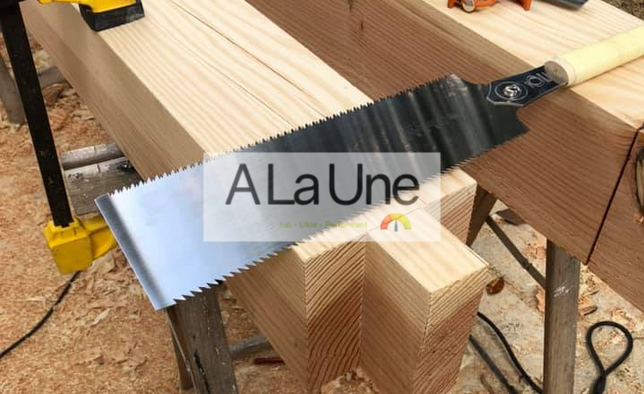
If you intend to get one, this article is very useful in helping you make your choice.
Discover all the necessary information about it, including the detailed comparison followed by the complete buying guide. This allows you to save time in searching for a model that meets your requirements.
Overview of my experience: For me, discovering the Japanese saw was a real cultural shock in my way of working wood. Unlike our Western saws that require pushing the blade, here everything is done by pulling, which allows the use of a blade that is infinitely thinner and more flexible. My feeling is unequivocal: you gain surgical precision and much less physical fatigue. I appreciate this sensation of pure glide where the tool seems to bite the grain effortlessly, leaving behind a surface so smooth that sanding becomes almost superfluous. It is the instrument of patience and finesse par excellence.
What is a Japanese saw?
As its name suggests, the Japanese saw is a hand saw of Japanese origin. Like other Asian countries, Japan is distinguished by its passion for woodworking. It is therefore normal to find many cutting tools among craftsmen, such as this saw with remarkable efficiency.
If you are used to handling a pruning saw or hand saw, this model is used in roughly the same way. But it is particularly distinguished by its use in the backward direction.
Unlike other classic hand saws, it cuts in the opposite direction. So you saw by pulling, not by pushing.
The Japanese saw performs cuts similar to these cutting tools. But it is especially its thin saw blade and finishing quality that make the difference.
It consists of a handle and an effective toothed blade. The latter is characterized by its design in fairly hard steel, significantly superior to that used in European saws.
Because of this characteristic, it has a long lifespan compared to its competitors.
There are many types of Japanese saws available. The Ryoba Japanese saw is popular thanks to its double-edged blade. This feature makes it versatile. It is perfect for making crosscuts and rip cuts.
The Kataba Japanese saw is prized for its ability to cut deeply and flush with the wood. As for the Dozuki Japanese saw, carpenters use it to make precise and fine cuts.
Besides that, you can find the Kugihiki saw, the Azebiki, and the Mawashibiki on the market. The latter is considered the origin of the drill. Its thick blade allows rounded cuts, which permits drilling holes.
The categories of saws with set teeth are distinguished by their moderately curved elongated structure. They offer an extremely fine saw cut. The thickness of the set teeth blade is less significant.
In this sense, cutting on the pull stroke causes no jamming or warping.
I remember my first attempt at miter cuts for an oak frame with a classic back saw: I always ended up with a one-millimeter offset that ruined the entire assembly. A friend then handed me his Ryoba, telling me to simply “let the weight of the saw do the work.” This realization was immediate: when pulling the tool, the blade naturally tightens and remains perfectly straight, whereas pushing tends to cause it to buckle. This experience transformed my thinking about the technical gesture: strength never replaces the precision of the pull. Since that day, my Japanese saw has never left my workbench for all my delicate finishing work.
Comparison of the Best Japanese Saws
To find the ideal model in a large stock of hand tools, we suggest you consult our comparison of Japanese saw offerings. Our products are ranked among the most sought-after models on the market. Their prices suit all budgets.
Wolfcraft 6951000 Japanese Saw
This saw features a blade length and tooth pattern suitable for cutting various materials. While some use it for cutting beams, baseboards, or wood, others use it for working on plastic pipes. It is also the perfect tool for cutting laminates.
Like the Stanley Japanese saw, this product has a flexible double-edged blade that simplifies difficult tasks. It offers very fine cuts that meet the needs of both professionals and novices.
Detachable, the saw can be easily stored. Its lightness provides good maneuverability. Even better, its non-slip handle reduces accidents. This finish also offers optimized user comfort.
No products found.
Advantages
- A multifunction saw
- Detachable and lightweight
Disadvantages
- Fragile plastic screw
Tajima JPR265A
Some people hesitate to use the Japanese saw because they fear injury. If you are one of them, we suggest you choose this reliable item. The brand has ensured the blade is well secured in the frame, reducing the risk of accidents.
Its replacement is not only quick but also easy. The blade guard removes effortlessly.
With its 0.9 mm kerf width, the tool allows cutting almost any type of wood with precision. Some customers state that its cutting capacity exceeds that of the radial saw. The brand equips it with a two-material ergonomic handle that facilitates grip.
No products found.
Advantages
- Safe model
- Straight and precise cut
Disadvantages
- Accompanying blade designed only for general sawing
Augusta Ryoba 44021 240 AMA
Looking for a versatile Japanese saw? Choose this model. It is equipped with a double-edged blade with multiple teeth simplifying cross and longitudinal cuts. It provides clean and straight cross-grain cuts.
If you are starting woodworking, this tool is definitely suitable for you. With its featherweight, it seems easy to handle. You can start slowly then move on to more aggressive cutting.
At the finish, it allows you to make finer cuts that require no sanding. With its ultra-sharp blade, this Japanese saw has no difficulty cutting through hard or soft wood.
No products found.
Advantages
- Performs longitudinal and cross cuts
- Easy to use
Disadvantages
- Questionable efficiency over time
Augusta 44020 270 AMA Kataba
The brand Augusta presents us this time with a practical saw to use. It stands out by its small dimensions of 11.8 cm long, 5 cm wide, and 62.5 cm high. Its small size reduces its bulk and facilitates handling.
Weighing 200 g, it demonstrates remarkable lightness. Its long handle made of Liberian fibers offers good work control at every use.
This Kataba Japanese saw has a fairly fine triangular tooth pattern. It offers deep and clean cuts, regardless of the material type. It is not only suitable for sawing wood but also for cutting plastics and baseboards.
No products found.
Advantages
- Small size and featherweight
- Kataba Japanese saw with very long handle
Wolfcraft 6955000
The wolfcraft 6955000 – Japanese Saw is a high-performance hand saw equipped with a 330 mm blade specially designed for clean cuts in solid wood, plastic, and laminates. Its Japanese fine-toothed blade allows precise and fast cuts with reduced effort, ideal for finishing work, panel fitting, or delicate cuts in various materials. The ergonomic handle ensures a comfortable grip and good cutting control.
This model stands out for its ability to offer clean cuts without splinters thanks to the geometry of its blade, making it a practical tool for carpenters, DIY enthusiasts, and demanding amateurs. Lightweight and easy to maneuver, it remains a reliable choice for daily manual cutting, even though its size and manual operation limit it to freehand work.

Advantages
- 330 mm precision blade
- Clean laminate cuts
- Comfortable ergonomic handle
Disadvantages
- Manual use only
- Not suitable for large wood
Tajima JPR265ST Japan-Pull
The Tajima JPR265ST Japan-Pull 265 mm Precision Japanese Saw is a pull-stroke hand saw designed for very fine and precise cuts in wood and similar materials. It features a blade of ≈ 265 mm with a tooth spacing of about 1.75 mm (≈ 16 TPI), a thin blade thickness (~0.6 mm), and a kerf width of about 0.9 mm, ensuring a precise and splinter-free cut line. Thanks to the quick blade change system and the short handle coated with non-slip elastomer, it combines performance and comfort even on delicate or detailed cuts.
This saw is ideal for carpenters, cabinetmakers, or demanding DIYers who seek precision and maneuverability in finishing projects, joinery, or piece adjustments. Its lightweight and ergonomic design allows a comfortable grip and optimal control during pull cuts, while remaining robust enough to last over time.

Advantages
- Very fine and precise cut
- Quick blade change
- Ideal for detailed finishing
Disadvantages
- Limited to soft materials
- Expensive specific blades
Augusta-Heckenrose 44011 150 AMA
The Augusta-Heckenrose Mini Dozuki 150 mm Japanese Saw is a traditional hand saw designed for fine and precise cuts thanks to its short 150 mm blade and rigid C75 steel back. The Dozuki configuration (reinforced blade with back) allows maintaining a very straight path, ideal for meticulous adjustments, carpentry joints, or delicate cuts of soft wood and similar materials. Its braided raffia handle ensures a comfortable grip while remaining lightweight and manageable.
Compact and simple, this mini Japanese saw is perfect for DIYers and craftsmen seeking precision in detailed work where large saws are impractical. It is suitable for both fine cuts and some coarser cuts when the situation requires, while remaining a reliable manual tool with no special maintenance needed.

The advantages
- Very precise cut
- Rigid C75 steel back
- Comfortable raffia handle
The disadvantages
- Not for solid hardwood
- Not suitable for heavy work
FAMEX 5525 Professional Japanese Kataba Saw
The FAMEX 5525 Professional Japanese Kataba Saw is a high-end Japanese hand saw with a 265 mm blade designed for fast, precise, and clean cuts in wood. Its Kataba format (blade without back) allows deep and efficient cuts, even in wide sections, while maintaining the fine cutting characteristic of Japanese saws. Its foldable system makes the tool safer to carry or store, ideal for craftsmen, carpenters, and demanding users.
Designed for professional use, it combines a durable hardened blade with a comfortable grip and easy blade replacement. This Japanese saw is suitable for both crosscuts and rip cuts for clean, splinter-free results, making it very versatile for all kinds of woodworking tasks.

The advantages
- Deep Kataba blade
- Foldable for safety and storage
- Fast & clean cut
The disadvantages
- Not for hard metal
- Non-reversible blade
Stanley 0-20-331
The Stanley 0‑20‑331 Mini Japanese Saw 120 mm from the FatMax range is a compact hand saw designed for fine and precise cuts, even in hard-to-reach places. Its flexible 120 mm blade with JetCut fine & extra-fine teeth (≈ 17–22 TPI) ensures clean cuts in wood, laminated panels, or derived materials while minimizing splinters. It is resharpenable and usable by both right- and left-handed users, making it practical regardless of your working style.
The ergonomic dual-material handle offers a secure and comfortable grip, even during prolonged use. Compact and lightweight, this mini Japanese saw is ideal for precision DIY, fine assembly adjustments, or finishing work, while remaining a reliable and durable manual tool from the Stanley range.

The advantages
- Very fine JetCut teeth
- Long-lasting resharpenable
- Suitable for right- and left-handed users
Disadvantages
- Limited cutting capacity
To perfect your hand-made joints, the use of well-sharpened chisels is an essential complement to precise cutting. If you prefer speed for your large cuts, rather turn to a robust and stable table saw. Finally, to organize your workspace and hold your pieces firmly, installing a versatile folding workbench will greatly facilitate your woodworking sessions.
What is the best Japanese saw?
If little is known about these cutting tools, it is normal to feel a bit lost when buying. Sometimes we wonder how to find the ideal model.
If you have already consulted our ranking of Japanese saws but still can’t decide, we advise you to choose a product according to the expected type of use.
If the model is intended to be used only a few times, there are many low-priced models capable of meeting your needs. Even if they do not have a high-end finish, their saw blade width promises good results. They require frequent maintenance and you can use them for a long time.
If, on the other hand, you are a professional in woodworking, you should equip yourself with an ultra-efficient saw. In this sense, you just need to increase the price and look for an expensive product that is sometimes high-performing.
With its blade length, tooth pattern, and suitable thickness, the tool provides precise and powerful cuts. Some items, like the Silky model, not only offer good performance but are also multi-purpose. They represent a very interesting investment.
What criteria should you consider before buying your Japanese saw?
With a huge stock of products available on the market, making the right choice is not at all an easy task. Finding the ideal item takes a lot of time. To help you spot it more quickly, consider the following parameters:
Different types of Japanese saws
Also called double-edged, the Ryoba Japanese saw has two sides, each with teeth. There are many categories on the market. Some have one side for hard wood and the other for soft wood. Others are used for more specific cuts. This Ryoba Japanese saw is generally used to level a wood panel or to make deep crosscuts.
The Dozuki Japanese saw has a blade thickness of 0.3 mm with trapezoidal teeth. It is reinforced by a back that allows you to easily make wood joints. Cabinetmakers also use it to make joints.
As for the Kataba Japanese saw, only one side of its blade has teeth. The blade length and width vary depending on the cutting edge. Thanks to this, cutting speeds differ depending on the position of the tool on the material to be machined. It is a model of Japanese saw with many uses.
The Azebiki model is not very common. It is distinguished by its short and curved blade. It is the ideal product for making a cut in the middle of a piece of wood. For the Kugihiki saw, professionals entrust it with finishing cuts. They favor it because it does not damage the material too much.
The Sokomawashibiki Japanese saw and the Anahiki are not as common on the market. But each has its own strengths and weaknesses. The latter, for example, is ideal for cutting large branches.
| Saw model | Type of teeth | Main use | Special feature |
| Ryoba | Double (Rip & Cross) | Versatile (crosscut/rip) | Two saws in one |
| Kataba | Single (Cross-cut) | Deep cuts and framing | Rigid blade without back |
| Dozuki | Very thin with back | Joinery (tenons/mortises) | Extreme precision (reinforced back) |
| Kugihiki | No set | Trimming dowels | Ultra-flexible blade, does not scratch |
Blade quality
No matter the blade length or blade thickness, know that this central part determines the quality and efficiency of the sawing. Therefore, its selection should not be taken lightly. Moreover, it defines the precision of the saw cut, which mainly differentiates Japanese saws.
To avoid purchasing a poor product, it is crucial to consider the material used to make this component. Most models are made of steel with remarkable hardness. That is why the saw can withstand intensive use without any problem.
Due to this hardness, the blade thickness is finer compared to other categories of hand saws. In fact, some examples feature a chrome finish. This enhances their robustness and increases their lifespan.
Practical aspect
To determine the practicality of the product, it is essential to observe the design of its handle. The latter ensures a good or bad grip. Generally, the handle of Japanese saws is notable for its length.
Thanks to this feature, it remains possible to saw with two hands. In this way, the work requires no huge cutting effort, but the efficiency is perfectly improved.
However, when you intend to make fine cuts with a good saw cut width, it is also possible to use one hand.
In this context, do not forget to check the weight of the saw, as this also affects comfort of use. Check if it is light or heavy. In the latter case, you must exert a lot of effort with each handling.
On the other hand, a small saw seems easy to store. It does not clutter your workshop. Some brands like Silky offer folding saw models. Their practicality is guaranteed.
How to use a Japanese saw?
It must be acknowledged that the first use of a Japanese saw can be disorienting. Since you are used to handling a Western saw by positioning yourself above the material to be worked on, it is quite the opposite with this model.
Before cutting, it is imperative to firmly secure the piece of wood to be sawed. This ensures its stability throughout the work. To cut, you pull the saw towards you without applying pressure. With the ultra-sharp saw blade, the cut is not only clean but also precise.
It is perfectly understandable that you might be a bit awkward at first. After two or three uses, you get used to using it without any problem. You just need to abandon your usual gesture with the pruning saw, fret saw or flush-cut saw and you’re good to go.
With the Japanese saw, you have to cut in the direction of the pull. Unlike other saws, it does not cut using the tip of the blade edge, regardless of the blade’s length or width. It cuts through the rear end.
To guide it, you use your thumb in the same way you are used to with traditional saws. You do not hold it by the front of the handle or grip, but rather a little further back.
Proceed with sawing by pulling regularly and gently. The more you go on, the better you will know the best angle to get precise cuts.
Avoid sawing quickly or applying too much pressure. Otherwise, the Japanese saw blade tends to twist or veer off the cutting line. If you are working on a large piece of wood, you can very well use both hands. It is better to keep them spaced apart from each other.
If you plan to make very deep cuts, know that these tasks can cause the blade to jam. At first, you need to use a wedge in the cut to split the sides.
Whatever the blade length or thickness, this element contributes to the saw’s power. It is therefore advisable to take meticulous care of it. Make sure to store the tool in dry places after each use.
The Best Brands of Japanese Saws
Given the usefulness of Japanese saws in everyday life, brands compete in inventiveness and originality to present diverse models. If you have a limited budget for acquiring the tool, many brands offer you low-priced examples.
Among the most well-known, Stanley offers a variety of saws at unbeatable prices. Despite its attractive pricing, the Stanley Japanese saw is able to guarantee successful sawing.
On the other hand, if you plan a larger budget for buying a new saw, Silky offers you a wide selection of powerful models. Although they are a bit expensive, their cutting quality justifies their price.
Some brands like Magma offer models equipped with several blades in one package. Even though they are also costly, they are complete and help you carry out many sawing tasks.
How Much Does a Japanese Saw Cost?
Compared to other knives or hand saws, the Japanese saw is notably inexpensive. Generally, its price does not exceed 80 or 100 euros. If you only use it occasionally, there is no need to invest in an expensive model.
There is a large stock of low-priced saws, but more than sufficient to meet the needs of DIY enthusiasts.
The cost of some models like the Stanley Fatmax Japanese saw 600 mm does not reach 20 euros. Yet, it is equipped with a flexible blade perfect for difficult woodwork.
For specialists seeking a high-end saw, they must plan a significant budget for the purchase. Other brands offer models designed for professional sawing.
The J-KSSETK saw for craftsmanship and industry is worth up to 79.90 euros, for example. Therefore, the price of the item notably depends on the intended type of use.
It is advisable to purchase from sites offering free delivery. This allows you to save money on every order.
How to maintain your Japanese saw?
Whether it is the Ryoba Japanese saw, Kataba Japanese saw, Dozuki Japanese saw or Stanley Japanese saw, this cutting tool requires regular maintenance.
This operation ensures its long lifespan and boosts its performance. If you want to enjoy your Japanese saw for a long time, make sure to take care of it frequently.
Unlike electric saws, its maintenance is not that complicated. It is strongly recommended to store it in a case isolated from other accessories after each use. This is to preserve its blade so that it does not come into contact with them. Otherwise, it bends or misaligns the teeth.
After use, make it a habit to remove the sawdust stuck between the teeth. It is necessary to sterilize the blade using 90-degree alcohol. Others use bleach to avoid contaminating other materials.
To properly maintain the Japanese saw, the most important part relates to the sharpening phase. Just like knives, its blade also needs it.
It should be noted that good sharpening requires techniques appropriate to the tools in question. It is recommended to use suitable sharpening tools. Otherwise, it may damage the blade.
If the blade appears worn, there is nothing better than replacing it permanently. If the product has good blade length precision, it guarantees speed and cutting efficiency.
In any case, the Japanese saw blade is rarely changed because it benefits from the significant toughness of the steel.
Advantages and disadvantages of a Japanese saw
Compared to other hand saws, the Japanese one stands out by its multiple advantages. It is equipped with an ultra-thin but quite sturdy blade.
If the blade of the pruning saw is less hard, its blade is quite rigid, supporting deep cuts. As such, it has great durability helping you to carry out your woodworking tasks for quite a long time.
Due to its thin blade thickness, the Japanese saw is capable of making cross cuts with great precision. If work with some manual models requires touch-ups, those with this model do not need corrections. The cut finish is flawless.
To cut wooden pieces, it is used by pulling. It does not require a huge physical effort, unlike pushing. The sawyer directs the teeth towards himself, not towards the end of the cutting part. This technique optimizes force.
That’s not all, it allows the Japanese saw blade to stay perfectly straight during sawing.
Carpenters also prefer to use this Japanese-origin saw because of its versatility. They can use it to cut several different materials.
Wood is one of the most commonly used pieces with the tool. But it is also found in plumbing work to cut PVC pipes. Some professionals entrust it with parquet cuts.
Whatever the strength of the element to be treated, the Japanese saw blade promises remarkable durability. You just need to know how to handle it well to avoid damaging it.
In this logic, the use of the device requires a lot of precautions. Like knives, it can cause potential bodily injuries. This delicate handling is among its disadvantages. It is better to be accompanied by someone experienced with the saw during the first use.
Besides these details, its operation is also very different from that of the Western saw.
No matter the length of the toothed blade, it is reversed. The cutting is done on the pull of the tool. If you do not master the technique, either you get injured, or the cut finish is poor. Therefore, its handling also requires skill.
Everything you need to know about the Japanese saw for your precision work
<!– wp:yoast/faq-block {"questions":[{"id":"faq-question-1622418936371","question":"How to saw with a Japanese saw?","answer":"If you are familiar with traditional saws, the use of the Japanese saw is the opposite. It cuts by pulling, because the toothed blade is directed towards the user and not towards the tip of the edge. Thanks to this technique, the saw blade can stay straight along the cut. Moreover, this increases the force.”,”images”:[],”jsonQuestion”:”How to saw with a Japanese saw?”,”jsonAnswer”:”If you are familiar with traditional saws, the use of the Japanese saw is the opposite. It cuts by pulling, because the toothed blade is directed towards the user and not towards the tip of the edge. Thanks to this technique, the saw blade can stay straight along the cut. Moreover, this increases the force.”,”jsonImageSrc”:””},{“id”:”faq-question-1622418938498″,”question”:”Which Japanese saw to choose?”,”answer”:”To find the ideal model, make your choice based on your budget and the use you plan to make of it. If you are an occasional DIYer, a less expensive item like the GRÜNTEK Japanese saw will suit you very well. Conversely, if your profession involves woodworking, opt for a higher-end product.”,”images”:[],”jsonQuestion”:”Which Japanese saw to choose?”,”jsonAnswer”:”To find the ideal model, make your choice based on your budget and the use you plan to make of it. If you are an occasional DIYer, a less expensive item like the GRÜNTEK Japanese saw will suit you very well. Conversely, if your profession involves woodworking, opt for a higher-end product.”,”jsonImageSrc”:””},{“id”:”faq-question-1622419328624″,”question”:”Why buy a Japanese saw?”,”answer”:”Due to the good quality of its blade, the Japanese saw allows you to obtain an ultra-thin saw cut line. Even though its price is not expensive, it offers many advantages. It is capable of sawing solid materials including hardwood. With its ergonomic handle, it can seem more manageable.”,”images”:[],”jsonQuestion”:”Why buy a Japanese saw?”,”jsonAnswer”:”Due to the good quality of its blade, the Japanese saw allows you to obtain an ultra-thin saw cut line. Even though its price is not expensive, it offers many advantages. It is capable of sawing solid materials including hardwood. With its ergonomic handle, it can seem more manageable.”,”jsonImageSrc”:””}]} –>If you are familiar with traditional saws, the use of the Japanese saw is the opposite. It cuts by pulling, because the toothed blade is directed towards the user and not towards the tip of the edge. Thanks to this technique, the saw blade can stay straight along the cut. Moreover, this increases the force.
To find the ideal model, make your choice based on your budget and the use you plan to make of it. If you are an occasional DIYer, a less expensive item like the GRÜNTEK Japanese saw will suit you very well. Conversely, if your profession involves woodworking, opt for a higher-end product.
Due to the good quality of its blade, the Japanese saw allows you to obtain an ultra-thin saw cut line. Even though its price is not expensive, it offers many advantages. It is capable of sawing solid materials including hardwood. With its ergonomic handle, it can seem more manageable.