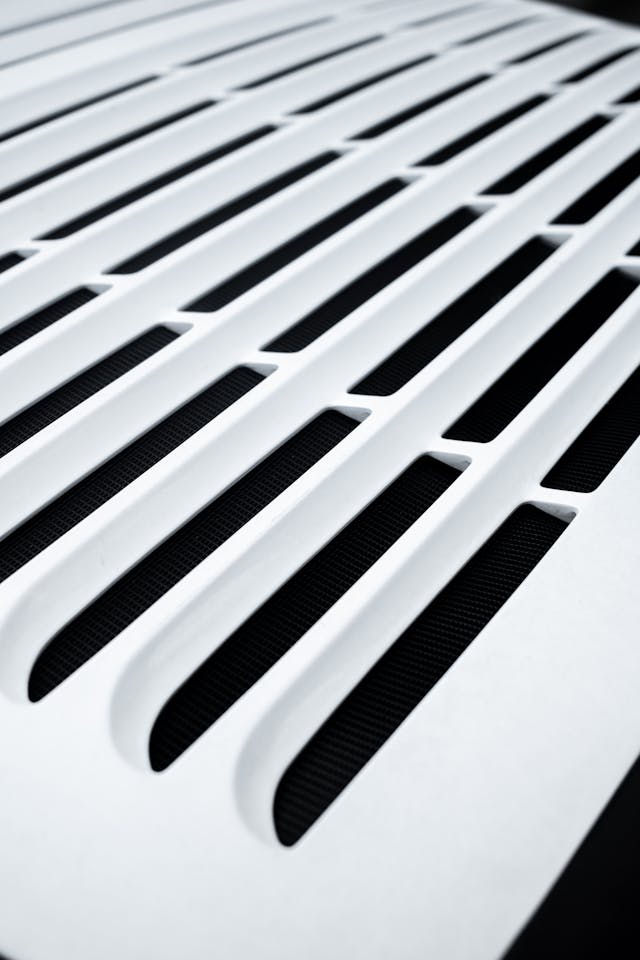
Do you suffer from these freezing drafts or annoying whistling as soon as the wind picks up on your joinery? Determining the correct direction of the window ventilation grille is the secret to taming invisible flows and activating the Coanda effect, turning a simple slit into an intelligent thermal shield. This guide reveals how installation at a high position, with slats oriented towards the ceiling, guarantees healthy air and total acoustic serenity without ever sacrificing your indoor comfort.
- Why the direction of a ventilation grille changes everything in your home
- 3 golden rules for installing your window ventilation
- How to avoid cold drafts and whistling
- Maintenance and tips for effective ventilation in 2026
📍 My experience: I was called for a problem of constant whistling in a bedroom in the middle of winter. The owner thought his VMC was faulty, but in reality, the window grille had been installed upside down during renovation. The lesson learned is simple: by simply flipping the grille to direct the airflow towards the ceiling, the noise disappeared instantly and the sensation of a “cold shower” on the bed was eliminated.
Why does the direction of a ventilation grille change everything in your home?
🍀 Positives
- Improved thermal comfort
- Reduction of wind noise
- Better air diffusion
🔻 Limitations
- Sometimes visible aesthetics
- Requires precise installation direction
We often forget that this small accessory manages your thermal comfort. The window ventilation grille acts like the lung of your home, orchestrating healthy air circulation daily.
Upward orientation for air intake and the Coanda effect
Outside air enters your living spaces. The airflow must be directed towards the ceiling for optimal thermal mixing.
Thanks to the Coanda effect, the fresh air “sticks” to the upper surface before gently descending. This prevents feeling a freezing draft on the neck.
The Coanda effect allows fresh air to follow the ceiling surface to gradually warm up before reaching the room occupants.
Comfort changes radically depending on the inclination. A poorly oriented grille creates an immediate discomfort zone. Directing the slats upwards remains the golden rule.
To optimize your installation, I suggest you consult our guide on noisy VMC in apartment buildings which deals with noise nuisances related to airflow. If you install your joinery yourself, the article on new construction windows also provides useful insights. Finally, for overall comfort, discovering how to treat humidity offers interesting perspective on the importance of good ventilation.
The air outlet or extraction directed downwards
In wet rooms, we talk about extracting stale air. The flow logic is completely reversed compared to the living room.
Point the slats downwards. This facilitates the capture of stagnant humidity near the walls and floors.
This direction also limits dust deposits on the wall above the grille. It’s a simple trick to keep your walls clean and evacuate odors.
🌍 Did you know?
The stale air inside a dwelling can be up to 8 times more polluted than outside air. A well-oriented ventilation grille can halve the concentration of pollutants in just 20 minutes.
3 golden rules for installing your ventilation on a window
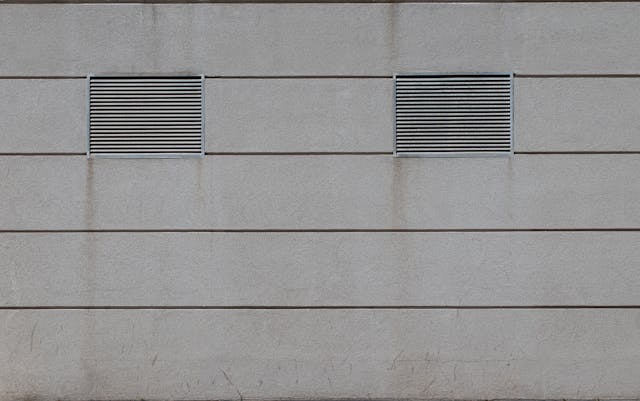
Now that we understand the physics of the flow, let’s move on to practical application on your joinery, where installation errors are costly in heating.
The high position for natural circulation
The grille should be placed at the top of the window. On wood or PVC, the top rail remains the standard location.
This height promotes thermal mixing. Cold air, being denser, falls to mix. It’s a simple matter of physics.
Also consider rain. A high installation better protects your interior from direct infiltration during heavy showers.
⚠️ Common misconception
It is often thought that a grille installed outside must have the slats pointing upwards to “suck” the air. This is false: outside, they should always point downwards to form a drip edge and prevent rainwater from entering the wall.
Fixing and sealing according to the joinery material
The fixing method varies depending on your window. On aluminum, clipping is preferred. For wood, screws ensure durable hold.
| Material | Fixing | Care | Sealing |
|---|---|---|---|
| PVC | Screwing | Risk of cracking | Seals required |
| Wood | Screws | Pre-drilling | Putty |
| Aluminum | Clips | Template | Thermal bridge |
Do not neglect the seals. They eliminate unwanted thermal bridges around the grille. On shutters, drill the box carefully.
The paper sheet test to validate airflow
Take a simple sheet of toilet paper. Bring it close to the grille. It is the most reliable and economical test.
If the sheet is pushed away, air intake or extraction.
If nothing moves, your duct is blocked. You then need to remove the grille to quickly check inside the wall.
How to avoid cold drafts and whistling?
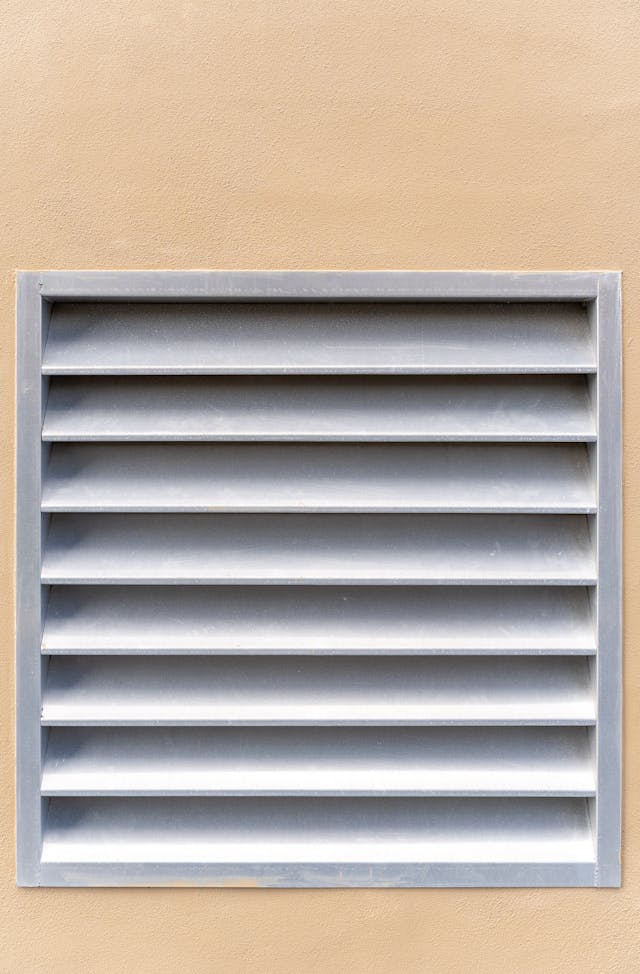
Nothing is more annoying than a grille that whistles as soon as the wind rises. You can fix this problem without blocking everything.
The impact of slats on aerodynamic noise nuisance
The whistling often comes from too sharp an angle of the slats. The air tears there and creates a sound vibration. This is pure aerodynamics.
Slightly tilt the fins to break the airspeed. Sometimes, a simple millimeter of offset is enough to restore complete silence at home.
If you live near a road, switch to acoustic grilles. They incorporate a specific foam that absorbs external decibels without blocking the air. It is a very worthwhile investment.
A persistent whistle is often a sign of an undersized grille compared to the suction power of your VMC.
Managing prevailing winds and water infiltration
Facades exposed to the west bear the brunt of storms. Water can then enter inside through the ventilation ducts. Be vigilant.
Install a protective exterior canopy. This small hood deflects driving rain while allowing air to circulate freely underneath.
Never block the grille with tape or putty. It is a fatal mistake for the building’s health. Humidity will skyrocket.
Find the balance. Protect the grille from external elements without ever sacrificing the necessary fresh air flow.
- Install a facade canopy
- Use baffle grilles
- Check the tilt of the external slats
- Clean the water drainage channels
Maintenance and tips for efficient ventilation in 2026
A perfect installation is useless if it ends up suffocated by dust. Regular maintenance is your true health insurance.
Regular cleaning of the slats to prevent clogging
A brushing every six months is essential. Dust accumulates quickly with pets or carpets, thus restricting the airflow.
On humidity-controlled models, grease can block detection. Gently clean the braids without wetting them. A simple vacuum is often enough to restart the system.
Also check the mosquito nets that get clogged with pollen. A blocked grille does not ventilate anything at all in the room.
- Vacuum cleaner with brush attachment
- Dry microfiber cloth
- Soapy water for plastics
- No chemical solvents
💡 Practical tip
Vacuum your grilles every 3 months. Dust accumulates faster in the direction of the airflow and can reduce the air flow rate by 30%, forcing your VMC to consume more energy.
Door undercutting, the essential complement
Air must travel from one room to another. If your doors are too airtight at the bottom, circulation stops abruptly, causing the suffocation of the living space.
Leave 1 to 2 cm under your doors so that air circulates from living areas to wet rooms.
Plan this space of 1 to 2 centimeters under each interior door. This undercutting is mandatory to ensure a truly effective VMC.
Never block the grilles in winter. You risk mold behind your furniture and rapid deterioration of your walls.
- Check the air passage under the doors
- Never obstruct air inlets
- Clean the extraction vents
- Check the motor annually
Mastering the direction of window ventilation grilles ensures a healthy atmosphere without drafts thanks to the Coanda effect. Install your modules at the top to orchestrate this invisible dance between fresh air and thermal comfort. Act now to protect your home from humidity and enjoy a sustainably purified interior.
FAQ
In which direction should the slats of a ventilation grille on a window be oriented?
To ensure optimal air circulation while preserving your comfort, it is essential to install the grille with the slats oriented towards the inside of the room. The flat back of the accessory should face outside. This clever configuration allows fresh air to enter your home while erecting a natural and protective barrier against rain and insect intrusion.
By directing the flow upwards, you benefit from the Coanda effect: the fresh air “sticks” to the ceiling and gradually mixes with the ambient air. This elegant technique avoids the sensation of a cold shower on the neck and ensures a homogeneous diffusion of freshness throughout your living space.
Where is it best to position the ventilator on the joinery?
The golden rule for flawless ventilation is to place the grille at the top part of your window, ideally on the upper crossbar of the frame or the sash. Physics is our ally here: warm air tends to rise, so introducing fresh air from above promotes a natural and effective thermal mixing, essential for a healthy environment.
Generally fixed between 1.5 and 2 meters from the floor, this strategic position also offers additional protection against water infiltration during severe weather. It is the perfect compromise between invisible technical performance and durable protection of your interior against stagnant humidity.
How to ensure that air actually circulates through the window grille?
There is a trick as simple as it is foolproof to validate your installation: the paper sheet test. By bringing a light piece of paper, such as a toilet paper sheet, in front of the grille, you will instantly see the movement of the air. If the sheet is gently pushed inward, your air intake perfectly fulfills its renewal mission.
If the sheet remains still, it is very likely that the duct is blocked by dust or external debris. Regular maintenance is the guarantee of constant breathing.
Why is it crucial never to block your ventilation grilles, even in winter?
Blocking your air intakes is a mistake that the building does not forgive. A house that no longer breathes sees its humidity level skyrocket, promoting the appearance of unsightly and harmful mold behind furniture. Ventilators are the lungs of your home; they regulate indoor air quality by evacuating pollutants and daily water vapor.
For this cycle to be complete, do not forget the “undercutting” of your interior doors, that small space of 1 to 2 centimeters under the wood that allows air to travel freely from one room to another. It is this fluid circulation […] that guarantees a healthy habitat and controlled energy efficiency throughout the year.