
Lately, your heating bill keeps rising. To address this situation, you are finally ready to embark on energy renovation work.
With this project, you will gain comfort both in winter and summer. To carry it out successfully, you need to know how to choose the best insulators.
Among wood fiber, rock wool sheep wool, glass wool, expanded polystyrene, cellulose wool, different types of thermal insulators are available on the market.
To avoid choosing a bad material, this article can serve as a guide. But to better understand our ideas, it is important to explain what is meant by thermal insulator.
What exactly is a thermal insulator?
A thermal insulator is primarily a material that prevents cold and heat from escaping a closed house.
Whether it is a bio-based insulator like sheep wool feathers, wood wool, cellulose wool or a synthetic insulator such as expanded polystyrene, these materials should protect you from the cold during the bad season and from heat in summer.
The best thermal insulators have the ability to significantly reduce temperature exchanges, condensation, and heat loss. They are characterized by their high thermal resistance indicated as R.
A material is classified as an insulator when the R coefficient is approximately 4 m²°C/W. When the thermal resistance of insulating materials is high, the house does not need to consume more energy.
If you want to limit your electricity bills, proceeding with interior wall insulation or attic insulation is an excellent idea.
But before starting, it is essential to carry out a thermal assessment. This step helps you define the thermal performance of each area.
After the diagnosis, you can start by insulating the most sensitive areas. Generally, the roof and attic are among the places with up to 30% heat loss.
As for the walls, they suffer about 25% heat loss. At the level of windows and glass, 10 to 15% heat loss is detected. They must therefore be treated as a priority.
The choice of insulating materials determines the success of energy renovation work. It is therefore imperative not to take it lightly.
How to choose a good thermal insulator?
Wood wool, sheep wool, glass wool, cellulose wool, wood fiber, expanded polystyrene, there are many thermal insulators that meet all requirements.
Moreover, they come in several forms such as semi-rigid panels, foam, solid panels, rolls, and many others. Faced with this wide variety, it is not easy to choose the ideal insulator well.
In any case, these materials are characterized by two distinct thermal properties. It is important to know them to avoid choosing an unsuitable material.
First, there is the thermal conductivity lambda expressed in W/m.K. This indicator refers to the amount of heat that is transmitted from one place to another.
If its value is low, then there is little conductivity. In this case, the material is a good insulator. This thermal conductor mainly relates to the thickness of the insulation.
Besides that, the performance of a material is reflected by its thermal resistance, indicated as R on the label. This is expressed in m²K/W. The insulation is remarkable when its value is high, at the same thickness.
Measurements of thermal conductivity lambda and insulation thermal resistance should normally be mentioned in the product’s technical data sheet, along with its thickness.
It is advisable to check the CE marking proving its compliance with European standards. A good material is also recognized by the presence of the ACERMI logo. This certifies that it has a high insulating power.
Furthermore, if you wonder how to properly choose the suitable material for interior wall insulation or roofing, consider checking the density.
If it is adequate, the insulation will not sag over the years. If you opt for mineral wools, favor a product with a density of at least 30 kg/m3.
Regarding longevity, favor thermal insulators that can last a long time. It should be noted that rodents love insulating materials. They keep burrowing into them. The consequences are especially felt on those with low density. Their effectiveness suddenly drops.
To avoid reaching this stage, consider installing special grids to block them. Otherwise, choose a rodent-resistant insulation such as loose hemp shiv.
The different thermal insulators
To carry out thermal and acoustic insulation of a house both inside and outside, it is necessary to know the different types of insulators.
Since they are numerous, they can be divided into 4 main families: synthetic, natural, mineral and new generation brick insulators.
Synthetic insulators:
- phenolic foam
- expanded polystyrene
- polyurethane
- extruded polystyrene
These thermal insulating materials are among the most common on the market. Indeed, they stand out for their high thermal performance. Moreover, they offer a good quality-price ratio.
On the other hand, it must be admitted that they are not very ecological due to their petrochemical products. Since they emit toxic smoke, they are dangerous in case of fire.
Natural insulators:
- sheep wool
- cellulose wadding wool
- wood fiber
- straw
- reed panels
- hemp
- wood wool
- cork
- flax fibers
- coconut fibers
- cob
- duck feathers
Each material differs by specific characteristics. Hemp wool for example has the advantage of being effective not only for sound insulation, but also for thermal insulation. Its drawback lies in its intolerance to moisture.
Straw on the other hand is praised for its interesting value for money. Despite being a good thermal resistance insulator, it is among the least expensive models on the market.
However, this insulator does not retain heat. A very thick layer must be chosen to achieve good results.
Cork also appeals to most people due to its great durability. Moreover, it stands out for its resistance to pests and moisture. To purchase it, a significant budget must be planned as it is expensive.
Mineral insulators:
- glass wool rock wool
- glass wool
- perlite
- cellular glass
- expanded clay
- vermiculite
These insulating materials are among the most classic for interior wall insulation. They are also used for attic and roof insulation.
Compared to other materials, mineral insulators have interesting thermal performance, notably rock wool insulation. They are also highly valued for their rot resistance.
Even though they have many strengths, they also have limitations. These thermal insulators compress slowly. They do not tolerate moisture.
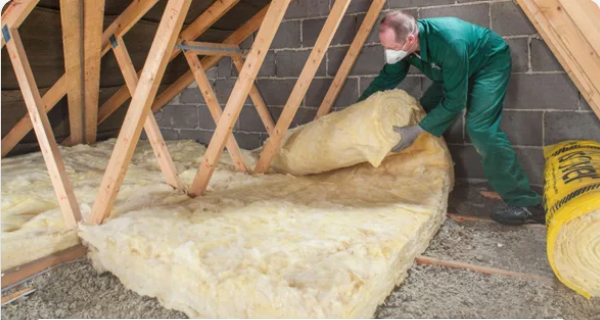
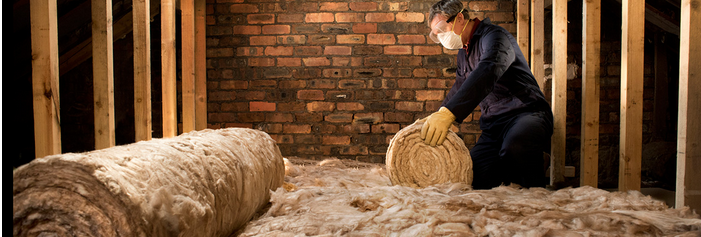
When handling them, personal protective equipment must be worn due to their irritability to the eyes, skin, and respiratory tract.
New generation insulators
- expanded clay monolithic wall
- monolithic wall brick generation
- cellular concrete
- pumice monolithic wall
- insulating paint
- aerogels
- insulating formwork
- vacuum insulated panels
Although their use is still recent, these insulators demonstrate great effectiveness in insulating your home.
The new generation monolithic wall brick is made with terracotta. Unlike the classic brick, it is both hollow and thick.
As for cellular concrete, this block is made of sand, water, cement, air, and aluminum. These two materials are used for building partitions and walls. They ensure better thermal insulation according to the RT2012 recommendations.
Although these insulating materials limit heat loss, they are criticized for their poor sound insulation. In cold regions, it is preferable to complement them with additional insulation to gain comfort in the house.
What is the best thermal insulating material?
Faced with the infinite offers on the market, finding the right one takes a lot of time. To avoid making a mistake during selection, consider the following 3 indicators:
The thermal resistance must be high. This means that the walls have remarkable insulating quality.
Also, almost the best thermal insulators have a lower thermal conductivity. In this sense, the materials help prevent heat loss.
The last criterion, and not least, the thermal lag must be significant. This indicates the material’s ability to retain heat. When the value increases, the risks of thermal exchange are reduced.
What is the best R for insulation?
Like the thermal conductivity lambda, the thermal resistance is among the essential qualities to require for a good insulator.
If your project involves insulating interior walls in a low-energy building, consider choosing a material with a thermal resistance of 4 m2.K/W.
In renovation, the performance values of the insulator must meet the requirements of energy renovation funding programs such as MaPrimRénov’. Also, they must fulfill the criteria of the existing Thermal Regulation.
In construction, the thermal resistance of the material must meet the expectations of minimal energy consumption. This is determined by the new legislation in force.
Similarly to wall insulation, there is a minimum thermal resistance for roof insulation. According to RT 2012 related to Low Energy Buildings, the R resistance value is 8 m2.K/W for new buildings.
If you use this resistance, you can benefit from optimal thermal comfort both in summer and winter. Once you convert the attic, you gain new living space.
Since the roof is the area most sensitive to heat loss, the thermal resistance to apply must be the most demanding.
What R for good wall insulation?
According to specialists’ recommendations, the thermal resistance expressed as R for insulating the walls of a low-energy building is greater than or equal to 4 m2.K/W.
If you want to obtain subsidies for your energy renovation work, the minimum thermal resistance must be 3.7 m2.K/W.
For a project of insulation under cladding, it is advised to use thermal insulating materials with low thermal conductivity lambda. Choose a material with a thickness of 111 mm for a thermal resistance of 3.70 m2.K/W.
As for interior wall insulation under plaster, choose thermal insulators like glass rock wool. Their thermal resistance is about 3.85 m2.K/W.
Best thin thermal insulator
To properly choose attic insulation, walls or roofing, several parameters must be considered. A good material must have multiple qualities. Its thickness is among the important parameters.
During an interior wall insulation, it causes a loss of living space depending on the chosen material. Its thickness generally ranges between 10 to 40 cm.
Many people tend to confuse thickness and efficiency. It is essential to always find the right balance.
For those who choose cellulose wadding, straw or other materials made with plant fibers, use a very significant thickness. They can provide you with better results than rock wool which has a dense nature.
Besides these details, certain insulating materials are particularly suitable for specific uses. For lost attic insulation, specialists recommend Airium mineral foam.
The latter stands out due to its light composition. Its density can be ultra low compared to concrete. However, it has an excellent insulation coefficient compared to most thermal insulators, at equal thickness.
Thermal insulation coefficient of materials
Whether for renovating a home or for new construction, you must always consider the insulation coefficients.
To do this, pay attention to the thermal resistance and thermal conductivity. These two indicators are applied by the Thermal Regulation.
Before choosing a thermal insulator, you must take into account the existing RT for already built buildings and the RE 2020 for new buildings. All coefficients must comply with these regulations.
Comparative table of thermal insulators
| Insulator | Wood fiber | Rock wool | Glass wool | Cellulose wadding |
| Lambda coefficient | 0.037 to 0.049 W/m.K | 0.040 W/m.K | 0.040 W/m.K | 0.035 to 0.042 W/m.K |
| Thickness for R = 3.75 m².K/W with average efficiency | 140 mm | 125 mm | 120 mm | 150 mm |
| Suitable for | Floors and slabs, roofs, walls, partitions | Floating slabs, partitions, walls, attics, sloping roofs, metal frameworks | Roofs, ceilings, walls, attics, partitions | Floors, partitions, lost attics, wood framework, false ceiling |
| Price | 15 euros per m² for 100 mm thickness | About 5 to 10 euros per m² for 100 mm | About 3 to 8 euros per m² for 100 mm | 20 euros per m² for 100 mm thickness |
Which insulator to choose for interior walls?
For interior wall insulation to be both durable and efficient, opt for the best insulator. Among cellulose wadding, expanded polystyrene, wood wool, glass wool and rock wool, there is no shortage of choices. The ideal is to find a product combining efficiency and increased longevity.
Professionals often use rock wool and glass wool. These mineral insulators are perfectly suitable for insulating walls from the inside. They are not only cost-effective but also affordable.
This operation requires the use of thin thermal insulators. They help solve the space issue in the house. It is important to find an insulator with a very low lambda coefficient.
Thin thermal insulation
The selection of thickness deserves special attention. When using classic insulating materials such as wood fibers, cork or glass rock wool, one cannot skimp on their thickness.
Whatever materials are chosen, it is important that their thickness varies between 14 and 18 cm. For attic insulation, the minimum thickness is 40 cm.
With this value, the insulation is not only effective, but the thermal resistance also complies with current regulations.
What is the most insulating material at equal thickness?
Even though there are a number of thermal insulators on the market, some may seem more insulating than others.
According to professionals, it is mainly the classic materials that have better thermal performance.
Rock wool, cork, wood fibers and glass wool are among them. They are some of the most used products during energy renovation works. According to RE 2020, the material must have a thickness of 300 mm.
For those who wish to deepen their knowledge of thermal insulation and discover lead opportunities in this field, we recommend visiting the site. You will find valuable information and advice to optimize your insulation projects.
This material has the ability to prevent heat and cold from escaping inside an enclosed space. It provides high thermal comfort in the home.
The answer to this question depends notably on the type of insulator and its thickness. But if you ask specialists, the glass wool is among their recommendations.
The cellulose wadding and cork are convincing more and more people due to their effectiveness. That’s not all, their installation is child’s play.
Many people tend to confuse thickness and efficiency. It is essential to always find the right balance.
For those who choose cellulose wadding, straw or other materials made with plant fibers, use a very significant thickness. They can provide you with better results than rock wool which has a dense nature.
Besides these details, certain insulating materials are particularly suitable for specific uses. For lost attic insulation, specialists recommend Airium mineral foam.
The latter stands out due to its light composition. Its density can be ultra low compared to concrete. However, it has an excellent insulation coefficient compared to most thermal insulators, at equal thickness.
Thermal insulation coefficient of materials
Whether for renovating a home or for new construction, you must always consider the insulation coefficients.
To do this, pay attention to the thermal resistance and thermal conductivity. These two indicators are applied by the Thermal Regulation.
Before choosing a thermal insulator, you must take into account the existing RT for already built buildings and the RE 2020 for new buildings. All coefficients must comply with these regulations.
Comparative table of thermal insulators
| Insulator | Wood fiber | Rock wool | Glass wool | Cellulose wadding |
| Lambda coefficient | 0.037 to 0.049 W/m.K | 0.040 W/m.K | 0.040 W/m.K | 0.035 to 0.042 W/m.K |
| Thickness for R = 3.75 m².K/W with average efficiency | 140 mm | 125 mm | 120 mm | 150 mm |
| Suitable for | Floors and slabs, roofs, walls, partitions | Floating slabs, partitions, walls, attics, sloping roofs, metal frameworks | Roofs, ceilings, walls, attics, partitions | Floors, partitions, lost attics, wood framework, false ceiling |
| Price | 15 euros per m² for 100 mm thickness | About 5 to 10 euros per m² for 100 mm | About 3 to 8 euros per m² for 100 mm | 20 euros per m² for 100 mm thickness |
Which insulator to choose for interior walls?
For interior wall insulation to be both durable and efficient, opt for the best insulator. Among cellulose wadding, expanded polystyrene, wood wool, glass wool and rock wool, there is no shortage of choices. The ideal is to find a product combining efficiency and increased longevity.
Professionals often use rock wool and glass wool. These mineral insulators are perfectly suitable for insulating walls from the inside. They are not only cost-effective but also affordable.
This operation requires the use of thin thermal insulators. They help solve the space issue in the house. It is important to find an insulator with a very low lambda coefficient.
Thin thermal insulation
The selection of thickness deserves special attention. When using classic insulating materials such as wood fibers, cork or glass rock wool, one cannot skimp on their thickness.
Whatever materials are chosen, it is important that their thickness varies between 14 and 18 cm. For attic insulation, the minimum thickness is 40 cm.
With this value, the insulation is not only effective, but the thermal resistance also complies with current regulations.
What is the most insulating material at equal thickness?
Even though there are a number of thermal insulators on the market, some may seem more insulating than others.
According to professionals, it is mainly the classic materials that have better thermal performance.
Rock wool, cork, wood fibers and glass wool are among them. They are some of the most used products during energy renovation works. According to RE 2020, the material must have a thickness of 300 mm.
For those who wish to deepen their knowledge of thermal insulation and discover lead opportunities in this field, we recommend visiting the site. You will find valuable information and advice to optimize your insulation projects.
This material has the ability to prevent heat and cold from escaping inside an enclosed space. It provides high thermal comfort in the home.
The answer to this question depends notably on the type of insulator and its thickness. But if you ask specialists, the glass wool is among their recommendations.
The cellulose wadding and cork are convincing more and more people due to their effectiveness. That’s not all, their installation is child’s play.


