Orbital sander: how to choose your model?
The orbital sander is increasingly used in manufacturing work, but especially in the renovation of floors, furniture, doors and windows, and any work in wood or PVC. It is not used on metal due to its low power compared to other types of sanders, but it is much lighter and more maneuverable. This buying guide helps you compare the best orbital sanders.
Summary of my experience: In my humble opinion, this tool is the indispensable companion for anyone wishing to achieve a smooth finish without expending all their energy. I have always preferred the orbital sander during finishing phases on large flat surfaces: its rectangular pad allows you to reach corners with a precision that eccentric models do not always allow. It is, in my view, the perfect balance between efficiency and control of the gesture to bring new life to an old piece of furniture or prepare a door before painting.
Comparison of orbital sanders
Top 7 best orbital sanders: our opinion
Makita BO3711J

The Makita BO3711J is a 190 W corded orbital sander designed for precise finishing work on wood, paint, or varnish. It offers a variable speed from 4,000 to 11,000 oscillations/min, a 2 mm amplitude, and a rectangular pad 93 x 185 mm compatible with abrasives 93 x 228 mm, ensuring homogeneous and efficient sanding. Its weight of about 1.6 kg and Soft Grip ergonomic handle improve maneuverability during prolonged use.
Designed for comfort, it includes a speed controller, a dust extraction system, and a quick abrasive change with clamps. Its 2 m cord and compact design facilitate work on flat surfaces, furniture, or doors, while offering good control for neat finishes.
Advantages
- Very good maneuverability
- Effective variable speed
- Clean, precise finish
- Lightweight and ergonomic
Disadvantages
- Limited power for rough sanding
- Cord a bit short
Bosch Professional GSS 18V-10

The Bosch Professional GSS 18V-10 is a compact 18 V cordless orbital sander designed for precise finishing work and sanding in hard-to-reach areas. It delivers up to 22,000 oscillations/min, with a 1.6 mm amplitude for controlled material removal. Its sanding surface of approximately 114 cm², interchangeable pads, and weight of about 1.4 to 1.7 kg ensure excellent maneuverability. The integrated microfilter system allows effective dust extraction for cleaner work.
Designed for versatility, it offers hook-and-loop or clamp attachment, a compact one-handed design, and compatibility with Bosch Professional 18V batteries (not included). Its dimensions of approximately 199 × 113 × 141 mm facilitate work on wood, varnish, putty, or metal, while providing good control for neat finishes.
Advantages
- Compact and very maneuverable
- Convenient cordless
- Versatile interchangeable pads
- Good precise finishing
Disadvantages
- Compact sanding surface
- Battery-dependent autonomy
Bosch PSS 250 AE
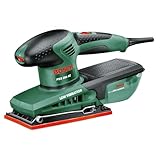
The Bosch PSS 250 AE comes with several abrasive sheets for stripping and finishing. Its carrying case secures the set. With 250 W power and a 92 x 182 mm pad, it is suitable for light sanding and large surfaces.
Advantages
- Comfortable grip
- Decent power
- Abrasives included
- Good value for money
Disadvantages
- Handle considered too thin by some users
Bosch Professional GSS 160-1 A

A sturdy storage case accompanies the Bosch Professional GSS 160-1 A orbital sander. It will therefore travel safely with its owner and will not be easily damaged. Indeed, wood dust will not accumulate on the motor thanks to the machine’s suction. The dust compartment is also larger than on other models, giving you a bit more time to sand.
Since it is equipped with several trays of different shapes, it can access all possible corners without any problem.
The 180 W power compared to other models is rather low. It is therefore recommended to limit to light work to avoid overloading the orbital sander. However, the model gains in ease of use, as it weighs less than its competitors.
It is not the cheapest either, but many appreciate its simple and quick sandpaper change thanks to the clamping system. Moreover, you have drilling templates included to lighten your work.
The dust extraction system is compatible with many vacuum cleaner models. Users also notice the very long power cable.
The model includes a switch protection to prevent accidental startups.
Advantages
- Delivered with a storage case and a long list of accessories
- Compact and as maneuverable as a vertical mouse
- Several pads of different sizes to reach everywhere
- Lightweight
Disadvantages
- More expensive than the competition
Makita BO 4556

The Makita BO4556 is a compact 200 W orbital sander designed for precise finishing work on wood, paint, or varnish. It offers a speed of 14,000 oscillations/min, an amplitude of about 1.5 mm, and a square base of 112 x 102 mm compatible with abrasives of 114 x 140 mm, ensuring even sanding. Its lightweight of about 1.1 kg and ergonomic rubberized handle allow comfortable one-handed use.
Designed for comfort, it integrates a dust extraction system, a quick paper change with clamps, as well as a cable of about 2 m for good freedom of movement. Its compact and quiet design makes it ideal for furniture, corners, and small surfaces, while offering good control for clean finishes.
Advantages
- Compact and very lightweight
- Good precise finishing
- Low vibration during use
- Ideal for small surfaces
Disadvantages
- No speed control
- Small size sole
DeWalt DWE6411-QS

The DeWalt DWE6411-QS orbital sander with its power of 230 W sands at high speed over large surfaces. It therefore works well on metal and PVC objects, a capability that some orbital sanders do not have.
The spindle system that holds the foam and sandpaper in place is much more durable than the hook-and-loop models that lose effectiveness over time. It only takes a few gestures to change the abrasive. It does not take several minutes.
This best value for money pleases consumers due to its lightness. They claim to get tired much less quickly with it. Its curves easily reach corners.
Advantages
- Inexpensive
- Ultra light
- Powerful enough for metal and PVC
- Ideal for corners
Disadvantages
- The motor has dips after several hours of sanding. The speed would suddenly drop, then immediately recover.
- No storage case
Einhell TC-OS 18/187

The Einhell TC-OS 18/187 orbital sander is an example of ergonomics. It features one of the thinnest handles that provides a comfortable grip for both small and large hands. The power switch is within finger reach on top. You can start and stop it without any trouble.
It is delivered without a battery, which explains why it is the cheapest in this comparison. Any battery from the brand’s W-Change range will do. Moreover, this component takes up no space and will not hinder your work.
The sandpapers attach to the machine using micro-velcro and are removed the same way to save you time. But in the long run, this system gradually loses its adhesion.
The light weight of 1.21 kg and maneuverability of the sander are noticeable when sanding doors or parts at height. Another comfort criterion, the item comes with a dust bag, but for more efficiency, it can also be connected to a vacuum cleaner, which is more powerful.
Advantages
- The cheapest of all
- Ergonomic handle and design
- Compatible with Power X-Change range batteries and convenient
- Child’s play to attach the sandpaper
Disadvantages
- The machine tends to vibrate.
Comparative technical specifications
| Selection criterion | Occasional use | Intensive / Professional use |
| Motor power | 150 W to 200 W | 250 W and above |
| Oscillation speed | Fixed | Variable (Variable speed) |
| Attachment system | Classic clamps | Hook and loop + Clamps |
| Dust collection | Fabric bag | Direct vacuum connection |
| Device weight | 1.2 kg to 1.5 kg | 1.8 kg to 2.5 kg |
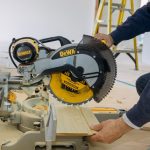
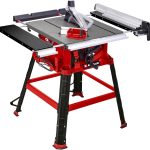
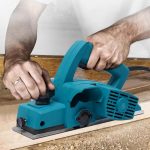
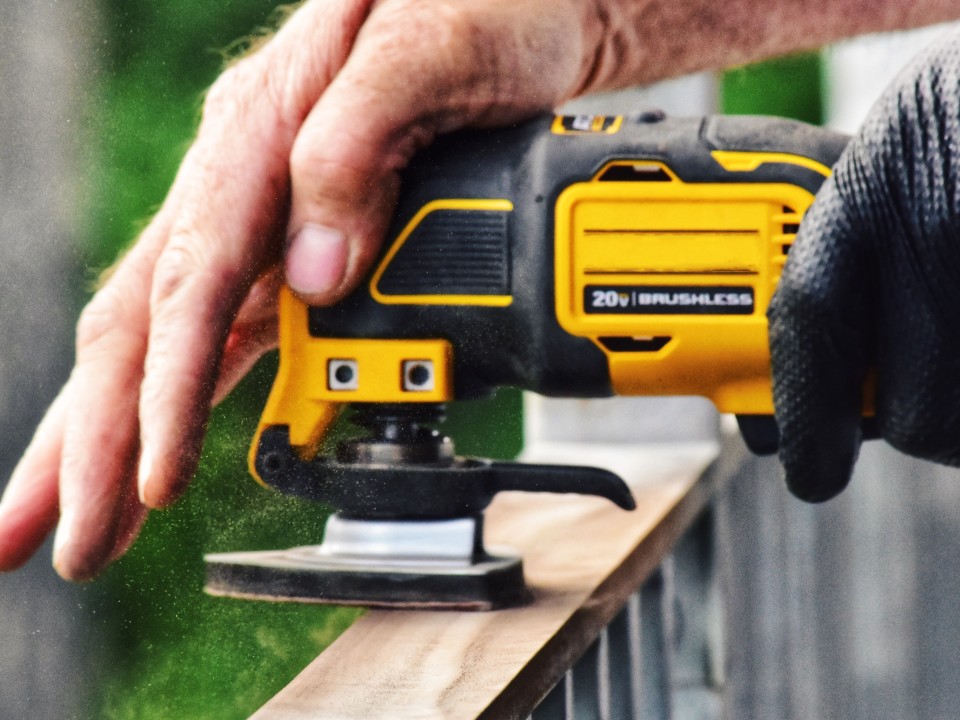
To perfect your renovation work, it is often useful to have other complementary equipment. For example, a jigsaw is essential for curved cuts before sanding edges. If you work on larger projects, using an electric planer allows you to rough out the material quickly. Finally, for finishing in the tightest areas, a multi-tool will perfectly complete your skilled DIY toolkit.
What type of sander for furniture?
For furniture, professionals recommend the random orbital or vibrating sander. This versatile type of device allows you to complete the work from start to finish without missing a single spot. It comes with rectangular and triangular pads suitable for corners and hard-to-reach areas.
These categories of sanders work on various materials such as wood, PVC, or metal. They are often used to strip beams, renovate doors, or prepare furniture before painting.
Which sander is the most effective?
When it comes to effectiveness, many users cite the Bosch brand as a benchmark. These machines are aimed at both professionals and demanding DIYers.
Their power allows for precise and fast results. They often come with several accessories to reach difficult areas and sand large surfaces. In return, their price is generally higher than that of other brands.
Which vibrating sander to choose?
It is advisable to choose a powerful model with a speed variator to adapt to different tasks. Also check the value for money and the presence of accessories to start immediately.
Handling and weight remain essential, especially for work at height. Vibrating sanders generally range between 80 and 150 euros.
The triangular vibrating sander
If you are looking for a triangular orbital sander, turn to brands like Bosch. Just in this comparison, two of these models come with triangular pads, namely the Bosch Professional GSS 18V-10 and the Bosch Professional GSS 160-1 A. These tools easily reach the right angles of doors and windows, as well as the corners of stairs without any trouble.
Most of the orbital sanders in this selection are rectangular and therefore suitable for large surfaces. But there are also square models for those who perform ultra-precise work in modeling, for example, still in the Bosch category.
I remember my first renovation of wooden shutters. I had started the work by hand, naively thinking that courage would be enough. After two exhausting hours of manual sanding, I finally gave in to an orbital sander. It was a real revelation: in a few minutes, the gray wood regained its original hue. This experience made me realize that in DIY, having the right tool is not a matter of laziness, but of respect for the material and for one’s own time. Since then, I never start a stripping project without checking the condition of my abrasives.
The Best Orbital Sander Brands
In this comparison of orbital sanders, we will also share some good addresses where you can find inexpensive products, but with solid quality.
Makita
Makita appeared around 1915-20 in Nagoya and is today one of the leaders in the electric tool market internationally. The Japanese giant holds 600 patents and has sold several million products worldwide, including drills, pneumatic tools, and many others.
The brand designs various models of orbital sanders ranging from the most affordable to the most expensive. They cost between 72 and 257 euros and some change. There are rectangular models as well as triangular ones. Power ranges from 190 W to 600 W. Both amateur DIYers and professionals are catered to.
Bosch
Bosch mainly supports professionals who are demanding about the quality of their work and perfectionists. Its corded or battery-powered electric tools demonstrate great durability and higher power. The quality of these tools allows the brand to charge higher prices on the market compared to its competitors.
The least powerful Bosch orbital sanders are 180 W and the most powerful are 400 W. That said, many users claim they are capable of good sanding under difficult conditions. The manufacturer offers the general public models with and without accessories at unbeatable prices. Their prices range from 80 euros to 326 euros for the most complete models.
DeWalt
The DeWalt brand was born around the same time as Makita, around 1924. The American brand launched its first product as a radial saw and has since experienced a strong rise. Today, it is in the hands of Black & Decker, another tool giant, and has since developed a rich collection of products, including its orbital sanders.
DeWalt focuses on the power of its orbital sanders to attract the most interest. Thus, the minimum recorded power is 230 W and the maximum is 350 W. Its machines stand out due to the large size of their pads designed to hold abrasive papers. They will help you quickly make progress in a long-term job.
Einhell
The Germans are not falling behind in the conquest of the European tool market. Einhell continues to make gardening and DIY enthusiasts happy, even in other countries around the globe. Hedge trimmers, drills, compressors, grinders, and many other interesting items are manufactured there every year.
Einhell also has a nice collection of orbital sanders for all needs. Most of its tools feature a manageable and comfortable handle and large pads for sanding large surfaces. The brand offers the lowest prices on the market. For example, its 150 W model costs 33 euros, and its 250 W reference costs twice as much.
Leroy Merlin
At Leroy Merlin, you will find brands of orbital sanders such as Bosch, Metabo, Worx, AEG, Festool, Skil, Black & Decker, Ryobi, and Makita. Thanks to discounts, it is possible to get one for less than 50 euros. The most expensive costs about 270 euros.
Castorama
In Castorama stores, you can find orbital sanders starting at 11 euros. And no, you are not dreaming, 11 euros for the Power brand. You also have other manufacturers like Erbauer, Skil, Stanley, Bosch, Mac Allister, but all around 60 euros. If you are looking for a cheap belt orbital sander, this is the place to go.
What type of sander for wooden shutters?
Three types of sanders prove effective for this task: orbital, random orbital, and angle. That said, an orbital sander equipped with triangular pads capable of reaching into corners and working on uneven surfaces does the job well on its own.
To avoid damaging it quickly, before using it on the shutters, remove all metal elements (everything related to screws). Start with 80 grit sandpaper to clean the shutters and move to finer paper (around 120 to 240) for finishing.
Criteria for buying an orbital sander
Before rushing to put an orbital sander among many others in your cart, consider a few criteria.
Power
Choose the power according to the work you have to do. If you are sanding a large surface, opt for a high-power model of 250 W or more. On the other hand, for light sanding, a low-power sander around 140 W will do the job. With this latter type of product, you might take a long time to sand several square meters. So, try to make the connection.
Do not force a medium-power or low-motor model to do heavy work. Otherwise, it could overheat or worse, the motor might fail and your equipment would break down after only a few months of use.
Many have noticed that the numbers are quite random. Some 300 W orbital sanders, for example, do not sand as well as 190 W models. The type of sandpaper can play a role, but the strength of the product mainly depends on the brand, model, and accessories sold with it.
Speed
Speed is measured in oscillations per minute or vibrations since we are talking about orbital sanders here. The most efficient orbital sanders develop up to about 26,000 movements per minute. Some only go up to half that. Therefore, take this detail into account, as it conditions the quality of sanding.
Safety and Practicality
Safety devices on a vibrating sander prevent accidental starts. The machines then include a protection on the power switch to make it inaccessible to small wandering hands or if, for example, you place the tool incorrectly.
Dust Extraction
The dust extraction on a vibrating sander is not just for show. Its presence and effectiveness determine how long the tool will last and the comfort of work. Indeed, if dust accumulates on your material, the equipment will no longer sand as well.
Most come with a dust bag directly connected to the body of the model. Some prefer cotton bags that can be washed, others opt for rigid plastic containers that are easier to empty and clean. Those expecting strong suction connect their vibrating sander to a vacuum cleaner. But they risk being encumbered throughout the entire job.
FAQ: Everything You Need to Know About the Vibrating Sander: Guide and Performance
The vibrating sander is distinguished by its rectangular or triangular pad which allows it to reach right angles, unlike the circular pad of orbital models. It is ideal for finishing sanding on flat surfaces such as doors or tabletops. Then: its lightness and low oscillation amplitude offer increased control, thus avoiding inadvertently gouging the wood.
The choice of grit is crucial for the final result. Generally, you start with a coarse grit (40 or 60) for stripping, then move to a medium grit (80 or 120) to even out. Then: you must finish with a fine grit (180 or 240) to obtain a perfectly smooth surface to the touch before applying varnish or paint.
It is essential not to apply excessive pressure on the machine: let the weight of the tool and the vibrations do the work to avoid overheating the motor. Then: regularly clean the pad and ventilation slots with compressed air to prevent the accumulation of fine dust. A systematic connection to a jobsite vacuum is also recommended to protect internal components.