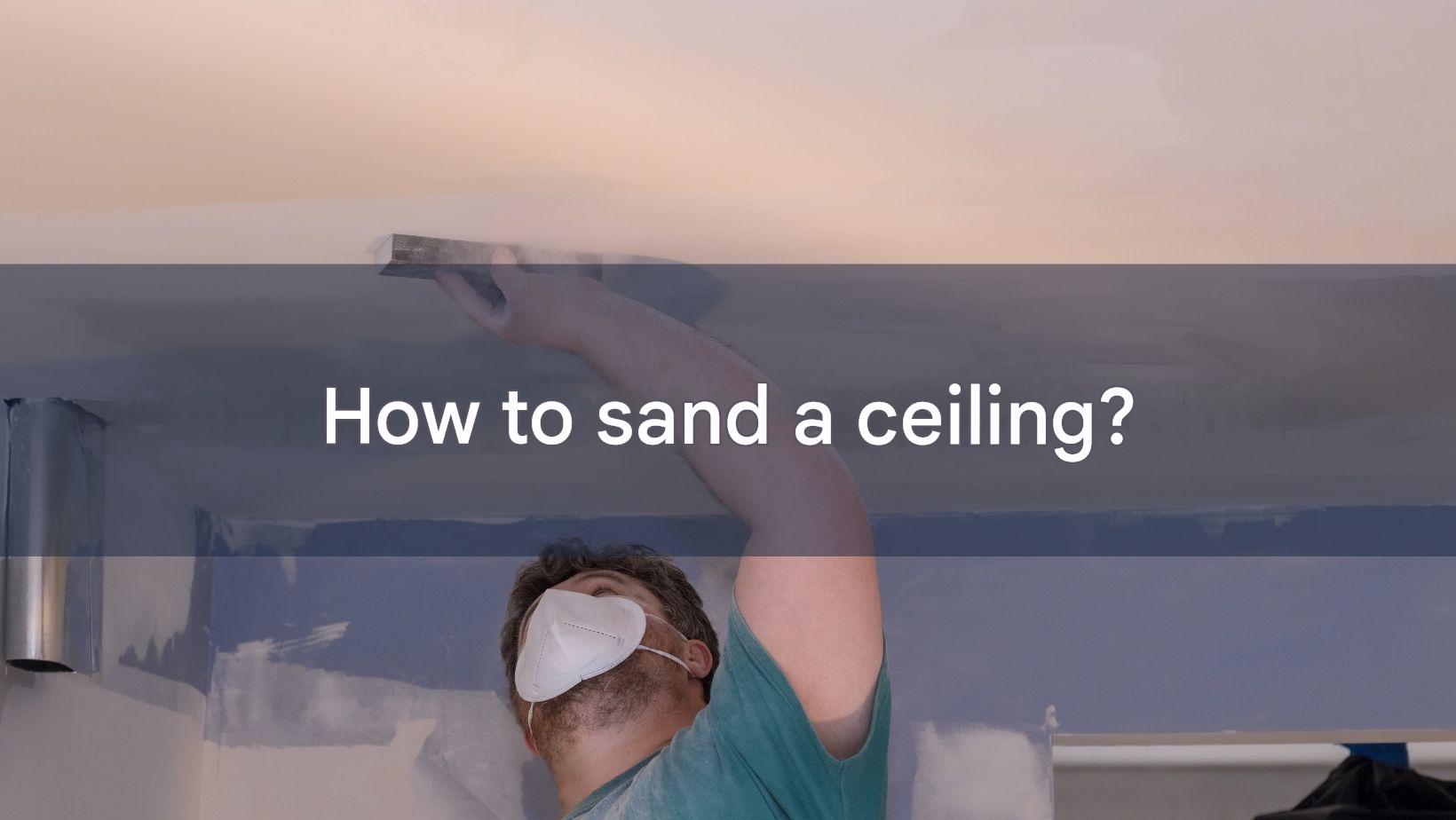
During new construction or renovation work, sanding is an essential step before varnishing or painting. Wall or ceiling, these parts contribute to the overall appearance of the house. If you tend to neglect them, know that no style of decoration can make up for your mistake. Therefore, it is crucial to take care of them.
Painting them is an interesting idea to brighten up the room. There are many color choices to meet every expectation. However, before taking action, sanding is a fundamental phase not to be missed to achieve a satisfactory paint finish. The work to sand ceiling and sand wall is roughly the same. In practice, it consists of stripping the old coloring material from the surface to allow a new paint to adhere more easily.
Simply put, sanding ceiling sanding is defined as a preparation step that facilitates the absorption of the new paint layer by the substrate. Without sanding, you may have to paint several times before it fully adheres. However, if you want to get good results, you will need to have suitable equipment.

A giraffe sander is among the most used and most effective tools. To successfully sand wall work or ceiling, it is important to master some basic rules of sanding.
How to sand a ceiling with a giraffe sander?
- Choose a giraffe sander with a telescopic handle and a pivoting head to easily reach the ceiling.
- Protect the room with tarps on the floor and adhesive tape to avoid dust everywhere.
- Wear protective equipment: mask, goggles, gloves, and ear protection if necessary.
- Use an appropriate abrasive (grit 80 to 120 for stripping, fine grit for finishing).
- Start sanding gently, keeping the giraffe flat and making regular movements.
- Work in zones, without pressing too hard, to avoid damaging the substrate or digging into the plaster.
- Vacuum the dust as you go if your giraffe is equipped with an integrated vacuum.
- Once finished, wipe with a damp cloth or sponge to remove the last dust residues.
We have already done a review of the giraffe sander. But if you want to know how to sand a ceiling with this device, the following section gives you a summary of the steps to follow.
But before going into details, it is appropriate to give you a brief definition of this type of sander. It is an orbital or eccentric tool designed to sand ceilings. It is also used to sand the tops of walls without using a stepladder or footstool. The giraffe sander is the ideal equipment to sand a support at height with ease. Versatile, it is suitable for many materials such as concrete, plaster, wood, and much more. It is extremely simple to use.
To sand with this tool, you just have to turn it on. But before starting it, you must first prepare the surface. To do this, remove all protruding elements such as screws or nuts. Then, check the attachment of the sandpaper or abrasive paper. To remove peeling ceiling paint, make several repetitive and crosswise passes over the surface. This will also prevent scratches and marks. Since this machine is equipped with a swivel head, it allows you to sand the surface in all directions. The telescopic arm of the sander generally measures 4 meters high, giving you a wide range of action.
How to sand a wooden ceiling?
| Step | Description |
|---|---|
| 1. Prepare the room | Empty the room or cover the furniture, protect the floor with a tarp. |
| 2. Choose the right tool | Use a giraffe sander or an eccentric sander depending on the ceiling height. |
| 3. Select the right grit | Choose a medium grit (80-120) for rough sanding, then a fine grit (180-240) for finishing. |
| 4. Protect surfaces and yourself | Wear a mask, safety glasses, and, if necessary, noise-canceling headphones. |
| 5. Start sanding | Sand at a moderate speed without forcing, keeping the sander flat against the ceiling. |
| 6. Work in sections | Divide the ceiling into zones, proceed methodically for an even finish. |
| 7. Vacuum regularly | Use a sander with integrated dust extraction or vacuum the dust as you go. |
| 8. Clean after sanding | Wipe with a damp cloth or sponge to remove dust residues. |
Unlike other materials, this surface can be easier to treat. Experts suggest using an electric sander such as the giraffe sander, belt sander and orbital sander to carry out this work. According to their DIY advice on how to do it, it is necessary to make successive passes with fine grit sandpaper. This technique promises a much better finish than using only one grit.
Wood sanding is done dry. It is still possible to proceed manually with a sanding block. But the finish with a sander is of high quality. It is recommended to make several regular passes with the tool along the grain of the material. The goal is to reduce the risk of scratches on the surface. Likewise, avoid pressing on the sander to prevent clogging the abrasive paper disc. After each phase, wipe with a damp cloth to lift the dust caused by sanding.
How to sand a drywall ceiling?
Before painting the ceiling, sanding the surface is essential. The same applies to sanding a wall before painting. When the room is drywall, know that it has a larger surface area. Therefore, its sanding requires appropriate equipment besides sandpaper or abrasive paper.
In any case, it all depends on the size of the area to be sanded. For a small surface, you can use a sanding block. Place it on the piece without applying significant pressure. It should be noted that using a sander vacuum is unnecessary when sanding drywall.
When working on a large surface such as drywall corners, nothing is better than using a giraffe sander. This tool is equipped with a swivel head and a telescopic handle helping you sand in all positions and heights. If you are looking for precision, a triangular, orbital, or eccentric sander is a good option. It offers better results without gouging the surface.
How to sand a paneling ceiling?
Paneling has been making a strong comeback recently in home interior decoration. While it was previously used to hide electrical conduits or to fill holes and cracks, this material is now making a comeback in ceiling or wall painting.
For painting work to be successful, ceiling sanding is a mandatory phase promising a better finish. Before sanding, it is imperative to strip the paint using a chemical stripper. Then you start sanding the surface. Use a random orbital sander equipped with a handle. Accompany the tool with increasingly fine grit sandpaper. Be careful not to leave the sander running too long on the same area, as this may damage the substrate. Once sanding is finished, dust off the surface. Allow it time to dry completely before applying the filler.
Some people want a more natural finish with an already colored ceiling. To achieve this, simply sand the piece until it has lost its previous shade. In the end, the paneling regains its raw wood appearance.
How to sand an already painted ceiling?
If you plan to paint a ceiling that has already been covered with other coloring materials previously, first determine the nature of the paint. If it is oil-based, your ceiling requires a sanding step before receiving another coating. Otherwise, your new paint will not adhere as you wish. In the case where your ceiling is less spacious, a sandpaper or abrasive paper helps you sand it by hand. Otherwise, you must use an appropriate tool such as a giraffe sander.
How to sand a plaster ceiling?
Despite its exterior appearance, plaster is among the delicate materials. It is therefore recommended to proceed with manual sanding. Otherwise, the sander risks damaging the surface. Moreover, during the work, you can run your hand over the ceiling to check for irregularities or not.
For a ceiling in a large room, the use of a suitable electric tool is necessary. These tasks take a lot of time and require more energy. You can then trust a giraffe sander.
How to sand a coated ceiling?
The coating is applied using a knife. In this sense, it is possible that it presents roughness. Ceiling sanding should not be done lightly. If you use a belt or orbital sander, a minor mistake can leave marks on the substrate. That is why it is recommended to sand the coating by hand with a sanding block. For better sanding, use medium or fine grit sandpaper.
How to sand a ceiling by hand?
Before answering how to sand a wall or ceiling by hand, it should be noted that the manual method is only suitable for small surfaces. If the substrate is large, it is better to turn to special ceiling sanding equipment such as a giraffe sander.
The use of sandpaper or abrasive paper is recommended. Its choice depends on the nature of the ceiling. If the material seems delicate, nothing beats medium grit abrasive paper, that is, between 80 and 100. If it appears rougher, coarse grit paper is preferred. For a substrate with few impurities, fine grit sandpaper is perfect.
How to sand a ceiling without creating dust?
Every DIY enthusiast looks for a way to sand plaster without generating too much dust. We all know that scraping old paint inevitably releases lots of dust and dirt flying everywhere. Whether we like it or not, this reduces work comfort. Moreover, these fine particles can be harmful to the motor. Worse still, it can affect your health if you do not wear a protective mask.
To avoid these inconveniences, opt for a sander equipped with a extraction system. It is fitted with a vacuum outlet and a dust bag. The performance of the vacuum does not depend on its power, but rather on the efficiency of the sander in collecting dirt.
The giraffe sander makes your tasks easier when sanding at height. Discover some DIY tips on how to treat a surface with this tool.
First, it is important to protect yourself from dust by wearing an appropriate mask. For your safety, equip yourself with protective glasses and gloves. Consider checking if the wall or ceiling contains any bulging elements. Still in this preparatory stage, it is wiser to check the general condition of the sander. If everything is fine, install a medium-grit abrasive paper disc. Then adjust the length of the telescopic arm of the sander. Choose the minimum speed to start sanding and increase the pace according to the progress of the work. To finish, get rid of the dust caused by sanding using a vacuum cleaner. Don’t forget to clean the wall or ceiling so that the results are flawless.
Since ceiling sanding work is done at height, the giraffe sander is ideal for this type of maintenance. Thanks to its telescopic arm sander, it has no difficulty working under these conditions. There is also the orbital sander and the vibrating sander on the market. But the giraffe is still the only machine capable of promising excellent results for ceiling sanding or wall sanding before painting.