
When energy consumption rises, it is planned to replace the electric water heater, the boiler, or the radiator in the home.
In co-ownership, collective heating has interesting advantages to better save on bills.
The system allows sharing all investment and maintenance costs among co-owners.
To assess heating consumption in each apartment, the installation of an individual meter or thermal energy meter is essential. Otherwise, you can use a RFC heating allocator.
To clarify things, it is appropriate to provide explanations about the collective heating meter. First, discover the essentials to consider on the subject.
What you need to understand about collective heating ?
Before detailing the operation of the individual meter, let’s try to define exactly what is meant by collective heating.
It is a system used to heat several different radiators in the dwellings of a collective housing. This can be done using a horizontal or vertical distribution network.
Collective heating can operate not only on electricity but also through the boiler or a heating installation equipped with a heat pump.
Using a central boiler room in the basement, heating is distributed fairly to all dwellings. It also ensures regulation of the amount of heat or cold according to the outside temperature.
To measure energy consumption, the installation of an individual collective heating meter is mandatory. Heating individualization allows you to benefit from energy savings through moderate consumption.
How does a collective heating meter work?
First of all, it is important to remind you that a law requires any building equipped with collective heating to use a device to estimate the amount of heat or cold consumed in each dwelling.
The goal is that each occupant pays for what they have actually consumed. With all the data gathered by the measuring device, this allows them to reduce their heating consumption.
Individual energy meters determine the consumption of the radiators in the dwellings. This simplifies the distribution of collective heating to share the costs.
Energy heating individualization thus facilitates consumption assessment. Each resident can adjust the temperature according to their comfort level and requirements.
To collect consumption and radiator room temperature, you can opt for the installation of heating allocators or the installation of an individual collective heating meter.
The energy meter for heating individualization measures the amount of heat or cold in each apartment to subsequently individualize the costs.
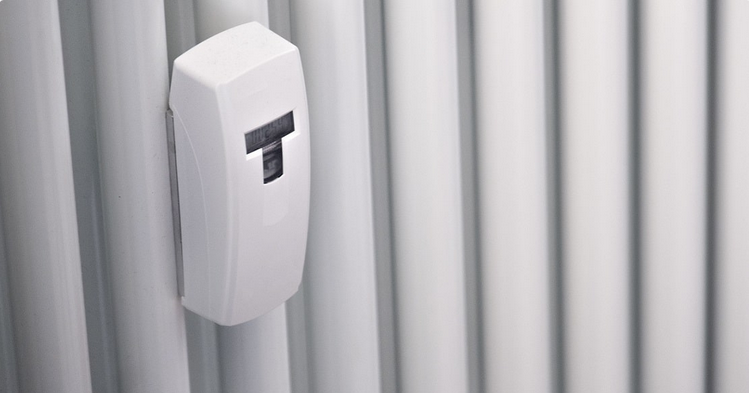
If its installation seems technically unfeasible, in this case you must use an RFC heating allocator. This is normally attached to a radiator but can also be fixed on a towel warmer.
Why install a collective heating meter?
The collective heating meter allows precise measurement of energy consumption in buildings equipped with shared heating. It contributes to a fairer distribution of costs and encourages responsible use of heating.
- Allows individualized billing of heating.
- Promotes control of energy expenses.
- Contributes to fairness among the residents of a building.
- Supports the energy transition and reduction of CO₂ emissions.
What are the advantages of installing an individual meter in a collective heating system?
Following awareness of the ecological impact, many changes in the law require each resident to insulate their home.
Similarly, many measures have been established encouraging all residents to achieve reasonable energy consumption savings.
If you live in a condominium and the building uses collective heating, the installation of an individual collective heating meter has been mandatory since 2017.
It is the condominium owners’ association or property manager who takes care of installing heating equipped with a thermal energy meter.
If the responsible parties observe non-compliance with current legislation, the law imposes a fine of 1500 euros per year per dwelling. This penalty remains until the occupant decides to use the meter.
| Advantage | Explanation |
|---|---|
| Transparency | Each occupant pays according to their actual consumption. |
| Energy savings | Motivates users to reduce waste. |
| Optimized comfort | Personalized consumption monitoring. |
| Legal compliance | Meets obligations in force in many collective buildings. |
Its major asset lies in the possibility of saving up to 20 % on heating bills. Indeed, you have the possibility to save money.
The installation of thermal energy meters similarly helps to make all households more responsible.
By knowing the radiator room temperature or the outlet water temperature, this helps them to understand their own consumption and possible waste. They can therefore balance their daily heating energy expenses.
Even better, individualized heating is interesting as it eases conflicts between neighbors.
When one uses little energy, one sometimes feels wronged. Thanks to the individual meter, each resident takes responsibility for what they consume.
How is individual consumption calculated with a collective heating meter?
Current regulations require occupants to use a device that estimates the volume of energy for heating individualization. Simply put, the installation serves to define the amount of heat consumed by each dwelling.
In practice, this can be done either by installing individual energy meters or by fitting a RFC heating allocator.
To obtain the consumption index, each radiator is equipped with a device that serves as the calorie meter. It handles the calculation of heat consumption determining the actual energy expenditure of an apartment.
Once it detects the radiator temperature rising above 23 °C, it immediately starts operating.
As for the payment of collective heating, the individual bill for each occupant includes the communal costs of fuel consumption. These are distributed fairly among the residents.
It also includes the individual charges based on the data from the individual heating meter or RFC heating allocator of each dwelling.
What are the current regulations regarding the installation of individual meters in buildings with collective heating?
Before the application of the new legislation, the assessment of heating costs was done according to the surface area of the dwelling. However, this only caused serious problems, as the system risked causing injustices.
Some occupants who are already saving energy heating consumption do not see the rewards of their efforts. Their neighbor keeps overheating their home.
To avoid this kind of situation, energy consumption heating individualization through the use of an individual meter for collective heating becomes mandatory.
If the co-owners’ association refuses to install it, it faces sanctions. The fine can be up to 1500 euros per apartment per year. This will be renewable until the building complies with the rules.
This heating individualization device applies to collective buildings used for residential or professional purposes that have collective heating.
However, it does not concern hotel establishments and buildings where the installation of thermal energy meters is technically impossible.
Also, it does not affect constructions for which the costs incurred by changing the installation appear to be high.
How do collective heating meters contribute to cost control and energy consumption reduction?
With heating installation equipped with a RFC heating allocator, the occupant becomes aware of their energy consumption. The data collected proves to be reliable and tested.
In this sense, residents can control their daily expenses to better save energy.
Moreover, despite their effectiveness, the costs of installing and operating thermal energy meters seem very low. This allows them to save money at the same time.
Aside from installing an individual meter, every resident is encouraged to adopt some simple daily habits to reduce energy consumption.
To do this, it is advised to lower the temperature at night by up to 2 °C. During the day, you can keep the room temperature at 19°C. This helps you save up to 15 % of heating consumption.
Make sure to heat only the rooms that are occupied. When you are not at home, remember to reduce the temperature by 2 °C.
Are there significant differences between brands and models of collective heating meters on the market?
More and more manufacturers offer a variety of individual thermal energy meters on the market. Techem, Ista, Simex, Siemens, Sferaco, Campa, Airelec, and Applimo are among the most reputable brands.
Like other products, the models from major brands remain reliable and of professional quality. It is therefore not surprising that they cost a bit more.
Additionally, they benefit from innovative technologies to outperform the competition. If you plan to acquire one, it is advisable to allocate a significant budget.
In any case, it must be admitted that almost all thermal energy meter models come at a reasonable cost. With the infinite number of offers, there is no shortage of choice.
If you do not want a standard thermal energy meter, opt for an ultrasonic thermal energy meter, autonomous or radiator heating type.
What is the procedure to follow for the maintenance and calibration of a collective heating meter?
In collective housing, collective heating provides residents with a personal heating distribution network.
Each occupant can in this case individualize their energy expenditure by using a room thermostat. This can be configured according to your heating needs.
In any case, occupants are not allowed to intervene directly in the maintenance of the installation. This operation is generally specified in the contract concluded by the co-owners.
Just like the installation and start-up date, it is the co-owners’ association syndic who has the authority to make decisions regarding the maintenance of individual meters such as water meters. They also handle the annual reading of these devices.
For tenants in a condominium, the maintenance of collective heating is among the rental charges. They therefore share in the cost of routine maintenance of the equipment.
This operation must take place at least once a year. It must be entrusted to a specialized company to ensure the safety of residents and extend the equipment’s lifespan.
How can the residents of a building dispute a reading or calculation made by the collective heating meter?
Generally, the heating allocators or the thermal energy meter installation is always reliable. Thus, one cannot doubt the data collected by these devices.
But in the case of a suspicious co-owner, it is possible for them to distrust it, regardless of the installation’s reliability.
If you are one of them, you are invited to contact your co-owners’ association syndic. They can examine your complaint about the calculation of the individual meter concerning your energy consumption. Then your request will be added to the agenda of the general assembly of all co-owners.
If you are a tenant, the first thing to do is to inform the owner.
They can then inform the co-owners’ association syndic of your issues. The important thing is always to find an amicable solution.
What is the average lifespan of a collective heating meter and how to know when it is time to replace it?
The durability of an individual meter for collective heating can vary depending on the brand and the quality of the model. The higher the quality, the longer it can last.
In most cases, thermal energy meters last between 6 to 10 years. The best models accompany you for more than 10 years.
For them to perform their roles for a long time, it is essential to take care of them at regular intervals. Their maintenance also guarantees their performance over time.
Like any device, the individual meter can break down at any time. There is no need to be a technician to spot its malfunction.
When your heating bill seems abnormally high while your usual consumption remains the same, it means the device is defective.
To repair it, you can call a specialist. If they cannot restore it, it is better to replace it permanently.
How have new technologies, such as wireless connectivity or home automation, impacted the operation and functionalities of collective heating meters?
With technological advances, brands compete in ingenuity to offer high-quality individual thermal energy meters. They do not hesitate to use modern technologies to face the competition.
As a result, one can find on the market a number of original and innovative models. Programmable, smart, or connected meters, home automation options are booming.
These devices ensure the accurate measurement of your heating consumption. They help you waste less energy while saving your money.
To avoid unnecessary overheating, you can adjust the room temperature based on your presence or absence. Moreover, the meter’s configuration can be done remotely. It provides you with security and comfort of use.
Yes, in many buildings, it is made mandatory by regulations to ensure a fair distribution of heating costs.
The meter directly measures the energy consumed, whereas the heat allocator is attached to the radiators and estimates heat consumption room by room.
The installation is generally decided at the condominium assembly and its cost is shared among the co-owners.
Publications similaires :
 Cleaning company after a death: expertise and know-how
 Off-peak hours: a time slot to save on your electricity bill
 No more hot water overnight
 Baking soda against snails
 Ribiland: reliable and efficient garden tools for all your outdoor work
 Placostil Prices: costs, materials, and rates per m² for your partitions