
Whether it is a small bathroom renovation or a large construction project, construction site monitoring is an essential process. It helps simplify site management, site scheduling, progress control, organization verification, and much more.
If you don’t know much about the subject, a lot of questions might be running through your mind. What does site monitoring involve? What is the purpose of carrying it out? Who can take care of it?
To help you better understand, this article provides relevant and precise answers to all your questions.
What is construction site monitoring?
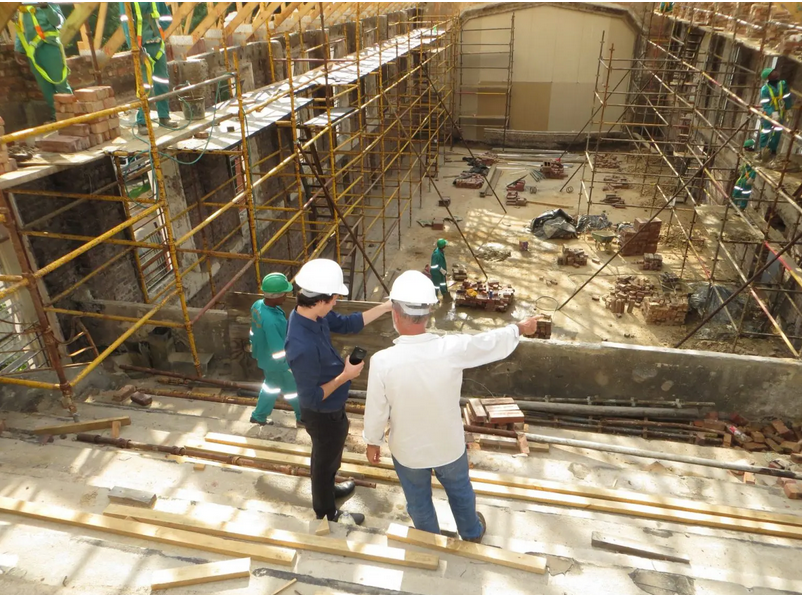
For any building professional, site monitoring is an essential element ensuring the smooth progress of work and the management of unforeseen events.
Thanks to this process, the person in charge such as the project manager or client, the architect, or the site supervisor, can check the progress status of subcontractors or employees throughout their work.
Construction site monitoring takes the form of a document gathering a number of pieces of information such as the involved parties, their tasks, costs, key milestones, site schedule, delivery calendar, and essential approaches to the work.
Site monitoring management greatly facilitates the organization of a construction site. It provides all useful instructions to the various participants such as masons, tilers, electricians, painters, roofers, and many other trades.
This way, the evolution of the construction project can be analyzed from the start until the delivery of the building. Even better, this document ensures that environmental and safety standards are respected.
Simply put, the site monitoring steps allow centralizing all data related to the ongoing site. They help you control expenses as well as the progress of the site, and especially to better anticipate deadlines.
As technology advances, several site monitoring tools are available. Professionals particularly prefer site monitoring software and the site monitoring Excel spreadsheet.
They are generally available in many versions. You just have to choose the one that suits you best.
Key elements to consider
Construction site monitoring is an essential step to ensure the smooth progress of work, respecting deadlines, quality, and budget. It is a process of control and communication among the different project stakeholders. Here are the main actions to include in effective monitoring:
- Planning and schedule adherence: track progress according to the established schedule.
- Cost control: regularly check expenses to avoid budget overruns.
- Coordination of participants: ensure good communication between architects, craftsmen, and clients.
- Quality verification: check the materials used and the conformity of the work to standards.
- Management of unforeseen events: anticipate and react quickly to delays, technical problems, or weather-related issues.
- Regular site reports: provide clear and shared documentation (minutes, photos, updated schedules).
Why is site monitoring important?
Whether it concerns a house extension, a construction project, or an interior renovation of a studio, site monitoring steps are very useful in improving the organization of a construction site.
Its implementation is essential to deliver a work that fully complies with the contract between the project owner or client and the site manager.
Referring to the delivery schedule, all site monitoring steps prioritize all tasks, limiting the risk of delays. They help to meet deadlines and the defined budget.
Thanks to site monitoring software application, expenses and unforeseen events can be easily controlled. Moreover, deadlines can be met.
Good site preparation is also among the site monitoring objectives. The document lists the nature of tasks on the site along with the date and the name of the actor or subcontractor.
It also aims to properly establish the site schedule that distributes the interventions. Besides work planning, also prioritize administrative monitoring including plans, photos, invoices, or delivery notes.
Whether you use a site monitoring Excel spreadsheet or a site management software, this control measure can be essential to ensure the safety of all workers. It also helps comply with environmental and site regulations.
With site monitoring steps, you can timely correct work that may present problems in the future. The goal is to reduce additional costs and avoid delays.
Comparative table of site monitoring methods
There are several approaches to monitor a construction site: manual, digital, or outsourced. Each has its advantages and limitations, depending on the size and complexity of the project.
| Monitoring method | Advantages | Disadvantages | Ideal for… |
|---|---|---|---|
| Manual notebook/spreadsheet | Simple, low cost, accessible to all | Risk of errors, lack of overall vision | Small sites or self-construction |
| Specialized software | Real-time monitoring, data centralization, automatic alerts | Paid subscription, requires training | Medium to large sites |
| External provider (Project Manager or site manager) | Expertise, time saving, guaranteed quality | Higher service cost | Complex or professional projects |
Who is responsible for site monitoring?

To apply troweled plaster, crushed plaster or scraped plaster on walls, the intervention of a painter may seem necessary. The same applies to carrying out site monitoring. You need a qualified professional to successfully complete it.
Site management monitoring requires rigor, appropriate skills, and organization in order to anticipate expenses and unforeseen circumstances. Good planning cannot be done without applying a certain effective strategy or approach.
Although some construction professionals can handle the site monitoring project, it is mainly the project manager who takes care of it most of the time.
His role is to frequently visit the construction site in order to take stock with the entire team of stakeholders and site managers during the site meetings.
Together, they monitor the progress of the work according to the site schedule, the availability of all human and material resources, and above all the quality of the work.
To achieve the various site monitoring objectives, the professional must have the necessary skills. Also, he must be equipped with good site monitoring tools.
It must be admitted that the paper format is obsolete for developing a site monitoring project that is both precise and clear. Moreover, it is inconveniently shareable with the stakeholders involved.
On the other hand, a digital format can prove practical to handle. Many opt for the site monitoring software application or the Excel site monitoring spreadsheet.
These solutions allow storing plans, invoices, photos, and other administrative elements. Via the internet, they are easily distributable to all stakeholders.
How do you know if a construction site is behind schedule?
The main advantage of the site monitoring application lies in respecting delivery deadlines. When the project management works are not completed by the scheduled date, the client is entitled to request late penalties from the site manager or the project manager.
The delivery schedule is clearly defined in the contract or the quote. Once the progress of the work stalls, the client has the possibility to put pressure on the team.
If in the end, the latter fails to meet the final delivery deadline, the client can claim the payment of penalties.
These penalties apply from the first day of delay according to the initially planned date. In the case where this is exceeded by more than a month, it is the project manager’s insurance that pays the compensation.
There are many reasons that explain delays on a construction site. The construction project is more complicated considering the multiplicity and complexity of the tasks to be accomplished, the plurality of actors, and the diversity of interactions of the site with its environment.
Among the most frequent causes are company failures, site accidents, equipment theft, and administrative procedures that take up a lot of time.
Certain circumstances do not require any penalties. They generally result from incidents beyond the control of the construction actors or the project manager.
If weather hazards, client faults, and additional work cause the failure to meet delivery deadlines, no sanctions apply to the project manager.
Can you visit a construction site in progress?
The site visit is highly recommended to avoid delivery delays. Like the site setup, the site schedule, and the site meeting, this operation is among the site monitoring steps to follow.
It should not be taken lightly as it allows observing on site, controlling, and studying everything that was discussed during the site meeting. That is why the visit always takes place after the meeting between the different trades.
It remains necessary to carry it out regularly. It is an opportunity to spot errors and defects in order to avoid possible defects. Solutions must be found to anticipate them during this site monitoring stages.
Try to document the visit with annotations or photos that help you summarize the observed information. This also allows you to become aware of the state of the work in real time.
Besides that, this site visit and site monitoring gives you the opportunity to take stock of the equipment and machinery used.
Make sure to check that the workers comply with all safety measures. Finally, it is appropriate to write a report summarizing all the essential information you have observed on the site.
How are bad weather conditions managed on a construction site?
The site is directly exposed to weather conditions. These can generally delay the execution of certain tasks such as concrete work, painting, facade renovation, and many others.
Severe weather conditions like very low temperatures below 2 °C or wind gusts of 60 km per hour cause the temporary interruption of the site monitoring stages and delivery delays.
Only the site manager can make this difficult decision. However, its implementation must be preceded by consultation with the staff representatives.
In any case, the employer must pay compensation to all site workers. They must file a work stoppage declaration. Also, they can request reimbursement of the compensations from the organization to which the company is affiliated.
To manage bad weather, it is advisable to always rely on weather forecasts. This information helps you better determine delivery times to meet your commitments.
Using the right tools also allows you to anticipate climatic hazards. This reduces their impact on the progress of the work.
What is a site report?
The site monitoring stages are divided into 5 parts. Site setup is the first operation to carry out. It is followed by the site schedule. After that, the site meeting will take place.
To record everything discussed during the meeting, there must be site visits. To summarize the important elements during the field inspection, it is imperative to prepare a report. This is the context in which we talk about the site report.
This informative document is written by the project manager. Non-contractual, it informs the construction project stakeholders of its overall status. The report allows them to know the progress of the work, the problems encountered, the risks of defects, and much more.
This report does not only summarize the team’s weaknesses, but it also details its strengths and assets.
It can be read before each site meeting to discuss elements to correct and to highlight new strategies. These allow improving the quality of the work and especially respecting delivery deadlines.
How are construction site wastes managed?
In site management, many tasks must be planned to avoid unforeseen events. For example, it is important to carefully choose site monitoring tools to successfully carry out the construction project.
Similarly, the site manager or foreman must plan waste management. About 35 % of waste in France comes from building and public works activities.
Drilling, demolition, and earthworks generate a significant amount of waste. It remains crucial to implement better waste management techniques to reduce environmental impact.
There are 3 types of waste, including inert waste, non-hazardous non-inert waste, and hazardous waste. The first category relates to earthworks materials, bricks, soil, ceramics, cinder blocks, concrete, tiles, rubble, and more.
The second concerns wood, plaster, packaging, plastic, metals, insulators, and much more. As for the last, it relates to paint, oils, tar, lead, hydrocarbons, gas bottles, batteries, and more.
Regardless of the type of waste, sorting is mandatory in France. The law prohibits their incineration and burial on site. To better manage them, you can recover them by recycling.
Why are there sometimes delays on a construction site?
Some project managers tend to neglect the construction site monitoring application. They use neither a construction site monitoring software nor an Excel construction site monitoring table. As a result, they fail to prevent delays in the delivery of the work.
However, this situation leads to a penalty. The project owner can be assisted by many organizations to claim compensation. To avoid getting to that point, nothing is better than respecting the work completion date provided in the quote.
In most cases, the incompetence of the public works building company causes construction delays. The same goes for poor personnel management.
They also have no room for error when calculating the budget. Otherwise, this risks increasing expenses. And unforeseen events delay the completion of the work.
It is essential to specify that certain exceptional circumstances protect the project manager in case of non-compliance with the delivery deadline.
If this incident results from bad weather, the person responsible does not suffer a delay penalty. Cyclones, violent storms, and heavy rain or snow cause a temporary halt to the site. This can postpone the delivery date.
Aside from that, site delays often stem from the fault of the project owner. When the latter, for example, does not pay the requested deposit, they have no right to claim anything from the site manager in case of a delay in the duration of the work.
The same applies when they add new complementary tasks. The person responsible is not subject to any fine.
How is safety ensured on a construction site?
An employer has the duty to guarantee the safety of their employees. The public works building sector is the most affected by workplace accidents. With work at height, dangerous equipment to use, and electrical current, risks are omnipresent.
To effectively ensure safety on the site, it is essential to implement better prevention measures.
Team training is part of this. All actors must know how to identify and prevent risks. For work at height, the use of scaffolding is mandatory.
Safety rules must be applied. Each participant is required to wear safety equipment such as helmets, work clothes, gloves, protective glasses, shoes, helmets, earplugs, and many others.
The site manager’s role is not only to provide directives. Their role also includes ensuring the safety of employees.
To achieve this, they must supervise effectively. Ideally, the use of technological tools improves safety to be able to work in complete peace of mind.
Depending on the type of project, it can be managed by the project manager, the site supervisor, the architect, or by the individual themselves in the case of self-construction.
Among popular tools, there are software like Procore, ArchiReport or Finalcad, which allow centralizing documents, photos, and communications.
Rigorous monitoring prevents delays, limits cost overruns, improves the final quality, and ensures smooth communication among all participants.