Compared to other building materials such as cement mortar, brick, or wood, the concrete slab demonstrates remarkable strength. To enhance its quality, it can be reinforced with metal reinforcements, resulting in reinforced concrete.
Thanks to the latter, a structure is capable of supporting significant loads. Its robustness and mechanical resistance are due to the set of construction steels embedded in the material. It is in this context that reinforcement arises.
Also called welded mesh, it is very frequently used in civil engineering and construction works requiring tensile strength such as columns, slabs, beams, retaining walls, or foundations.
To learn more, this article summarizes the relevant information about it. Before getting to the heart of the matter, it is appropriate to start with the definition of reinforcement.
What exactly does reinforcement consist of?
We have often heard about house foundation reinforcement. But when you are not a building expert, it can be easy to get confused.
Reinforcement is nothing other than the action of assembling numerous reinforcements or construction steels welded welded mesh. It is a network of steel wires and bars embedded in concrete. The goal is to increase its mechanical tensile strength.
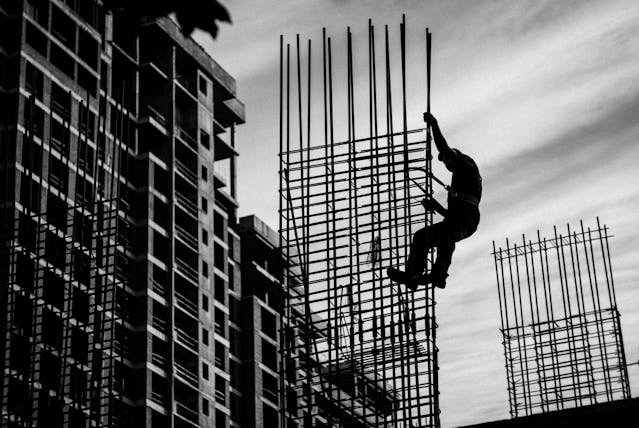
This set of steel reinforcements is widely used in strengthening concrete structures. Like in house foundation reinforcement work, it is used in the consolidation of beams, columns, slabs, pillars, lintels, and many others.

It is common to use it when planning to set up a beautiful terrace or build load-bearing walls. It must be said that its uses seem diverse. The reinforcement bar or rebar can adapt to countless configurations such as creating structures for placing vertical and horizontal chains, making concrete footings, and more.
Whatever its application, reinforcement has many interesting properties. That is why it is very useful for most concrete works requiring good tensile strength. It greatly contributes to the robustness of a concrete slab. To clarify, we invite you to consult the following section.
Why is reinforcement essential for the strength and durability of a concrete slab?
Before answering this question, it is important to remind you that a concrete slab is already a resistant construction element in itself. However, it can be weakened by tensile forces. That is why the use of different types of welded mesh becomes an absolute priority.
When concrete undergoes successive shocks or a violent rupture, it can break or crack over the years. Although it has high compressive strength, it poorly tolerates tension. To strengthen a concrete structure, it is essential to reinforce it.
Welded mesh slabs in concrete serve to remedy the material’s vulnerability. In their presence, the material is able to resist tensile and shear forces. It thus becomes harder and tolerates various shocks without problem.
Regarding house foundation reinforcement, this metal structure allows the concrete to be reinforced against soil instability and the test of time. It guarantees not only the solidity of the building but also its durability.
To achieve this, technicians insert longitudinal and transverse reinforcements inside the foundation footing. This operation takes place after excavation and the pouring of the first layer of concrete. It helps to strengthen the house foundation reinforcement, preventing any risk of breakage or cracking of the structure.
What are the secrets to successful reinforcement?
The strength of a concrete slab largely depends on the quality of its reinforcement. Well designed, it guarantees mechanical resistance, durability, and safety. Here are the key points to master:
- Soil preparation: a well-leveled and stabilized soil prevents subsidence and cracks.
- Choice of welded mesh: the section and mesh size vary depending on the structure and the loads to be supported.
- Precise positioning: the reinforcements must be placed on spacers to remain well within the concrete core.
- Good bonding: bars and mesh are tied together with wire to prevent any displacement.
- Protection against moisture: using a polyethylene film under the slab enhances the durability of the concrete.
- Appropriate thickness: improperly sized reinforcement compromises structural resistance.
What are the different types of reinforcement used for concrete slabs and how to choose the right one?
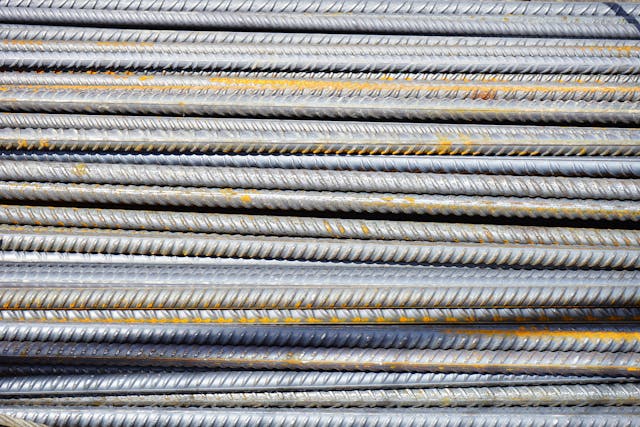
There are several types of concrete such as stamped concrete, ready-mix concrete, fast-setting concrete, washed concrete, and more. The same applies to reinforcement. There are several types of welded mesh that can be used to strengthen concrete.
But they can be classified into two categories according to the Technical Association for the Development of Welded Mesh Use or ADETS.
On one hand, there are surface welded meshes called RAF or anti-crack roll and PAF or anti-crack panel. They stand out for their lightness. Their main role is to limit cracking of a concrete structure while preventing it from fragmenting.
On the other hand, there are structural welded meshes known as structural mesh or ST. As their name indicates, they have a true structural role for the building. That is why they are the material used to make reinforced concrete.
Each welded mesh for concrete slabs is defined by the size of its meshes, the steel section, the dimensions of the roll or panel, the wire diameter, and their nominal mass. To make the right choice, you must consider the loads applied to the metal structure. Likewise, consider the type of structure to be built.
Whatever reinforcement is used, it consolidates the concrete by enhancing its tensile and compressive strength.
Reinforcement vs plain slab: what differences should be noted?
Reinforcement is not always mandatory, but it completely changes the behavior of concrete under mechanical stresses. Here is a clear comparative table between a standard slab and a reinforced slab:
| Criterion | Simple slab (without reinforcement) | Reinforced slab (with reinforcement) |
|---|---|---|
| Mechanical strength | Good only in compression | Excellent in compression and tension |
| Risk of cracks | Higher | Greatly reduced |
| Durability | Average (5 to 15 years) | Long term (20 to 50 years) |
| Typical applications | Small shelters, pedestrian walkways | House slabs, terraces, foundations |
| Average cost per m² | 30 to 50 € | 50 to 80 € |
| Maintenance | May require repairs | Long-term stability |
How to properly install reinforcement in a concrete slab to avoid cracks and other structural problems?
For some structures, assembling welded mesh reinforcement is not mandatory. However, others require it to ensure their longevity, such as house foundation reinforcement, terrace slabs, low wall foundations, and more.
To reinforce a concrete slab, creating a reinforcement plan is a crucial step not to be overlooked. Once done, you can start by digging the ground. Make sure to level it and consider the slab thickness. Then lay sand and gravel in the hole to stabilize the surface.
To protect the concrete from moisture problems, use a polyethylene film. Place the mesh on spacers and then connect them using wire. Once this step is finished, pour the concrete over the reinforcement.
For making the concrete, you will need a shovel, a screed, a wheelbarrow, an electric vibrating needle, and a concrete mixer. As for house foundation reinforcement or garden shelter welded mesh, a rebar tying plier, bolt cutters, and a bender are among the useful tools for this operation.
What are the costs and materials needed for reinforcing a concrete slab?
Masons set the price for reinforcement at about 50 euros per square meter. Since this action is an essential part of making a slab, the installation cost is included in the price of the concrete slab. If you plan to make the reinforced concrete slab yourself, it will cost you between 25 to 40 euros per square meter.
When hiring a professional or specialized company, the price per square meter for reinforcement may vary depending on the choice and thickness of the reinforcement.
If the concrete slab does not require reinforcement, budget between 30 to 50 euros per square meter. As for a reinforced concrete slab including reinforcement, it costs 50 to 80 euros per square meter.
To find the best price, it is advisable to compare several quotes. Generally, the hourly rate of a qualified craftsman for concrete slab work including reinforcement is estimated at 50 euros per hour, excluding materials.
Regarding the cost of reinforcement materials, the welded mesh panel for slabs is available between 2 to 8 euros per square meter. For binding wire, a pack of about twenty costs around 5 euros. And for concrete chaining, count between 3 to 8 euros.
What are common mistakes to avoid when reinforcing a concrete slab and how to correct them?
Whatever the type of construction, it is essential to carry out the reinforcement plan according to the rules of the art. The most common mistake is to neglect this step. However, this famous plan is used to define the number and diameter of bars, the type of steel, as well as the positioning dimensions within the formwork. It provides you with a detailed and very precise calculation.
During house foundation reinforcement or the construction of the garden shed welded mesh, many also make a mistake during the placement of the steel reinforcement for reinforced concrete. Others do not realize the poor composition of the concrete.
In all cases, it should be noted that these defects can affect the quality of the final work. They should not be ignored, but solutions must always be found.
The practices to adopt relate to the proper execution of the house foundation reinforcement plan. The concrete mix must also be carried out properly as required.
Make sure that the vibration is sufficient in the formwork according to the rheology of the slab. To limit flaws, there is nothing better than entrusting the work to a professional. They are capable of ensuring the quality and durability of the reinforcement.
Yes, it is possible provided that the plans and standards are respected. However, for foundations, a house, or load-bearing structures, it is strongly recommended to entrust the work to a professional.
The thickness depends on the structure: for a simple terrace, a slab of 10 to 12 cm may suffice, but for a foundation or a load-bearing floor, 15 to 20 cm is recommended, with the reinforcement properly centered.
No, for small projects (garden shed, slab for an outdoor container), an unreinforced slab may be suitable. However, for any structure supporting significant loads or subject to ground movements, reinforcement is essential.