Compared to other types of concrete such as fast-setting concrete, reinforced, fibered, or heavy concrete, stamped concrete offers several advantages. It allows you to create an original look for your outdoor spaces, thanks to its variety of patterns and textures. Additionally, this stamped coating easily integrates into the ambiance in which it is used.
By avoiding the use of harsh chemicals, the lifespan of stamped construction material is surprising. It can accompany you for many years. Moreover, it requires no complex maintenance. Although this stamped concrete offers multiple benefits, it must be admitted that it has limitations. Discover through this article its various drawbacks.
My critical analysis: although the visual appearance of stamped concrete is undeniably attractive, I consider it essential to know its weaknesses before succumbing to its aesthetics. In my opinion, we too often forget that beneath the appearance of stone or wood, it remains a rigid material subject to the laws of expansion. My point of view is as follows: it is an exceptional coating that requires absolute technical rigor during installation, because unlike traditional paving, the slightest mistake or crack here becomes almost irreparable without leaving a visible trace.
What are the disadvantages of stamped concrete compared to other coatings?
Before answering the question, it is appropriate to define what is meant by reinforced concrete floor coating. It is a decorative concrete made from cement, pigments, specific gravel, and additives. When combined with certain materials, it is laid only on a pre-prepared ground.
To obtain shades and surface texture patterns, it remains necessary to use colored hardeners with specific molds. Similarly, a finishing treatment designed for this material must be applied. This serves to preserve the hues, waterproof, and extend the lifespan of the stamped construction material.
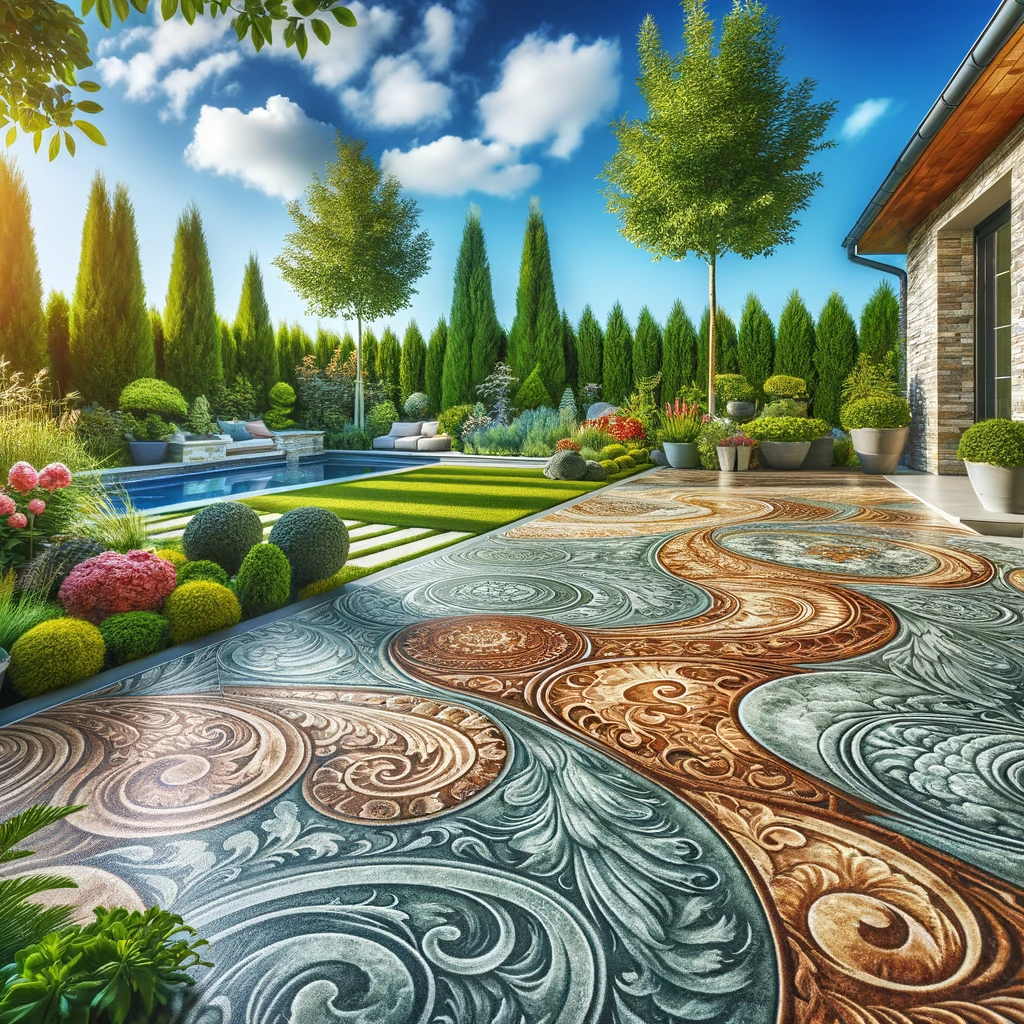
With the variety of surface texture patterns, it is capable of producing an excellent finish for a contemporary garden walkway or a terrace. It pairs effortlessly with any style of your outdoor space.
However, even though stamped concrete offers various advantages, it is criticized for the complexity of its installation. Unlike traditional concrete, the process of its assembly involves producing custom texture patterns using special molds. These must be carefully placed on fresh concrete. Once this stamped floor coating material hardens, the molds must be carefully removed to avoid damaging the surface.
Due to this complexity of implementation, installation can be expensive. Unlike tiling, this stamped floor coating requires a significant budget. It is necessary to call on qualified professionals since the installation demands certain expertise.
Thus, if you plan to enhance your terrace with stamped construction material, please anticipate considerable expenses related to the work.
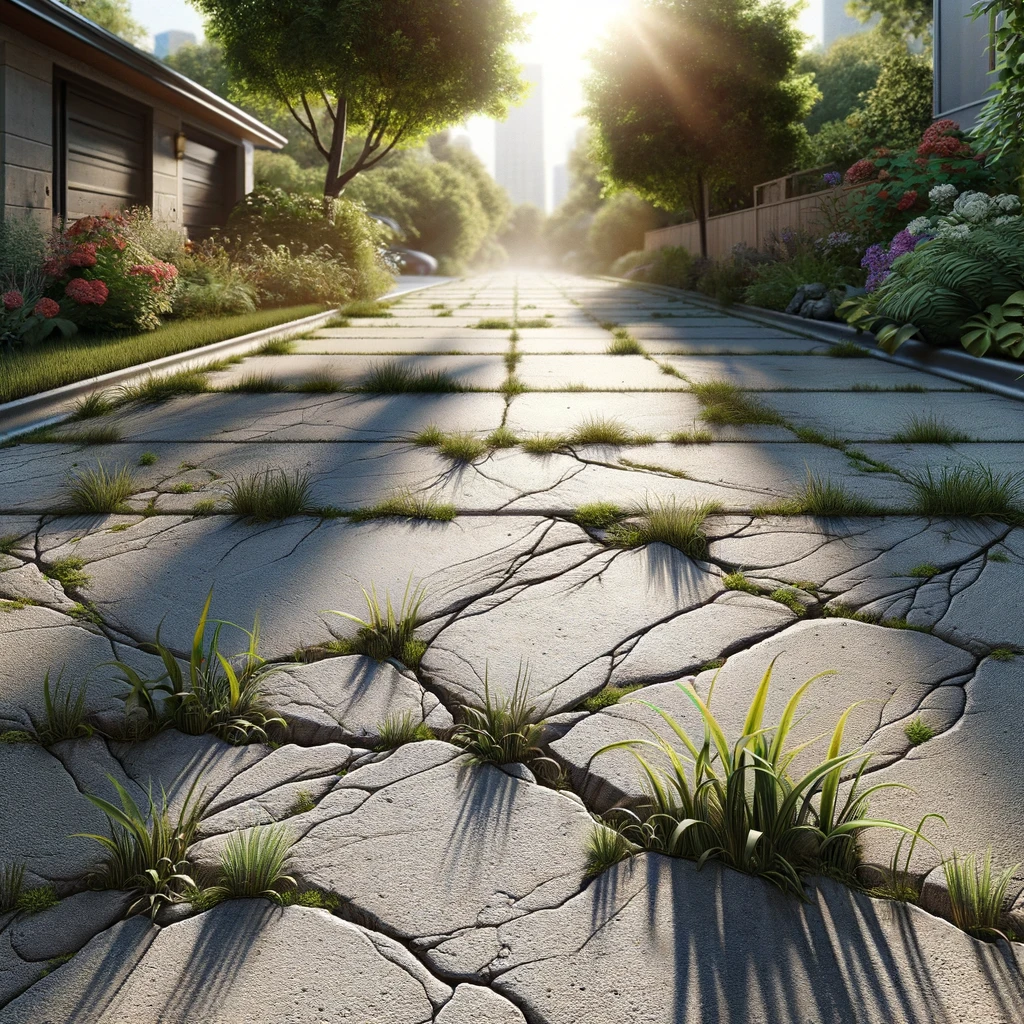
When setting up my own terrace, I hesitated for a long time to use this process to imitate slate slabs. The realization came during a visit to a friend who had installed it two years earlier: I noticed that the areas most exposed to the sun had slightly lost their luster and, above all, that the surface became extremely slippery at the slightest shower. This experience radically changed my thinking about the importance of surface treatment. Since then, I no longer conceive of this material without a total requirement for the quality of the anti-slip varnish, because in my opinion, safety must always take precedence over the shine of the first day.
What problems can arise when using stamped concrete in adverse weather conditions?
Of course, a stamped concrete terrace is particularly aesthetic. This flooring is capable of creating a variety of original patterns and textures, which provides optimal flexibility in terms of design.
However, many criticize stamped concrete for its sensitivity to temperature variations. When it is very hot or very cold, it can discolor or, in the worst case, crack. These extreme climates are not suitable for this stamped coating construction material.
As a result, if you live in regions exposed to frequent temperature changes, it is better to use another flooring suitable to withstand them.
Otherwise, try to use an appropriate thickness of stamped concrete to avoid this kind of problem. To avoid making a mistake, there is nothing like calling on qualified professionals.
The expert can give you better advice in this situation. Thanks to their in-depth knowledge, they strive to find suitable solutions. Otherwise, they can recommend other decorative flooring alternatives that do not present sensitivity to temperature variations.
Table of the limitations of stamped concrete
| Major drawback | Main cause | Long-term impact |
| Risk of cracking | Thermal expansion / loose ground | Degraded aesthetics and infiltration |
| Slippery surface | Protective varnish (depending on finish) | Risk of falling in rainy weather |
| Discoloration | UV rays and mechanical wear | Surface pigment fading |
| Demanding maintenance | Need for regular varnishing | Maintenance cost every 2 to 3 years |
In which situations is stamped concrete not the best choice?
Even though stamped concrete is an aesthetic and versatile coating, there are specific cases where other solutions are better suited. Here are some concrete situations where its use can pose problems:
- High heavy vehicle traffic areas: mechanical stresses can accelerate cracks and deterioration.
- Very humid or shaded spaces: the surface can quickly develop moss and become slippery.
- Properties subject to ground movement: sloped or unstable terrain, with increased risk of cracking.
- Small indoor surfaces: the cost of stamped concrete is not necessarily cost-effective compared to tile or vinyl.
- Areas requiring frequent repairs : such as public parking lots, where the difficulty of local repairs makes the material impractical.
- Short-term projects : if the coating is meant to be temporary, stamped concrete is not a viable solution given its permanent installation.
How can stamped concrete be affected by freezing and thawing, and what are the potential drawbacks?
As we just mentioned above, it is observed that some people undervalue stamped concrete sensitivity to temperature variations. Because of this vulnerability, this material can be damaged by both thawing and freezing.
Like its intolerance to UV rays and temperature fluctuations, these extreme conditions impact not only the appearance but also the lifespan of the stamped construction material. This situation can occur even if you regularly maintain it with a suitable pressure washer.
It is therefore important to remember that thawing and freezing can gradually cause a dulling of its color. If you do not take action, this may lead to cracks. In cities where winter is particularly harsh, both icing and melting can cause surface chipping of the stamped concrete.
If the ground is not properly prepared before installing the stamped floor coating, the damage can be worsened. The same applies when using materials unsuitable for local climatic conditions.
It should be noted that premature degradation of the stamped concrete floor coating may seem inevitable, especially when used around your pool. If you plan to decorate your outdoor space with decorative stamped concrete floor coating, be sure to take this into account to avoid irreversible damage.
What are common aesthetic defects associated with stamped concrete and how can they be resolved?
Like new wood for construction, stamped floor coating offers both advantages and disadvantages. The major weakness is the stamped concrete sensitivity to temperature variations. Due to the difficulty of installation, the cost of the work is similarly high. It is imperative to call on qualified professionals.
Its limitations do not end there! Noticeable aesthetic defects can also be observed. Even though this decorative floor coating provides a variety of patterns and textures, it does not appear as flexible as most flooring solutions in terms of customization.
It must be admitted that design options with stamped concrete are limited compared to other materials such as parquet or tile. Additionally, the frequency of its patterns can often create a less natural look. Nevertheless, it offers you a wide choice of surface patterns and textures that can match your tastes.
From an aesthetic standpoint, it is important to emphasize that stamped concrete construction material is not suitable for those seeking a smooth floor. That is why it cannot be used on interior surfaces. When using relief molds to create patterns and textures, they may leave the floor slightly uneven.
Over the years, this stamped floor coating can undergo color variation due to prolonged exposure to sunlight. Moreover, its thermal properties influence its appearance over time.
Severe weather conditions continuously alter its exterior texture. Indeed, it is important to consider all these factors if you choose stamped concrete for your future outdoor developments.
What are the risks of cracking in stamped concrete and how can they be avoided or minimized?
In certain regions, the temperature can drop below zero. As a result, the water contained inside the stamped concrete construction material freezes. This undoubtedly causes the appearance of cracks.
These cracks may compromise the structure of the stamped floor covering. They also risk damaging its overall appearance. Over time, the frequency of freezing and thawing can worsen the damage.
To avoid these issues, it is strongly recommended to properly prepare the ground before installing the stamped concrete construction material. The selection of the terrain is crucial since it determines the lifespan of the stamped floor covering. It must be free of moisture.
Otherwise, ensure that the soil drainage is carried out according to best practices. Likewise, try to choose the correct thickness for the concrete covering. All these precautions prevent the formation of cracks over time.
It should be noted that many brands currently offer high-quality stamped concrete materials on the market. They are specially designed to avoid sensitivity to temperature variations. They are therefore manufactured to withstand extreme weather conditions. To thus enjoy the advantages of stamped durability, do not hesitate to favor them.
It is worth recalling that the wind can sometimes cause problems on this decorative floor covering. Since gusts generate dust movements that settle on the concrete surface, this undoubtedly alters its aesthetics.
It is therefore advisable to prevent the accumulation of this dirt on the stamped floor covering. You can clean the surface using a soft-bristle brush. In case of more stubborn residues, use an appropriate pressure washer.
How can stamped concrete be affected by heavy traffic and what drawbacks can this cause?
Before discussing the details, it is important to mention that reinforced concrete is not only used for private spaces. It can also be the ideal floor covering for public places.
It can be used to cover the floors of garden paths, garage or gate accesses, terraces, bus or metro stations, pedestrian crossings, roundabouts, gas stations, and more.
Despite its multiple uses, it must be said that heavy traffic can affect this stamped concrete floor covering. Despite its strength and durability, it is essential to consider the weights that this material can tolerate. This defines the thickness of the concrete slab to be used.
If you plan to use it for a pedestrian walkway or garden path, you can choose a thickness of 8 to 10 cm. But, it must range from more than 13 to 20 cm if it is a floor covering for a garage. Please determine the thickness based on the weight of the vehicles.
If you neglect these details, your stamped floor covering may not last over time. In case of doubt, do not hesitate to call on qualified professionals.
What are the alternatives to stamped concrete?
Stamped concrete is an aesthetic and durable solution, but there are other exterior coatings that may better suit your budget, desired style, or maintenance constraints. Here is a comparison of the main alternatives:
| Coating | Main Advantages | Limitations to Consider |
|---|---|---|
| Stone pavers | High-end aesthetic, long-lasting | High cost and lengthy installation |
| Floor resin | Modern, customizable, highly resistant | High price, sensitive to UV without protection |
| Outdoor tiles | Wide choice of formats and designs, easy maintenance | Fragile in case of frost or impact |
| Wood or composite | Warm and natural, enhanced aesthetics | Requires regular maintenance (oil, treatment) |
| Stabilized gravel | Economical, natural drainage | Frequent maintenance (weeding, leveling) |
| Asphalt (tar) | Durable and suitable for large surfaces | Less aesthetic compared to other solutions |
What are the limitations in terms of customization and design with stamped concrete, and what drawbacks can this pose in certain architectural projects?
Stamped concrete is nothing more than a decorative floor coating. Thanks to the use of relief molds, one can benefit from a wide variety of patterns and textures. Despite their diversity, there are still limits in terms of customizing the appearance of the stamped floor construction material.
It is not at all easy to create more detailed textures or complex patterns with this type of concrete. Additionally, it is difficult to achieve a uniform finish over the entire surface of stamped concrete. The dispersion of color pigments varies from one area to another. As a result, this causes noticeable differences in shades across the entire surface.
In any case, know that the stamped concrete floor coating can imitate the appearance of many materials. It is enough to use special molds and they can reproduce many elements such as wood, stone, pavers, brick, and many others.
Finally, despite its various drawbacks, stamped concrete offers interesting advantages. For the durability and robustness of the floor coating, please call on qualified professionals to carry out its installation. The team’s intervention guarantees the quality of the work. To find the best price, do not hesitate to request several free quotes.
Frequently Asked Questions
Yes, but an appropriate sealing must be planned and the surface maintained regularly, as the pigments lighten faster under UV exposure.
Repairs are complex because it is difficult to exactly reproduce the existing pattern and color. This can leave visible contrasts.
Not a lot, but it requires the application of a protective varnish every 3 to 5 years to preserve its appearance and resistance to external aggressions.