
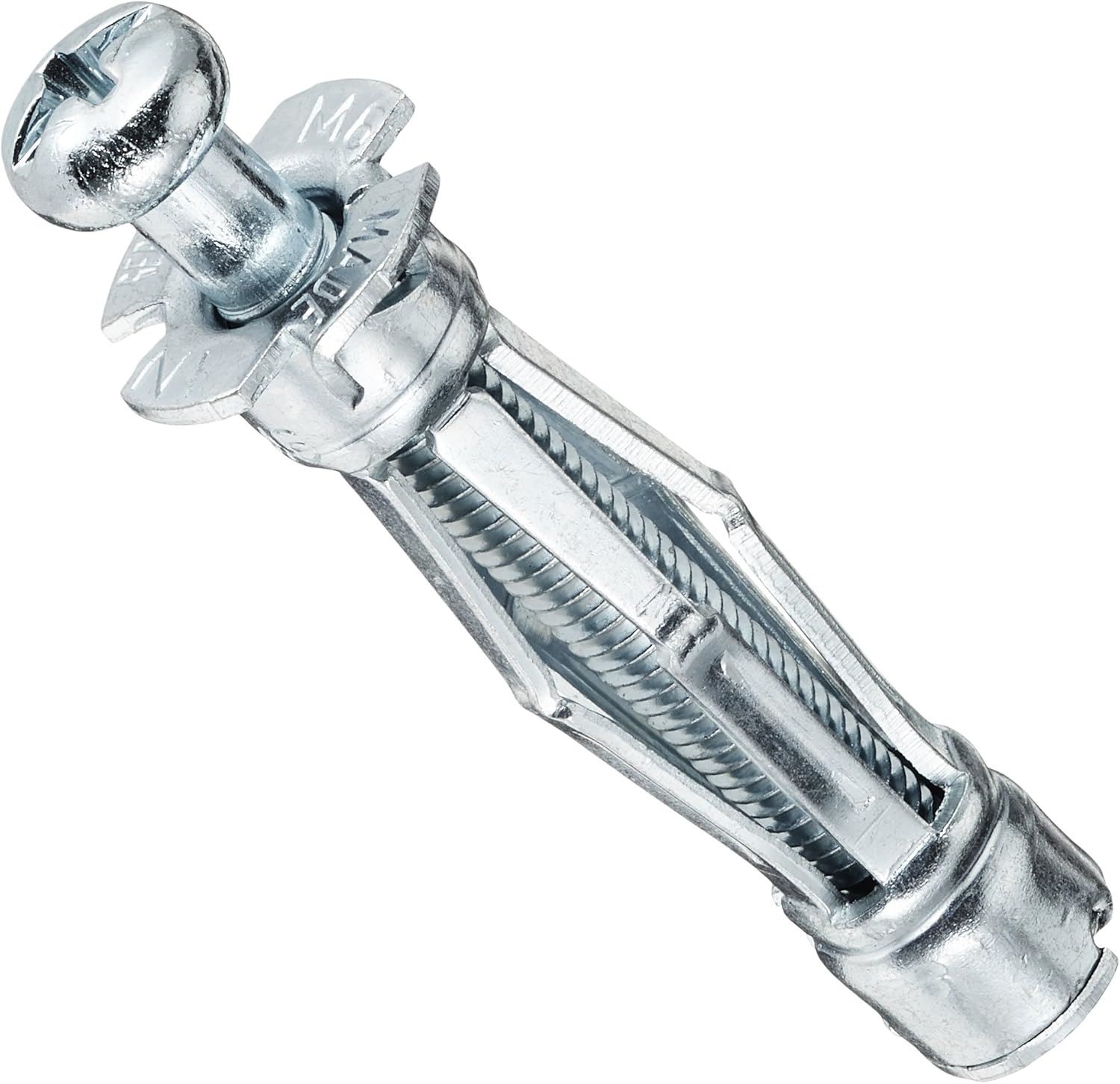
Faced with a wobbly shelf or a heavy frame threatening to collapse, uncertainty about the size of the Molly anchor for BA13 often turns a simple decoration project into a real technical headache. This comprehensive guide unveils the precise correspondences between diameters M4 to M6 and your wall loads, guaranteeing impeccable mechanical stability. You will discover how to master the umbrella expansion and adapt the useful length to the thickness of your partition to achieve an anchorage with professional strength without ever weakening your support.
- The fundamentals of the Molly anchor for your BA13 projects
- Mastering the exact dimensions according to the thickness of the support
- Successfully installing with the right tools and method
- Practical solutions for unforeseen issues and removal of fixings
🗣️ My experience: In 2022, I tried to fix a 12 kg mirror with classic screw anchors out of laziness to take out my Molly pliers. The mirror held for three hours before crashing to the ground, taking a piece of the partition with it. The lesson is clear: for any object over 5 kg, metal expansion is the only viable option.
The fundamentals of the Molly anchor for your BA13 projects
👍 Strengths
- Exceptional mechanical resistance
- Easy screw removal
- Optimal load distribution
👎 Weaknesses
- Requires a specific plier
- Permanent (difficult to remove)
After choosing your shelf or mirror, the question of the support immediately arises to guarantee a fixing that will not move.
Understanding the expansion mechanism for a durable fixing
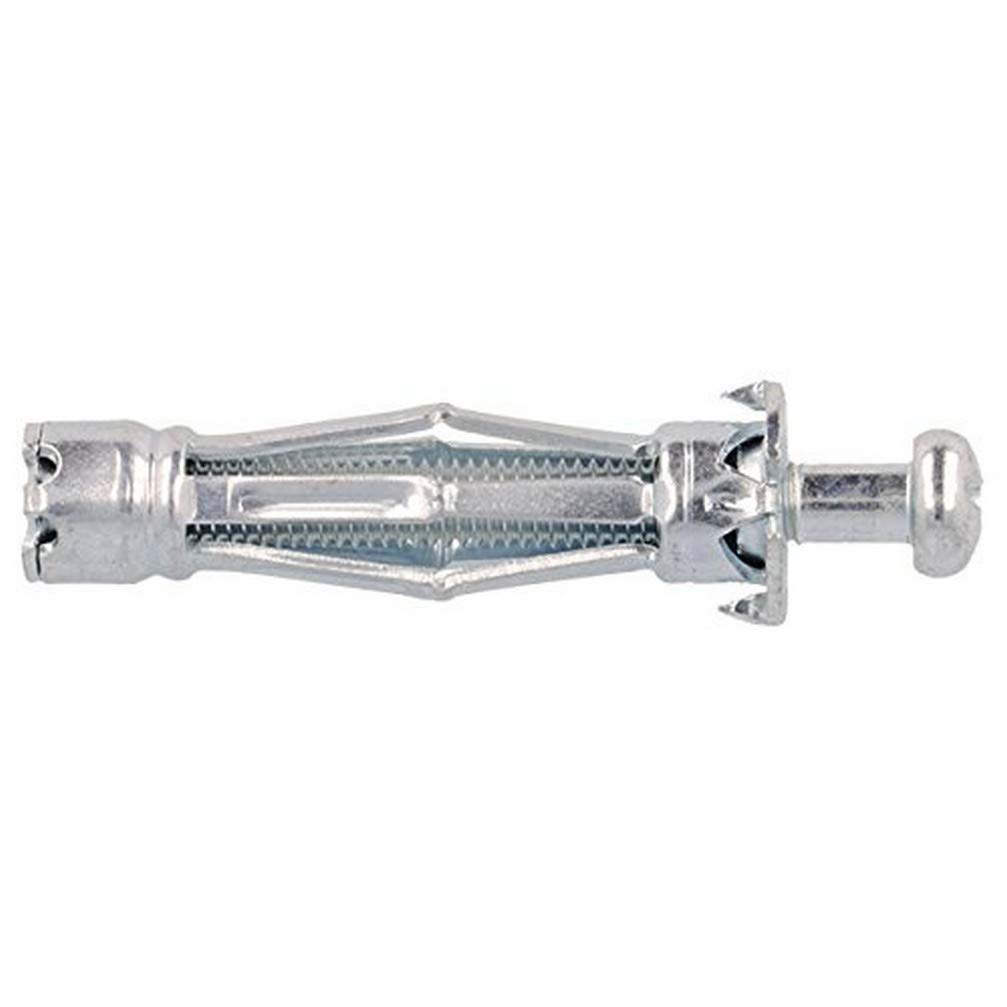
The secret lies in the metal expansion. When screwing, branches open like an umbrella behind the board. This deployment ensures a solid anchorage.
This specific shape guarantees optimal mechanical stability. The pressure is distributed over a wide area. This thus prevents localized crumbling.
Once screwing is complete, the anchor and the wall become one. The whole then forms a perfectly immobile anchoring point.
To deepen your work, I recommend reading my guide on the plasterboard partition which complements this topic well. My article on filling with MAP also provides useful tips if you have made a hole that is too large. And to go further, knowing how to use an electronic level offers interesting insight for aligning your fastenings.
Choose the right diameter according to the weight of the object
The choice of the molly anchor size for ba13 depends on the load. The M4 model is suitable for light frames. The M6 supports tall furniture, better handling tearing and shearing.
| Model | Load |
|---|---|
| M4 | 20 kg |
| M5 | 30 kg |
| M6 | 50 kg |
- M4: up to 20kg
- M5: up to 30kg
- M6: up to 50kg
Distinguish classic models from self-drilling variants
The standard screw-in version requires drilling. Conversely, the impact model allows a notable time saving.
However, beware of self-drilling systems with heavy objects. The precision of manual drilling is often preferable to preserve the integrity of the plaster.
In short, your choice will depend on your tools. Your patience will also determine the installation method adopted.
🌍 Did you know?
The name Molly is actually a registered trademark that has become a generic term. The invention of this metal expansion anchor dates back to 1934, revolutionizing fastening in hollow materials worldwide.
Master the exact dimensions according to the thickness of the support
Once the weight is identified, the most common mistake is to ignore the actual thickness.
Adapt the length of the anchor to single or double skin BA13
A standard board measures 13 mm while a lining reaches 26 mm. This difference radically changes the useful length needed for deployment.
If the fastening is too short, the anchor body will open in the plaster. This weakens the structure. The strength depends on full expansion behind the wall.
An anchor unsuitable for the thickness of the support is the number one cause of fastenings that fail prematurely.
Manage the specific constraints of tiling or insulation
For a bathroom, add the tiles and adhesive to the plasterboard. This ceramic covering imperatively increases the total thickness.
Complexes with thermal lining create a deeper void. You then need to select long models to reach the free anchoring zone.
| Support | Total Thickness | Recommended Molly Length |
|---|---|---|
| BA13 alone | 13 mm | 33 mm to 46 mm |
| BA13 + Tile | 20-25 mm | 50 mm to 60 mm |
| Double BA13 | 26 mm | 50 mm to 66 mm |
| BA13 + Insulation | > 40 mm | 80 mm and above |
Using the right size molly anchor for BA13 ensures a long-lasting installation. This technical choice prevents the accidental tearing off of your heavy furniture or shelves.
Succeeding in Installation with the Right Tools and Method
Having the right anchor is a good start, but without the proper method, you risk ruining your wall in seconds.
Why Prefer the Expansion Pliers Over the Screwdriver
Using an electric screwdriver is risky because a too high torque can quickly occur. This risks tearing the internal threading. The pulling force must remain controlled.
The specific pliers offer surgical precision during deployment. They ensure a clean pressing of the collar against the plaster. The aesthetic result is then flawless.
The Molly pliers are not a luxury, they are the guarantee of a symmetrical anchoring and professional finish without effort.
Steps for a Clean and Play-Free Drilling
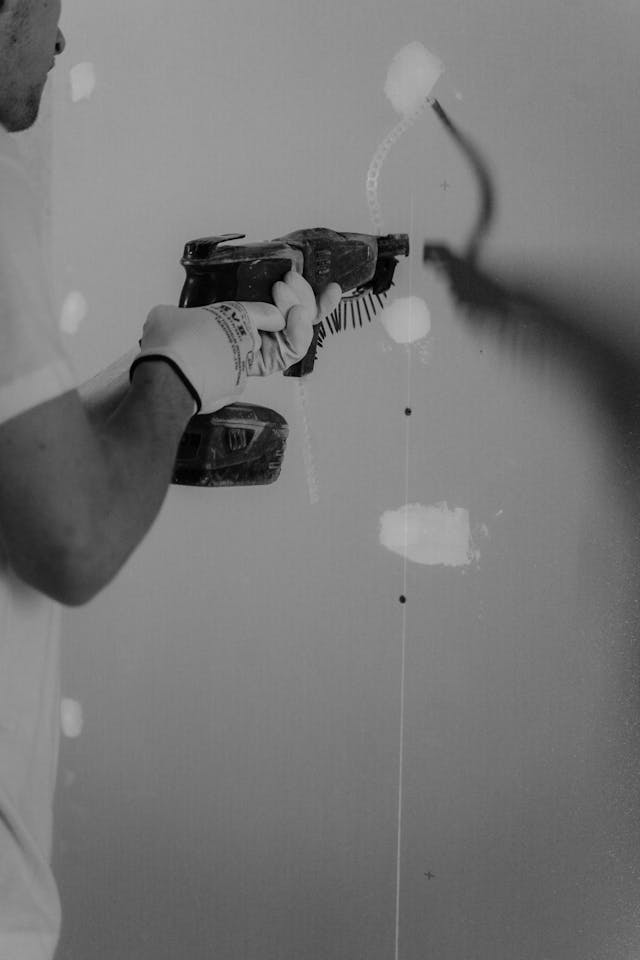
The choice of drill bit determines the final strength of your installation. If the hole is too wide, the fixing becomes completely useless. Strictly respect the drilling diameter recommended by the manufacturer.
You must absolutely drill without activating the percussion of your machine. This precaution prevents breaking the back of the board. Your partition will thus retain all its structural integrity.
⚠️ Warning
The classic trap is choosing an anchor that is too long. If the non-expanding part is longer than the thickness of your board (13 mm), the anchor will never properly press against the inner wall, creating play.
To achieve a perfect anchoring and install your molly anchor size for BA13, simply follow this logical sequence:
- Marking with a pencil
- Slow drilling
- Inserting the anchor
- Expanding with the pliers
💡 Tip
If you do not have a precise 8 mm drill bit, never force the anchor with a hammer. A hole that is too narrow will prevent the wings from opening, while a hole that is too wide will make the anchor unstable.
Practical Solutions for Unexpected Issues and Removing Fixings
Even with the best intentions, a technical issue can arise, especially on old or already drilled partitions.
How to react when an anchor spins freely?
This annoying phenomenon often indicates a hole that has been accidentally enlarged. The drill bit may have slipped, creating a crumbly support unable to hold the anchor. Adhesion then becomes completely nonexistent.
If the anchor spins, do not insist. Stabilize the collar with a wedge or use a sealing resin to fill the void before expansion. This often saves the situation.
Sometimes, patience reaches its limits. If nothing works, simply shift your fixing point.
Removing an anchor without ruining your plasterboard partition
To free your wall, start by breaking the metal head. A flat screwdriver or a drill allows you to detach this detachable collar. Proceed with great care.
Once the head is removed, do not try to extract everything. Simply push the rest of the metal body into the cavity.
For an invisible finish, follow these cleaning-up steps:
- Smoothing filler
- Fine sanding
- Paint touch-up
Your wall will thus regain its original appearance, as if no molly anchor hole for BA13 had ever been installed at that exact spot.
Mastering the size of your metal fixings guarantees an unshakable anchorage, from M4 to M6 depending on your loads. Always adapt the effective length to the thickness of your partition to avoid any disaster. Act now with an expansion plier to give your walls professional and lasting stability.
FAQ
What diameter Molly anchor should be chosen for a BA13 board?
The choice of diameter is a crucial step that intrinsically depends on the weight of the object you want to hang on your wall. For light decorative items not exceeding 5 kg, a diameter of 3 or 4 mm is more than sufficient. However, as soon as the load ranges between 5 and 20 kg, it is imperative to opt for models of 5 or 6 mm to ensure flawless holding.
For your most ambitious projects, such as fixing upper cabinets or sanitary fixtures, diameters of 8 mm (up to 25 kg), 11 mm (up to 40 kg), and 13 mm (up to 50 kg) are the guardians of your mechanical stability. It is often advised to favor the largest possible diameter to provide your support with optimal resistance and durability against the tests of time.
What length of anchor is necessary for single or double skin drywall?
Precision is the mother of safety when it comes to penetrating your partition. For a standard 13 mm thick BA13 board, a classic anchor designed for this dimension is sufficient. However, the task becomes more subtle with a double skin partition, where the total thickness reaches 26 mm. In this case, a longer anchor, capable of covering a clamping range for example from 16 to 48 mm, is indispensable.
The goal is to allow the body of the anchor to pass through the entire material so that the metal “umbrella” expansion deploys perfectly behind the wall. An anchor that is too short, which would open awkwardly within the thickness of the plaster itself, would irreparably compromise the solidity of your anchorage.
How to differentiate a Molly anchor from a screw-in or hammer-in model?
Each anchor has its own technical signature and preferred terrain. The Molly anchor, a true benchmark for BA13, stands out for its mechanical expansion mechanism operated by a specific plier, offering unmatched robustness in hollow materials. On the other hand, the screw anchor, or self-drilling anchor, appeals for its speed: it inserts without pre-drilling for light loads but requires caution not to weaken the plaster.
Finally, the hammer-in anchor presents itself as the ultimate speed solution, especially for installing battens. After a preliminary drilling, it locks into the support with a simple hammer strike. While the Molly relies on tensile strength and load distribution, the screw and hammer-in models favor ease of execution for more specific needs.
Is it possible to fix heavy loads on BA13 with these anchors?
Absolutely, the combination of the metal anchor and the plasterboard allows supporting significant loads, provided the weight limits are strictly respected. A single 13 mm diameter anchor can support up to 50 kg. This is an engineering feat based on distributing pressure over a large surface at the back of the board.
However, for objects exceeding this 50 kg threshold, the wisdom of the DIYer dictates multiplying the fixing points. By distributing the load over several anchors, while ensuring they are not placed too close to each other to avoid creating a fragile zone, one ensures mechanical stability worthy of a professional installation.
This specific shape guarantees optimal mechanical stability. The pressure is distributed over a wide area. This thus prevents localized crumbling.
Once screwing is complete, the anchor and the wall become one. The whole then forms a perfectly immobile anchoring point.
To deepen your work, I recommend reading my guide on the plasterboard partition which complements this topic well. My article on filling with MAP also provides useful tips if you have made a hole that is too large. And to go further, knowing how to use an electronic level offers interesting insight for aligning your fastenings.
Choose the right diameter according to the weight of the object
The choice of the molly anchor size for ba13 depends on the load. The M4 model is suitable for light frames. The M6 supports tall furniture, better handling tearing and shearing.
| Model | Load |
|---|---|
| M4 | 20 kg |
| M5 | 30 kg |
| M6 | 50 kg |
- M4: up to 20kg
- M5: up to 30kg
- M6: up to 50kg
Distinguish classic models from self-drilling variants
The standard screw-in version requires drilling. Conversely, the impact model allows a notable time saving.
However, beware of self-drilling systems with heavy objects. The precision of manual drilling is often preferable to preserve the integrity of the plaster.
In short, your choice will depend on your tools. Your patience will also determine the installation method adopted.
🌍 Did you know?
The name Molly is actually a registered trademark that has become a generic term. The invention of this metal expansion anchor dates back to 1934, revolutionizing fastening in hollow materials worldwide.
Master the exact dimensions according to the thickness of the support
Once the weight is identified, the most common mistake is to ignore the actual thickness.
Adapt the length of the anchor to single or double skin BA13
A standard board measures 13 mm while a lining reaches 26 mm. This difference radically changes the useful length needed for deployment.
If the fastening is too short, the anchor body will open in the plaster. This weakens the structure. The strength depends on full expansion behind the wall.
An anchor unsuitable for the thickness of the support is the number one cause of fastenings that fail prematurely.
Manage the specific constraints of tiling or insulation
For a bathroom, add the tiles and adhesive to the plasterboard. This ceramic covering imperatively increases the total thickness.
Complexes with thermal lining create a deeper void. You then need to select long models to reach the free anchoring zone.
| Support | Total Thickness | Recommended Molly Length |
|---|---|---|
| BA13 alone | 13 mm | 33 mm to 46 mm |
| BA13 + Tile | 20-25 mm | 50 mm to 60 mm |
| Double BA13 | 26 mm | 50 mm to 66 mm |
| BA13 + Insulation | > 40 mm | 80 mm and above |
Using the right size molly anchor for BA13 ensures a long-lasting installation. This technical choice prevents the accidental tearing off of your heavy furniture or shelves.
Succeeding in Installation with the Right Tools and Method
Having the right anchor is a good start, but without the proper method, you risk ruining your wall in seconds.
Why Prefer the Expansion Pliers Over the Screwdriver
Using an electric screwdriver is risky because a too high torque can quickly occur. This risks tearing the internal threading. The pulling force must remain controlled.
The specific pliers offer surgical precision during deployment. They ensure a clean pressing of the collar against the plaster. The aesthetic result is then flawless.
The Molly pliers are not a luxury, they are the guarantee of a symmetrical anchoring and professional finish without effort.
Steps for a Clean and Play-Free Drilling
The choice of drill bit determines the final strength of your installation. If the hole is too wide, the fixing becomes completely useless. Strictly respect the drilling diameter recommended by the manufacturer.
You must absolutely drill without activating the percussion of your machine. This precaution prevents breaking the back of the board. Your partition will thus retain all its structural integrity.
⚠️ Warning
The classic trap is choosing an anchor that is too long. If the non-expanding part is longer than the thickness of your board (13 mm), the anchor will never properly press against the inner wall, creating play.
To achieve a perfect anchoring and install your molly anchor size for BA13, simply follow this logical sequence:
- Marking with a pencil
- Slow drilling
- Inserting the anchor
- Expanding with the pliers
💡 Tip
If you do not have a precise 8 mm drill bit, never force the anchor with a hammer. A hole that is too narrow will prevent the wings from opening, while a hole that is too wide will make the anchor unstable.
Practical Solutions for Unexpected Issues and Removing Fixings
Even with the best intentions, a technical issue can arise, especially on old or already drilled partitions.
How to react when an anchor spins freely?
This annoying phenomenon often indicates a hole that has been accidentally enlarged. The drill bit may have slipped, creating a crumbly support unable to hold the anchor. Adhesion then becomes completely nonexistent.
If the anchor spins, do not insist. Stabilize the collar with a wedge or use a sealing resin to fill the void before expansion. This often saves the situation.
Sometimes, patience reaches its limits. If nothing works, simply shift your fixing point.
Removing an anchor without ruining your plasterboard partition
To free your wall, start by breaking the metal head. A flat screwdriver or a drill allows you to detach this detachable collar. Proceed with great care.
Once the head is removed, do not try to extract everything. Simply push the rest of the metal body into the cavity.
For an invisible finish, follow these cleaning-up steps:
- Smoothing filler
- Fine sanding
- Paint touch-up
Your wall will thus regain its original appearance, as if no molly anchor hole for BA13 had ever been installed at that exact spot.
Mastering the size of your metal fixings guarantees an unshakable anchorage, from M4 to M6 depending on your loads. Always adapt the effective length to the thickness of your partition to avoid any disaster. Act now with an expansion plier to give your walls professional and lasting stability.
FAQ
What diameter Molly anchor should be chosen for a BA13 board?
The choice of diameter is a crucial step that intrinsically depends on the weight of the object you want to hang on your wall. For light decorative items not exceeding 5 kg, a diameter of 3 or 4 mm is more than sufficient. However, as soon as the load ranges between 5 and 20 kg, it is imperative to opt for models of 5 or 6 mm to ensure flawless holding.
For your most ambitious projects, such as fixing upper cabinets or sanitary fixtures, diameters of 8 mm (up to 25 kg), 11 mm (up to 40 kg), and 13 mm (up to 50 kg) are the guardians of your mechanical stability. It is often advised to favor the largest possible diameter to provide your support with optimal resistance and durability against the tests of time.
What length of anchor is necessary for single or double skin drywall?
Precision is the mother of safety when it comes to penetrating your partition. For a standard 13 mm thick BA13 board, a classic anchor designed for this dimension is sufficient. However, the task becomes more subtle with a double skin partition, where the total thickness reaches 26 mm. In this case, a longer anchor, capable of covering a clamping range for example from 16 to 48 mm, is indispensable.
The goal is to allow the body of the anchor to pass through the entire material so that the metal “umbrella” expansion deploys perfectly behind the wall. An anchor that is too short, which would open awkwardly within the thickness of the plaster itself, would irreparably compromise the solidity of your anchorage.
How to differentiate a Molly anchor from a screw-in or hammer-in model?
Each anchor has its own technical signature and preferred terrain. The Molly anchor, a true benchmark for BA13, stands out for its mechanical expansion mechanism operated by a specific plier, offering unmatched robustness in hollow materials. On the other hand, the screw anchor, or self-drilling anchor, appeals for its speed: it inserts without pre-drilling for light loads but requires caution not to weaken the plaster.
Finally, the hammer-in anchor presents itself as the ultimate speed solution, especially for installing battens. After a preliminary drilling, it locks into the support with a simple hammer strike. While the Molly relies on tensile strength and load distribution, the screw and hammer-in models favor ease of execution for more specific needs.
Is it possible to fix heavy loads on BA13 with these anchors?
Absolutely, the combination of the metal anchor and the plasterboard allows supporting significant loads, provided the weight limits are strictly respected. A single 13 mm diameter anchor can support up to 50 kg. This is an engineering feat based on distributing pressure over a large surface at the back of the board.
However, for objects exceeding this 50 kg threshold, the wisdom of the DIYer dictates multiplying the fixing points. By distributing the load over several anchors, while ensuring they are not placed too close to each other to avoid creating a fragile zone, one ensures mechanical stability worthy of a professional installation.
Publications similaires :
 Best Shredders: Reviews and Comparison 2026
 Double blade saw
 Lidl Electric File
 Mastering the installation of rails for partition walls with plasterboard sheets
 How to choose sustainable tableware for the home?
 How much does an entrance door cost: understanding prices and choosing according to your budget