Waking up one morning without hot water can turn a routine into a real headache. Between quickly searching for the cause and the desire to get the system running again, it is not uncommon to miss some essential points. This problem usually hides a defect in the hot water tank, the water heater, or even in the plumbing around the installation. As an expert in renovation and troubleshooting, I offer you a point-by-point analysis to understand why the hot water production suddenly stops, identify common breakdowns, and discuss practical solutions adapted to each situation.
My analysis of the situation: In my opinion, finding yourself without hot water overnight is one of the most frustrating domestic mishaps, as it directly affects our basic comfort. I believe that before panicking and calling an emergency repairman, you need to keep a cool head: often, the cause is much more benign than a pierced tank. My editorial viewpoint is that a simple check of the electrical panel or the safety group solves the problem in a large number of cases, thus avoiding unnecessary travel costs for a simple tripped circuit breaker.
Common sources of a sudden absence of hot water

The sudden loss of hot water in a home affects both old houses and recent apartments. Several elements can be responsible, from a simple electrical failure to a defective part in the hot water production system. Understanding where the problem really comes from saves time during diagnosis and avoids unnecessarily replacing parts.
Some clues quickly alert: a tripped switch, cold water flowing instead of hot water, a changed water pressure, or even unusual noises coming from the hot water tank. These symptoms guide the savvy DIYer towards priority checks.
If the breakdown comes from a defective component, you may need to know how to replace your electric water heater to regain optimal comfort. For those who prefer to delegate these technical tasks, it is wise to use a connection platform and consult AlloVoisins reviews to choose a reliable service provider. Once the repair is completed, don’t forget to check your settings to reduce your heating consumption and thus achieve sustainable energy savings.
Problem with electrical supply or thermostat setting?
The absence of electrical supply is one of the simplest reasons to check. A tripped circuit breaker, a blown fuse, or a general outage can prevent the water heater from functioning properly. Sometimes, it is simply a matter of resetting a main switch or replacing a fuse corresponding to the line dedicated to the hot water tank.
The thermostat also plays a central role. If the requested temperature is not met or if the device is poorly set, the water remains lukewarm or cold. A misadjusted or damaged thermostat often cuts the heating too early or inhibits the heating element. Before any intervention, it is therefore advisable to check this regulation element.
Defect in plumbing or water pressure?
A sudden change in water pressure often indicates a fault in the water supply or the internal network. An accidentally closed valve, an invisible water leak under a floor or inside a wall, or a limescale blockage restrict the flow inside the water heater. As a result, the device no longer receives enough water to heat.
The safety group also deserves close examination. Its function is to protect the hot water tank against overpressure and to allow draining during certain phases of the cycle. If it gets stuck or leaks, the hot water production stops or causes a drop in water pressure throughout the hot circuit.
Isolated breakdown or defective part inside the hot water tank?
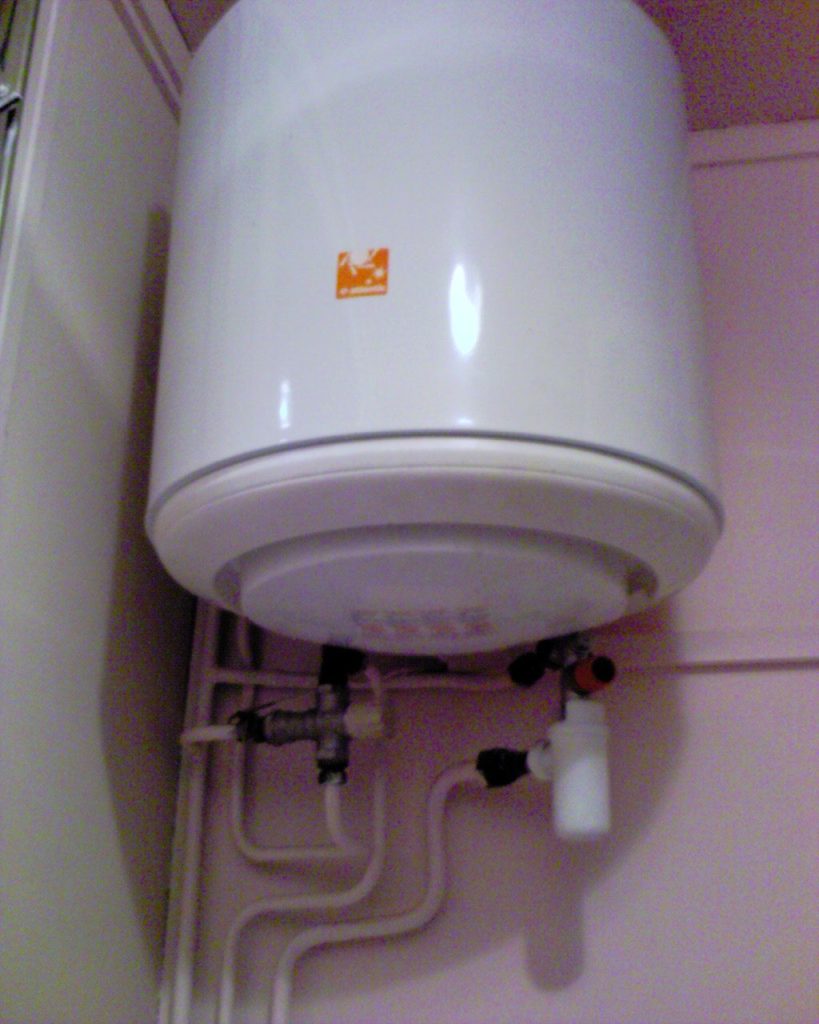
Among the sensitive internal elements, the armored or steatite heating element is the primary candidate for malfunction. A limescale-coated heating element heats less efficiently until it eventually stops transferring heat to the water. A break in this part completely disables the water heater.
Other components can also fail, such as the day/night switch, which controls the automatic operation of the hot water tank during off-peak hours. Finally, an internal water leak, sometimes only visible at the bottom of the tank, gradually leads to an automatic shutdown to prevent electrical damage.
How to diagnose a lack of hot water at home?
Performing a structured self-diagnosis, step by step, helps isolate the exact cause of a hot water outage. This process avoids unnecessarily dismantling the entire water heater or calling a professional for a minor issue accessible to any handyman equipped with a test screwdriver.
Here is a concise checklist of controls to perform as soon as the shower turns icy cold without warning:
- Check the main power supply and the electrical panel.
- Verify the condition of the thermostat and its set temperature.
- Observe any indicator lights or signals on the hot water tank.
- Ensure that the water pressure has not suddenly dropped and that the safety group is not leaking.
- Look for visible signs of water leakage near the device.
These initial investigations cover about 80% of the breakdowns encountered in the French residential sector and allow quickly ruling out serious issues requiring a complete replacement.
Summary table of causes according to symptoms
| Symptom | Likely Cause | First Action to Attempt |
|---|---|---|
| Sudden cold water | Electrical failure, thermostat malfunction, burnt-out heating element | Check the electrical panel and the thermostat |
| Drop in hot water pressure | Leak, blocked safety valve, partially clogged pipe | Visual inspection, purge the safety valve |
| Noises in the tank | Build-up of limescale on the heating element or anode | Drain and maintain the water heater |
| Wet spots under the tank | Perforated tank, defective part, worn seal | Cut off power, call a certified technician |
This table is used to guide the diagnosis and streamline the search for the source of the fault. Adapting your investigation based on the signals perceived around the hot water tank often prevents wasting valuable time.
I personally experienced this situation on a winter Monday morning, and my first reaction was to believe that my water heater was permanently out of order. The realization was immediate when I discovered, after opening the protective cover, that the thermostat’s thermal safety had simply tripped following a brief power outage. This experience taught me the importance of knowing the safety components of your installations: a small click on a reset button saved me from completely replacing the device. This is a thought I often share now: visual diagnosis is the first step for the informed handyman.
Frequently Asked Questions about Unexpected Lack of Hot Water
Why is there no hot water even though the cold water works properly?
- Faulty thermostat
- Heating element out of service
- Circuit breaker tripped only on the tank side
What to do if the hot water tank trips the circuit breaker?
- Turn off the power to the installation
- Isolate the tank at the terminal block
- Work on the heating element or contact a qualified electrician/plumber
How to know if the safety group is at fault ?
- Try a manual flush from the knob
- Observe the flow during normal use
- Check for the total absence of leak on the fittings
In which cases should the water heater be completely replaced ?
| Notice | Recommended action |
|---|---|
| Rusty tank | Immediate replacement |
| Multiple leaks or close repairs | Replace the water heater |
| Device older than fifteen years | Consider a new modern model |