Wood engraving is among the very widespread manual activities up to now. Even though this technique is not new, many people continue to practice it to enhance their creativity.
The success of the pyrography pen only makes it more popular. However, it is also possible to apply it without this tool. This article provides you with further explanations on this subject.
| Method | Description | Advantages | Disadvantages | Practical tips |
|---|---|---|---|---|
| Using a knife or scalpel | Engraving by hand by incising the wood with a fine knife or scalpel. | Precision in details, no electricity needed | Requires patience and good skill | Trace the design with a pencil before engraving |
| Using paint | Painting directly on the wood to create patterns or letters. | Simple, no specific tools needed | Less durable, risk of fading over time | Use paint suitable for wood |
| Engraving with a Dremel or mini drill | Use a rotary tool to carve the wood with a suitable bit. | Precise control, suitable for complex details | Can be noisy and dusty | Wear a mask and protective glasses |
| Burning with a candle or heated iron | Gently melt the wood surface to mark a design with a hot object. | Economical technique, interesting visual effect | Risk of burns, not very precise | Work in a ventilated area, beware of fire |
| Using a pencil or pen on wood | Draw on the wood with permanent tools for a decorative effect. | Easy, fast, no specific tools | No relief, visual only | Use suitable permanent pens |
How to engrave on wood without a pyrography pen ?
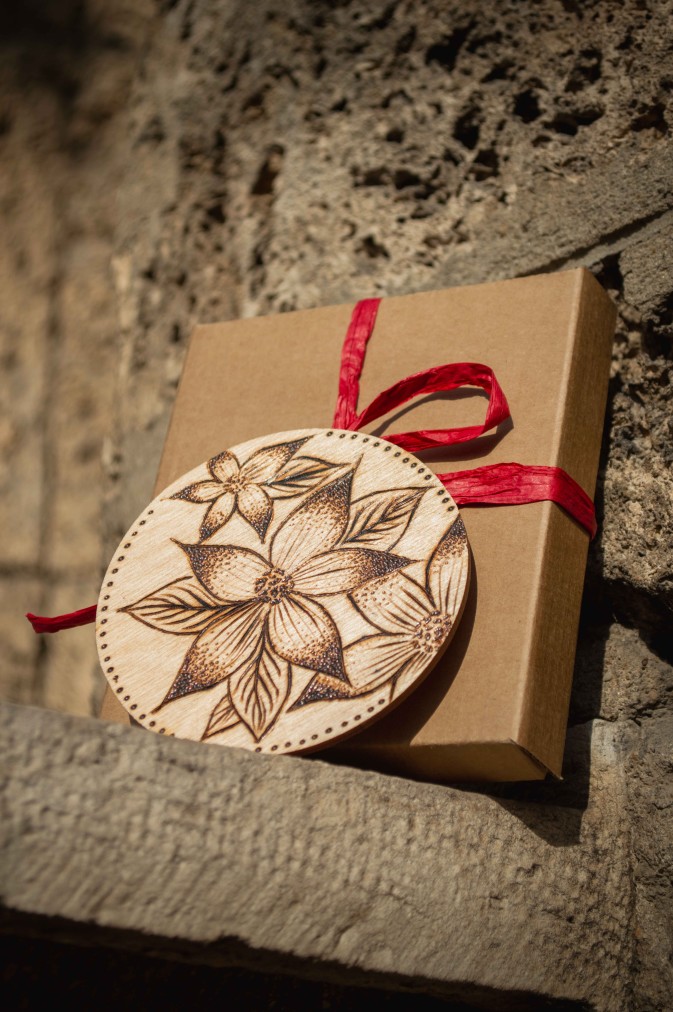
It is perfectly possible to personalize or decorate wood without using a pyrography pen. Several techniques, ranging from simple manual tools to more creative methods, allow you to achieve aesthetic and durable results. Whether for an artistic project, a decorative object, or a unique gift, here are some effective alternatives to engrave wood differently.
- Use an electric engraving pen to trace patterns directly on the wood surface.
- Use a mini drill like a Dremel with an engraving or milling bit.
- Perform manual engraving with a wood knife or wood chisels.
- Use carbon paper to transfer a design then carve it with manual tools.
- Try chemical engraving using a product suitable for wood (less common and to be handled with care).
- Engrave using a fine soldering iron as a substitute for a pyrography pen for small lines.
- Experiment with the stencil and paint technique for a “engraved” trompe-l’œil effect.
Woodcut engraving
You have probably heard of pyrography, but not woodcut engraving. These two methods allow working on the wood surface.
If you are wondering which type of wood to choose for pyrography, know that wood engraving also requires a quality material to achieve a better result.
Wood engraving is defined as a classic technique of engraving on wood. To engrave a text or drawing on a piece of wood, it requires a gouge, a chisel, a penknife, or even a burin.
To achieve this, you sketch your drawing directly on the wood. You carve the outline of the image using the tools mentioned above. Generally, all engraved parts appear white on the outside.
So far, your initial drawing stands out in relief on the carved board. Then you proceed to inking. It is important to choose a fairly firm product so that it does not spill into the recesses.
After hand printing, allow sufficient drying time for your work. The delay depends on the nature of the ink used.
Laser wood engraving
Just like the best professional pyrographer, the laser allows you to trace or write on a wooden surface with neat and precise results.
Many companies use this technology to engrave their logos on their products. Likewise, individuals use it to make personalized gifts.
Specialists or artisans use it for many applications such as composing trophies, models, decorative objects, plaques, keychains, toys, and many others.
In all cases, the laser machine allows for a clean and smooth engraving. This creation lasts a long time, thanks to the power of the laser.
Thanks to this, the wooden support withstands abrasion as well as external aggressions.
It should be noted that laser engraving requires quality wood. Its nature affects the final result. It is therefore advisable to choose the best material to avoid unpleasant surprises.
Kolrosing
- Origins of kolrosing: Kolrosing is an ancient Scandinavian decorative art still popular today.
- Engraving technique: This technique consists of engraving and carving decorative patterns or lines on wood.
- Supports used: The supports used can be wooden spoons, cutting boards, small boxes, or decorative objects.
- Tools for engraving: Engraving is generally done using a knife, but other sharp tools can also be used.
- Coloring of patterns: After incision, the cuts are colored to highlight the decorative patterns.
- Materials for coloring: Powdered charcoal, ground coffee, black wax, or any dark-colored powder are used for this.
- Usage recommendation: It is recommended to use a tool specially designed for engraving on wood.
- Tips for beginners: If you are not familiar with using a pyrography pen, specific advice can help you get started.
Pyrography
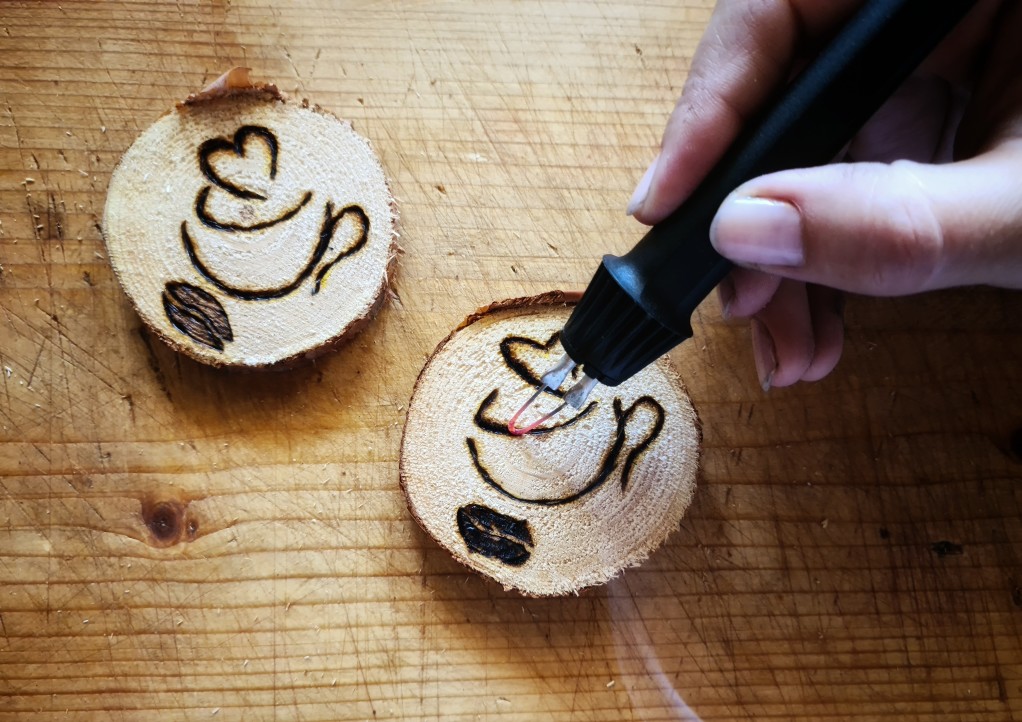
Pyrography is an interesting activity to personalize kitchen utensils or everyday wooden objects.
To carry it out successfully, you use the appropriate tool called a pyrograph used to engrave drawings, letters, or shapes.
Through this technique, you restore their shine to increase their aesthetic value. Thanks to it, your old spoon can become chic and unique.
To achieve this, the tip of the pyrograph must be heated up to 200 °C. You use the heat to engrave on wood. Besides the wooden support and the pyrograph, use tracing paper and a sheet with a sketch.
To start, trace the sketch onto the tracing paper. Then place and fix this traced model against the wood.
Now retrace your design with a pencil, then remove the tracing paper to see the result. To finish, reproduce the drawing with the pyrograph.
You can use sharp knives, chisels, cutters, or even nails to incise patterns into the wood. These tools allow for precise cuts without the need for electricity.
After incising the wood, it is recommended to color the cuts with powders such as charcoal, ground coffee, or black wax. This enhances the contrast and highlights the decorative patterns.
Soft and fine woods like pine, poplar, or linden are ideal because they are easier to engrave by hand. Avoid hard woods that require more effort and may damage the tools.