Recently, spots of humidity in the house have been noticed. The heating bill also keeps rising. It is therefore urgent to insulate your home. However, faced with the wide choice of insulating materials on the market, it is difficult to find the right one.
If you are looking for an element that is both effective and versatile, opt for cork panels. They can insulate walls, ceilings, floors, and attics both thermally and acoustically.
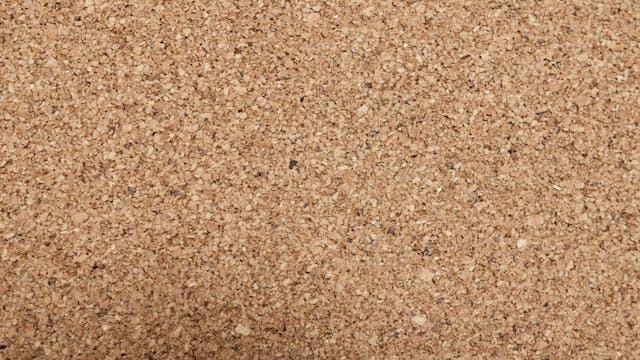
This material is made from debris of renewable cork oak bark. Thus, it is a healthy component that poses no risk to health or the environment. The panel comes in many different colors and thicknesses. To learn more, take your time and read this article.
Overview: I consider cork as the noble material par excellence of bio-sourced insulation. In my opinion, its ability to last through decades without losing its technical properties is a feat of nature that industry struggles to match. What I find remarkable is its versatility: it not only traps heat, but also offers an organic aesthetic that instantly warms a room. To me, it is a sustainable investment that combines thermal performance and total respect for the environment.
What are the insulating properties of cork panels?
More and more experts consider the cork panel as the best acoustic and thermal insulator on the market. It has many interesting advantages.
Firstly, it appeals to most people because of its versatility. It can be used for any type of insulation. Whether it concerns interior walls, attics, or floors, cork demonstrates great thermal and acoustic performance.
Next, its resistance makes it a top choice material for both thermal and acoustic insulation. Unlike other elements in the same category, it is not afraid of water. It can absorb and release it. Due to its moisture regulation quality, it can be used to insulate buildings considered historical monuments.
That’s not all, cork panels are naturally protected against fungi, insects, and pests. With proper treatment, they can protect a home from fire. Some belong to the classification of B1 construction materials which are hardly flammable.
Many people also appreciate their flexibility and lightness. As such, they are easy to install provided the wall is in excellent condition. If the support has moisture problems, it is important to treat them before installing the insulating material.
Compared to other insulators, cork is a rot-proof bio-sourced insulating material. As a result, you can use it to insulate, for example, areas under screed or basements without worrying about its deterioration.
I tested the installation of expanded cork panels in a north-facing bedroom that remained hopelessly cold despite the heating. During handling, I was immediately charmed by the “burnt wood” smell and the texture of this material. Placing my hand on the bare wall, I became aware of the immediate break in the thermal bridge: the wall was no longer a source of cold, but a warm surface to the touch. It is this immediate comfort sensation, beyond the numbers on technical sheets, that definitively convinced me of the value of this material for housing.
Is cork a good sound insulator?
Cork is not only a good thermal insulator. It also offers high sound performance of about 30 dB. It is no surprise that it is among the best acoustic insulators. It holds the number 1 position among durable and effective insulating materials.
Even if you use cork of low thickness, it is enough to provide good sound insulation. That is why many use it for insulating party walls dividing two small rooms in a house. You have the option to install it on the ceiling or under the floor. A 4 mm cork underlay can guarantee indoor sound insulation.
The cork panel is capable of absorbing various frequencies depending on its thickness. A coating of 2.5 to 4 mm can absorb high frequencies while a thicker one, over 5 mm, captures mid and high frequencies. If you use 5 mm cork, it serves to reduce airborne noises such as impact noises.
Cork is particularly favored for insulating a passive house or an eco-friendly dwelling. Since this insulator comes from cork bark, this stripping system helps boost the conversion of carbon into oxygen. Moreover, it is a natural insulating material, therefore ecological, recyclable, and renewable.
Technical characteristics of cork insulation
| Property | Performance |
| Thermal conductivity (λ) | About 0.038 to 0.045 W/m.K |
| Fire resistance | Naturally fireproof (Class B-s1, d0) |
| Acoustic insulation | Reduction of impact noises up to 20 dB |
| Durability | Almost unlimited: rot-proof and stable |
| Origin | Cork oak bark (renewable resource) |
How to install cork panels on a wall?
To better answer this question, it is important to carefully choose the type of cork to fix on the wall. Some people opt for natural cork panels, due to their high sound insulation quality. However, it should be known that their installation requires more caution and consideration since it is a heavy material.
On the other hand, expanded cork panels are lightweight materials. This significantly reduces the costs related to their installation. Due to their great thermal insulation capacity, they are mainly used on exterior facades.
For cork rolls or tiles, their fixing is very easy. Since they are lighter than other panels, simple gluing is enough to put them in place.
The method of fixing cork to the wall can be divided into three main categories. You can attach it using glue, mortar adhesive, or mechanical fixing.
The first may seem the fastest and simplest to carry out. You just need to use a strong glue to install cork rolls or tiles on the wall. It can also be used for cork up to 30 mm thick at most.
For the second technique, it is mainly applied to expanded cork, ideally outdoors. In most cases, the adhesive mortar is only a supplementary fixing, as it must be combined with a mechanical fixing, most often with a plug. For external insulation to be effective, you need to use cork panels of a high thickness. Additionally, you must cover them with a finishing coat that increases the total load.
Regarding mechanical fixing, it is the most secure and effective method. Generally, it is combined with an adhesive fixing that strengthens the installation of the insulating material. It is suitable for natural or expanded cork thicker than 30 mm.
Can cork be used for thermal insulation of houses?
Of course, cork is one of the thermal insulating materials par excellence. In summer as in winter, it effectively insulates almost all surfaces of the home, providing you with optimal thermal comfort. Whether in panels, granules, or rolls, it is suitable for every area of the house.
For external insulation at the roof level, it is recommended to use rigid cork panels. They are fixed using screws, plugs, or adhesive mortar. Similarly, you can use cork panels for interior wall insulation, but do not forget to cover them with plaster- or lime-based render.
Besides that, many prefer expanded cork granules to insulate low floors. You can pour them between the floor joists. If you use boards, they can be laid directly on the floor.
If you plan to insulate the attic, expanded cork granules are the most commonly used materials. Others insulate this space from the inside using cork boards. For this, they insert them between the rafters.
No matter the place to insulate, cork offers you better results for thermal insulation of the house. Especially since it is chemically neutral, it poses no danger to the environment. Let us recall that cork is a 100% natural insulating material.
What are the ecological advantages of expanded cork?
Do you want to contribute to environmental preservation when insulating your house? Do not hesitate to use expanded cork. It is an ecological option for the planet since it is the result of a renewable resource, cork.
Indeed, the bark of the cork oak used for its composition can regenerate every 9 years. Moreover, its harvesting causes no damage to the tree. The production process leaves no toxic waste affecting the environment. At the end of its life, you can recycle the material or compost it.
As its name suggests, expanded cork is therefore a type of cork. A renewable and natural material, it stands out by its manufacture without the use of chemicals that are toxic to the environment. It thus emits no atmospheric pollutants threatening the ecosystem.
Used in countless renovation and construction projects, it is a solution that is both efficient and ecological, improving the home’s energy efficiency. When you use it, you have the opportunity to limit your carbon footprint to fight against climate change.
Besides being an ecological material, insulation with expanded cork promises a better quality of life for the inhabitants. Due to its insulating quality, it helps them reduce their needs for air conditioning and heating. This allows them to save energy while benefiting from optimized thermal comfort.
What is the difference between expanded cork and agglomerated cork?
As we just explained in the paragraph above, expanded cork is one of the most efficient types of cork in terms of insulation. Know that agglomerated cork also has countless advantages. To clarify, it is important to explain the difference between these two types of cork.
It is worth emphasizing that cork can be expanded or agglomerated. The first results from cooking natural cork at an extreme temperature, that is about 300 °C with steam. As for the second, it can be created by crushing natural cork from cork stoppers or cork oak. Then you grind it into small pieces and the resulting product is mixed with an ecological binder forming, for example, panels.
Compared to agglomerated cork, expanded cork appears more brown. The natural manufacturing process of the granules makes expanded cork more resistant and more insulating. It can be found in two formats, including loose cork and panels.
As for agglomerated cork, it is widely used in the wine industry. It is used, for example, to seal champagne or wine bottles. It comes in the form of rolls, panels, and tiles.
Despite the variety of corks, each has its own thermal conductivity coefficient. If expanded cork panels have a thermal coefficient between 0.035 and 0.045 W/m.K, those of agglomerated cork are around 0.044 to 0.049 W/m.K.
Is cork resistant to moisture and fire?
Cork is not only natural, ecological, and recyclable. It is also an excellent thermal and acoustic insulator. Even better, it stands out for its resistance to water. Since it is generally composed of suberin, this molecule makes it very resistant to steam as well as moisture. Despite contact with water, it reacts very well to this environment. This material refuses to disintegrate or melt even when submerged.
Besides water, it is insoluble in ether, alcohol, hydrochloric acid, chloroform, and sulfuric acid. The suberin contained in cork creates a barrier impermeable to gases as well as moisture. Cork is protected from heat and is completely waterproof.
In addition to its tolerance to water, this insulating material is also fireproof. It can withstand high temperatures up to 120 °C. In short, cork is hardly flammable. In the event of an accidental fire, it takes some time to burn.
Moreover, cork is not at all a flame spreader. That is why many people use it to insulate homes, but also to protect them against domestic fires. And even if flames spread, it emits no toxic or dangerous fumes. In case of fire, it therefore poses no risk to inhabitants.
Can cork panels be used for interior decoration?
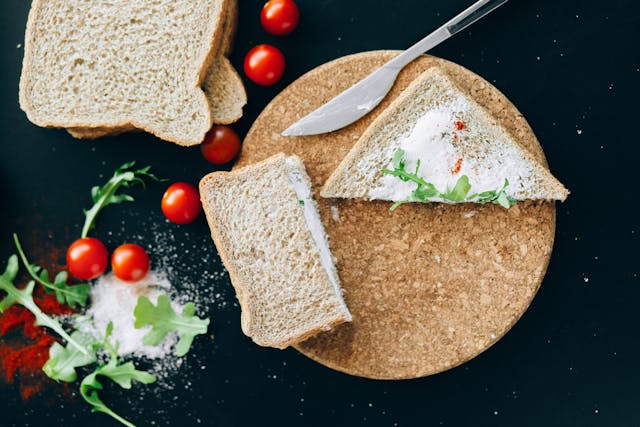
Besides its main role, the cork panel can be used in many ways to make decorative objects at home. It provides an aesthetic touch and a warm ambiance that highlights it. Unlike most insulating materials, it is easy to work with. That is why it is possible to create countless accessories and furniture with rolls or cork panels.
To enhance an office, you can, for example, create a wall covered with cork. This aesthetic material covers the floor and beautifully dresses the wall. Cork cacti are also practical for hanging decorative elements or your jewelry. Many small accessories can be made from cork, such as document holders, trivets, yoga blocks, pencil holders, and more.
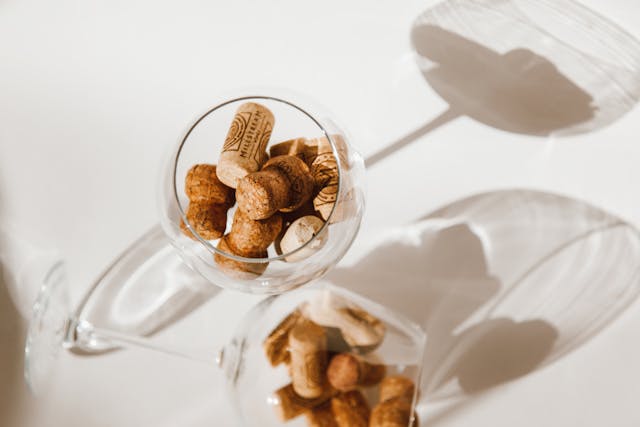
So you can find it everywhere in the house. To close boxes, you can cut cork panels and make lids. Many also collect cork stoppers to make small vases. A collection of benches, tables, headboards, shelves, and stools made of cork is available online. Ideas are plentiful. You just need to be creative and you can start your projects.
What is the average cost of cork panels for insulation?
To effectively and naturally insulate your home, nothing beats choosing cork panels. Besides their sound insulation qualities, they guarantee thermal comfort in all seasons.
Because of its many advantages, it is normal for this insulation to be expensive. Its price mainly depends on its thickness, packaging, and density. Generally, cork is offered between 10 to 30 euros per square meter. It can be used to insulate roofs, floors, attics, walls from the outside or inside.
Insulation costs vary. They differ depending on the complexity of the task, the thickness or density of the insulating material, the geographic area, and the professional labor.
There are 2 categories of cork insulators. Compared to agglomerated cork, expanded cork is the most common model. While the first costs about 7 to 10 euros per square meter, the price of the second can reach up to 60 euros per square meter. It is noted that expanded cork panels are more expensive than granulates.
Is cork a durable and recyclable material?
The major advantage of cork is its durable and recyclable properties. It can be harvested from the bark of the cork oak. In this way, the tree can continue to live. The bark stripping is completely painless for the plant. Moreover, this increases its ability to purify the air. So if you are looking for the most durable and ecological insulation, nothing beats cork.
Its harvest also contributes to the fight against global warming. It can be done every nine years. This material is capable of capturing a significant amount of carbon dioxide in the atmosphere. After each harvest, the tree can similarly absorb more CO2, which optimizes bark regeneration.
Finally, cork is also a biodegradable insulating material. It can be recycled many times without difficulty. Cork is widely used in packaging. Since it generates no toxic products, it can be used safely. Inert to substances, it releases neither odor nor flavor.
Besides packaging, cork is well known in the manufacture of stoppers. After the recycling process, it can be used to create new cork stoppers, parquet boards, shoe soles, and many other decorative objects.
Cork panels: insulation, decoration, and ecological solutions for the home
Absolutely. Cork is naturally rot-proof and resistant to mold, making it an excellent choice for humid environments. However, it is recommended to use high-density cork tiles and apply a suitable finish to prevent water from stagnating between the joints.
Black expanded cork is thermally treated at high temperature, which causes the cells to expand and releases the natural resin (suberin) that acts as a binder. It is mainly intended for technical insulation. Decorative cork, on the other hand, is often made of natural cork granules cold-agglomerated, favoring aesthetic appearance and fine grain.
The most common method is to use contact adhesive or a specific adhesive mortar for bio-based insulators. For reinforced thermal insulation with thick layers, it is advisable to double the fixing with collar dowels (rosettes) to ensure perfect stability of the panel over time, especially if you plan to apply a finishing plaster on top.