When wondering how to reduce heating consumption, nothing beats starting thermal insulation work. It is important to note that heating expenses represent about 60% of energy consumption.
That’s not all, 25% to 30% of the indoor heat escapes through the walls, roof, attic, and many other parts of the home. To limit these house heat losses, energy renovation work becomes an absolute priority. Before determining which areas to insulate first, let’s first summarize in a few paragraphs the importance of home insulation.
My priority analysis: I often see homeowners rushing to change their windows while their attics are real thermal sieves. My point of view is pragmatic: insulating a house is like dressing for winter: there is no point in having luxury shoes if you don’t wear a hat. I consider that the absolute priority should always be given to the roof, because heat, by simple physics, always tries to escape upwards. For me, a successful insulation strategy starts where the losses are the most massive, before tackling aesthetic details.
Why carry out home thermal insulation work?
Whether it is attic insulation, interior wall insulation or roof insulation, these energy renovation works help eliminate thermal bridges.
It is an interesting solution to make significant energy savings. Thanks to the reduction of your heating bill, you can save money.
Whatever insulating material is used, rock wool, glass wool, sprayed polyurethane foam, rigid insulating panels or even rolls, panels, bulk, thermal insulation work greatly improves your comfort in winter as well as in summer.
If you intend to put your home on the market, thermal insulation is part of the 5 profitable works to carry out before selling. Buyers always favor a properly insulated house.
Energy renovation work is also one of the key solutions to treat humidity in the house. It should be noted that this phenomenon causes a number of damages not only to the dwelling but also to the health of the occupants.
During my first renovation, I spent weeks tracking the slightest drafts under the doors, thinking that was my major comfort issue. The realization was brutal during a particularly harsh winter: despite my efforts, the temperature dropped as soon as I turned off the radiator. It was when I went up to the attic that I understood my mistake: the old glass wool was compressed and completely ineffective. This experience was a real lesson: I understood that insulation is not treated by intuition but by thermal logic. Since then, I always advise starting from the top to stabilize the house’s inertia.
What are the different parts of a house to insulate?
The roof
Looking for ways to clean the roof of your house? The priority is first to carry out thermal insulation.
This area causes heat loss in the house of up to 30%. Therefore, insulation work should start with the roof.
- The roof: Looking for ways to clean the roof of your house? The priority is first to carry out thermal insulation. This part causes up to 30% heat loss. Therefore, insulation work should begin with the roof.
- The walls: Insulating the walls, whether interior or exterior, should be done after the roof insulation, as partitions generate up to 25% heat loss. The choice of insulation technique depends on the type of materials. The use of sprayed polyurethane foam is recommended to limit thermal bridges.
- The floor and windows: Once the roof and walls are insulated, you can tackle the floor, responsible for 7 to 10% of thermal losses. Windows should not be neglected: they also let energy escape. Insulation depends on the type of glazing, the nature of the joinery, and the quality of the installation.
- The crawl spaces: Located under the lower floor, these non-habitable spaces allow pipes to pass through. Poorly ventilated, they poorly regulate humidity and can cause up to 7% energy loss. Internal insulation is recommended, with work generally less heavy than for other parts of the house.
- The attic and basement: Since the roof is a major source of heat loss, insulating the attic is essential. You can use glass wool, rock wool, or rigid insulating panels made of mineral wool. Although costly, these materials are easy to install and optimize thermal resistance. The basement, if poorly insulated, also lets out significant heat. It is advisable to insulate the basement walls to recover some precious degrees.
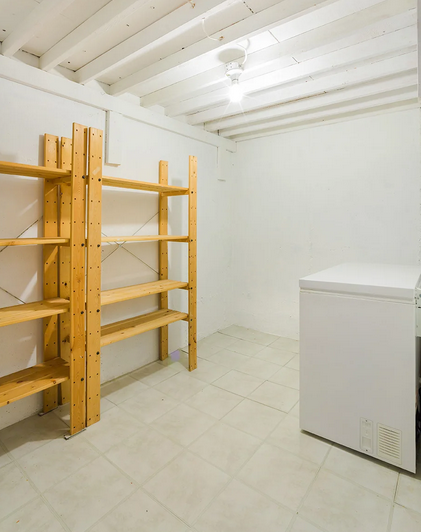
You can use glass wool to insulate the basement. Otherwise, adding polystyrene panels can do the trick. They can replace the vapor barrier.
Table of Average Thermal Losses
| House Area | Share of Heat Loss | Priority of Intervention | Difficulty of Work |
| Roof and attic | 25% to 30% | Maximum (No. 1) | Easy to Medium |
| Exterior walls | 20% to 25% | High (No. 2) | Difficult (External or Internal Insulation) |
| Windows and glazing | 10% to 15% | Medium (No. 3) | Easy (Replacement) |
| Lower floors | 7% to 10% | Moderate (No. 4) | Medium |
How to Check the Insulation of a House?
The best way to know if a home is insulated or not is to carry out a thermal assessment by calling on a professional. Their mission is to inspect the dwelling to detect areas affected by heat loss in the house.
In general, they relate to the attic, the roof, the walls, the windows, the basement, the loft, and the lower floors. It is especially in these places where heating heat is lost due to poor home insulation.
The expert equips themselves with special devices to identify thermal bridges. They propose effective measures and advice to improve the thermal resistance of the dwelling.
In any case, some signs should alert you to the presence of thermal bridges and energy loss. It happens that all windows and doors are closed. Yet, you still feel a sensation of drafts.
Besides that, traces of humidity should also warn you of poor thermal insulation at home. If this phenomenon is very common in the bathroom or kitchen, it gives you a sign of significant heat loss in non-humid rooms.
How to properly insulate a home?
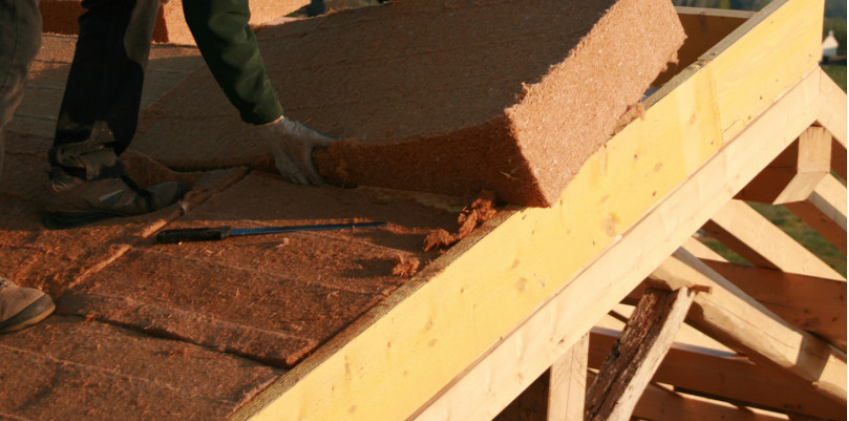
If you are looking for an idea to insulate home solutions, know that there are many methods promising effective results.
Thermal insulation of walls from the inside or ITI is among the most practiced techniques. These home insulation works apply not only to walls but also to converted attics, unconverted attics, and lower floors.
This involves directly placing an insulator, plaster facing, and vapor barrier on the wall. By choosing this method, you can benefit from financial aid for works. As for thermal insulation from the outside or ITE, it is suitable for wall insulation, attic insulation, and roof insulation.
It helps avoid thermal bridges. Also, this home thermal insulation has the advantage of preserving the inertia of the walls. Just like interior wall insulation, it is eligible for financial aid for works such as zero-rate eco-loan and MaPrimeRénov’.
It must be admitted that this home insulation price seems costly. The home insulation works are extensive. It is therefore advisable to benefit from financial aid to reduce costs.
Which part of the house to insulate?
To find the right answer, it is recommended to carry out a thermal assessment. Its objective is to detect the existence of thermal bridges and heat loss in a particular area.
If this concerns the roof, do not hesitate to start the energy renovation works with this part of the dwelling. Professionals favor good thermal resistance with rock wool and glass wool.
Also, walls must be insulated whether from the outside or the inside. The first method guarantees optimal thermal performance. The second, for its part, is not only easy to apply but also less expensive.
During home thermal insulation, do not forget the lower floors. They are among the places to insulate. Rigid insulating panels help fix thermal bridges. If your windows are equipped with single glazing, it is better to use double or even triple glazing.
Which wall to insulate first?
Before choosing between bulk panel rolls, wood fiber or sprayed polyurethane foam, it is essential to determine the area to prioritize. To do this, try to consider the exposure of the walls.
If the facade faces north, it lacks sunlight. Therefore, the area must be well insulated. Do not hesitate to use a thermal insulator 10 or 20 cm thick.
For walls facing south, a material with high thermal capacity is suitable. Cellulose wadding or wood fiber will not disappoint you. Since the surface is mostly sunny, the thickness of the insulation should be reduced.
Which wall should be insulated in a house?
When the wall is very thick, it is not capable of guaranteeing good home insulation and sufficient thermal comfort. Its density probably does not protect against temperature fluctuations. This type of wall does not insulate against heat or cold.
Of course, it can slow down the entry of cold air inside the house due to its inertia. But over the years of exposure, it becomes less insulating. As a result, it is responsible for heat loss in the house during the cold season.
During heatwaves, the thickness of the wall is not able to provide you with coolness. The heat is thus stored inside, causing absolute discomfort. Only interior or exterior wall insulation can remedy this situation.
In general, it is the old walls that have a significant thickness of up to 1 meter. If your home is among the older constructions, try to start the energy renovation.
If you hesitate because of home insulation costs, consider getting information about financial aid for the work.
The zero-interest eco-loan is one of the interesting schemes that help reduce the costs of home insulation work.
What are the elements allowing the insulation of the house?
There are many insulating materials on the market, each with its own characteristics. Those made of mineral wool are among the most used, due to their effectiveness for both acoustic insulation and thermal insulation.
Even better, they are available at a price affordable for everyone. For example, we can mention cellular wool, glass wool and rock wool. The latter comes in the form of bulk panel rolls, panels, or flakes.
Regarding materials made of vegetable wool, cork, hemp, wood wool and wood fiber are the most common insulators.
| Element | Thermal loss rate | Recommended insulation techniques | Commonly used materials | Specific remarks |
|---|---|---|---|---|
| Roof | Up to 30% | Insulation from the inside or outside (sarking) | Glass wool, rock wool, rigid panels, cellulose wadding | Priority in any energy renovation project |
| Walls | Up to 25% | Interior insulation (ITI) or exterior insulation (ITE) | Sprayed polyurethane foam, expanded polystyrene, mineral wool | Choice depending on wall type (concrete, brick, cinder block) and aesthetic constraints |
| Ground floor | 7 to 10% | Insulation under slab or via crawl space | Insulating panels, polyurethane foam, mineral wool | Important for houses on crawl spaces or uninsulated slabs |
| Windows | 10 to 15% | Replacement or addition of high-performance glazing | Double or triple glazing, PVC, wood or aluminum joinery | Check installation quality to avoid thermal bridges |
| Crawl spaces | Up to 7% | Insulation of the floor above the crawl space | Insulating panels, sprayed foam | Essential to limit humidity and thermal losses |
| Attic | Variable depending on use | Insulation of the floor or roof slopes | Glass wool, rock wool, rigid panels | Should be insulated even if not converted, to limit heat loss through the roof |
| Basement | Variable | Insulation of basement walls and ceiling | Extruded polystyrene, mineral wool, polyurethane foam | Allows recovering a few degrees and improving overall thermal comfort |
Also, there is cellulose wadding, cotton wool, as well as flax wool. To compose these insulations, they must always be complemented with synthetic elements, just like animal wool insulations.
As for the latter, sheep wool and duck feathers are most often used for thermal insulation of the house. The first category also proves effective for acoustic insulation.
Finally, synthetic insulations can optimize the energy performance of the dwelling. They are suitable only for thermal insulation, but not for acoustic insulation.
They can be manufactured through a chemical process. They come in many varieties. Polystyrene is one of the most chosen materials for insulating houses.
The roof is the main source of heat loss, accounting for up to 30% of losses. Next are the walls, responsible for about 25%, followed by the windows and the floor slab. These elements should be prioritized to improve the overall energy efficiency of the home.
Heat naturally rises, which explains why the roof lets out a large part of the energy. By insulating the roof first, you immediately reduce the most significant losses. This creates a solid foundation before moving on to other insulation work.
Yes, even though these areas are less exposed, they contribute to heat loss. A poorly insulated basement can cool the rooms above, and crawl spaces promote humidity and air infiltration. Insulating them completes the work and improves the thermal comfort of the entire house.