
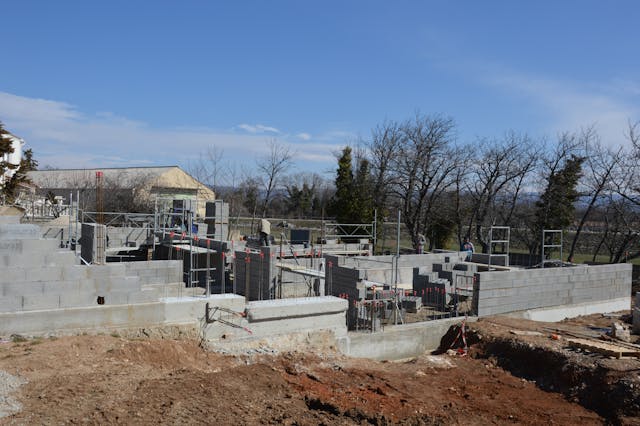
Just like no-mix concrete, cement, lime, welded meshes, wood, aggregates, natural stone, or fast-setting concrete, brick paving blocks and cinder blocks are among the most favored materials in the building sector.
While the former is often used in the construction of walkways or decorative walls, the latter contributes to the creation of load-bearing walls.
Some people sometimes confuse brick paving blocks and cinder blocks. However, these can be used in various situations. If you also have trouble distinguishing them, this article will help you better understand their differences.
📋 The essentials at a glance: Personally, I consider the choice of construction material to be the most structuring decision for the durability of your work. Did you know that a standard cinder block wall has a compressive strength of 40 to 80 bars? Whether you opt for the aesthetic of brick or the robustness of concrete, each block meets specific technical constraints that must be mastered before pouring the first footing.
What are the main materials used for brick manufacturing?
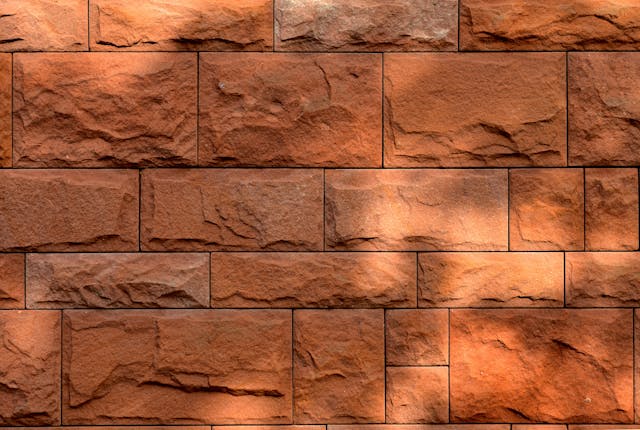
When discussing their production, we often think of the technical characteristics of machine brick manufacturing. However, it is important to know the materials of their composition.
It should be recalled that brick has been one of the construction elements used since time immemorial. It is made from clay soil. You use an outer layer of fired clay and then multiple internal layers to reinforce its strength.
With the advancement of industrialization, this material has undergone many different manufacturing methods. It comes in several versions, namely hollow bricks, solid bricks, terracotta bricks, perforated bricks, and paving bricks.
The latter can be made of concrete, clay, reconstituted stone, sandstone, natural stone, granite, or slate.
They are generally used when you plan to create a beautiful terrace. Likewise, they can be used during the construction of public squares, garden borders, walkways, parking lots, sidewalks, and more.
Combining aesthetics and robustness, paving bricks offer a variety of sizes, shapes, and colors to suit all desires and styles.
📍 My experience: When creating my boundary wall in 2024, I wanted to mix leftover solid bricks and hollow cinder blocks to save a few euros. Bad idea: since the expansion coefficients were different, micro-cracks appeared in the plaster during the first winter. Lesson learned: for a homogeneous and lasting structure, load-bearing materials should never be mixed.
What are the strengths and uses of bricks, pavers, and cinder blocks?
Whether for outdoor landscaping, wall construction, or decoration, bricks, pavers, and cinder blocks each offer specific advantages. Distinguishing them well allows you to choose the most suitable material for your project.
- Brick: excellent thermal and acoustic insulator, used for facades, chimneys, and partitions.
- Paving stone: aesthetic and wear-resistant, ideal for terraces, driveways, sidewalks, or parking lots.
- Concrete block: solid and economical, perfect for load-bearing walls and foundations.
🌍 Did you know?
The concrete block, also called “agglo” or “rubble stone,” is composed of 87% gravel and sand, 7% cement, and 6% water. It is one of the most recyclable construction materials in the world, as it can be crushed to become aggregate again.
- Material versatility: different formats, compositions, and finishes depending on the intended use.
- A choice influenced by the environment: insulation, aesthetics, and durability vary depending on the chosen material.
How do the manufacturing processes of bricks and concrete blocks differ?
More and more people tend to confuse concrete blocks, bricks, and paving stones. Although these blocks are all used in construction and landscaping projects, many points distinguish them. Their composition methods are among these.
As mentioned above, brick is made from fired clay. You need to find quality earth and mix it with water to obtain a paste. You can add organic materials or plant fibers to optimize the strength and durability of the bricks.
That said, the next step is to shape the paste and use a mold solely to get the brick shape. On a flat surface, place the brick blocks to dry. Once done, you just have to use them according to your project.
Regarding the manufacturing of concrete blocks, the processes differ from those of bricks. This material is made of concrete, but not clay. For this reason, its production requires preparing concrete. This consists of cement, sand, and gravel.
Before pouring it, you should make the formwork. For this, use clean boards free of nails. Then, you can pour the concrete. The formwork can be reused after making the concrete blocks.
As technology advances, builders do not lack creativity and ingenuity to produce bricks, paving stones, and concrete blocks. They thus bring to market models of brick and concrete block machines that allow them to save time in material creation.
It is a versatile equipment; they are not only concrete block molding machines but also brick manufacturing machines. Some are used not only to make bricks, paving stones, and curbs but also gutters and pipes.
To produce these materials, it is enough to use different molds. To find the right product, try to analyze the technical characteristics of brick and concrete block machines.
💡 Practical tip
Always moisten your bricks or concrete blocks before laying them in summer. If they are too dry, they will “drink” the mortar water too quickly, preventing proper setting (drying phenomenon) and weakening the structure.
How to compare bricks, paving stones, and concrete blocks?
🌟 Strengths
- Non-flammable and rot-proof
- Excellent thermal inertia
- Very long lifespan
🔻 Limitations
- High weight during installation
- Carbon footprint related to cement
Before starting any work, it is useful to compare each material according to its composition, usage, and advantages. Here is a table highlighting the main differences.
| Material | Main Composition | Common Uses | Key Advantages |
|---|---|---|---|
| Brick | Baked clay | Facades, partitions, chimneys, decorative fittings | Thermal insulation, aesthetic, durable |
| Paving stone | Concrete, natural stone, clay | Terraces, walkways, sidewalks, parking lots | Aesthetic, durable, eco-friendly |
| Concrete block | Concrete (cement, sand, gravel) | Load-bearing walls, foundations, retaining walls | Strength, affordable price, quick installation |
What is the main difference between a paving stone and a brick in terms of use?
Even though the market combines the production of machine-made concrete blocks and bricks in one device, each material has its specificities. Concrete blocks are often used in the construction of load-bearing walls and foundations. On the other hand, bricks are prized for their multiple applications.
Some people use them for composing facades, others for their chimneys or outdoor barbecues. As for brick pavers, they are deployed for constructing traffic lanes for cars, garden borders, walkways, parking lots, patios, terraces, and much more.
Since bricks have many uses compared to concrete blocks, it is not surprising that their price is somewhat higher. Apart from that, it is clear that bricks surpass the other due to their aesthetic appeal.
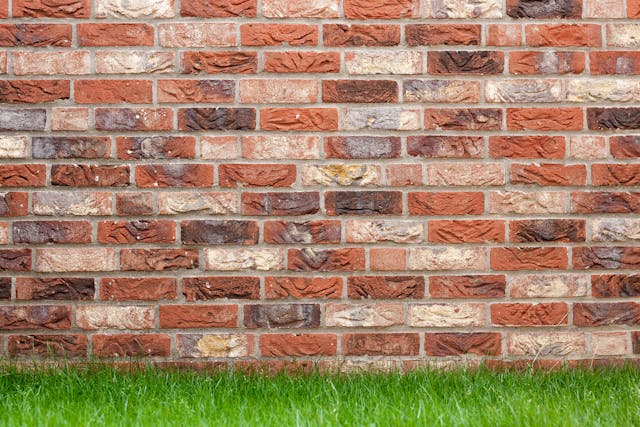
They also help you save energy due to their thermal insulation quality. If you choose concrete blocks, you need to complement them with an insulating material for optimal indoor comfort.
In any case, concrete blocks, bricks, and paving stones each find their use in renovation or construction projects. It is practical to have a concrete block and brick machine at home.
To carry out multiple applications, you can opt for equipment for structuring concrete blocks, bricks, paving stones, borders, cinder blocks, culverts, and gutters.
Why are concrete blocks often used in the construction of load-bearing walls?
Many people do not hesitate to acquire a concrete block making machine or a concrete block laying machine to build load-bearing walls. It should be noted that there are several types of concrete blocks.
For example, there are support blocks that serve as a base for a window. By the way, consider consulting our guide to choose between PVC, aluminum, or wood windows if this topic interests you, of course.
Returning to our main topic, hollow concrete blocks, also known as cinder blocks, are also found on the market. They are made of concrete poured into molds to obtain rectangular hollow concrete blocks. In most cases, they are used for constructing partitions in various projects.
What concerns us here is the solid concrete block. It proves to be the perfect material for erecting load-bearing walls. Unlike the hollow concrete block, it is made of thick concrete without internal cavities.
Unlike other categories of brick pavers, it is heavier and demonstrates incredible solidity.
That is why it is ideal for projects requiring great strength such as load-bearing walls. It can also be used for building retaining walls and foundations.
What types of pavers are commonly used in outdoor landscaping?
To bring a fresh touch to your outdoor spaces, you plan to install a driveway, a garden border, or a terrace. To ensure the durability, aesthetics, and practicality of the layout, it is important to carefully choose the materials to be used.
There are many paver options that correspond to various projects. Among the most used are natural stone pavers, concrete slabs, precast concrete pavers, and brick border pavers or brick pavers.
The first is generally found in terrace design. In blue stone, granite, sandstone, or travertine, the natural stone paver can be heavy, which complicates its installation. As for the concrete slab, it is also used for outdoor coverings. Their drawback lies in their frequent cleaning since the material easily attracts moss and dirt.
Regarding the precast concrete paver, it is often available at a high price because it consists of premanufactured elements. These can be assembled on site. There is nothing like favoring brick pavers.
Used for several centuries, they remain among the ecological and durable materials. They can enhance your outdoor space for an average of 125 years.
Since they offer great resistance to wear, frost, and weather, they are perfect for an outdoor environment such as garden borders or terraces. If you want a non-slip surface, prioritize terracotta bricks.
To save time in their production, do not hesitate to get a brick block machine. Some versatile models also produce curbs and brick block machine borders.
How is a house’s energy efficiency affected by the type of brick used?
Indeed, countless advantages can be gained from brick block pavers. Although each has its strengths, the latter is especially beloved by most due to its many benefits.
Brick is not only non-flammable, but it also has better acoustic insulation. Likewise, it offers good humidity regulation. Additionally, its thermal conductivity can seem low.
It is important to specify that there are many types of bricks. You can choose between hollow brick, monolithic brick, solid brick, and insulating brick. As its name suggests, the latter differs by its interesting insulating capacity.
Made of terracotta, it is the best thermal insulator compared to other categories of bricks. Thus, it helps improve the energy efficiency of a home.
Its excellent thermal inertia greatly reduces heating costs. This material is capable of storing heat from the air all day long. And at night, it can release it.
What is the environmental impact of concrete block production?
Even though concrete blocks were initially used for the construction of industrial or professional premises, their application is now very varied. They also have the advantage of being environmentally friendly. Like paving bricks and curbs, they are mostly made from natural materials.
To make concrete blocks, you use about 80% sand and gravel, 7% limestone and clay, 6% water, and only 7% cement. Only the latter requires firing. In short, concrete blocks are made up of 93% natural resources.
Besides that, it is important to mention that they remain an inert material. They require no chemical treatment, neither curative nor preventive. If you do not use a device for paving machine curb machine concrete block, the production of concrete blocks has a better environmental quality.
What are the standards governing brick dimensions in construction?
There are several types of paving bricks and concrete blocks, but what interests us now is the first material. Each type of brick has its drawbacks, advantages, and specific size.
First, let’s consider the so-called ecological bricks, of which there are 3 types: the monolithic brick, the aerated concrete brick, and the lime-hemp brick. The first comes in two different thicknesses. There is the monolithic brick of 37 cm and the other of 20 cm.
As for the second, its thickness must be greater than 24 cm. The third, meanwhile, must have a thickness of at least 30 cm to have high energy performance.
Besides the ecological brick, there is the terracotta brick. This one stands out for its many applications. Its dimensions can therefore vary according to its use. Generally, these range between 15 to 30 cm.
The common size of bricks, regardless of the category, is 220 mm x 105 mm x 60 mm. These standard dimensions also depend on the manufacturers.
How do paving installation techniques differ from those of bricks?
⚠️ Common misconception
Believing that laying pavers on a simple sand bed is sufficient for a driveway. Without a compacted crushed stone sub-base (formation layer) and stable curbs, your pavers will sink under the weight of wheels at the first rains.
To better answer this question, it is important to explain the installation of pavers and then that of bricks. Regarding the first material, its arrangement can vary depending on the intended use. You can also place it on different supports, including sand, mortar, and soil.
If you install it on the latter, start by excavating the ground. You can then add sand. It is recommended to use a geotextile felt to prevent weed regrowth.
Once done, lay the pavers. The simplest method is the staggered pattern. Otherwise, you can also install them by tapping with a mallet.
Regarding the installation of the brick, you have the choice between laying in rows and laying in herringbone. For the first technique, you place the blocks side by side forming several horizontal rows. The second consists of arranging them in a staggered pattern. Remember to give them a 45-degree angle relative to the horizontal line.
What recent innovations have been introduced in the production of concrete blocks to reduce their manufacturing cost?
The use of a paved concrete block machine or a concrete block molding machine is among the recent inventions in the manufacturing of this building material. Thanks to its use, you can not only save time, but the quality of the paved brick concrete block obtained is also guaranteed.
Producers use technologies that perfectly meet European standards. The concrete block manufacturing machine offers you innovative and durable materials. Powerful, it is generally equipped with a high-performance motor accelerating the production of concrete blocks.
That’s not all, it enjoys countless interesting features allowing it to produce other materials besides concrete blocks. It is observed that most prefer the brick concrete block machine over a simple concrete block molding machine.
Frequently Asked Questions
Concrete blocks are the most suitable as they combine strength, weight, and durability. Bricks can be used, but they are more expensive and sometimes require additional insulation.
Paving stones (natural stone or bricks) are the most recommended: they resist frost and bad weather very well and offer a durable aesthetic finish.
Yes, because brick, especially terracotta or insulated versions, has better thermal efficiency and lasts a long time. Concrete blocks remain ecological but often require additional insulation.
Publications similaires :
 How to dig a hole in your garden with an electric auger?
 How to trim a thuja hedge that is too wide?
 Effective stump removal: Everything you need to know about the stump grinder
 Jardipedia: connected garden tips and ideas
 Fruits starting with Z: complete list of rare and exotic fruits
 Y-shaped fruits