
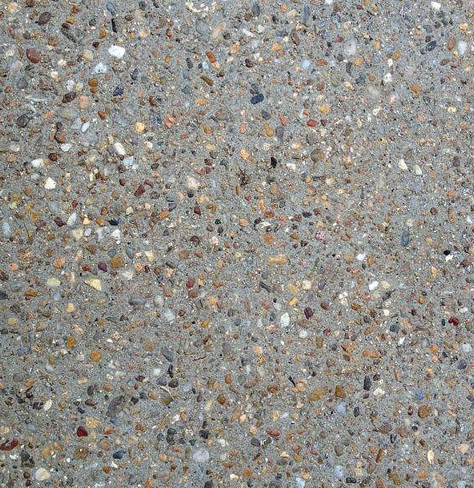
Like rapid-setting concrete, exposed aggregate concrete has been hugely popular lately. For outdoor landscaping, this floor covering is highly favored to enhance garden paths, terraces, pool decks, courtyards, sidewalks, or parking areas.
While installing a steel pergola requires significant expenses, laying an exposed aggregate surface is affordable for everyone. Yet, it gives an unmatched aesthetic touch to your outdoor spaces.
If you want to learn more about this, we invite you to consult our practical guide. We provide explanations on the use of exposed aggregate concrete, the technique implemented for exposed aggregate concrete, pressure washer cleaning, and much more.
Comparison of applications for exposed aggregate concrete
Exposed aggregate concrete can be used in many outdoor landscaping projects. Each use offers specific advantages. Here is a table to better visualize its various applications:
| Application | Main advantages | Usage recommendations | Concrete example |
|---|---|---|---|
| Garden paths | Aesthetic, non-slip, durable | Provide sufficient thickness (8-10 cm) | Decorative pedestrian path |
| Terraces | Modern and natural effect, many finishes | Properly slope for water drainage | Family terrace |
| Pool decks | Rough surface, optimal safety | Choose light aggregates to limit heat | Safe pool coping |
| Sidewalks and public squares | Durable and aesthetic on a large scale | Check local and accessibility standards | Urban development |
| Driveways | Excellent resistance to heavy loads | Minimum thickness of 12-15 cm required | Garage driveway |
What is exposed aggregate concrete and in which applications is it mainly used?
It is important to start with the definition of this floor covering. It is primarily an ordinary concrete made from a mixture of water, cement, and aggregates.
The first difference is that the gravel or pebbles used are visible, making it a decorative floor covering with a gravelly appearance. Exposed aggregate concrete is therefore simply a concrete technique created to achieve a more specific aesthetic finish.
Furthermore, the exposed aggregate concrete technique differs by the addition of a surface retarder. This is why this material, rough to the touch, is called exposed aggregate concrete.

This retarder product delays the surface cement setting. It facilitates the passage and washing with a pressure washer, then revealing the contours of the concrete aggregates. This operation makes the stones more visible.
Regarding the use of exposed aggregate concrete, it is mainly applied outdoors and rarely indoors. Its implementation technique aims to obtain a floor covering more attractive than a simple ordinary concrete slab.
If you plan to enhance your garden, terrace, or pool deck, prefer durable and aesthetic exposed aggregate concrete.
Although its scope of application is often limited to outdoor spaces, some people use it in their garage or bathroom. It is mainly used on driveways.
No matter where you install it, the exposed aggregate concrete lifespan can seem appealing. Like raw concrete, it has strength and durability.
The steps to create exposed aggregate concrete
To achieve an aesthetic and durable finish, the implementation of exposed aggregate concrete must follow a precise process. Here are the main steps to follow:
- Ground preparation: excavate, compact, and lay a gravel bed to ensure stability.
- Formwork installation: delimit the surface to obtain clean edges.
- Concrete pouring: pour the properly dosed concrete mix with the chosen aggregates.
- Activator application: spray the surface retarder product evenly.
- High-pressure washing: after a few hours, rinse to reveal the decorative aggregates.
- Finishing touches: smooth the edges, check for uniformity, and protect if necessary with a curing product.
How is exposed aggregate concrete installed for garden paths or terraces?
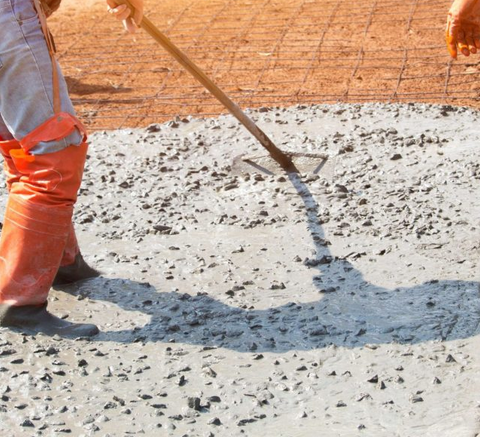
When you plan to make a screed, the technique used must be applied according to best practices. The same applies to the production of the exposed surface terrace work.
It must be said that the installation steps resemble those of standard concrete. There is no significant difference in excavation preparation, earthworks, slab pouring, or reinforcement.
Only the spraying of the surface activator distinguishes the implementation of exposed aggregate concrete. The activator delays the setting of the concrete. The next day, when it is sufficiently hard, all that remains is to proceed with high-pressure washing.
The goal here is to remove the surface layer of mortar that envelops the surface gravel. Thanks to the high-pressure water jet, the cement deposit is removed to reveal the pebbles.
For the successful realization of exposed aggregate concrete surfaces, the selection of stones can be crucial. Since they come in various shapes, colors, and sizes, you can play with them to achieve a better finish.
The choice between crushed and rolled gravel can, for example, diversify the final results. The same goes for colors. Choose one that matches the decor of your outdoor spaces.
With exposed aggregate concrete, the quantity of gravel must be significant to highlight them. It is also possible to use the tone of the cement covering the aggregates to decorate the exposed surface. Otherwise, consider adding colored pigments to tint it.
If this coating convinces you, contact a professional and get free quotes. They can estimate the price of exposed aggregate concrete.
What are the advantages and disadvantages of exposed aggregate concrete compared to other types of exterior coatings?
Like any concrete construction, garden paths, terraces, poolside areas made of exposed aggregate concrete demonstrate strength and better durability.
The creation of exposed surfaces is achieved with the same materials used in ordinary concrete, namely water, cement, and aggregates. That is why exposed concrete flooring resists weather and external aggressions better compared to terraces made of stone, wood, or tiles.
Besides that, it shows optimal tolerance to thermal shocks. It is no surprise that a poolside terrace made of exposed aggregate concrete has a longer lifespan.
If you want to enjoy your flooring for a very long time, opt for durable and aesthetic exposed aggregate concrete.
Its other major asset is its pleasant appearance. It is mainly used to beautify your outdoor spaces. Note that the implementation of exposed concrete can be customized according to your tastes.
Due to the variety of textures, colors, and aggregate sizes, it becomes easy to integrate exposed aggregate concrete into countless design styles, whether traditional, modern, or atypical.
Since it is a rough surface, this flooring is non-slip. It is also easy to maintain. If you are interested in its installation, contact a specialist and get free quotes. They are able to estimate the price of exposed aggregate terraces.
Despite the many advantages of exposed concrete flooring, it has some drawbacks. It must be admitted that the exposed concrete installation technique is reserved for professionals. Products for exposed aggregate concrete such as setting retarders, pressure washers, and bars involve many elements to master.
Aside from that, the creation of exposed surfaces for terraces is costly compared to classic concrete. To find the right price, try to contact several professionals and get free quotes.
How to maintain and clean exposed aggregate concrete surfaces to extend their durability?
For a successful outdoor layout, the implementation of exposed concrete is an increasingly popular idea.
This type of concrete allows you to nicely enhance your garden paths, terraces, and poolside areas. Besides its aesthetic side, the strength and lifespan of exposed concrete flooring are among its main assets.
However, with its rough surface, it easily traps dust, grease stains, green moss, and other dirt. It is therefore useful to regularly clean the exposed aggregate concrete floor.
To do this, start by clearing the surface. This removes the grime trapped between the stones. You do not need to perform a pressure washer cleaning. Simply use a broom with soft bristles.
The next step is cleaning the exposed concrete flooring. To do this properly, you can use dishwashing liquid and hot water.
In case of stubborn stains, there are many practical and effective natural tips and solutions. You can use many products that help keep your poolside terrace looking new.
For oily stains, use flour or talcum powder. Rust can be removed with a rust remover product.
Among lemon, vinegar, glycerin, or Marseille soap, baking soda offers miraculous results. You just have to mix it with a liter of hot water and you’re done.
Even professionals use it regularly to maintain their exposed concrete flooring.
What is the difference between exposed aggregate concrete and washed concrete?
Many people tend to confuse exposed aggregate concrete with washed concrete. Although they share many similarities, it must be said that each has its own particularities.
Their difference lies notably in their texture, appearance, maintenance, durability, and cost.
Sidewalks or garden paths, terraces, pool decks made of exposed aggregate concrete are distinguished by their texture which is both non-slip and rough.
On the other hand, surfaces made of washed concrete are shiny and smooth. Exposed or washed, their aggregates are visible, but those of the former are generally colored.
Regarding cost, when estimating the price of exposed aggregate terrace, it is noticed that it is more expensive compared to washed concrete flooring.
This price seems justifiable given that the creation of exposed aggregate surfaces requires special aggregates. This flooring also offers a nicely attractive finish.
Many appreciate the aesthetic durability of exposed aggregate concrete. It tolerates weather and wear better. In terms of maintenance, it requires little upkeep, unlike washed concrete due to its smooth surface.
If you plan to use it in your outdoor spaces, call on a specialist and get free quotes. There is nothing like entrusting the implementation technique to a professional.
What are the average costs associated with installing exposed aggregate concrete?
If you opt for a pool deck terrace in exposed aggregate flooring, please plan a significant budget. Compared to traditional concrete, its technical implementation seems costly.
To estimate the price of exposed aggregate concrete alone, you must consider the surface to be covered. The costs applied are decreasing. The smaller the terrace surface to cover, the higher the price per square meter.
For a small surface area less than 25 m2, prepare a sum of 100 to even 150 euros per m2. Conversely, covering a large surface, that is more than 25 m2, costs only 30 euros per m2.
As for the installation of exposed aggregate concrete, many factors come into consideration such as the cost of materials, labor, duration of work, and more.
Overall, the price of exposed aggregate terrace must include the cost of earthworks, formwork, and the actual installation.
On average, you should count 100 to 150 euros per m2 for a terrace up to 50 m2. As for the creation of exposed aggregate surfaces over 50 m2, the exposed aggregate price ranges between 50 to 90 euros per m2.
Can color be applied to exposed aggregate concrete and, if so, how?
Of course, exposed aggregate concrete can be colored to enhance its appearance. Like any concrete, it is usually gray. However, it is possible to add pigments that change its natural hue.
In most cases, the pool deck terrace or courtyard in exposed aggregate concrete is white, black, or gray. If you want to personalize it, you have the possibility to play with many shades.
Some people prefer to combine several different colors to create a much more special flooring.
To avoid making a mistake, it is advisable to go through a professional. They can estimate the exposed aggregate concrete price and help you choose the right shade to give your outdoor spaces a unique and unmatched finish.
What is the technical process of concrete exposure and what materials are used?
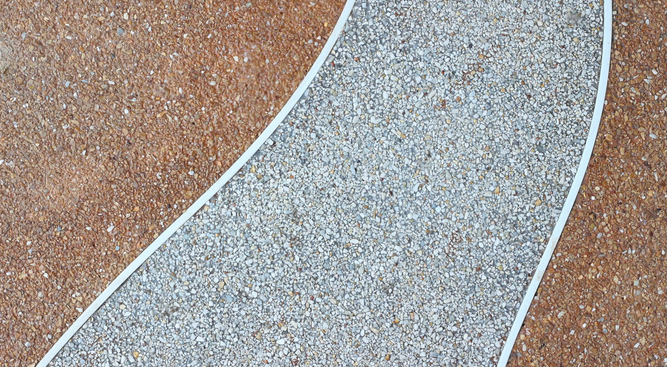
As mentioned in the previous section, the materials that make up exposed aggregate concrete are the same as with regular concrete.
To obtain 100 liters of exposed aggregate concrete, you need 35 to 36 kg of cement, 17 to 18 liters of water, 50 to 55 liters of sand, and especially 80 liters of gravel. The latter must be in large quantity for better exposed aggregate concrete.
Besides these materials, this type of flooring requires the use of a retardant setting exposed surface product. Available at hardware stores, the exposure agent delays the setting of the concrete. To use it correctly, please follow the instructions carefully.
The implementation of exposed flooring is similar to that of ordinary concrete. The difference is the spraying of a surface exposure agent after the concrete is poured and leveled.
When the exposure time has elapsed, the next operation consists of pressure washer cleaning bars. The pressurized water jet is used to remove cement residues, highlighting the aggregates.
How does the climate affect exposed aggregate concrete and what precautions should be taken in extreme climates?
For the exposed concrete implementation technique to be successful, it is essential to choose the most suitable day for pouring the concrete. Excessively high or low temperatures influence the final quality of the work.
Cold slows down the setting and hardening of concrete. Conversely, hot weather only accelerates these processes. These situations risk degrading the concrete or causing possible cracks in the terrace.
To avoid this, it is advisable to check the weather forecast a few days before the concrete pouring date.
If the ambient temperature is below or equal to 0 °C, concrete pouring should be avoided. The water contained in the mix freezes and then expands until the concrete is damaged. The scheduled date for mixing the concrete should be postponed by a few days.
And if the ambient temperature is above 25 °C, please pour the exposed aggregate concrete early in the morning. Before laying it, moisten the formworks as well as the base layers.
It is recommended to protect the fresh exposed aggregate concrete by applying a curing solution immediately after pouring.
Are there any specific ecological considerations related to the use of exposed aggregate concrete?
Exposed aggregate concrete is among the main materials widely used to decorate parking areas, car parks, or garden paths, terraces, beaches, and pools.
Despite its high price, it combines aesthetics, durability, and ease of maintenance. Even better, the lifespan of exposed flooring can be considered satisfactory.
Despite its advantages, it must be admitted that it is polluting for the planet, just like most concretes. Although it uses some natural origin materials, the use of a surface exposure agent is required in its composition process.
However, this is a chemical product to be sprayed on the concrete layer in order to obtain a exposed aggregate concrete coating.
In any case, it is less polluting than most ordinary concretes. Major brands currently offer eco-friendly concretes.
They enjoy an exceptionally high-quality finish that respects the environment. Compared to regular concrete, this one has a higher cost.
They are similar. Washed concrete highlights the aggregates through immediate high-pressure washing, while exposed aggregate concrete uses a surface retardant product, then rinsing, to achieve a more uniform finish.
The price generally varies between €50 and €120 per m² depending on the thickness, choice of aggregates, and complexity of the project.
It is possible, but technical. The dosing, installation, and especially the deactivation phase require precision and speed. Hiring a professional is strongly recommended for a durable and uniform finish.
Publications similaires :
 Thermal insulation, how to choose well?
 How to choose a good carpentry service for your construction project?
 Building compliance in the Antilles regarding smoke extraction: an overview of standards and obligations
 Choosing your electrical equipment for a safe installation
 Kitchen designer to avoid: the pitfalls for your kitchen in 2026
 Successfully completing your Habitatpresto work estimate with peace of mind