To give a warm and natural touch to the home, the use of wood is booming. Both outdoors and indoors, this noble material adapts to all styles, from the most classic to the most sophisticated.
Unlike new wood, burnt wood is widely used by both individuals and professional cabinetmakers. Also called Yakisugi or shou sugi ban, it comes from an ancient Japanese technique for natural wood protection.
Whether you plan to renovate your old furniture or create your cladding, this Japanese method shou sugi ban will surely please you. To better clarify the subject, take your time to discover this article.
What is Shou Sugi Ban?
If you are a skilled carpenter, you have probably already heard of it. But for those planning to learn DIY, this Japanese term might still be unfamiliar.
Shou sugi ban is nothing other than a wood burning technique. Many confirm that it originates from Japan. It aims to cause combustion on one visible side of the board in order to optimize its resistance.
Thanks to the shou sugi ban wood treatment, the material tolerates water, insects, mold, UV rays, fungi, as well as fire.
It should be noted that the majority of Japanese buildings are made of wood.
The inhabitants fear bad weather as well as the spread of fire during a blaze. The carbonized layer, using the ancient Japanese technique shou sugi ban, slows down the spread of flames.
The method is not limited to Japan. Although it is not new, it is currently enjoying immense success all over the world, especially in Europe.
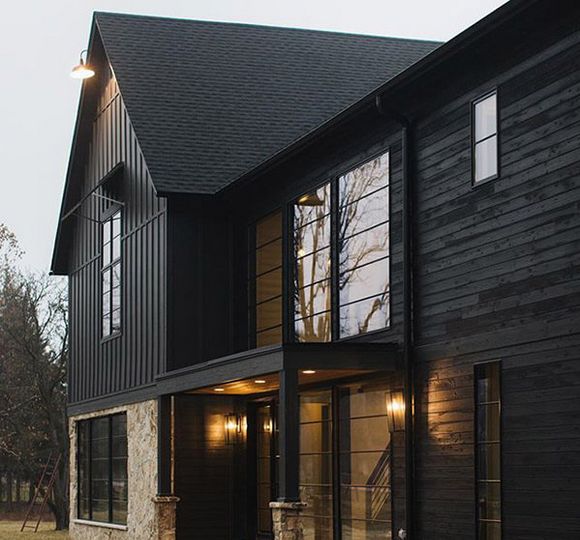
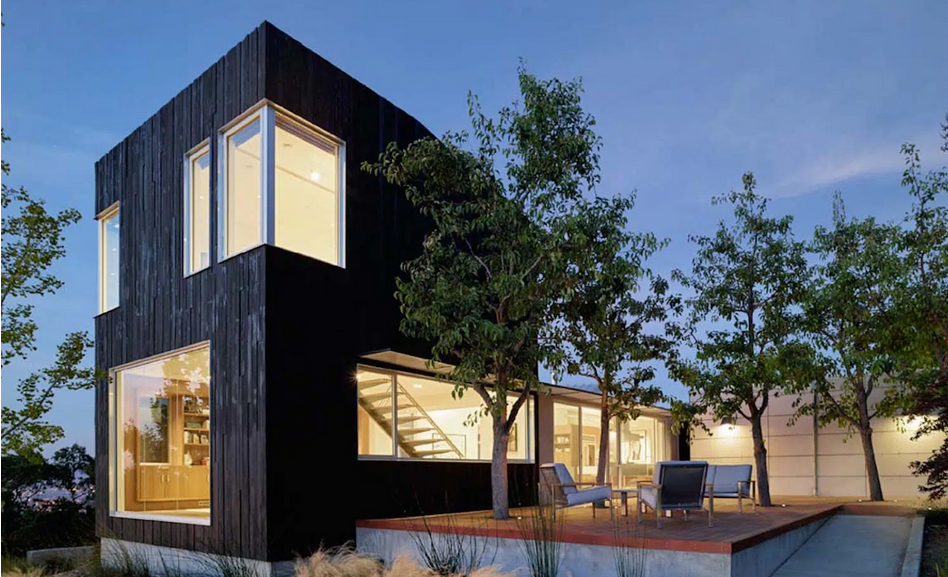
Shou sugi ban wood is distinguished by its black appearance. It is widely used for the exterior cladding of a house. This type of wood siding brings an unmatched aesthetic note to the construction.
How is the Shou Sugi Ban technique performed?
As we just mentioned above, the shou sugi ban technique has been used for a long time, even dating back to prehistoric times. To carry it out, you can choose between the traditional method and the modern one.
The first involves building a triangular tube using 3 wooden boards. Once done, you insert the fire inside this chimney. Don’t forget to allow oxygen to pass through to optimize the combustion effect.
That said, now spread out the boards and scrub them with a brush. This removes all impurities. To finish, spray water to stop the carbonization.
It must be admitted that this traditional wood treatment requires skill and experience. If you are still a beginner, it is better to opt for the modern method.
As for the latter, the blowtorch wood technique is the most common. Unlike the wood chisel, the plane, the mallet, or the wood lathe, the blowtorch is not only used for woodworking.
It is mainly used for thermal welding or cutting metal parts. Versatile, the blowtorch is also necessary to carry out the shou sugi ban wood technique.
Prefer a propane model with torches. It ensures optimal flame control. The temperature of the latter must reach 250 to 500 °C for the carbon to form.
It is advisable to work outdoors to avoid fire risks. Don’t forget to wear special fireproof gloves. As a precautionary measure, keep a fire extinguisher nearby.
The principles of the burnt wood technique
The Shou Sugi Ban, of Japanese origin, is a traditional method that consists of burning the surface of the wood to improve its durability and aesthetics. Very trendy today, this technique combines authenticity and natural protection. Here are its key points:
- Japanese origin: an ancient technique used to naturally protect wood.
- Burning process: surface carbonization that creates a protective layer.
- Increased durability: better resistance to insects, fungi, and weather.
- Reduced maintenance: burnt wood requires fewer chemical treatments.
- Unique aesthetics: dark and textured appearance, enhancing facades and outdoor layouts.
- Ecological: a natural alternative to industrial or chemical treatments.
Comparison: burnt wood Shou Sugi Ban vs classic treated wood
Burnt wood differs significantly from chemically treated wood, both in terms of aesthetics and performance. Here is a comparison to better understand:
| Criteria | Burnt wood (Shou Sugi Ban) | Classic treated wood |
|---|---|---|
| Origin | Traditional Japanese method | Modern industrial treatments |
| Durability | Highly resistant to insects, UV, and moisture | Depends on the type of treatment used |
| Maintenance | Limited, little or no products to apply | Often needs to be retreated regularly |
| Aesthetic aspect | Unique, noble, deep black and textured | Natural or stained appearance but more common |
| Ecology | Natural, without chemicals | Often dependent on chemical products |
| Cost | Higher at purchase | Often more affordable |
What are the advantages of wood treated with Shou Sugi Ban?
Whether you use the traditional or modern shou sugi ban wood technique, this method enhances the material’s resistance.
With the carbon layer on the wood surface, it is resistant to rain, humidity, mold, UV rays, fire, wood-boring insects, and fungi.
As such, this ancient Japanese technique extends the lifespan of wood cladding. The material can accompany your house for up to 80 years.
From an aesthetic point of view, shou sugi ban wood has a black color. It also has a scaly texture enhancing its visual aspect. You can keep this burnt wood finish as is.
But you also have the option to combine it with other synthetic materials such as varnish, stain, dye, paint, or resin. No matter your choice, the Japanese shou sugi ban method enhances your home.
Its advantages do not stop there! The shou sugi ban wood is used in several ways. Of course, it is mainly used for wood cladding. But this material also finds its place in interior decoration. It can be seen both in the living room and in the kitchen.
The shou sugi ban yakisugi technique is an opportunity to give a second life to unused woods. Both indoors and outdoors, the method offers them increasing value.
To preserve their condition, they require no specific maintenance. The wood surface lasts a very long time without special care. Among other things, you can apply a coat of stain every 3 to 6 years.
Is this treatment suitable for all types of wood?
Traditionally, the wood used for the shou sugi ban technique is cedar. Also called sugi in Japan, it is naturally rot-resistant.
The Japanese have long used it in construction. Versatile, this wood is also highly prized as an ornamental tree.
Since the shou sugi ban yakisugi technique is spreading worldwide, Europeans are using other wood species.
The French, for example, prefer Douglas fir. But you can also find the use of Larch, oak, accoya, ash, pine, maple, and many others.
The finish varies not only depending on the intensity of the burning but also on the wood species used. Likewise, the durability of the carbon layer varies according to these parameters.
Although some woods are suitable for outdoor use, they can also find their place indoors. To increase their longevity, it is recommended to apply a finishing resin on top.
For more information, do not hesitate to seek advice from professionals such as Zwarthout shou sugi ban.
How to maintain and clean wood treated with Shou Sugi Ban?
Whether for wall cladding wood, furniture, or fencing, the Japanese technique shou sugi ban provides an excellent finish.
Thanks to this carbonization process, the wood surface layer becomes less sensitive to attacks from rain, sun, insects, and any form of rot.
However, be aware that it can still deteriorate over the years, especially the wood cladding. It is constantly exposed to the sun, storms, wind, and other external aggressions.
Certainly, shou sugi ban wood requires no frequent maintenance. However, you can take care of it from time to time to enjoy it for many years.
Its maintenance is very easy. Many products are dedicated to extending the qualities of burnt wood. For your wood cladding, you can, for example, oil it every 4 or 5 years.
There are also other protective products for furniture made from shou sugi ban technical wood.
If you do not know which one to choose, consider consulting specialists such as Zwarthout shou sugi ban. Maintenance of carbonized furniture is generally done every year.
Does Shou Sugi Ban offer protection against insects?
Through the ban shou sugi process, burnt wood is not afraid of wood-boring insects. It is able to resist their invasion.
Their presence can be easily identified by wood dust everywhere or holes in the wood. You might also find dead insects.
The woodworm, house longhorn beetle, termite, wood weevil, lyctus, and sirex are among the ranking of parasites that feed on wood. Since technical wood shou sugi ban can seem quite robust, the material resists their attacks.
If your shou sugi ban wood cladding has already been around for a very long time, its tolerance to insects may decrease. It therefore requires maintenance. Otherwise, you can treat the contaminated part of the wood.
To do this, remove the damaged parts. Brush the wood surface and dust it off. This simplifies the adhesion of curative products.
There are several treatments available on the market. Between thermal treatment, fumigant gas injection care, or natural solutions, the choice is not lacking.
It is not recommended to use chemical products. Even if they provide immediate results, they risk damaging the shou sugi ban black wood.
How long does the wood protection last after being treated by this method?
As a general rule, the shou sugi ban yakisugi technical wood is capable of lasting for a century. Its lifespan can vary depending on the frequency of its maintenance as well as the products used.
If you are used to using insecticides to eradicate harmful pests, the wood surface gradually loses its original qualities. To avoid this, it is recommended to use other non-aggressive maintenance products.
More and more natural solutions prove to be highly effective. They are not dangerous not only for the black wood but also for humans and the environment.
To oil the shou sugi ban house, you can use linseed oil, olive oil, tung oil, neem oil as well as teak oil.
If you prefer stains, choose a model free of solvents, lindane, and other chemical additives. Stains based on linseed oil, soybean oil, and beeswax are better options.
Is Shou Sugi Ban environmentally friendly?
Of course, the care of technical wood shou sugi ban poses no threat to the environment. Whether you practice the traditional approach or the modern process, there is no use of chemical solutions or products.
The blowtorch wood technique is applied using a device called a blowtorch. This is used to burn the wood surface. This method thus requires no intervention of harmful or toxic products for your health and especially for the environment.
With the shou sugi ban yakisugi technique, it becomes possible to recover almost useless wood. It allows giving it a new look that enhances it.
This solution thus reduces waste and prevents the cutting of new pieces of wood. Likewise, it limits the use of synthetic materials.
Where can treated Shou Sugi Ban wood be used inside or outside the house?
Wood obtained by the shou sugi ban technique can be used both indoors and outdoors. Due to its unique appearance, it helps to enhance interior decoration.
Black wood becomes the ultimate decor element. Table, chair, headboard, or dresser, shou sugi ban wood reigns in the home. Many also use it for fireplace cladding.
Others use it for everyday objects such as lighting fixtures, coat racks, cutlery, and more. In any case, the technical wood shou sugi ban adds an unparalleled touch of elegance to your interiors.
As for the exterior, this type of treated wood is very often used as a cladding solution. At first glance, it carries a style that immediately draws attention.
Beautiful to look at, it enhances the construction. It is no surprise that this wood wall covering continues to conquer modern buildings.
What is the historical origin of this technique?
Many articles on the internet highlight that the shou sugi ban technique comes straight from Japan. However, other sources also mention its appearance in other countries.
According to the books The Clan of the Cave Bear, the wood hardening method dates back to prehistoric times. It was deployed at that time to hunt mammoths.
In the Middle Ages, the ban shou sugi technique was used to design fences. People of that era burned wooden stakes before inserting them into the ground.
Regarding the history of this wood treatment in Japan, it is written in the philosophy of Buddhism, highlighting the imperfections caused by time.
The shou sugi ban was originally applied to protect the Japanese during heavy rains or storms.
The wood carbonization method strengthens the solidity and durability of the house. Thus, it defends well against multiple weather hazards.
As the whole world is won over by its various advantages, shou sugi ban wood is becoming increasingly popular.
Many Scandinavian countries are bringing burnt wood back into fashion. Therefore, one can find constructions in technical wood shou sugi ban everywhere.
The cedar or Sugi was traditionally one of the wood species used for the shou sugi ban technique. But today, many types of wood can be used, including pine, oak, larch, and much more.
Compared to the traditional method, the blowtorch wood technique is one of the most common approaches. It combines efficiency and ease of use.
Yes. Originally used outdoors to protect facades, Shou Sugi Ban is now also appreciated indoors for its unique design. Outdoors, it withstands weather conditions, while indoors, it adds a modern and natural decorative touch.