Compared to other types of finishes, concrete flooring has long been one of the most popular coverings. It can be found everywhere, whether in the kitchen, the shower, the bedroom, or even the living room. It is a solution that is both durable and stylish, but above all easy to maintain. If you want to restore its shine, do not hesitate to sand it.

Besides renovation work, many people undertake concrete sanding to optimize the adhesion of a new covering. Before preparing the screed concrete, the surface must first and foremost be flat. Therefore, you must remove irregularities and small imperfections on the floors. To do this properly, the use of suitable equipment is essential.
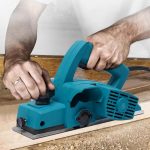
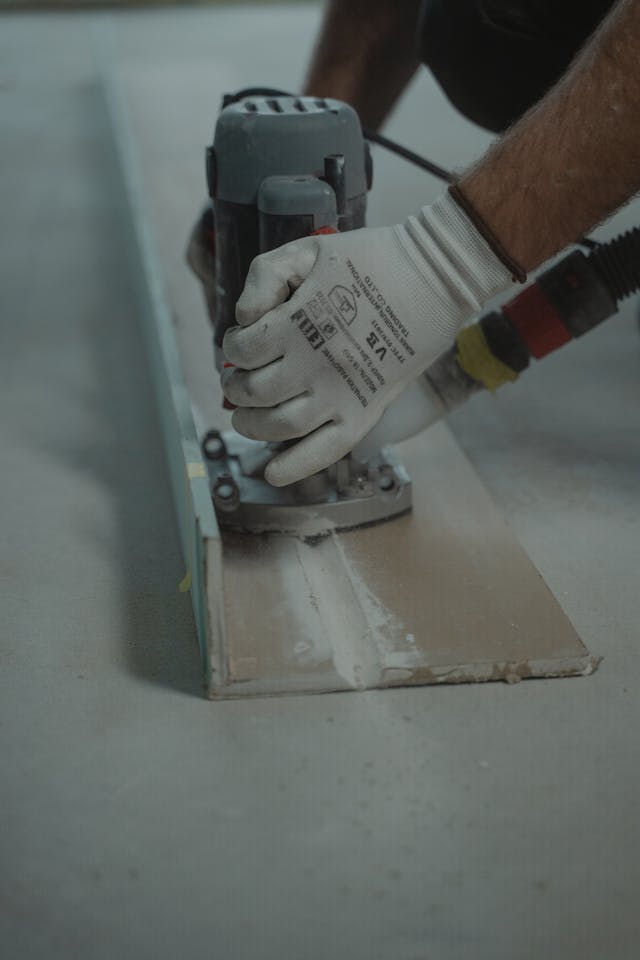
There are many power tools that help you sand concrete more easily. Among the best known, the concrete sander is the device specially designed to perform this task.
Also called a concrete surface grinder disc, the device allows you to sand a large surface. Powerful and versatile, it not only ensures polishing or sanding of the surface but also facilitates finishing work.
Some professionals use the portable trowel during concrete sanding work. This equipment is mainly intended for polishing wall concrete. On the other hand, the angle grinder is capable of providing better results similar to the concrete sander.
Even though it seems heavier than the other, it also does a good job when resurfacing floors. To achieve this, it requires the use of a special sanding plate and a specific concrete surfacing disc.
Which disc to use for sanding concrete?
- Abrasive grain disc: Composed of grains of different thicknesses; ideal for general concrete sanding depending on the desired level of finish.
- Diamond disc: Very versatile, recommended for hard materials such as concrete, brick, or stone; ensures fast and precise sanding.
- Diamond disc with sanding plate: Mainly used dry, it offers excellent results without the need for wetting.
- Roller disc: Must be used with water (wet sanding); suitable for certain specific concrete tasks.
- Coarse grain disc (40 to 60): Recommended for initial sanding and removal of large roughness.
- Medium to fine disc (80 to 120): Perfect for correcting irregularities and preparing a smooth finish.
- Ultra-fine disc (200 to 400): For a neat finish or light surface polishing.
- Discs offered by the Diamwood brand: Available in different ranges for all budgets, suitable for various concrete tasks.
It is quite feasible to sand concrete with an angle grinder. However, it should be noted that not every abrasive disc is suitable for this type of work. The choice depends on the materials to be treated. If you want to use this machine to sand concrete, you should equip yourself with a special sanding grinder disc.
There are many categories of sanding discs available on the market. The company Diamwood offers a wide variety of discs to suit all budgets.
The grain disc, as its name suggests, is made up of grains of different thicknesses. There is also the diamond disc which can prove to be more versatile. This category is perfect for working with hard materials such as concrete, brick, and stone. It guarantees a fast and precise result.
You have the option to use it with water or dry. In most cases, the diamond disc with a diamond sanding plate works without water. On the other hand, the roller disc is used under wet conditions.
During floor sanding, use a large abrasive disc of 40 to 60 grit. When finishing by removing irregularities, a medium-fine disc of 80 to 120 grit will be very useful. For the final touch, you will need an ultra-fine example of 200 to 400 grit.
Even though sanding, polishing, and surfacing work is not as complicated as it seems, you still need to master some basic rules. If you intend to use an angle grinder for this project, discover some useful tips summarizing the crucial steps.
How to sand concrete with an angle grinder?
To sand concrete with an angle grinder, it is imperative to convert it into a sander. To do this, you must first lock the spindle. Then, remove the grinder disc and install the new abrasive sanding disc holder. Next, position the disc on the plate and you’re all set.
It is worth noting that the brand Diamwood offers an angle grinder adapter for sanding plates on the market. This accessory will also be a valuable aid in your sanding project.
Whatever type of your power tool angle grinder, it is essential to respect certain safety measures. Whether you plan to sand screed concrete or polished concrete floors, know that these tasks require the use of somewhat hazardous equipment. Wearing personal protective equipment is therefore an absolute priority.
Equip yourself with an appropriate mask since concrete sanding generates a significant amount of dust. The use of a vacuum system is strongly recommended. Also, cover your hands with protective gloves. These limit the risk of injuries. Special goggles are also necessary to protect your eyes.
Before starting concrete sanding, do not forget to check the condition of the angle grinder disc power tool. Make sure the power cable shows no signs of damage before plugging in. Once all these precautions are taken, you can now prepare the worksite.
First, empty the room by moving all the furniture. Then use a vacuum cleaner to sweep the house. Remove all debris from the floors. If you notice any cracks, repair them before sanding the concrete. Work in a well-ventilated room.
Once this step is finished, take your angle grinder and install the special concrete surfacing disc. The brand Diamwood suggests quality diamond disc examples for angle grinders.
Once the disc is properly mounted, proceed with sanding by making several passes methodically. After each sanding session, vacuum the dust. This allows you to see the progress of your work. If the result does not satisfy you, do not hesitate to make some corrections until the floor is perfectly smooth.
When finishing, choose an extra fine abrasive disc. At the end, remember to rub all the stripped parts with a clean, damp sponge. Once the concrete floor is completely dry, you can apply wax so that the surface remains shinier. If you have ordered a red dye with free delivery, it is time to apply it to the floor.
Which sandpaper for concrete?
| Abrasive paper grit | Recommended use | Result obtained |
|---|---|---|
| Grit 40 to 60 (coarse) | Initial sanding of raw concrete, removal of major roughness | Quick roughing, rough surface |
| Grit 80 to 100 (medium) | Surface preparation before applying a coating (paint, resin) | Smoother surface but still adherent |
| Grit 120 to 150 (fine) | Finishing before painting or fine coating | Relatively smooth surface |
| Grit 180 to 240 (very fine) | Finishing sanding, smoothing before final treatment or decoration | Very smooth surface, ready to be treated or decorated |
| Diamond abrasive paper | For very hard concrete, intensive or professional sanding | High efficiency, long lifespan |
To treat a small concrete surface, you are not obliged to use a special concrete sanding tool. It only consumes your electric power. Abrasive paper can do the job. Since an infinite number of products are available on the market, know that they are not all equal.
Besides their variety in quality, they also differ according to the type of work to be done. Some are only suitable for roughing. Others, on the other hand, are intended for finishing.
Besides that, it is important to define the type of material to be sanded before selecting the paper. To work on bare metal and wood, aluminum oxide abrasive models are a good choice. Conversely, if you plan to sand concrete, experts recommend silicon carbide papers. They are also suitable for sanding gypsum or synthetic floors.
Once you have clearly defined the ideal paper, you must also choose which grain density suits the concrete. Sometimes, mistakes are made in this selection. It is essential to mention an important detail on this subject. If you opt for a high-type grit, know that it is ultra-fine in this case. A grit 280 paper is extra fine compared to one with grit 40.
To prepare the surface before laying decorative concrete, use an 80 grit paper. A 220 grit abrasive is, conversely, reserved for very fine concrete sanding. If you intend to use it for concrete sanding, know that the work takes a lot of time.
If you are in a hurry, nothing beats a sander or concrete surface grinder. A grinder is also another solution for sanding at full speed.
How to sand concrete by hand?
As mentioned above, if your project involves sanding a small concrete surface, nothing prevents you from using abrasive paper manually. This operation requires no particular skill or technique. It is an extremely simple application. Moreover, abrasive sheets can be used with or without a sanding block.
More and more people also prefer the abrasive sponge to treat concrete. Some models are not only suitable for sanding but also for polishing and deglossing. The accessory is perfect for manual sanding with water.
Besides that, it is possible to use the sanding block to refresh a concrete floor. It offers work that is both consistent and comfortable. With it, there is no need to increase the pressure to sand, which sometimes causes surface roughness. Perfectly flat, it smooths the floor in no time and with little effort.
Find our other tips to learn how to sand a ceiling.
It must be admitted that quick work does not often guarantee quality. It is better to do it properly. If the concrete floor is small, you can sand it manually with sandpaper. However, sanding a large surface requires the use of a power tool angle grinder or concrete sander. It allows you to sand in record time.
There are many good reasons to encourage individuals to proceed with sanding. Renovation work is among them. You just need to equip yourself with a good sander or angle grinder, surfacing disc products, and a suitable pad, and you can get started. Before applying a floor covering, the sanding step is essential.