
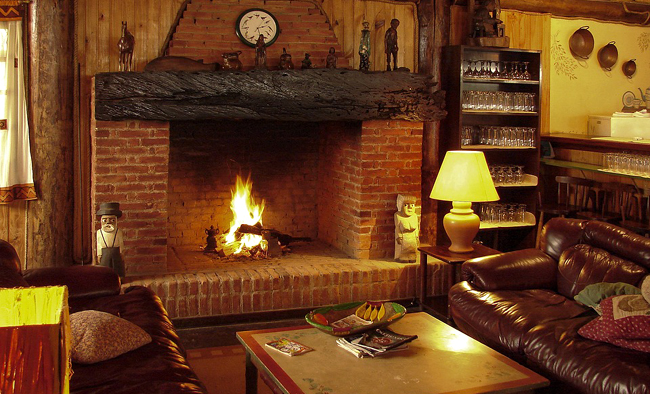
Previously, the fireplace found its place in country houses. This is no longer the case nowadays, as this heating method is gaining ground in almost all luxurious urban homes.
Its main role is to warm the room during the cold season. But that’s not all; it also plays an unmatched decorative role, creating a warm atmosphere in the house.
Just like the heat pump and boiler, it requires regular maintenance to function perfectly.
To clarify things, discover important details about chimney flue sweeping. If you want to know what the law says about this operation, the frequency of fireplace maintenance as well as the chimney sweeping price, take your time and read this article.
The essential takeaway: I consider chimney sweeping less as a regulatory constraint and more as life insurance for your home. In my view, a clean flue is the sine qua non condition to enjoy the magic of a wood fire without the fear of a chimney fire or carbon monoxide poisoning. I find that the thermal performance of a stove or fireplace drops drastically as soon as soot accumulates: just a few millimeters are enough to waste a significant portion of your heat. In my opinion, it is a responsible maintenance act that preserves your safety, your wallet, and the quality of the air you breathe.
What does chimney sweeping consist of?
To better understand the subject, it is important to define what is meant by fireplace chimney sweeping. This operation involves the maintenance of chimney flues or smoke evacuation tubes.
Even if you have already emptied the ashes, you must remove deposits inside the flues. Otherwise, accidents can occur.
Thanks to the chimney sweeping steps, you get rid of soot which can quickly and easily ignite. Fireplace sweeping maintenance thus prevents the risk of fire.
Moreover, the operation helps avoid the threats of carbon monoxide poisoning. It should be noted that a fireplace emits this colorless, odorless, but deadly gas that can asphyxiate occupants.
I remember moving into an old house where the previous tenant assured me that the flue was “perfect.” As a precaution, I had a professional check it before the first fire of winter. The realization was immediate when the brush brought down a massive bird’s nest and several kilos of soot that I would never have suspected. That day, I realized we are literally playing with fire by neglecting this invisible maintenance. The draft became so strong that lighting the fire became child’s play, but it was especially the chimney sweeping certificate in my drawer that allowed me to sleep peacefully. Since then, I never wait for the heating season to make an appointment: doing it in spring allows anticipating work before the autumn rush.
Is it mandatory to have your chimney swept?
Fireplace sweeping maintenance is dictated by laws imposed by the standard departmental health regulations or RSDT. The article states the requirement for chimney sweeping at least once a year.
The clause can be adapted according to the frequency of use of the wood stove chimney and municipal decrees. It is therefore necessary to inquire at your town hall. In any case, carrying out the chimney flue sweeping is legally mandatory, regardless of the region.
If you have heating appliances burning wood, coal, or fuel oil, you must have your chimney swept once or twice a year.
If you do not comply with the law, you face a third-class fine that can go up to €450. Additionally, failure to comply with the chimney sweeping obligation exposes you to the risk of carbon monoxide poisoning and fire.
In the event that these disasters occur, your home insurance company will refuse to compensate you. Know that they require the sweeping certificate as proof before issuing the insurance claim indemnity.
By the way, consider reading this article: when and how to subscribe to home insurance?
How to sweep a chimney?
When wondering how to pick a lock or how to sand plaster, it is easy and quick to find information on these topics.
But when it comes to wood stove chimney sweeping, this task is primarily reserved for a professional. There are two types of sweeping: chemical chimney sweeping and mechanical sweeping.
The first involves using sweeping logs that contain chemical products. You just have to burn them in the chimney. Thanks to their combustion, they help sweep and clean the chimney flues.
| Sweeping steps | Description and practical tips |
|---|---|
| Preparation of equipment | Get a chimney brush (hedgehog), sweeping rods, gloves, goggles, and mask. |
| Securing the area | Protect the floor around the chimney with a tarp, open windows to ventilate. |
| Inspection of the flue | Check the condition of the flue, presence of soot or creosote, and absence of animals. |
| Mechanical sweeping | Insert the chimney brush into the flue and perform back-and-forth movements. |
| Cleaning residues | Remove soot fallen into the hearth with a shovel and a metal bucket. |
| Final check | Ensure the flue is clean, then close the trapdoor or protective plate. |
| Recommended frequency | Perform sweeping at least once a year, ideally before winter. |
Due to the simplicity of the technique, this method of fireplace chimney sweeping does not require calling a professional chimney sweep.
On the other hand, mechanical sweeping performs chimney maintenance using a sweeping brush called a hedgehog. Its execution requires the skills of a specialist.
To detach the soot, the tool must be inserted along the entire length of the pipe, whether from below or above. Then, clean these residues with a vacuum cleaner designed for this purpose.
First, don’t forget to protect your furniture by using a tarp or an old sheet. Remember to turn off the fireplace and empty it of its ashes as well as its components such as the cast iron plate and the andirons.
Place a large basin or a garbage bag under the chimney flues. Do not allow your pets or children to enter the room during chimney maintenance.
Summary table of flue maintenance
| Type of installation | Recommended frequency | Legal obligation | Type of deposit removed |
| Fireplace / Wood stove | Twice a year (including once during the heating period) | Yes (according to RSD) | Soot and creosote (flammable) |
| Gas boiler | Once a year | Yes | Dust and combustion residues |
| Pellet stove | 1 to 2 times a year | Yes | Fine ashes and volatile deposits |
| Open hearth fireplace | Before each season | Yes | High risk of animal nests |
When should you have your chimney swept?
Chimney sweeping is part of the departmental health regulations of the municipality where the house is located. The frequency of chimney maintenance varies depending on the type of heating appliance used and the regions. To avoid being fined a third-class penalty, it is important to gather information at the town hall. This helps you know the chimney sweeping obligation.
If you have a traditional fireplace, ideally you should carry out maintenance twice a year, before and during the heating season. The same applies to a wood stove. For boilers and pellet wood stoves, you can take care of them once a year.
Spring is the most favorable period to perform chimney maintenance and sweeping. Also, you can call a professional chimney sweep during the summer. Conversely, avoid waiting until autumn since many specialists are no longer available due to the return of the cold season.
Chimney sweeping: Prices and rates
To meet the requirements of home insurance and to be able to benefit from insurance claim compensation, chimney flue sweeping may be unavoidable.
Before you start, it is advisable to inquire about the chimney sweeping price. This allows you to prepare your budget in advance. The table below gives you an idea on this subject.
| Type of chimney sweeping | Average price |
| Traditional or mechanical chimney sweeping | 50 to 120 euros |
| Chimney sweeping without soot | 50 to 100 euros |
| Chemical sweeping | 25 to 50 euros |
On average, the price of traditional chimney sweeping is 71 euros. Including installation, the price range is between 50 and 120 euros. This chimney maintenance sweeping mainly concerns wood fireplaces and stoves and pellet boilers.
To do this, simply insert the brush into the flue. Then add rods to push it forward. This operation can be repeated several times until good results are obtained.
As for chimney flue sweeping without soot, the work costs approximately 50 to 100 euros. It relates to oil and gas boilers. It also involves cleaning the heat exchanger, filters, and burners. It is also necessary to maintain and inspect the condition of the flues.
Regarding chemical sweeping, this operation may seem the least expensive, as it typically requires a budget between 25 to 50 euros.
The principle is to burn a sweeping log or sweeping powders in the hearth in order to destroy the soot.
No matter its effectiveness, this technique cannot replace mechanical or classic sweeping.
Is the chimney sweeping certificate mandatory?
As mentioned above, chimney sweeping is required according to the standard departmental health regulations.
When you call a professional chimney sweep, they provide you with a sweeping certificate certifying their intervention for chimney maintenance.
This document must specify the maintained chimney flues, any anomalies detected during the sweeping, and the expert’s observations.
It serves to prove that you have properly followed the chimney sweeping obligation as well as the chimney sweeping steps.
If you plan to carry out chimney maintenance yourself, you are not complying with the law. You cannot issue yourself a sweeping certificate.
In case of fire, the absence of this document prevents you from benefiting from multi-risk home insurance compensation. The company requires a sweeping certificate before offering you insurance claim compensation.
Can I sweep my chimney myself?
Chimney sweeping must be done at least once a year. For those who use the chimney most often, it should be swept two or three times a year. Since it is a safety issue, it is in your interest to have it done.
Technically, every occupant is legally required to carry out chimney flue sweeping. If they intend to do it themselves, the maintenance has no legal value without a sweeping certificate. Only an authorized chimney sweep can issue it.
In case of damage or fire, the home insurance company refuses to intervene. Only if you present this certificate will they agree to pay you insurance claim compensation.
Some people hesitate to use a recognized chimney sweep because of the high chimney sweeping price.
If you are one of them, it is advisable to entrust chimney maintenance to them just once, which is mandatory. For additional sweepings, you can take care of them yourself.
Why should you have your chimney swept?
- Risk prevention: Chimney sweeping is essential, as it helps prevent carbon monoxide poisoning and fire hazards. These incidents can be caused by a dirty heating system.
- Residue accumulation: When in use, tar and soot accumulate in the chimney ducts, which could gradually clog them.
- Occupant safety: If left unchecked, this situation leads to many accidents. For your safety, do not hesitate to sweep your chimney regularly.
- Thermal comfort: This operation is equally useful not only for the health and safety of occupants but also for their well-being. By removing dirt, the chimney functions properly. It is thus able to provide optimal thermal comfort within the home.
- Energy savings: If you do not know how to reduce your heating consumption, it is recommended to sweep your chimney. Chimney maintenance significantly improves its efficiency. Take advantage of this to save energy.
- Insurance proof: If, unfortunately, a fire occurs, you can receive insurance compensation. You only need to present the chimney sweeping certificate to the insurer.
- Refusal of compensation: If you do not have it, even if you subscribe to a multi-risk home insurance, the company has the right not to compensate you.
Who must and can sweep a chimney?
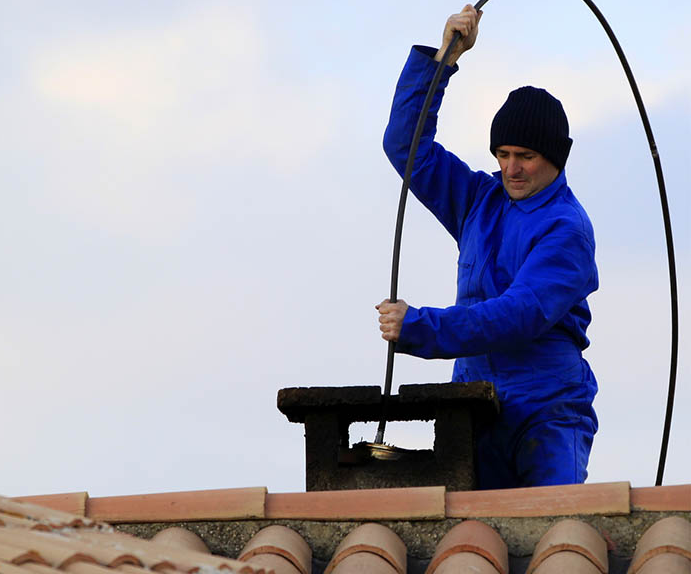
Occupants of a dwelling are required to perform chimney sweeping at least once a year. This obligation also applies to owners living in their own house.
For landlords, this operation is the responsibility of their tenant. As owners, they must specify in the rental contract that chimney maintenance is the tenant’s responsibility.
In all cases, owner-tenant chimney sweeping is part of the current legislation. It should be noted that fireplace chimney sweeping must always be carried out by an experienced chimney sweep.
Which professional should you hire to sweep your chimney?
With the variety of profiles on the web, it is not difficult to quickly find a professional chimney sweep. However, avoid entrusting the task to just anyone, as otherwise, it will have no value.
The technician must have accreditation and professional qualification to practice the activity. After chimney maintenance, they are required to provide their clients with a chimney sweeping certificate. This document will be required by the insurer in case of fire.
To find the right service provider, it is advisable to request several quotes. Take the opportunity to compare chimney sweeping prices.
Wood chimney sweeping
The wood fireplace is one of the heating systems that offers increased comfort in the home. To improve its efficiency, it needs to be swept twice a year.
The price for wood fireplace sweeping generally varies depending on the region, the chimney sweep contacted, and the type of intervention. But in most cases, you should budget between 50 and 100 €.
Still, plan for travel expenses for the craftsman, in case access and circulation present constraints.
The steps for chimney sweeping often take between 15 to 30 minutes. During fireplace maintenance, try to protect the house against soot and dust with a tarp, for example.
Insert chimney sweeping
You put an insert in the hearth in order to optimize heat and especially to secure the dwelling. The use of a closed fireplace makes the installation of a liner inevitable.
As you use it, soot sticks to the walls of the ducts.
It must be admitted that sweeping an insert is a bit complicated, because dirt accumulates in countless parts of the installation.
To achieve this, there is nothing better than calling a professional chimney sweep. This type of heating usually requires two annual sweepings.
Chimney Sweeping in Paris: 5 Parisian chimney sweep companies
Since it is the country’s largest city, Paris is home to a number of competent chimney sweeps. To find the rare gem, there are several pages and platforms that put you in direct contact with craftsmen.
Among the 5 best profiles, you have the company DA SILVA which stands out with its fifteen years of experience. It is capable of solving any problem related to chimney sweeping.
Also, the agency K.MIGUEL can take care of your fireplace maintenance. According to former clients’ opinions, its service qualities are top-notch.
Otherwise, you can entrust your fireplace to the company Chaligny in Paris. It works with a team of experienced chimney sweeps able to take care of your heating.
Many people also testify to the professionalism of the company DESA. Besides sweeping wood pellet stove chimneys, it handles lining, smoke detector installation, and professional hood degreasing.
Finally, the technicians of the company Au Ramonage d’Antan remain at the service of both professionals and individuals. They can carry out various works such as insert sweeping, mitron installation, and gutter cleaning.
FAQ: Chimney Sweeping: safety, regulations
Sweeping removes soot and creosote deposits that accumulate in the flue. These residues are flammable and can cause a fire. Moreover, a blocked flue increases the risk of carbon monoxide poisoning, an odorless and deadly gas. Regular sweeping therefore ensures the safety of the occupants and the proper functioning of the heating system.
In France, sweeping is a legal obligation. It must be done at least once a year, and twice if you use your chimney intensively or burn wet wood. This frequency helps maintain good energy efficiency and complies with insurance company requirements.
Failure to comply with sweeping obligations can result in a fine of up to €450. In case of fire or damage, your insurance may refuse to compensate you if you do not present a sweeping certificate. This document, issued by a certified professional, proves that the maintenance was carried out according to standards.
Publications similaires :
 Thermal insulation, how to choose well?
 Breaking a concrete slab
 Building compliance in the Antilles regarding smoke extraction: an overview of standards and obligations
 Choosing your electrical equipment for a safe installation
 Kitchen designer to avoid: the pitfalls for your kitchen in 2026
 Successfully completing your Habitatpresto work estimate with peace of mind