
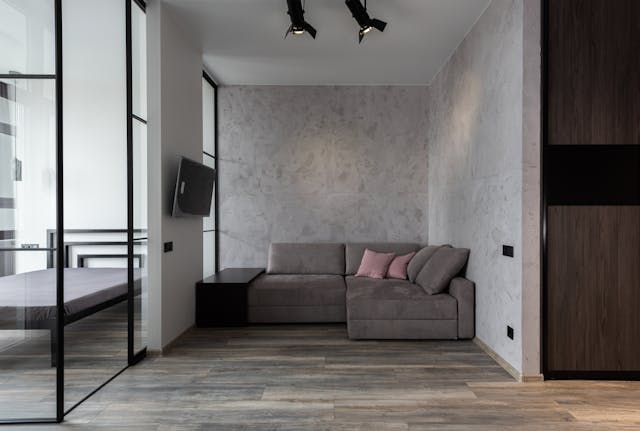
Plaster acts as a protector for walls. Aesthetic, it helps preserve their shine for many years. Even better, this material serves as a mask for wall imperfections and similarly prevents bump effects on the surface.
Between lime plaster, filling plaster, smoothing plaster, facade plaster, multipurpose plaster, or decorative plaster, the latter continues to attract more and more individuals and professionals.
It gives a more aesthetic appearance to a surface and highlights the room. Whatever the decorative plaster effects, it beautifies and personalizes your interior decoration. To know everything about decorative plasters, it is appropriate to start this article with the definition.
What is decorative plaster?
People often choose between Tollens paint, Unikalo paint, Guittet paint, Seigneurie paint, or Renaulac paint to dress walls. And they tend to overlook the application of decorative plaster. However, the latter is of paramount importance to enhance the entire room.
It is a wall coating dedicated to giving relief to walls. It can provide them with style and character, enhancing the house. That’s not all, decorative plaster effect can imitate many materials such as concrete, sand, metal, and wood. It is also possible to tint it according to your tastes.
Also called facing plaster, interior decorative plaster guarantees a beautiful finish for your walls. Besides its decorative role, it serves a protective function for the surface. That is why it offers higher resistance compared to classic paint. The material is generally made from paste or powder.
To meet all desires, you can find different types of decorative plasters for walls. Regardless of the type, it is essential to follow the manufacturer’s instructions on the number of layers to apply, the type of surface, and the preparation of the material. This allows you to achieve better results.
What are the different types of decorative plasters available?
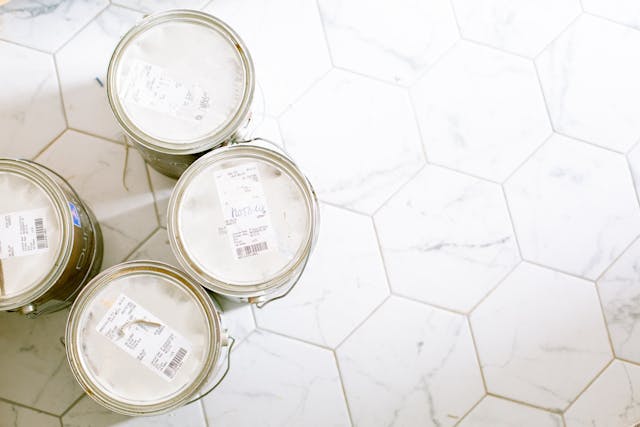
As mentioned above, there are different types of decorative plasters for walls available on the market. Each category corresponds to a particular surface and a very specific style.
Among the most common interior decorative plasters, lime plaster is suitable for almost all rough surfaces except metal walls. If you use it on drywall, first apply a bonding primer.
Versatile, this type of wall plaster can be applied indoors as well as outdoors. It can be used with pigments or in its natural state.
If you combine it with hemp, the whole gives a rustic note to the room. You can also apply lime hemp plaster on the facade or on exterior walls. Moreover, it is a better thermal insulator especially for brick or stone walls.
Decorative plaster with concrete effect is also among the well-known types of decorative plasters. It is particularly suitable for contemporary interiors. For those looking to bring a touch of elegance and modernity to their home, it is the wall plaster of choice.
If you are considering applying it to decorative plaster walls, it is best to entrust it to a professional. Its application requires specific care.
Regarding stucc, this interior wall plaster is a smooth paste material that is ready to use, whether on walls or ceilings. Since it is made of ultra-fine marble powder, it is perfect for playing with transparency. It is also used to imitate the marbled effect. To simplify adhesion, please add a binder such as casein to the stucc plaster.
Besides lime plaster, decorative concrete effect plaster, and stucc, there is also decorative plaster with a tadelakt effect. It is a Moroccan-origin facing plaster. Its particularity lies in its resistance to humidity. That is why it is notably used as decorative plaster in bathrooms.
Major paint brands also offer you decorative plaster with natural stone effect, decorative plaster with sand effect, matte decorative plaster, decorative plaster with metal effect, and much more. Moreover, Toupret decorative plasters are available in many different colors.
How much does the application of decorative plaster cost on average?
Regardless of the decorative plaster effects or types of decorative plaster for interior or exterior, it is advisable to entrust the application to an expert. Especially if the surface is in poor condition, it requires a specific wall plaster application technique and careful preparation.
Furthermore, the services of a professional do not cost much. If you plan to hire one, budget between 15 to 30 euros per square meter.
This price generally includes wall preparation as well as the application of two coats of plaster. If the surface requires repairs before application, such as filling cracks or holes, this rate may increase. The same applies when creating particular ornamentations.
To purchase interior decorative plaster, it costs on average between 5 to 15 euros per square meter. And as mentioned above, labor costs range between 15 to 30 euros. For the total budget, that is the price including labor and supplies, you should plan between 20 to 45 euros per square meter.
What are the advantages of decorative plaster?
Decorative plaster is not limited to covering walls: it transforms and enhances every space while providing practical benefits.
- Customization: varied colors, textures, and effects (concrete, stone, wood, sand).
- Aesthetics: modernizes an interior or reinforces its classic style.
- Durability: more resistant than simple paint.
- Versatility: usable indoors and outdoors.
- Masking: reduces defects or irregularities on a wall.
- Comfort: can improve thermal and acoustic insulation.
What factors influence the price of decorative plaster?
To fully know about decorative plasters and wall plaster, the price of paste or powder can be useful. It should be noted that many parameters can affect the costs.
These are firstly defined by the different types of decorative plasters. If you choose lime plaster, it is the most economical option. Interior decorative stucco plaster, on the other hand, is more expensive than this classic product.
If you have a larger budget, you have the possibility to acquire the decorative plaster with tadelakt effect. Its price ranges from 100 to 250 euros. With this remark, one can say that the cost of the product also depends on the decorative plaster effects.
Besides that, the next factor relates to the complexity of the application. If the latter requires a more difficult surface preparation, it is normal that this increases the costs.
During painting renovation work, some surfaces require the removal of the old coating before applying wall plaster. For this purpose, this preparatory phase takes a lot of time. This is why the professional increases their quote.
The type of surface to be treated also determines the cost of the plaster. If it is intended to cover walls, its price is not necessarily the same for the ceiling, which requires work at height.
Similarly, one must take into account the expected finish category, the number of coats to be applied, the condition of the wall to be covered, the surface to be plastered, and the materials used. Besides that, the price varies for decorative plaster made of marble powder or pigments.
What options exist according to your needs?
Decorative plaster adapts to projects thanks to a wide range of finishes and materials. Each option corresponds to a specific atmosphere and use:
| Effect type | Main characteristic | Recommended style |
|---|---|---|
| Concrete effect | Modern, industrial | Loft, urban interior |
| Stucco | Marbled, refined appearance | Chic living room, boutique hotel |
| Tadelakt | Moisture resistant | Bathroom, kitchen |
| Lime plaster | Natural and breathable | Old houses, rustic |
| Natural stone effect | Authentic relief | Warm interiors |
| Sand or metal effect | Original and contemporary | Design or minimalist spaces |
What are the advantages of using decorative plaster?
Many households prefer to give a fresh look to their decorative plaster walls. Like paint, this material gives them a very successful decorative effect. It allows them to provide a new appearance and make them original. Once applied to the surface, it promises an immediate change to the room.
This type of decorative plaster coatings is also available in many models. You can find decorative plaster for bathroom, living room, or facade renovation.
To meet all tastes, there are many possible decorative plaster effects. If you want, for example, to create a note of modernity in your interiors, decorative plaster with concrete effect will suit you very well.
Some decorative plaster coatings have moisture resistance. Others are perfect for hiding surface defects. Most provide good wall protection.
Unlike classic wall coverings, decorative plaster suits all decoration styles.
Whether your house is traditional, rustic, or modern, interior decorative plaster enhances it by beautifying walls, ceilings, or floors.
Even though this product has multiple advantages, its price remains reasonable. Additionally, the different types of decorative coatings for interior or exterior use are easy to find in stores. They are available online or in almost all paint shops in the city.
What are the potential drawbacks of decorative coatings?
Although the strengths of these decorative plaster coatings are numerous, only a few disadvantages can be mentioned.
If you choose types of decorative coatings of poor quality, they may crack or detach from the wall over time. This damage occurs when the wall plaster application is not done properly. That is why it is safer to delegate this task to a professional.
For decorative plaster in bathrooms, it is sometimes applied on a very damp wall surface. Over time, this condition causes cracks inside the plaster.
To avoid reaching this stage, it is recommended to assess the nature of the wall or ceiling before applying decorative plaster with a honeycomb roller. When you are not sufficiently knowledgeable, it is better to seek advice from an expert.
It should be noted that each type of interior or exterior decorative plaster has its advantages as well as its disadvantages. For lime plaster, its drawback is its long drying time. While stucco is appreciated for its many possible finishes, it requires the addition of a binder to facilitate adhesion.
As for decorative plaster with concrete effect, it is not only waterproof but also easy to maintain. Its disadvantage relates to its complex application, which requires the use of a professional. And regarding decorative plaster with tadelakt effect, it is very expensive.
What is the difference between decorative plaster and paint?
Some people confuse interior or exterior decorative plasters with paint. However, each coating has its own specificities. Of course, both serve to beautify walls and protect them. But there are still some clearly visible differences between them.
For the different types of decorative plasters for facing plaster, there is lime plaster, decorative plaster with concrete, sand or metal effect, stucco plaster, and decorative plaster with tadelakt effect. As for paint, it comes in several types including acrylic paint, oil-based paint, bio-sourced paint, and depolluting paint.
Compared to paint, the main advantage of decorative plaster choice lies in its ability to easily hide irregularities on a wall surface. It contains a significant amount of cellulose and calcium carbonate.
Even better, this type of coating is praised for its thermal and acoustic insulation quality. To limit, for example, noise between rooms, many prefer to apply it in children’s bedrooms.
Some models of decorative plaster such as lime-hemp plaster stand out for their tolerance to humidity. The material is capable of regulating humidity levels. In this sense, it can be applied in rooms like the kitchen or bathroom.
How to apply decorative plaster yourself?
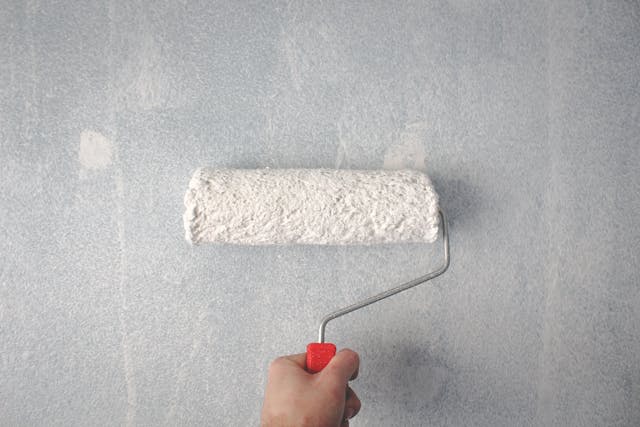
Although the intervention of an expert is always recommended, applying wall plaster is not a complex task at all. With some knowledge of masonry and painting, you can easily accomplish it without any trouble.
These small tasks can be divided into 3 parts, including surface preparation, applying the undercoat, and applying the plaster.
For the first step, this operation consists of making the surface healthy, dry, hard, and clean, free of roughness, holes, and mold. The preparation depends on the condition and nature of the surface. Treating an old wall is different from treating a new one.
This prerequisite should not be taken lightly, as it allows for an aesthetic and durable result. If the wall is damaged, it must be repaired with filler, leveling, or smoothing plaster.
Once done, you can apply the undercoat. The latter ensures better adhesion during the application of interior decorative plaster. Please mix the undercoat well, then apply it to the wall with a brush. Alternatively, you can use a paint roller.
Once the undercoat is well spread, the final step is to apply the decorative plaster itself. Depending on the type of plaster and the effect you want to achieve, you can apply it using a roller, brush, blade, spatula, or trowel.
If you want, for example, to give your wall a wood-like appearance, use a wood grain tool. A stamp, on the other hand, allows you to create reliefs over the entire surface. And to provide a specific troweled effect typical of Provence, use a trowel or scraper.
What is the lifespan of decorative plaster?
Whatever the types of interior or exterior decorative plaster, this coating is particularly admired for its great durability. It can dress your wall or facade for decades.
Its lifespan can vary depending on the quality of the decorative plaster suited to the surface. If you choose a high-quality model, its lifespan is relatively long. On the other hand, if your plaster is cheap, don’t expect it to last very long.
Moreover, regular maintenance of the wall also ensures the durability of the material. The more carefully you take care of it, the longer it enhances your wall or ceiling. Adding a clear protective varnish is recommended to protect the wall plaster. This product also facilitates its cleaning and optimizes its resistance to moisture.
What are the current trends in decorative plasters?
If you want to adopt a trendy modern interior, nothing is better than opting for a decorative plaster with a concrete effect. It perfectly matches the industrial theme. You also have the opportunity to pair it with furniture with a sleek design.
This type of plaster is suitable both in a bedroom and in a living room. It can also be found in a hallway, an entrance, or even hotels or offices.
For those seeking authenticity, lime plaster will not disappoint anyone. It provides an authentic natural note to the wall. To give an ethnic touch to the room, you just have to play with its different colors.
This most common choice of decorative plaster evokes the unique charm of old houses. It allows you to confer a trendy rustic style to your interior decor.
And finally, stucco plaster is a better option to create a refined atmosphere in your living room. It comes in many different shades. If you prefer a classic effect, choose light brown, white, or beige. For more modernity, gray and darker shades will do the trick.
Yes, and even better: it offers a richer aesthetic finish and can hide imperfections that paint does not diminish.
Yes, but some finishes (like tadelakt or stucco) require real expertise. The intervention of a professional is recommended.
Yes, but the plaster must be chosen according to the use: moisture-resistant for bathroom/kitchen, or more aesthetic for living room and bedroom.
Publications similaires :
 Best professional woodburner
 Shou sugi ban: Burnt wood, the technique
 Printed concrete: limits and disadvantages
 Berkey Filters: Lifespan, Maintenance, and Detailed Performance
 Billing software for self-employed entrepreneurs: a complete guide
 Toxic Purslane: Understanding Its Toxicity and Associated Risks