To insulate your home, many materials can be used. Between cellulose wadding, flax, hemp, expanded cork, polystyrene, or glass wool rock wool, the latter has a number of notable advantages. It is not only a thermal insulator, but it is also part of a better sound insulator.
More and more professionals as well as individuals use it to insulate various different structures such as homes, administrative buildings, or collective housing. Regardless of their application, rock wool rolls or rock wool panels demonstrate remarkable effectiveness. To learn more, it is important to provide you with the definition before addressing the details.
What is rock wool?
When planning to start energy renovation work, it is not easy to find the thermal insulator suited to your needs. Among the different options, the advantages of rock wool material are numerous.
First of all, it is a fibrous material belonging to the category of mineral wools at the same level as glass wool. The rock wool panel or rock wool roll is made from a volcanic rock, most often basalt. This is transformed into fibers by melting. Then an impregnation oil and a binder are added to make them both stable and water-repellent.
Rock wool insulation comes in many forms. You can find rigid and semi-rigid rock wool panels. Likewise, the market offers you rock wool rolls, flakes, and shells.
As mentioned in the introduction, this material is used in thermal and acoustic insulation projects in multiple structures such as tertiary buildings, houses, apartment buildings, and many more.
You also have the option to use it for a variety of applications such as thermal insulation of terraces, roofs, cladding, converted or unconverted attics, partitions, walls from the outside or inside, floors, ground, chimneys, and more.
Thanks to the many advantages of the rock wool material, many major brands handle its distribution in commerce. Among the most sought after, Rockwool rock wool and Rockplus premium kraft enjoy immense success in the market.
What are the advantages of rock wool as an insulator?
Compared to other materials, rock wool insulators stand out for their many interesting properties. First of all, it offers high thermal resistance ensuring comfort at home, both summer and winter. If you want to save energy, the rock wool roll provides you with better thermal insulation.
That’s not all, it has great performance in limiting airborne noise, equipment noise, and impact noise. That is why many use it for its acoustic absorption and sound insulation quality.
Its other asset lies in its fire resistance. Not only does it not emit any toxic smoke, but it also does not risk catching fire. Rock wool roll or rock wool panel, Rockplus premium kraft or Rockwool rock wool, the material does not spread flames. It is used in fire protection.
To fight termites, this insulator, both thermal and acoustic, also promises good results. Since it is a mineral-based material, it offers no food for these insects. Consequently, it creates an effective barrier against their spread.
Similarly, rock wool insulation is highly praised for its versatility. It is suitable for almost all parts of a house to insulate. Whether it is interior or exterior walls, floors, ceilings, roofing, terraces, or converted attics, its effectiveness has never disappointed its users.
Despite the many rock wool advantages, it is accessible to everyone. There is no need to spend a lot of money to purchase it. The rock wool price fits all budgets.
What are the potential drawbacks of rock wool?
No one can deny that rock wool rolls or rock wool panels offer countless benefits. Nevertheless, they have some significant weaknesses.
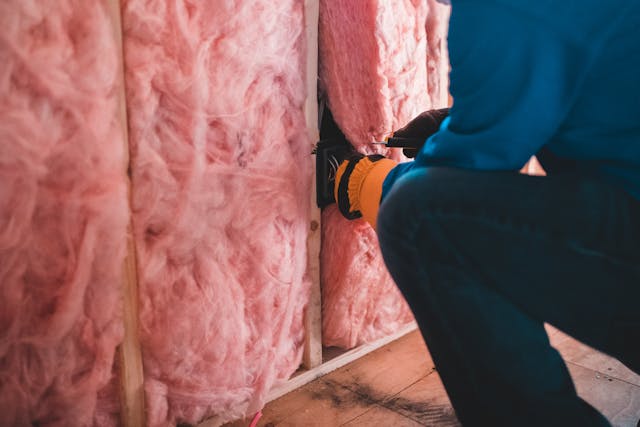
Compared to other insulators such as glass wool, rock wool panels is an irritating material. Thus, during installation, it is advisable to wear protective equipment such as gloves and safety glasses. This protects you from temporary itching. Otherwise, it is advisable to entrust its installation to a professional.
At the time of assembly, it is important to note that rock wool rolls can also release dust. If you do not wear a mask, this dust may cause respiratory discomfort.
In this same context, these powders could cause eye irritation. Even though rock wool insulation is considered a non-carcinogenic material, always protect yourself during its installation.
Regarding the ecological impact, it must be admitted that its negative effect on the environment is noticeable. The production of rock wool panels requires a high temperature of up to 800 degrees.
The process also requires components that can be harmful to health, such as formaldehyde or binders. Some constituents of its fibers can also cause allergies in susceptible individuals.
Furthermore, rock wool panels appear to be difficult to recycle. To enjoy its performance for a long time, it is required to replace the material every 15 years.
Why prioritize rock wool for your insulation work?
Rock wool is considered a versatile and efficient material. Derived from volcanic rocks, it combines safety, comfort, and energy efficiency, making it an attractive choice compared to other insulators available on the market.
- Reliable thermal insulation: reduces energy losses and improves comfort in all seasons.
- Excellent acoustic insulation: significantly reduces external and internal noise.
- Natural fire resistance: non-combustible material, providing additional safety.
- Versatility of use: suitable for attics, walls, floors, ceilings, roofs, facades.
- Proven durability: performance maintained over many years.
- Budget accessibility: reasonable cost relative to its performance.
How does rock wool compare to other available insulators?
To choose an insulator well, it is essential to compare not only the price but also durability, thermal and acoustic efficiency. Here is a practical overview of rock wool compared to other materials:
| Insulating material | Thermal performance | Sound insulation | Fire resistance | Average price per m² (excluding installation) | Estimated lifespan |
|---|---|---|---|---|---|
| Rock wool | ★★★★☆ | ★★★★★ | ★★★★★ | 8 to 20 € | 15 to 50 years |
| Glass wool | ★★★★☆ | ★★★☆☆ | ★★★★☆ | 5 to 15 € | 10 to 30 years |
| Cellulose wadding | ★★★★☆ | ★★★★☆ | ★★★☆☆ | 10 to 20 € | 20 to 30 years |
| Hemp | ★★★☆☆ | ★★★★☆ | ★★★☆☆ | 15 to 30 € | 30 to 50 years |
| Expanded polystyrene (EPS) | ★★★★☆ | ★★☆☆☆ | ★★☆☆☆ | 10 to 25 € | 25 to 40 years |
How much does rock wool installation cost on average?
Whether you plan to use the rock wool roll, Rockplus premium kraft, blown rock wool, Rockwool rock wool or the rock wool panel, it is always necessary to inquire about the installation cost to avoid surprises.
As explained above, the rock wool price is affordable for everyone. It can vary depending on countless parameters such as the rock wool thickness, its quality, and its packaging. For a 20 cm rock wool thickness, the material costs between 10 to 15 euros.
Regarding the installation price, there are some criteria that can affect the total amount. The installation technique is one of them. Likewise, the quote depends on the specialist’s hourly rate and the difficulty of accessing the area. This is the case for insulating convertible attics.
Besides that, the type of work also influences the installation cost. For wall insulation by rock wool interior insulation, budget between 15 to 30 euros.
Regarding floor insulation, this operation costs between 30 to 40 euros. And for insulating convertible attics by roof mounting, you need to prepare an amount between 25 to 40 euros.
Taking into account the rock wool price and the installation fee, the total cost of rock wool insulation ranges between 30 to 60 euros. Although this operation is not very expensive, you can still benefit from government aids subsidizing energy renovation works.
The installation of glass wool rock wool is funded by numerous schemes. Some are even combinable. To take advantage of them, it is required to delegate the installation of rock wool insulation to an RGE professional or Recognized Environmental Guarantor. Before hiring such a provider, take the time to verify their certification.
What is the difference between rock wool and glass wool?
Glass wool and rock wool are both mineral insulators. Although they are manufactured using similar methods, their raw materials are not the same. The first is made from lime, sand, and soda ash. The second is mainly composed of basalt, blast furnace slag, and dolomite.
Even if their composition seems different, it must be said that rock wool insulators like glass wool have identical qualities. These materials offer better resistance to moisture, termites, and fire. They are also available in several formats.
Regarding their acoustic performances, these appear similar. However, it is noted that rock wool insulation promises excellent summer comfort compared to glass wool.
Regarding the cost, the rock wool price ranges between 5 to 15 euros while that of glass wool varies between 5 to 10 euros. With this price difference, it is no surprise that glass wool is the most favored insulation by countless French households.
If you plan to insulate converted attics, know that glass wool can be installed in a single layer. However, rock wool insulation requires a crossed installation in two layers. This way, it can achieve a similar thermal resistance coefficient.
How to install rock wool in a wall, ceiling, or floor?
Like glass wool rock wool, rock wool has significant thermal and acoustic insulation qualities. It is feasible to use rock wool panels in a home to insulate a floor, wall, or ceiling.
If you want to use it on partitions, a few steps must be followed. You must start by installing a frame to receive the rock wool material. Once done, you can mount it leaving an air gap between the panel and the wall.
Then put the vapor barrier in place. This protects it from condensation to improve its lifespan. Finally, all that remains is to cover the entire wall with drywall, hiding the rock wool panel.
Regarding its installation on exterior walls, the professional directly glues the rock wool insulation onto the facade. After fixing the anchors, they apply the base coat. The last phase is to apply the finishing coat. This insulation requires the use of rigid rock wool panels.
Depending on the nature and extent of the rock wool insulation work, different types of experts can assist you. For exterior insulation, a carpenter, roofer, or even a painter can help.
For interior rock wool insulation, do not hesitate to contact a plasterer or drywall installer. For major work, it is better to use the services of a company specialized in renovation. Otherwise, an architect can assist you.
What are the common uses of rock wool in construction?
Besides better thermal and sound insulation, high tolerance to fire and insects, good sound absorption, and vapor permeability, rock wool material is easy to install. It also has many different uses.
Rockwool rock wool, rock wool panels, Rockplus premium kraft, blown rock wool or rock wool rolls, each model suits very specific applications.
There are several forms of rock wool insulation. For example, there are rigid and semi-rigid rock wool panels, shells, flexible rock wool rolls, blown rock wool, flakes, and more.
To insulate converted attics, the rock wool roll and the rock wool panel are among the most suitable rock wool insulators. For wall insulation, prefer semi-rigid panels.
Conversely, rigid rock wool panels are perfect for insulating floors. If you want to stop energy losses in unconverted attics, use blown rock wool flakes.
Apart from that, rock wool is used to insulate facades or exterior walls. You can also use it for insulating wooden frames, roofs, attic floors, partitions, ceilings, terraces, and much more.
If you are afraid of making the wrong choice, do not hesitate to seek advice from a professional. They can help you choose the most suitable rock wool insulation.
What is the lifespan of rock wool?
Unlike other insulators, rock wool panels or rolls have a long lifespan. They can last up to 15 years while maintaining their thermal and acoustic performance. Whether you use it for insulating the roof, ceiling, basement, or walls, its effectiveness remains throughout its use.
If you use rock wool rolls, it is noted that this material poorly tolerates moisture due to its low density. Water thus takes the place of air. However, it is the air that should act as the insulator. Consequently, moisture risks degrading its thermal performance.
On the other hand, some rock wool insulators like exterior panels tolerate water penetration without problem. However, although they are denser, it is necessary to add plaster or a rain barrier. The latter ensures the material’s waterproofing.
How to maintain and check the condition of rock wool over time?
Rock wool insulation requires no specific care, especially interior insulation. It is crucial to install the material according to best practices. Once done, it can effectively fulfill its functions and requires no complex maintenance.
If its installation does not comply with standards, it compromises not only its performance but also its lifespan. To enjoy it for many years, make sure to install it properly.
In any case, it is possible to maintain exterior thermal insulation to protect it. To do this, regular cleaning of the facade may be necessary. Take the time to frequently check the joints. In case of leaks or cracks, repair them as soon as possible to prevent water infiltration inside the wall.
To ensure the protection of the facade, you can add a layer of paint specially designed to optimize insulation performance. During renovation work, you have the option to install a framework accompanied by a finishing film.
To ensure the thermal insulation remains in excellent condition, occasionally examine its fastenings. If there is a problem, consider tightening the elements or replacing them if necessary.
Also remember to check the interior walls. When you notice cracks or black stains, know that they warn of the presence of moisture.
Moisture problems undoubtedly harm the effectiveness of insulation. To avoid this, it becomes urgent to apply the most appropriate solutions. If you do not know what to do, you can always consult a specialist.
Is rock wool an environmentally friendly material?
According to common beliefs, the ecological footprint of rock wool insulation is deplorable. It is criticized for its manufacturing process that requires more energy. However, it allows for significant energy savings following its installation. Thus, this element considerably reduces electricity consumption to preserve the environment.
During its formation, it uses mineral-based materials such as basalt, reconstituted bricks, and slag. These ingredients are called abiotic resources. Non-living, they cannot be created by humans. The use of toxic products is limited, which indicates the ecological nature of this insulation.
Many individuals are accustomed to throwing away rock wool rolls after use. However, they can be recycled once they are at a waste disposal site. The latter reprocesses the material to create new rock wool insulation. Similarly, it can be compacted to form, for example, bricks.
In conclusion, the environmental impact of rock wool insulation is encouraging. It helps reduce CO2 emissions throughout its use.
Thanks to the advantages of rock wool, it is among the essential mineral insulations for both individuals and professionals. Proper installation practices are necessary to minimize the environmental consequences of using the material. To benefit from efficient, durable, and ecological insulation, do not hesitate to prioritize rock wool insulation.
Yes, especially in rigid panels. It is ideal for facades and roofs because it is fire resistant and maintains good performance even in difficult conditions, provided it is protected by a coating or weather-resistant membrane.
It is essential to wear gloves, goggles, and a mask to avoid skin or respiratory irritation caused by fibers and dust released during installation.
Its manufacture consumes a lot of energy, but once installed, it reduces CO2 emissions by improving the building’s energy efficiency. Moreover, it is recyclable through certain specialized channels.