
It remains important to insulate your home to enjoy unparalleled thermal and acoustic comfort. In many cases, heat loss occurs at openings such as the front door and the window. Thus, priority is given to their insulation to limit heat loss. People do not hesitate to invest money, regardless of the cost of the work.
On the other hand, garage door insulation often takes a back seat. However, this part helps to reduce energy loss and optimize overall comfort. If you are ready to embark on this project, we suggest you consult this file. We provide you with more essential details to remember on the subject.
Summary of key points: In my opinion, the garage door is too often the poor relation of thermal insulation, even though it represents a colossal surface of heat loss. I consider that insulating this wall is not just a matter of temperature, but a real lever to stabilize the climate of the entire house, especially if the garage is attached. In my view, effectiveness relies on a global treatment: it is not enough to seal the door panel, it is imperative to treat the peripheral thermal bridges to achieve a tangible result on your energy bill.
What are the best options to insulate a garage door?
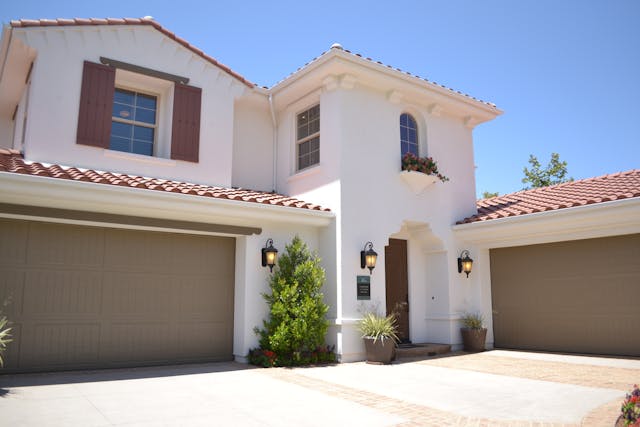
Whether you equip yourself with a sliding garage door, up-and-over garage door, or even a sectional garage door, insulating it is a priority. In most cases, the carpentry may seem thinner. It therefore requires a better garage door insulator optimizing its insulation quality.
Several methods can be distinguished to achieve excellent results. If you have a sliding door or up-and-over garage door made of wood, know that this material is already a good natural thermal insulator. To enhance its properties, you can add panels of polyurethane foam polystyrene. Otherwise, use insulation seals, for example, on the entire frame of the garage door to insulate.
In the case of metal or PVC garage doors, these materials sometimes have low insulating power. To remedy this, adding a garage door insulator on the inner face may be essential. Generally, people choose between reflective thermal film, wood fiber panels, and those made of extruded polyurethane polystyrene foam.
If you want to know how to insulate a garage door in the simplest way, you just have to seal the frame of the carpentry. This involves insulating its lower and side parts. They are filled with a garage door insulator limiting thermal bridges. Versatile, the foam seal prevents both water infiltration in case of severe weather.
Which materials are recommended to insulate a garage door?
When one seems firmly decided to carry out garage door insulation, it is difficult to choose the best material. Yet many options are available, each with its specific advantages.
Insulation panels made of polyurethane foam polystyrene are among the most popular elements. They are not only lightweight but also easy to install and handle. Polyurethane foam or polystyrene panels, these materials offer better thermal insulation. They help reduce heat loss while maintaining a comfortable temperature in the garage.
Compared to polystyrene, it must be admitted that polyurethane foam is expensive. However, its high price is worth it given that its performance in terms of garage door insulation is quite surprising. Even better, it has great longevity. Robust, it tolerates moisture. It is also among the best sound insulators limiting external noise.
Besides extruded polystyrene polyurethane foam, glass wool is another common choice for garage door insulation. Durable and resistant, it also offers good acoustic and thermal insulation. This material is generally available in a variety of densities and thicknesses to suit multiple different insulation needs. Its installation on a sliding garage door or up-and-over garage door is relatively simple.
For those looking for a more eco-friendly material, cellulose foam is effective for insulating garage doors. Many also choose aluminum sheets due to their ease of application. Otherwise, they can use seals and sealing strips to improve garage door insulation.
I long ignored the icy draft that rushed under my metal garage door, thinking it was inevitable for this room. One winter, I decided to install a thermo-reflective insulation kit and threshold brush seals. The realization was immediate: the temperature in the adjacent laundry room rose by three degrees without touching the thermostat. That day, I understood that a simple afternoon of DIY could transform a thermal sieve into an effective buffer zone, improving my daily comfort far beyond the simple parking area.
Insulation materials for garage doors
Let’s summarize through the table below the most popular insulators for up-and-over, folding, or sliding garage doors:
| Insulation material | Average thickness (mm) | Thermal performance (λ in W/m.K) | Advantages | Disadvantages |
|---|---|---|---|---|
| Polystyrene panels | 20 to 50 mm | 0.030 to 0.040 | Lightweight, easy to install | Less durable |
| Polyurethane foam | 30 to 100 mm | 0.024 to 0.030 | Excellent thermal insulation | Higher cost |
| Aluminum sheets | 5 to 20 mm | 0.038 to 0.042 | Easy to cut and apply | Limited effectiveness |
| Glass wool | 50 to 100 mm | 0.030 to 0.040 | Good thermal and acoustic insulation | Requires a structure for installation |
How to insulate a garage door without compromising its opening?
Of course, it seems necessary to insulate the walls and ceiling, but also the garage doors. These works aim to limit the appearance of thermal bridges and improve comfort in the rooms of the house.
If you are looking for an easy solution, nothing beats opting for the garage door insulation kit. It is available in almost all DIY stores, simplifying the garage door insulation process.
Generally, it includes all the useful elements for installation, including insulating materials, various fixing parts, sealing strips, and indeed precise and detailed instructions. Some kits also offer more specific tools to make the work more efficient and faster. Before making a choice, be sure to consider the product’s compatibility with the size and type of garage door insulation.
Many people also prefer the thermal curtain which is placed in front of the garage door. If you wonder how to insulate a garage door more easily, its use is a real child’s play.
Similarly, adhesive strips are also widely used to proceed with garage door insulation without hindering its opening. You also have the option to put a thinner insulation on the opening. Otherwise, install a garage door threshold specially designed for this purpose. The goal is to fill the space between the door and the floor, blocking cold, weather, and wind.
Comparison of solutions to avoid compromising the opening
To make it easier for you to read, here is a table comparing the most well-known garage door insulation ideas without hindering the door’s operation:
| Insulation solution | Description | Approximate cost (€/m²) | Advantages | Disadvantages |
|---|---|---|---|---|
| Door insulation kit | Ready-to-install panels | 10 to 25 €/m² | Quick and efficient installation | Not always suitable for all doors |
| Insulating adhesive strips | Application of strips to seal air leaks | 5 to 10 €/m² | Economical, easy to apply | Less effective in case of large heat losses |
| Thermal curtain | Curtain installed in front of the door | 15 to 40 €/m² | Thermal and acoustic improvement | May hinder door opening |
What are the main advantages of insulating a garage door?
There are many reasons encouraging individuals to insulate a garage door. For example, one might undertake the work to make a garage a fully functional room. Many garages are also attached to houses. Due to poor garage door insulation, energy loss occurs through the partition between the garage and the dwelling. It is therefore essential to address garage door insulation.
The first advantage lies in increased energy efficiency. The work significantly reduces heat loss. With a thermal barrier, an insulated garage door can reduce the amount of energy needed to cool or heat a home. Consequently, you can save on your electricity bill while helping to reduce your carbon footprint.
The major benefit of garage door insulation is also to improve overall comfort in both the garage and the house. When equipped with an insulated garage door, the temperature inside becomes more stable, regardless of the season.
If you store items in the garage during winter, they retain their original condition because they are not at risk of freezing. This prevents damage and extends their lifespan. Here is a summary of the notable advantages of garage door insulation:
- Improvement of energy efficiency
- Reduction of heat loss
- Decrease in external noise
- Improvement of overall comfort
Can a garage door be insulated without major work?
Many wonder how to insulate a garage door on a small budget and without major work. There are many possible and effective solutions. Installing thin insulation may seem like a good idea. You can use reflective thermal film, wood fiber panels, or polyurethane polystyrene foam sheets. The latter is the most common option. Their installation does not require significant work.
It is also possible to simply seal the frame of the garage door insulation. Just install foam seals around the frame. They will not interfere with the door’s operation in any way.
Besides that, the garage door insulation kit attracts most people due to its ease of use. It usually comes in the form of a roll. You just have to cut it to insulate the entire surface of the door.
If you have the necessary budget and your garage door is already worn out, why not replace it once and for all? Although this solution is costly, it guarantees absolute comfort and energy savings. Quality models are designed with excellent thermal and acoustic insulation.
What is the difference between thermal and acoustic insulation for a garage door?

The garage door is the largest opening of a home. It is therefore a vulnerable element for significant energy loss. Additionally, it facilitates the transmission of outside noises inside. When we talk about insulation for up-and-over garage doors, sectional garage doors or sliding garage doors, it concerns the thermal and acoustic insulation of this part of the garage.
The first reduces heat transfer. This allows for optimal comfort in the garage and also energy savings that lighten monthly bills. An insulated garage door helps reduce your air conditioning and heating needs.
As for acoustic insulation, its purpose is to reduce or limit noise pollution from the external environment coming from neighbors or certain rooms in the house. Consequently, it prevents the spread of noise to enhance comfort.
It is possible to find insulators that serve both as acoustic and thermal barriers. Their use is a good idea for better home insulation, excellent energy efficiency, and great indoor comfort. It is advisable to prioritize them to insulate a garage door profitably and thoroughly.
What are the steps to properly insulate a garage door?
The first thing to do is to measure the garage door insulation. Once done, you must choose insulating materials that correspond to the type and size of the door. After this phase, you can prepare it properly.
To do this, cleaning the surface is essential to remove all dirt including grease and dust. These prevent the adhesive from sticking properly. Take the time to inspect the door. If there are signs of damage, repairs must be made so that the garage door insulation is effective.
After preparation, all that remains is to install the insulation itself. This work varies depending on the chosen insulation material. If you use a garage door insulation kit or foam panels, you need to measure the materials and then cut them according to the size of each part of the door. To ensure their attachment, you can use a suitable adhesive. Make sure there are no folds or gaps that reduce thermal efficiency.
If you use a garage door insulation roll, you unroll it while aligning it carefully. Then you fix it using adhesives or specific staples. To simplify the tasks, here is a summary of the steps to follow:
- Measure the door precisely
- Choose the appropriate materials
- Prepare the surface
- Install the insulation according to the manufacturer’s recommendations
What is the average cost to insulate a garage door in 2024?
Unlike insulating the ceiling or walls, insulating a garage door seems inexpensive. However, it is difficult to determine the exact price since there are several factors that can influence it.
The first relates to the dimensions of the door. The larger it appears, the higher the total cost. Custom doors similarly require additional expenses.
If you decide to hire a professional, know that this choice increases the budget. If you are ready to handle the garage door insulation yourself, you will likely save on labor costs. However, you must ensure your skills so that the work is done properly.
The most crucial element defining the cost of garage door insulation is the price of materials. Polyurethane is in most cases more expensive compared to polystyrene. If you plan to favor it, you can prepare a budget between 30 and 60 euros per square meter depending on its thickness. If you want to go through a professional, don’t forget to add the installation price ranging between 30 and 50 euros per hour.
What criteria should be considered when choosing an insulation kit for a garage door?
The garage door insulation kit is easy to find in specialized stores. Often inexpensive, it generally includes bubble insulation as well as adhesives that hold the insulation on the door. These elements also serve as joints between the insulation parts. Sometimes it is necessary to cut according to the size of the garage door.
This kit is practical for an old garage door. In the case of a sectional garage door, its effectiveness is limited since the adhesive and insulation tend to peel off over time. To find the right model, please consider its compatibility with your type of garage door. It should be noted that there is a tilting garage door, but also a sliding garage door and sectional garage door.
Besides that, favor an easy-to-use door insulation kit. This helps you save time in assembling the product. Choose a model that has a good thermal coefficient. It demonstrates great efficiency in limiting heat loss.
Insulation solutions for garage doors
Among wood fiber boards, garage door insulation kits, polyurethane foam panels, extruded polystyrene, and reflective thermal film, there are many insulation options for garage doors. To make the right choice, consider the following criteria:
| Criterion | Importance | Recommendations |
|---|---|---|
| Ease of installation | Crucial for a quick installation | Opt for ready-to-install kits |
| Compatibility with door type | Essential for good efficiency | Check compatibility with swing or tilt door |
| Thermal resistance | Important to avoid heat loss | Choose a material with a good thermal coefficient |
What is the best method to insulate a garage in 2026?
Yes, it is entirely possible provided that ultra-light materials such as multilayer thermo-reflective films are used. Care must be taken not to overload the door panel because the compensation springs are set for a specific weight: insulation that is too heavy could prevent the door from rising or prematurely wear out the motor of the automation system.
Floor insulation is not essential if the garage is not a living space: however, the installation of a high-density rubber threshold seal is imperative. This device fills the gap between the bottom of the door and the concrete, preventing not only cold air from entering but also dead leaves and rainwater from penetrating.
Classic thermal insulation provides slight acoustic improvement, but for a convincing result, materials with fibrous structure or composite panels should be favored. Eliminating air passages through new seals significantly reduces the transmission of airborne noise: which is ideal if you use your garage as a workshop or if you live on a busy street.