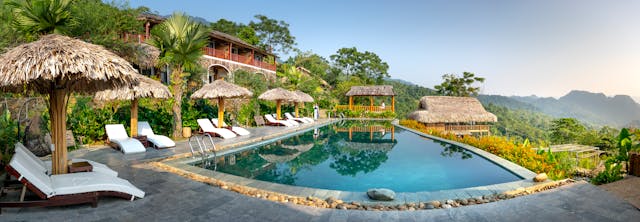
In our previous article, we covered the essentials to remember about the pool veranda. This time, we provide you with more information on natural pool construction. In recent years, it has become a growing trend. It is a better alternative to the classic pool.
It fascinates individuals with its natural and ecological aspect. That is why many have recently decided to install it in their green spaces.
Whether you have a Chinese garden, zen garden, aquatic garden, contemporary garden or ecological garden, the natural swimming pond enhances it. If this installation appeals to you, we invite you to discover its secrets. To learn more about it, let’s start with its definition.
What is a natural pool and how does it work?
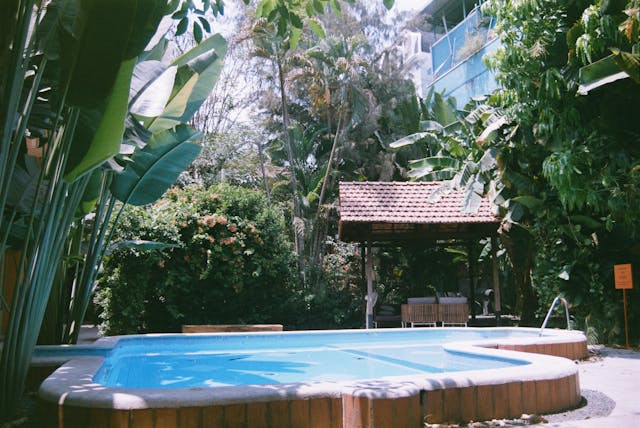
Also called an ecological pool, natural swimming pond or biological swimming pool, a natural pool pond is above all a pool. Unlike traditional pools, it uses neither chemical water treatment nor filtration system. To ensure its operation, it relies on the principle of lagooning.
This biological technique aims to purify natural pool water, thanks to the presence of microorganisms and plants similar to the water of a natural pond. Thus, there is no need to use chemical products or filtration systems to treat the water.
Similarly, you are not required to sterilize your natural pool swimming pond as you would a classic pool. One can say it is a natural pool ecosystem in itself.
It consists of two basins, the swimming zone and the lagooning zone. While the first is more spacious, the second is shallow. It houses aquatic plants. Their role is to clean and filter the natural pool swimming water. The lagooning zone guarantees the filtration and purification system of the natural pool water.
Note that these two zones are connected by a regeneration zone. This latter ensures the oxygenation of the water. It also has an aesthetic function. That’s not all, it helps warm the water through the effect of pebbles and the sun before sending it back to the swimming zone.
According to the natural pool lagooning system, the water is thus treated naturally in the lagooning zone, thanks to the roots of aquatic plants, typical rocks, and microorganisms.
To have healthy and clean natural pool water, the organic matter to be removed becomes food for the animals and plants present in the natural swimming ponds. It is the bacteria that ensure this transformation.
Why do natural pools appeal so much to individuals?
Biological pools are not just simple basins: they become true ecosystems that combine comfort, aesthetics, and respect for the environment. Here are their most notable advantages:
- Ecological balance: water filtered by plants and microorganisms, without chemical products.
- Preserved health: no irritation or odors related to chlorine.
- Unique atmosphere: natural appearance reminiscent of a pond or lake.
- Enhanced biodiversity: refuge for certain plant and animal species.
- Landscape aesthetics: perfect integration into the garden, whatever its ambiance.
- Simplified maintenance: no addition of costly or restrictive chemical products.
What are the essential differences between a natural pool and a traditional pool?
To choose the right installation, it is crucial to compare the ecological pool with the traditional model. Here is a clear overview:
| Criterion | Natural pool | Traditional pool |
|---|---|---|
| Filtration | Lagooning (plants, rocks, bacteria) | Chemical products and mechanical filters |
| Swimming comfort | Fresh water, no irritation | Risks of irritation and chlorine odors |
| Ecological impact | Promotes biodiversity, environmentally friendly | Chemical products, high carbon footprint |
| Construction cost | Higher (15,000 to 60,000 €) | Less expensive (10,000 to 40,000 €) |
| Annual maintenance cost | About 300 to 400 € | Regular products and treatments: 600 €+ |
| Durability | Autonomous and sustainable ecosystem | Depends on maintenance and filtration system |
| Aesthetics | Natural look, landscaped garden | Often more standardized design |
What are the environmental benefits of natural pools compared to traditional pools?
Their major asset lies in their use of a natural purification system. Thanks to the principle of natural pool lagooning, the use of chemical products like bromide and chlorine is no longer necessary.
Aquatic plants, minerals, and microorganisms ensure the natural filtering of natural pool water. This self-cleaning mechanism simultaneously respects the ecological balance of natural swimming ponds.
Many people thus choose the natural swimming pool for daily use because it is beneficial for their health. The risks of eye or skin irritation and any form of allergy are minimized.
Unlike the traditional pool water treatment system, no toxic substances are used. A natural pool swim may feel gentler on the skin. It poses no health risks.
Compared to classic pools, this installation also respects the environment. It replaces chemical treatment with biological cleaning through cleansing plants. It simultaneously stimulates local biodiversity, as this natural pool construction provides shelter for many aquatic species.
Its advantages do not stop there! A natural pool swim gives you the feeling of swimming in the heart of nature, for example in a stream, river, or lake. Although its installation costs more compared to a traditional pool, its maintenance requires no significant expenses.
In terms of aesthetics, natural pond pools are magnificent to see. Thanks to the various natural elements that compose them, they create a true corner of nature enhancing your garden. Flora, fauna, waterfalls, and rocks together provide a very attractive natural ambiance.
How to plan and design a natural pool in your garden?
Just like installing a arbor and pergola in the garden, natural pool construction requires good preparation. To start, it is important to clearly define its location. Take the time to study its surface. It mainly depends on the layout of your garden. Assess your budget and gather the materials and tools needed for the work.
After these preliminaries, you can carry out the earthworks for the natural swimming basins. It should be noted that the swimming area is deeper than the natural pool lagoon area. That said, the next step is to waterproof your ecological pool by covering the bottom with sand. Then you need to install the protective felt without overflowing the swimming pool basin.
Once done, now install the synthetic rubber membrane or the EPDM tarp. The latter has a durability of about 50 years. Separate the natural swimming basin from the lagoon basin. To do this, you can use a bag filled with gravel or large stones.
Before putting minerals into the pool and planting vegetation, it is imperative to properly prepare the lagoon or purification zone. For this, install drainage pipes connected to a grid filter at the bottom. Once the basin is filled with water, you can sow your aquatic plants and add the minerals of your choice.
Even if everything is in place, please be patient before taking a natural pool swim. It is important to emphasize that the natural water treatment system requires many weeks to function properly. It is advisable to respect this period before you can enjoy the pool.
What are the costs associated with building and maintaining a natural pool?
Natural pool construction makes you dream. This luxury equipment combines ecology and aesthetics, helping you cool off in the heart of nature. When you plan to start its installation, many questions haunt your mind. Among the most frequent topics, the construction price and natural pool maintenance interest most people.
It must be admitted that it is expensive to build compared to a traditional pool. Many factors can influence the cost of the work, such as the surface area of the natural pool swimming basin, the types of materials or aquatic plants to be integrated, additional equipment, and more.
It is the earthworks, planting, lining, hydraulic system, substrate, and landscaping of the surroundings that cause the most expenses during natural pool construction.
If you call on a specialist, plan a budget that can go up to 60,000 euros. This corresponds to a natural swimming basin area of 100 m2. For self-construction, you should count between 15,000 to 25,000 euros. You can thus see a big price difference between hiring a professional and installing the equipment yourself.
Regarding maintenance costs, the intervention of an expert costs about 400 euros each year. This pricing concerns a medium-sized natural pool basin. Whatever the price, it should be known that its maintenance greatly contributes to its durability and the preservation of its swimming water quality.
Which aquatic plants and materials are used to filter water in a natural pool?
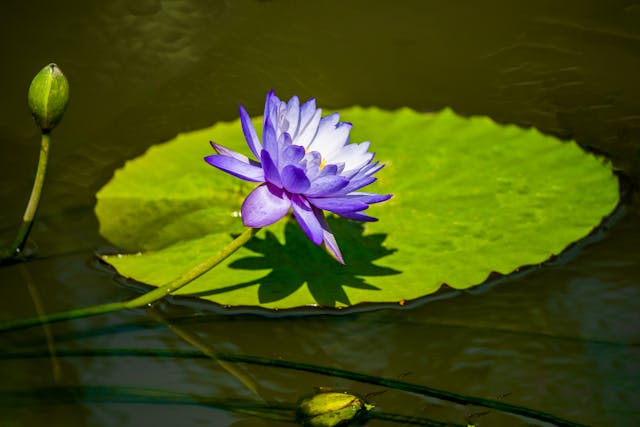
Among its main advantages, this ecological pool promises you natural filtration without resorting to chemical products. As we all know, these can be harmful to both health and the environment.
Thanks to the plants and materials installed in the lagoon zone, the quality of natural pool water is top-notch. They ensure the natural purification system, offering you the opportunity to swim in water that is both healthy and clear.
Each has its own functions. Oxygenating plants allow bacteria and animals to survive in the natural swimming pond, through the oxygen they release. The water crowfoot, starry water as well as the pondweed are examples of these.
There are also purifying plants. They capture large metals that hinder the quality of natural pool water. They also retain phosphate which promotes the growth of algae. The myriophyllums and carex are part of this group.
Regarding materials, zeolite is among the most used, thanks to its superior filtration properties. It binds heavy metals, fine particles, and organic compounds that dirty natural pool water. Besides that, please use layers of bentonite, layers of clay, and an EPDM rubber membrane during natural pool water construction.
It is important to specify that the purification of this equipment only works when the material or plant is properly installed in its place. Otherwise, algae can appear, risking to disrupt the quality of naturally disinfected water.
What are the main challenges related to the maintenance of a natural pool?
As we explained above, natural pool ponds differ by their self-cleaning property. Their design is indeed inspired by ponds and lakes. The objective is to produce a natural pool ecosystem guaranteeing the purification and cleaning of the water.
For the water treatment system to work properly, it is essential to prioritize natural pool maintenance. It should be noted that this operation must be carried out throughout the swimming season.
In summer, you must clean the ponds every week. During the cold season, maintenance is limited to preparing for winter so that the equipment tolerates climatic conditions without damage. The first challenge to overcome is related to preserving water quality.
Of course, it is forbidden to apply chemical treatment. You must control the water hardness as well as the pH, giving you an indication of the balance of the natural pool ecosystem. Also ensure that the natural pool water is oxygenated. Not only does this preserve the good health of the plants, but it also improves bacterial life in the water.
That said, cleaning the pond is one of the steps not to be neglected during natural pool maintenance. You can do it manually or use a pool robot designed for this purpose.
Also make sure to properly maintain the plants. Some owners tend to underestimate this operation, whereas it is one of the major challenges to overcome. If you do not do it properly, the plants cannot ensure the filtration of natural pool water. Therefore, please prune them at the right time so that they fulfill their roles as they should.
How to integrate a natural pool into the landscape of your garden?
Inserting an ecological pool into a garden is a true creation. It should not be installed just anywhere. It is crucial to harmonize it with your outdoor space.
First, a natural swimming pool natural bathing pond takes up a lot of space, unlike classic above-ground pools. For a swimming pond of about 30 m2, it requires an area of 100 m2. Its advantage is its ability to blend easily with any garden style. Modern, zen, rustic, exotic, or minimalist, find a balance during the natural swimming pool construction.
Indeed, each natural bathing pond is unique. It is designed to enrich and complement your garden. Depending on the soil composing the bottom as well as the surrounding plants, the water can take on many shades, from deep blue to emerald green. This allows you to fully enjoy the charm of nature at every swimming moment.
Besides that, take the time to carefully analyze the location of your natural swimming pool pond. It should be situated in a semi-shaded area. This makes the water disinfected by UV rays. To ensure its optimal functioning, make sure that the natural pool water does not exceed a temperature of 25 °C.
Also, try to install the equipment near a tree with evergreen foliage. Otherwise, leaves will fall into the natural bathing pond in autumn. Regarding the landscaping around the pool, you can decorate it with gravel or exotic wood. Consider delimiting the pool deck with concrete planters.
What are the current trends and innovations in the field of natural swimming pools?
As natural swimming pools are gaining popularity, specialists compete in ingenuity and creativity to make the natural bathing pond not only practical but also unique and trendy. More and more new touches are consequently integrated during the natural swimming pool construction.
Besides natural filtration and ecological water conservation, the use of durable and innovative materials is gaining ground. The use of ecological concrete is popular. This material guarantees both the robustness of the installation and the qualities of traditional concrete.
For coatings, it is noted that porcelain stoneware is highly valued for its frost resistance and anti-slip properties. As for finishes, they are chosen to provide an attractive visual effect.
The 3D reinforced liner allows, for example, to reproduce the natural textures of pebbles or sand. Many also use glass paste tiles, thanks to their ability to change their reflections depending on the daylight.
The colors of natural pool water are customized. Green recalls rivers and lakes while blue connotes the sea. A true tropical paradise, accompanying the ecological pool with palm trees, multicolored flowers, and natural stones is similarly trendy.
What are the testimonials from natural pool users about their experience and satisfaction?
At a time when ecology is becoming an important issue, natural swimming pool construction perfectly matches eco-responsible solutions. Almost all owners particularly appreciate the natural water treatment system. This significantly minimizes the use of toxic chemical substances that are harmful to the environment and especially to health.
Of course, natural swimming pool construction is expensive. This equipment also requires a large space because of its various included zones. In any case, it offers an excellent natural bathing pond experience as if you were swimming in mountain lakes.
Many are also satisfied with the principle of natural swimming pool lagooning, due to the water quality. Healthy and clear, it shows no accumulation of pollutants that could endanger their health. No more fungal infections or red eyes, a natural water pool promises health, comfort, and a very refreshing swim in the best setting.
Last but not least, it sublimely enhances your outdoor spaces. By bringing a natural, zen, and modern atmosphere, the installation fits beautifully with any garden style.
How to ensure safety and water quality in a natural swimming pool?
For the filtration system to continue ensuring the quality of natural swimming pool water, it is essential to properly maintain the natural swimming basin. To achieve this, a few passes with the robot are necessary to clean the decks, the pump filter, and the natural swimming basins.
Besides that, it is essential to take care of the aquatic plants. This involves trimming them at the end of each season. If some green algae appear, you can remove them by hand. During natural pool maintenance, avoid using chemical products. Every year, remember to reseed with bacteria to preserve water quality.
Regarding the safety of natural pool basins, it is mandatory to comply with current regulations. There are obligations that apply to every private pool owner. This relates to the use of safety devices. Among the most well-known are protective barriers, perimeter alarms, safety alarms, submerged alarms, and many others.
Concerning pool shelters and covers, these equipments are mainly suited for conventional pools. They may disrupt the balance of the natural pool ecosystem because they are often opaque.
As a result, these devices block sunlight. However, sunlight is essential for the growth of microorganisms in the natural water pool. Moreover, a lagooning zone should not be covered. A pool shelter can therefore prove unnecessary with this type of natural swimming basin.
Yes. On average, you need to plan for at least 50 to 100 m² to accommodate the swimming area, the regeneration zone, and the filtration zone.
No, on the contrary. After the initial investment, maintenance is more economical: no chlorine or expensive chemicals, only ecological monitoring and possibly annual maintenance by a professional.
Yes, because microorganisms and aquatic plants provide continuous biological filtration. The water remains clear and healthy, comparable to that of a lake or a river.