Compared to other building materials like bricks, pavers, and cinder blocks, aerated concrete offers countless remarkable advantages. It is especially praised for its high sound and thermal insulation quality. Additionally, it has a long lifespan of about 50 years.
It can be used in various building applications. To learn more, we provide interesting details to remember about aerated concrete blocks. We invite you to take your time and read this article.
Essential: I consider aerated concrete as one of the most rewarding materials for a DIY enthusiast, as it reconciles masonry with the precision of carpentry. In my opinion, its cellular structure is a feat that allows building and insulating in a single operation. What I find remarkable is its lightness, which avoids overloading existing structures while offering very interesting thermal inertia. In my view, it is the ideal solution for creating robust interior fittings without the weight constraints of traditional concrete.
What is aerated concrete and what are its main characteristics?
Just like exposed aggregate concrete, washed concrete, or stamped concrete, aerated concrete is simply a version of traditional concrete. It is made of cement, lime, water, sand, and an expanding agent which is aluminum powder. This last ingredient gives it its airy nature. Its difference thus lies in its porous structure.
Its name comes from the cells that form after the slurry carbonates and foams. Depending on the technology used during its preparation, two categories of aerated concrete sources can be distinguished. There is aerated concrete made of gas-forming substances and foam concrete. The latter is a classic aerated concrete but mixed with foam.
In general, aerated concrete is part of the building materials dedicated to structural work. Thanks to its natural ingredients like sand and water, it is considered an ecological material. However, its manufacturing process has an environmental impact since it also contains aluminum and cement. In any case, its production makes it a concrete that is durable, resistant, yet very light.
Thus, although this type of concrete is robust, it weighs little, which facilitates handling. Despite its lightness, the aerated concrete block tolerates compression. It also has the characteristic of being a better sound and thermal insulator. Its porous structure guarantees unmatched thermal insulation.

The first time I had to build a partition wall in a room upstairs, I was apprehensive about the weight of the cinder blocks and the mess of traditional mortar. When trying aerated concrete, I had a real revelation during the first cut: being able to saw a “stone” block with a simple hand saw seemed almost magical to me. I then realized that masonry was becoming accessible and clean. The glue assembly, millimeter by millimeter, allowed me to get a perfectly straight wall on the first try, turning a dreaded chore into a smooth and rewarding building experience.
What are the advantages of aerated concrete compared to other building materials?
Compared to most building materials such as wood and plasterboard, aerated concrete does not burn. Non-combustible and flame-resistant, it consequently offers excellent fire safety. And even if exposed to high heat, it does not risk bursting or cracking, unlike heavy concrete.
It is also a vapor-permeable material. Its open or porous structure makes it breathable. Thus, there is no need to use a vapor barrier since it is a very active capillary insulator. The surface of aerated concrete can absorb moisture. Likewise, it has the ability to release it. That is why many choose this variant of concrete to enjoy a healthy and pleasant climate in the home.
Unlike other types of concrete, it stands out for its lightness, which enhances its ease of use. Solid, it resists both frost and extreme temperatures. This porous material contains no harmful substances for the environment or humans. Its manufacturing requires little energy. This is certainly its main quality necessary for an eco-friendly building element.
Aerated concrete is not only a good thermal insulator. It is also distinguished by its high sound absorption. In most cases, it does not require an additional layer of acoustic insulation to minimize noise. Easy to use, it can be easily cut with a standard hand saw.
Comparison of aerated concrete with other materials
If you hesitate to choose aerated concrete, the table below helps you make a decision. Discover a comparison of the most commonly used building materials with their strengths and limitations.
| Material | Lightness | Thermal insulation | Ease of use | Cost |
|---|---|---|---|---|
| Aerated concrete | Very light | Very good insulator | Easy to handle | Moderate |
| Concrete block | Heavy | Poor insulator | Requires more tools | Economical |
| Brick | Medium | Medium insulator | Relatively easy | Moderate to high |
| Wood | Light to medium | Good natural insulator | More fragile in humidity | Variable depending on quality |
What are the common uses of aerated concrete?
Also known as Ytong or Siporex, aerated concrete is widely used in structural construction. It continues to be successful due to its interesting characteristics. It can therefore be installed both outdoors and indoors since it is an insulating, non-flammable, and lightweight material.
This porous material is available in various sizes and many formats such as tiles, slabs, panels, or blocks. If you choose aerated concrete panels or tiles, they are mainly used for constructing structures inside a house such as creating partitions, shelves, or a countertop in your kitchen. These models can be used as decorative material, for example, to shape furniture to personalize your interior.
As for aerated concrete blocks, they are mainly reserved for building insulating walls. They are also used for home extensions, facades, and renovation work. They are widely deployed in the construction of individual houses, but also buildings, offices, apartments, schools, garages, hospitals, shops, and many other industrial premises.
Besides that, aerated concrete blocks are used for both exterior and interior walls, whether load-bearing or non-load-bearing. It is also possible to use them for your lintels, belt beams, wall slabs, or floor slabs.
How to properly install aerated concrete blocks?
To start, please prepare the surface that will receive the aerated concrete blocks. For good stability, it must be completely flat. To do this, level the ground with cement and a coating that eliminates unevenness. Once done, do not hesitate to clean it to make the work area cleaner.
If the dimensions of the blocks do not meet your needs, you can cut them using a band saw or a simple hand saw. Then prepare the adhesive by mixing it with water. Once finished, you can apply it, for example, with a notched trowel for aerated concrete. Remove the excess before the substance dries.
Now please lay the first row of blocks on the mortar-adhesive layer. For each row, remember to glue the blocks together. Spread the adhesive evenly on the aerated concrete blocks of the bottom row. Check the level with each block installation. You can use a rubber mallet to ensure their fixation.
If some blocks protrude a little beyond the line, do not hesitate to file them with sanded boards which are often provided by the manufacturer. Thanks to its lightness, aerated concrete can be easily corrected. It sands, cuts, and shapes more easily, offering more freedom in the architecture of your project.
Comparative characteristics of aerated concrete
| Property | Observed performance | Site advantage |
| Bulk density | About 400 to 600 kg/m³ | Easy handling, ideal for upper floors |
| Thermal conductivity | λ from 0.09 to 0.15 W/m.K | Distributed insulation (monowall) |
| Fire resistance | Non-flammable (Class A1) | Maximum safety for kitchens/workshops |
| Implementation | Thin joint laying (adhesive) | Clean site and quick drying |
| Machining | Cutting with hand saw | Ultra-precise custom adjustment |
Steps for installing aerated concrete blocks
Unlike most concretes, the cellular model is easy to implement. For better results, please follow the steps below:
| Step | Description | Necessary tools |
|---|---|---|
| Surface preparation | Clean and level the base | Trowel, level |
| Cutting the blocks | Cut the blocks as needed | Aerated concrete saw |
| Applying the adhesive | Apply a thin layer of adhesive | Notched trowel |
| Laying the blocks | Align and lay the blocks | Level, mallet |
What are the main advantages of aerated concrete for thermal and acoustic insulation?
Unlike traditional concrete, aerated concrete is an insulating concrete. It is characterized by its thermal insulation performance, even in intense heat. This quality is provided by the air bubbles present in the material, thanks to the aluminum powder added to the concrete composition.
Since it is a breathable material, water vapor naturally migrates through the aerated concrete block. This mechanism is called moisture regulation. This action helps prevent condensation and ambient humidity. Without it, mold may develop on the surface of the wall. If you want to enhance its protection, you can reinforce the aerated concrete wall with a finish made of plaster coating.
This type of concrete also has the ability to act as a hygrothermal regulator. Consequently, it can eliminate the sensation of a cold wall during the chilly season so that the interior always stays warm. Similarly, walls made of aerated concrete can prevent heat from outside the home from entering inside during summer.
Besides being a better thermal insulator, aerated concrete has good acoustic insulation. It is not only a healthy and lightweight material but also robust and durable. It resists weather and various impacts. Discover below the main advantages of aerated concrete:
- Excellent thermal insulation
- Good fire resistance
- Easy cutting and handling
- Solid and durable concrete
Is aerated concrete suitable for load-bearing walls?
As mentioned above, aerated concrete comes in several formats. It is most often used for constructing walls and partitions. You can choose between smooth aerated concrete blocks, interlocking blocks, lintel blocks, U-shaped blocks, or corner blocks.
It can be used for creating load-bearing or even non-load-bearing walls. But that’s not all, many people use it to make floors, roofs, partition walls, roofs again, or cladding that ensures a minimal environmental footprint.
Besides aerated concrete blocks, there are also models in the form of tiles and panels from 5 to 30 cm thick. They are used in almost all stages of house construction, whether indoors or outdoors. This material is not only deployed for load-bearing walls or structural work but also during finishing and interior design.
What tools are necessary to work with aerated concrete?
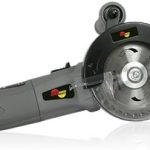
The major advantage of aerated concrete is that sophisticated tools are unnecessary. To work with this lightweight material, you don’t need advanced technical knowledge. You simply need a hand fork saw to cut it. If you don’t have one, you can use a bandsaw. It is important to note that manufacturers currently also offer special saws for aerated concrete blocks.
When installing them, choose a quality masonry adhesive to ensure their long-term fixation. A notched trowel is necessary to apply the substance. Otherwise, use a glue comb.
Besides that, please gather a spirit level, a chalk line, a trowel, a plumb line, as well as mason’s tools. Don’t forget to include a rubber mallet in your list, as it is very useful almost throughout the installation of aerated concrete blocks.
Among the most essential tools, here is a series of equipment and materials necessary to work with this lightweight but solid material:
- Saw for aerated concrete
- Notched trowel for applying adhesive
- Rubber mallet
- Spirit level
What are the disadvantages of aerated concrete to consider?
Aerated concrete has many advantages. It is not only a good insulator but also an ecological, resistant, durable, and ultra-light material. However, it does have some drawbacks.
When compared to cinder blocks and bricks, this material is rather delicate to handle. It is likely to chip at the slightest drop onto a hard surface. That is why the use of anchoring and fixing plugs may be necessary during installation to avoid damaging it.
That said, many appreciate aerated concrete for its high thermal insulation quality. Nevertheless, it must be admitted that its sound insulation capacity is lower than that of traditional concrete. Certainly, it meets regulatory requirements to reduce noise coming from outside.
However, an additional acoustic insulating material is essential when the facade is near a very noisy environment. The same applies in the case of a partition wall between adjoining dwellings.
What is the average cost of a project using aerated concrete in 2026?
With the many advantages of aerated concrete, it is not surprising that it is available at a somewhat higher price compared to other types of concrete on the market. Choosing it for the house wall results in an additional cost of about 30% compared to a cinder block of the same wall thickness.
Generally, a aerated concrete block is offered at 1 to 5 euros including tax per unit. Per square meter, plan a budget between 25 to 40 euros including tax excluding installation fees. If installation and supply costs are included, you should prepare an amount between 60 to 100 euros including tax.
Even if aerated concrete can be somewhat expensive, its use is worthwhile due to the thermal comfort it provides to the house occupants. Even better, it allows them to save energy thanks to its interesting thermal insulation quality.
Comparison of construction material costs
This table helps you choose the right material for building your wall, partition, or beam. We provide you with indicators on work costs with their complexity. The goal is to give you a general idea of the advantages of each element.
| Type of material | Estimated cost (€/m²) | Estimated lifespan | Installation difficulty |
|---|---|---|---|
| Aerated concrete | 25 to 40 €/m² | Very long lifespan | Easy |
| Cinder block | 10 to 25 €/m² | Very long lifespan | Medium |
| Brick | 30 to 50 €/m² | Very long lifespan | Medium |
| Wood | 40 to 80 €/m² | Variable depending on treatment | Easy to medium |
What precautions should be taken when handling aerated concrete?
If you are used to working with concrete cinder blocks, know that aerated concrete blocks seem more fragile. It is therefore recommended to handle them with care.
If they fall on a hard surface, they can break in one go. Moreover, it seems impossible to recover them after the fall. To avoid this, their handling requires vigilance.
Despite its countless advantages, aerated concrete is a brittle material. Its installation can therefore seem a bit complex, as otherwise, cracks may form over time.
It is important to be careful when fixing or sealing elements. It is recommended to use special plugs for aerated concrete to avoid damaging the material and ensure a solid anchorage.
What are the alternatives to aerated concrete and in which cases should they be preferred?
Concrete blocks are a better alternative to aerated concrete since they offer many attractive advantages. Like aerated concrete, they are also a porous material free of harmful substances for both humans and the environment.
Thanks to their composition of sand, water, cement, and stone, they constitute a natural and also recyclable building material. So if you want to contribute to the preservation of the planet, you can opt for concrete blocks.
Compared to aerated concrete, the latter is also inexpensive. Easily accessible, it helps you build a house at a lower cost even though it is a natural material. Robust, it is also resistant to weather and wear. Thus, even if your home is located in regions with frequent rain, it remains intact.
For interior partitions, you can choose plasterboard or bricks. Made of terracotta, the latter help regulate ambient humidity. By increasing the wall’s inertia, they ensure high comfort in summer.
Using aerated concrete: building solid and insulating structures in 2026
Yes, aerated concrete is a hydrophilic material: it absorbs moisture if not protected. Outdoors: it is essential to apply a single-layer water-repellent coating or a compatible “lightweight” render that allows the substrate to breathe while preventing water penetration, thus avoiding the risk of cracking due to freezing.
It is entirely possible, provided that specific plugs for aerated concrete are used (often helical or radial expansion types). The cellular structure being softer than shuttered concrete: load distribution is key. For very heavy loads: it is advisable to increase the number of fixing points or use an appropriate chemical anchor.
Its manufacturing process requires less energy than that of fired brick. Moreover: its lightness reduces the environmental impact related to transportation. Finally: its excellent insulating properties help to sustainably limit heating consumption, making it a strong ally for constructions meeting the high energy performance standards of 2026.