Recently, you have wanted to update your interior decor. To achieve this, it is necessary to give a second life to your antique furniture.
After painting, it seems difficult to choose the ideal finish. Between waxing and varnishing a piece of furniture, you find it hard to make a decision.

Even though the latter method gives the wood a shine, the former offers countless advantages. This article chooses to reveal the essentials to know about furniture wax. To help you find the ideal product, it is first appropriate to mention some selection criteria.
📋 The essentials at a glance: Personally, I consider wax to be the most noble finish to enhance the grain of antique wood. It offers a satin protection and an inimitable scent that modern varnishes cannot match. With about 15 ml of wax per m2, you bring your furniture back to life while letting it breathe naturally.
How to choose the right type of wax for my furniture?
When you plan to purchase a wood saturator, some parameters must be taken into account. The same applies to wax. Here are the 3 elements worth studying that will allow you to find a product that meets your expectations.
🗣️ My experience: During my first flea market in 2023, I wanted to wax a dresser without properly stripping it first. The wax reacted with the old varnish, creating sticky marks impossible to polish. The lesson was immediate: wax does not hide flaws, it highlights them. A healthy surface is the key to success.
The different types
There are 3 types of waxes available on the market. Tinted wax comes in a variety of shades. It is perfect for highlighting the appeal of furniture while providing more resistance. Easy to spread, it is applied using a cloth or brush.
Liquid wax, as its name suggests, is distinguished by its fluid texture. Because of this characteristic, it is preferable to apply it with a brush. It constitutes a good finish for antique furniture.
As for paste wax, it is generally used with a cloth. Thanks to its slightly solid composition, it prevents dripping risks. In this respect, its application is a real child’s play.
The formula
Some products on the market are made from natural elements. They are sometimes derived from food extracts and beeswax. They are widely used by both individuals and professionals.
As for mineral waxes, they consist of chemical substances, among which paraffin is one of the main ingredients. Since this product can release toxins, its use requires great precautions.
The type of furniture
It remains useful to choose the wax according to the type of furniture. Since old wardrobes or shelves can be fragile, they require specific and regular maintenance.
In this context, it is advisable to favor natural waxes. This product is suitable for respecting the sensitivity of the material.
On the other hand, a new piece of furniture can have high resistance. It tolerates the use of a wax with chemical ingredients, but the quantity must be limited as much as possible.
What are the advantages of waxing furniture?
🌟 The pros
- Authentic patina
- Easy local repair
- Often natural product
🔻 Limitations
- Sensitive to water stains
- Regular maintenance required
- Protection against moisture: Using wax on furniture brings a number of quite different advantages. Many people use it because of its better protection against moisture and scratches.
- Enhancement of durability: Compared to other coatings, wood proves to be fragile. Using wax helps guarantee its durability. Its nourishing nature strengthens its resistance. This product covers the surface, effectively waterproofing the furniture.
- UV prevention: Because of the sun, wood also risks gradually fading. Once it is exposed for a long time to UV rays, it slowly changes color.
- Protection against burns: However, know that this situation is very often accompanied by burn marks and cracks. To protect it, the most relevant solution is applying wax to the furniture.
- Rehydration of the wood: This product allows treating dried-out wood. As it penetrates deeply, it rehydrates the material. To keep it in its original state, it is advisable to wax it regularly.
- Restoration of the patina: This treatment similarly restores its original patina. It protects it from stains, water rings, dirt, dust, and rings. When you use wax, the surface becomes smooth and prevents their accumulation.
- Recovery of the color: It also appeals to most because it restores the natural color of the wood. Sun, humidity, and temperature changes make the material more vulnerable.
- Barrier against insects: For this purpose, it does not tolerate insect attacks. To reinforce its robustness, wax is one of the best solutions.
- Ease of application: Whatever its texture, this product stands out for its ease of application. It can simply be used with a cloth. Any beginner can easily rub the wax onto the surface.
Which types of furniture are best suited to be waxed?
If you have an antique piece of furniture, you can very well wax it to restore its shine. Due to its nourishing and protective action, the product helps strengthen its resistance while highlighting its appeal.
That’s not all, it prevents the deterioration of the wood caused by insects and the appearance of cracks. But before any application, it is essential to strip the furniture of wax.
Also, a new cabinet or table can be waxed without any problem, especially since it is made of raw wood.
Wax is used as a finish to protect the furniture against any external aggression. It gives it both robustness and improves its durability.
Besides its protective function, it enhances the color of the natural wood while giving it shine. If you like modern rustic decoration, consider favoring wax for new furniture.
How to prepare the furniture before waxing it?
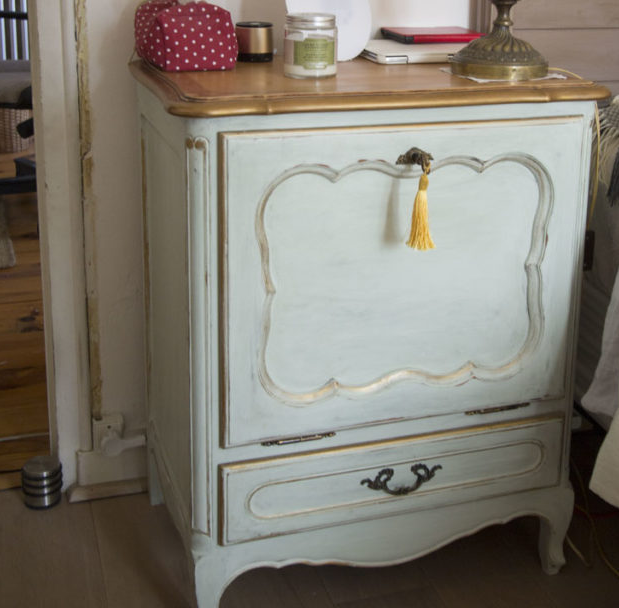
When planning to sand plaster, it is imperative to prepare the surface. It is the same with wax, the surface must be both clean and smooth to the touch before applying the product. This preliminary phase can be done quite easily.
The first step is to remove all residual materials and dust. You can use a broom, a DIY blower, or even a vacuum cleaner.
Once done, pass a damp sponge or a lint-free cloth over the surface to remove remaining particles.
The second part is de-waxing the wood. This step aims to remove old oils or waxes using a product called de-waxer.
This allows the pores of the material to open, which then simplifies the adhesion of the wax. Thanks to this treatment, you can obtain ultra-clean furniture free of any finish traces.
The last step involves repairing cracks. To do this, do not hesitate to use wood filler, wood putty, or a wood filler.
After drying, the surface has no roughness or imperfection, making the application of the wax easier.
What is the best technique to apply wax on the furniture?
The right method depends on the type of wax. If you use liquid wax, it is better to apply it with a brush. A paste wax is applied using a piece of cotton cloth, preferably lint-free.
After preparing the surface, start by applying a first coat. Regardless of the type of wax, this coat should be thick.
⚠️ Common misconception
Applying a very thick coat thinking it will better protect the wood. An overload of wax will never dry properly and will remain sticky, permanently attracting dust and fingerprints.
| Technique | Description | Advantages | Disadvantages | Recommended for |
|---|---|---|---|---|
| Cloth application | Use a soft cloth (cotton or microfiber) to spread the wax in circular motions. | Easy to perform Requires no specific tools Allows good control of the amount | Longer application time Less suitable for large surfaces | Antique furniture, delicate surfaces, beginners |
| Brush application | Spread the wax with a soft-bristle brush to reach corners and moldings. | Precise in angles and reliefs Ideal for carved furniture | Can leave marks if used improperly Requires thorough brush cleaning | Moldings, decorative furniture, textured surfaces |
| Steel wool application | Rub the wax with very fine steel wool (0000) to make it penetrate well into the wood. | Excellent penetration Patinated and aged effect | Can scratch fragile surfaces Requires good skill | Raw wood, restoration, vintage finishes |
| Mechanical application | Use a polisher or sander with a pad to spread and shine the wax. | Time-saving Shiny and uniform finish | Expensive equipment Less suitable for small furniture | Large surfaces, professionals, modern furniture |
When spreading it on the surface, you must follow the direction of the wood grain while making circular motions. Once this step is finished, let the product dry thoroughly. One hour may be enough for it to harden.
Now apply the second coat. Unlike the first, this one should be less thick. As soon as the product dries, all you have to do is polish the surface.
To achieve this, rub it with a silk brush or nylon brush. Then polish it with a soft wool cloth, always following the wood grain. Do not stop until the furniture becomes shiny.
How long should you wait before polishing the furniture after applying the wax?
Generally, wax is applied in 2 or 3 coats at most to deeply impregnate the material. Between each coat, it is recommended to wait at least one hour to allow the solvent products to evaporate.
Before polishing the surface, you must let the last coat dry for at least one hour. Once the wax hardens, you can polish the surface to give the furniture a nice shiny appearance.
How to protect the furniture surface during the waxing process?
When waxing furniture, there is no need to spread a large amount of product on the surface. Although the first coat requires a thick layer, it is unnecessary to apply too much product at once.
In this regard, it is not necessarily required to cover the furniture with a tarp during treatment. However, you can protect the floor with a plastic sheet to avoid stains. If you cannot tolerate the product’s smell, you can wear a mask during application.
What common mistakes should be avoided when waxing furniture?
Some people apply liquid wax on furniture with a cloth. However, the liquid may spill everywhere, affecting the final result. It is recommended to use a brush to spread this product. Prefer a quality tool to avoid leaving bristle marks.
🌍 Did you know?
The characteristic smell of wax often comes from turpentine essence. Originally, cabinetmakers used cork stoppers to polish the hot wax and achieve an exceptional mirror finish.
After waxing, others clean the furniture with water. However, the product does not tolerate moisture as it can leave marks on the wood.
💡 Practical tip
For a professional result, always polish in the direction of the wood grain with a cotton cloth or a boar bristle brush. If the wax is hard to work with, gently warm it in a bain-marie.
Frequently Asked Questions
To achieve this, it is advised to follow the steps mentioned above exactly. Start by preparing the surface. Then, apply the first coat followed by the second. The final phase is polishing to give the surface its shine.
It is not recommended to use water to clean the furniture. Instead, use stain-removing oil. Water-based products can be used as a last resort to avoid marking the wood.